
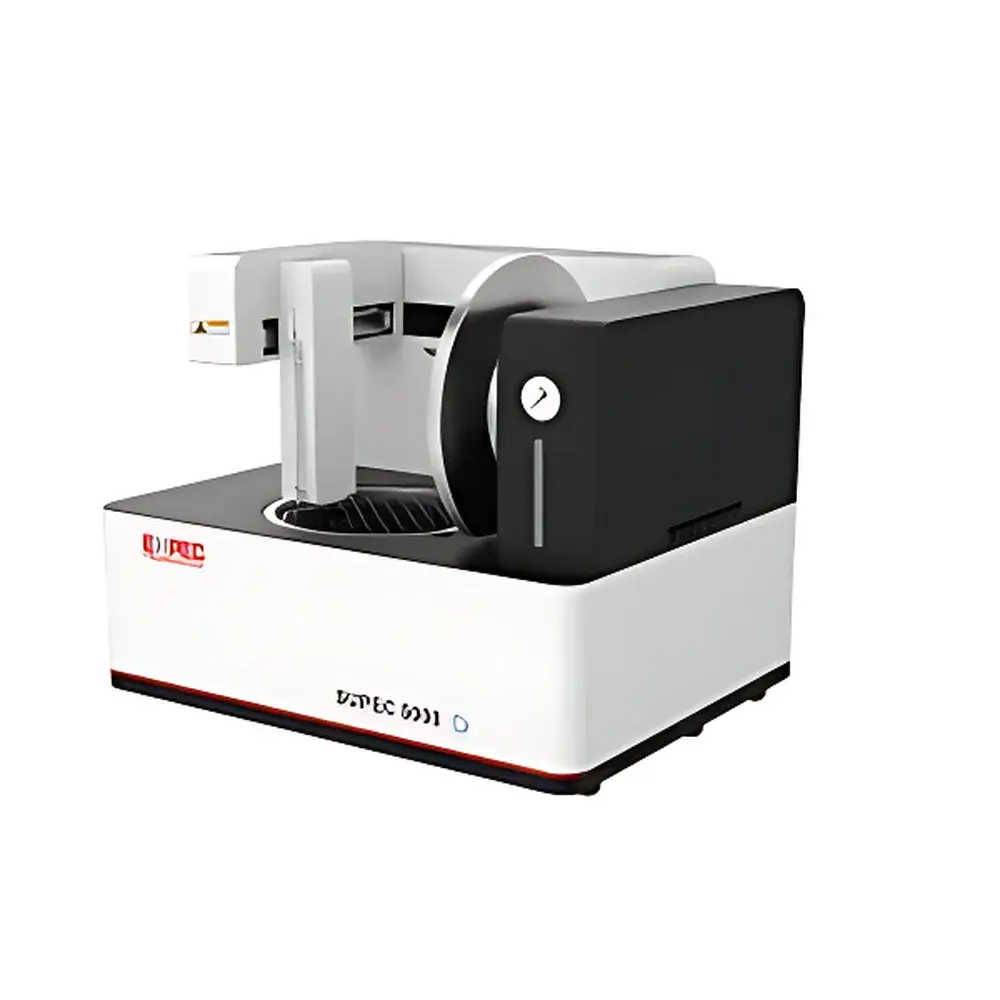
EXPEC SUPEC 5000 TPTN Fully Automated Total Phosphorus and Total Nitrogen Analyzer
| Brand | EXPEC |
|---|---|
| Origin | Zhejiang, China |
| Manufacturer Type | Authorized Distributor |
| Country of Origin | China |
| Model | SUPEC 5000 TPTN |
| Application | Total Phosphorus (TP) and Total Nitrogen (TN) |
| Instrument Type | Laboratory-Based Analyzer |
| Measurement Principle | Spectrophotometry (UV-Vis) with Potassium Persulfate Digestion |
| Compliance Standards | GB 11893, HJ 636, National Surface Water Monitoring Guidelines |
| Safety Features | 9-layer pressure vessel safety protection, automated lid actuation, 120 °C precision temperature control |
| Automation Level | Full walk-away operation from sample loading to report generation |
| Sample Throughput | Batch processing with customizable multi-tube sample trays |
| Reagent Delivery | Independent parallel multi-channel injection system |
| Detection System | Dual-wavelength UV-Vis spectrophotometric detection module |
| Robotic Platform | High-precision articulated robotic arm with cup-position recognition |
Overview
The EXPEC SUPEC 5000 TPTN Fully Automated Total Phosphorus and Total Nitrogen Analyzer is a laboratory-grade analytical platform engineered for precise, reproducible quantification of total phosphorus (TP) and total nitrogen (TN) in aqueous environmental matrices. It implements standardized oxidative digestion using potassium persulfate under controlled high-temperature, high-pressure conditions—followed by spectrophotometric detection across the ultraviolet and visible spectrum. This two-stage methodology aligns strictly with nationally mandated procedures: GB 11893 for TP determination via ammonium molybdate spectrophotometry and HJ 636 for TN analysis using alkaline potassium persulfate digestion coupled with UV absorption measurement. The instrument integrates fluid handling, thermal processing, optical detection, and data reporting into a single coordinated workflow—eliminating manual intervention after initial sample placement. Its architecture is designed for compliance-driven laboratories requiring audit-ready traceability, repeatable inter-batch performance, and minimal operator-dependent variability.
Key Features
- Fully automated digestion module with independent pressure-controlled vessels, maintaining 120 °C ± 1 °C for precisely 30 minutes per batch; includes automatic lid opening/closing and real-time pressure monitoring.
- Nine-layer integrated safety protocol—including overpressure relief valves, temperature cutoff sensors, torque-limited lid actuators, and redundant pressure transducers—to meet IEC 61010-1 requirements for laboratory equipment.
- Dual-range UV-Vis photometric detection system covering 200–800 nm, optimized for simultaneous absorbance measurement at 220 nm (TN) and 700 nm (TP), with baseline correction and stray-light compensation algorithms.
- Parallel multi-channel reagent dispensing system featuring isolated peristaltic pumps and dedicated fluid paths—preventing cross-contamination between TP and TN reagents, as well as among sequential samples.
- High-accuracy robotic arm with vision-assisted cup positioning and force-sensing tip calibration, enabling sub-millimeter repeatability in pipetting and tray manipulation.
- Modular, ergonomic sample tray design supporting 12–48 positions with lift handles, compatible with standard 16-mm borosilicate glass tubes or 50-mL polypropylene centrifuge tubes.
Sample Compatibility & Compliance
The SUPEC 5000 TPTN accepts raw or filtered water samples from surface water, groundwater, wastewater effluents, and drinking water sources without pre-dilution in most routine cases. It accommodates turbid and moderately colored matrices through algorithmic background subtraction and dual-wavelength referencing. All operational protocols conform to Chinese national standards GB 11893 and HJ 636, and support documentation meets GLP documentation requirements for environmental testing laboratories. Data integrity safeguards include electronic audit trails, user-level access control, and timestamped method logs—facilitating alignment with ISO/IEC 17025:2017 clause 7.7 on result reporting and traceability.
Software & Data Management
The embedded control software provides intuitive workflow configuration, method validation tools, and real-time status visualization. Each analysis generates a structured CSV and PDF report containing raw absorbance values, calibration curve parameters, digestion time/temperature logs, and QC flag indicators. Data export supports LIMS integration via ASTM E1384-compliant file formats. All instrument actions—including reagent volume delivery, digestion cycle initiation, and spectral acquisition—are recorded with millisecond resolution and digitally signed for regulatory review. Software updates are delivered via secure HTTPS channels with cryptographic verification.
Applications
This analyzer serves environmental monitoring agencies, municipal water quality labs, industrial effluent compliance facilities, and third-party testing organizations performing routine TP/TN surveillance. It is routinely deployed for long-term trend analysis in national surface water networks, source water vulnerability assessments, wastewater treatment plant discharge verification, and potable water safety screening. Its batch-processing capability enables efficient handling of large sample sets during seasonal monitoring campaigns or emergency spill response scenarios—while maintaining full method fidelity and regulatory defensibility.
FAQ
Does the SUPEC 5000 TPTN require external cooling or ventilation systems?
No—its digestion chamber incorporates passive thermal shielding and an integrated condensate management system, allowing safe operation in standard laboratory environments without dedicated fume hoods or chilled water connections.
Can the instrument be validated against certified reference materials (CRMs)?
Yes—built-in CRM calibration routines support NIST-traceable standards such as EPA 1620-1 (TP) and EPA 1621-1 (TN); method validation reports include spike recovery, limit of detection estimation, and intermediate precision metrics.
Is remote monitoring or troubleshooting supported?
Remote diagnostics are available via encrypted VNC session with prior authorization; all remote access events are logged and require dual-factor authentication per ISO 27001 Annex A.8.2.3 guidelines.
What maintenance intervals are recommended for long-term reliability?
Scheduled preventive maintenance includes quarterly optical path cleaning, biannual pump tubing replacement, and annual pressure sensor recalibration—documented in the onboard service log with auto-generated reminders.
How does the system handle carryover between high-concentration and low-concentration samples?
The robotic arm executes three-stage rinse cycles using deionized water and ethanol between each sample position; rinse efficiency is verified daily using blank matrix spikes and reported in the QC summary.







