
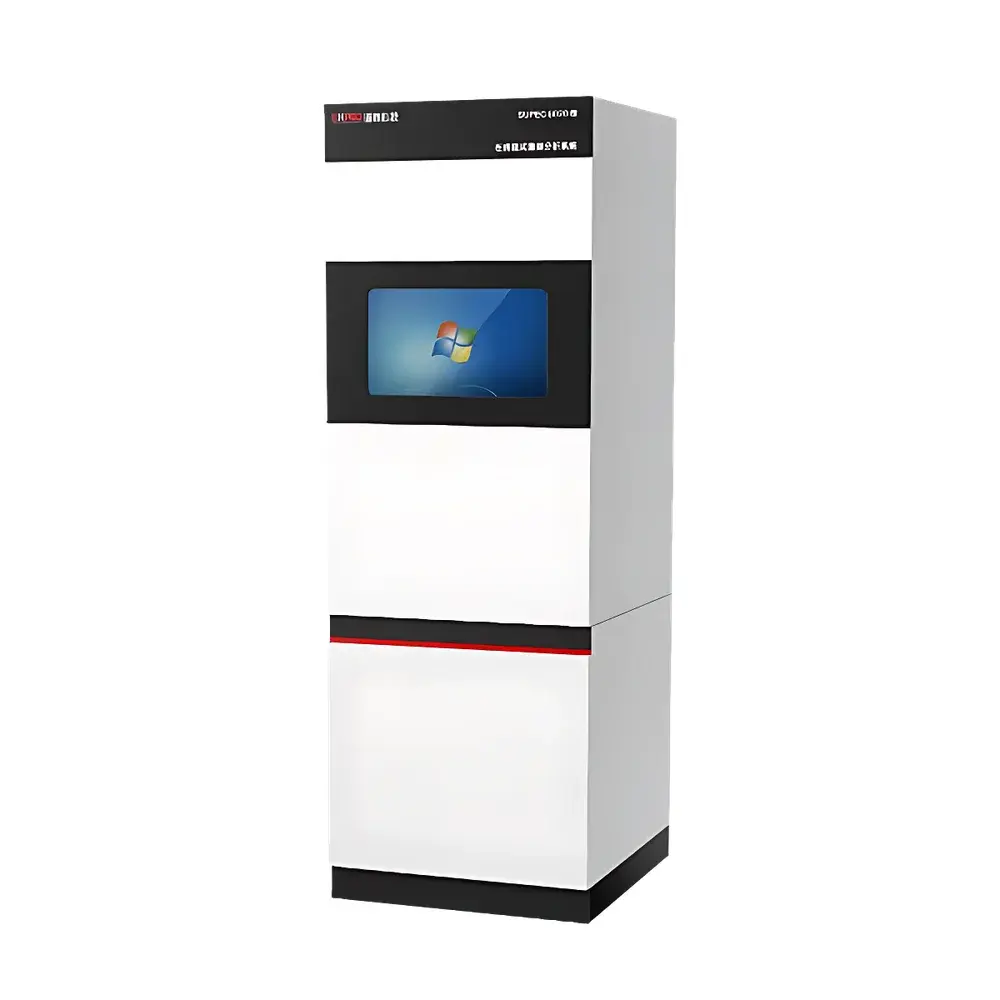
EXPEC SUPEC 8020 Flow Cytometric Algal Online Monitoring System
| Brand | EXPEC / SUPEC |
|---|---|
| Origin | Zhejiang, China |
| Manufacturer Type | Authorized Distributor |
| Country of Origin | China |
| Model | SUPEC 8020 |
| Pricing | Available Upon Request |
Overview
The EXPEC SUPEC 8020 Flow Cytometric Algal Online Monitoring System is an automated, real-time environmental instrumentation platform engineered for continuous in situ analysis of phytoplankton communities in natural and engineered water systems. It operates on the principle of hydrodynamic focusing combined with laser-induced fluorescence (LIF) and multi-angle light scattering (MALS), enabling high-throughput, single-cell resolution characterization of motile and non-motile algal cells as they pass through a laminar flow stream. Unlike conventional grab-sample microscopy or pigment-based spectrophotometric assays, the SUPEC 8020 captures simultaneous forward scatter (FSC), side scatter (SSC), and full-spectrum fluorescence emission (350–850 nm) from each individual cell—allowing discrimination of taxonomic groups (e.g., cyanobacteria, diatoms, chlorophytes, cryptophytes) based on intrinsic optical signatures, cell size, granularity, and photosynthetic pigment composition (e.g., phycocyanin, phycoerythrin, chlorophyll-a, fucoxanthin). The integrated high-speed microfluidic imaging module acquires ≥1000 cellular images per minute with micron-level spatial resolution, supporting morphology-assisted classification and dynamic population tracking over time.
Key Features
- Optimized large-volume flow cell geometry specifically designed for low-concentration algal suspensions in turbid freshwater matrices—minimizing clogging and ensuring stable hydrodynamic focusing across variable particle loads.
- Simultaneous full-spectrum fluorescence detection using a 32-channel photodiode array coupled with a broadband excitation source (405 nm and 488 nm lasers), delivering spectral fingerprints essential for pigment-based taxonomic inference and bloom early-warning capability.
- High-speed brightfield and fluorescence imaging at ≥100 fps, synchronized with cytometric signals to enable hybrid feature fusion—combining morphological descriptors (cell length, width, aspect ratio, texture) with optical parameters for improved classification robustness.
- Integrated recirculating sheath fluid system with self-cleaning protocol and low-reagent consumption (<50 mL/day), eliminating dependency on external pressurized sheath supplies and reducing operational downtime and maintenance frequency.
- Ruggedized industrial enclosure rated IP65, with temperature-compensated optics and flow path materials compliant with NSF/ANSI Standard 61 for potable water contact applications.
Sample Compatibility & Compliance
The SUPEC 8020 is validated for direct online deployment in raw surface water matrices including eutrophic lakes, reservoirs, drinking water intakes, and urban rivers with turbidity up to 100 NTU and total suspended solids ≤50 mg/L. It accommodates native phytoplankton concentrations ranging from 10² to 10⁶ cells/mL without dilution or pre-filtration. System calibration adheres to ISO 13395:2017 (water quality — determination of phytoplankton by flow cytometry) and supports traceable alignment with EPA Method 445.0 (fluorometric chlorophyll-a) and ASTM D5257-22 (standard guide for phytoplankton enumeration). Data integrity protocols conform to GLP-compliant audit trail requirements, with timestamped raw event files stored locally and exportable in FCS 3.1 format for third-party analysis.
Software & Data Management
The embedded EXPEC AquaView™ software suite provides real-time visualization of cytogram plots (FSC vs SSC, FL1 vs FL2), spectral heatmaps, temporal abundance trends, and automated taxon-specific alert thresholds. All image and event data are archived with SHA-256 checksums and support role-based access control (RBAC). The system integrates natively with SCADA platforms via Modbus TCP and OPC UA, and exports structured JSON/XML reports compatible with national water quality monitoring databases (e.g., China’s National Surface Water Quality Monitoring Network, USGS NWIS). Audit logs record all user actions, parameter changes, and calibration events in compliance with FDA 21 CFR Part 11 requirements when configured with digital signature modules.
Applications
- Early detection and quantification of cyanobacterial blooms (e.g., Microcystis, Anabaena, Planktothrix) in drinking water source protection zones.
- Long-term phytoplankton community dynamics assessment for ecological status evaluation under EU WFD or China’s “Blue Sky & Clear Water” initiative.
- Process optimization and alarm verification in drinking water treatment plants—correlating algal load with coagulant dosing, filtration breakthrough, and disinfection by-product precursor levels.
- Research-grade longitudinal studies on climate-driven shifts in freshwater plankton phenology, nutrient limitation responses, and invasive species establishment.
- Regulatory compliance monitoring for Class II–III surface water bodies per GB 3838-2002 (China Environmental Quality Standards for Surface Water).
FAQ
What sample pretreatment is required prior to online installation?
None—raw water is introduced directly into the flow path; optional inline 100 µm mesh prefilter is available for highly debris-laden sites.
Can the system differentiate between viable and non-viable algal cells?
Yes—using dual-stain viability assay compatibility (SYTOX Green + chlorophyll autofluorescence) and membrane integrity-based gating in AquaView™.
Is remote firmware update supported?
Yes—over secure TLS 1.2 connection with rollback capability and version-controlled release notes.
How frequently does the system require calibration verification?
Bi-weekly NIST-traceable bead calibration is recommended; automated daily background noise and laser power diagnostics run autonomously.
Does the system meet cybersecurity standards for critical infrastructure?
Yes—it implements IEC 62443-3-3 SL2-aligned network segmentation, encrypted local storage, and configurable firewall rules for OT network integration.
Related Products







