
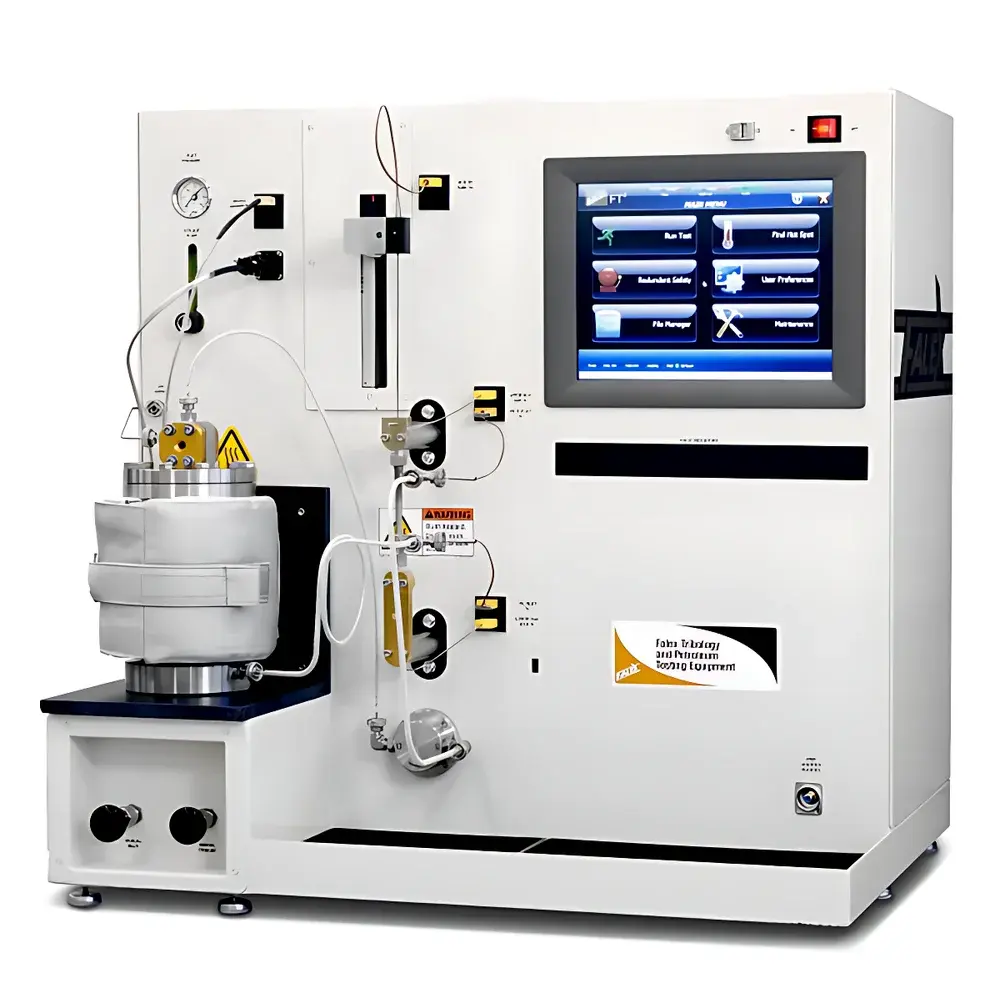
Falex 450-001-002 High-Temperature Coking Performance Tester for Aviation Lubricants
| Brand | Falex |
|---|---|
| Origin | USA |
| Model | 450-001-002 |
| Heating Tube Temperature Range | 300–450 °C |
| Temperature Control Accuracy | ±2 °C |
| Flow Rate Range | 0.55–10.0 mL/min |
| Pressure Range | 0–200 psi |
| Test Duration | 2.5–500 hours |
| Sample Reservoir Temperature | 100–210 °C |
| Sample Volume | 100 mL–1 L |
| Compliance | SAE ARP 5996B, SAE AS5780 |
Overview
The Falex 450-001-002 High-Temperature Coking Performance Tester is an engineered laboratory instrument designed to evaluate the thermal oxidative stability and coking tendency of aviation turbine lubricants under dynamically controlled, high-temperature flow conditions. It implements the Heat-Transfer Fluid Process (HLPC) methodology defined in SAE ARP 5996B — a standardized dynamic coking test protocol required for qualification and surveillance of MIL-PRF-23699 and MIL-PRF-32321 grade lubricants. Unlike static oxidation tests (e.g., ASTM D943 or D2272), the 450-001-002 simulates real-world service conditions by circulating conditioned oil through a precisely heated stainless-steel test tube while maintaining controlled pressure, flow rate, and thermal gradients. This enables quantitative assessment of deposit formation kinetics, carbonaceous residue morphology, and thermal degradation onset — critical parameters for predicting in-service reliability of lubricants in modern high-bypass turbofan engines where bearing sump temperatures routinely exceed 280 °C and transient post-shutdown metal surface temperatures may surpass 400 °C.
Key Features
- Programmable heating tube assembly with independent PID-controlled zones, capable of stable operation from 300 °C to 450 °C at ±2 °C accuracy over extended durations (up to 500 hours)
- Motor-driven precision metering pump delivering calibrated flow rates between 0.55 and 10.0 mL/min, automatically adjusted based on real-time fluid viscosity and system backpressure
- Integrated pressure regulation system supporting 0–200 psi operating range with digital transducer feedback and safety interlocks
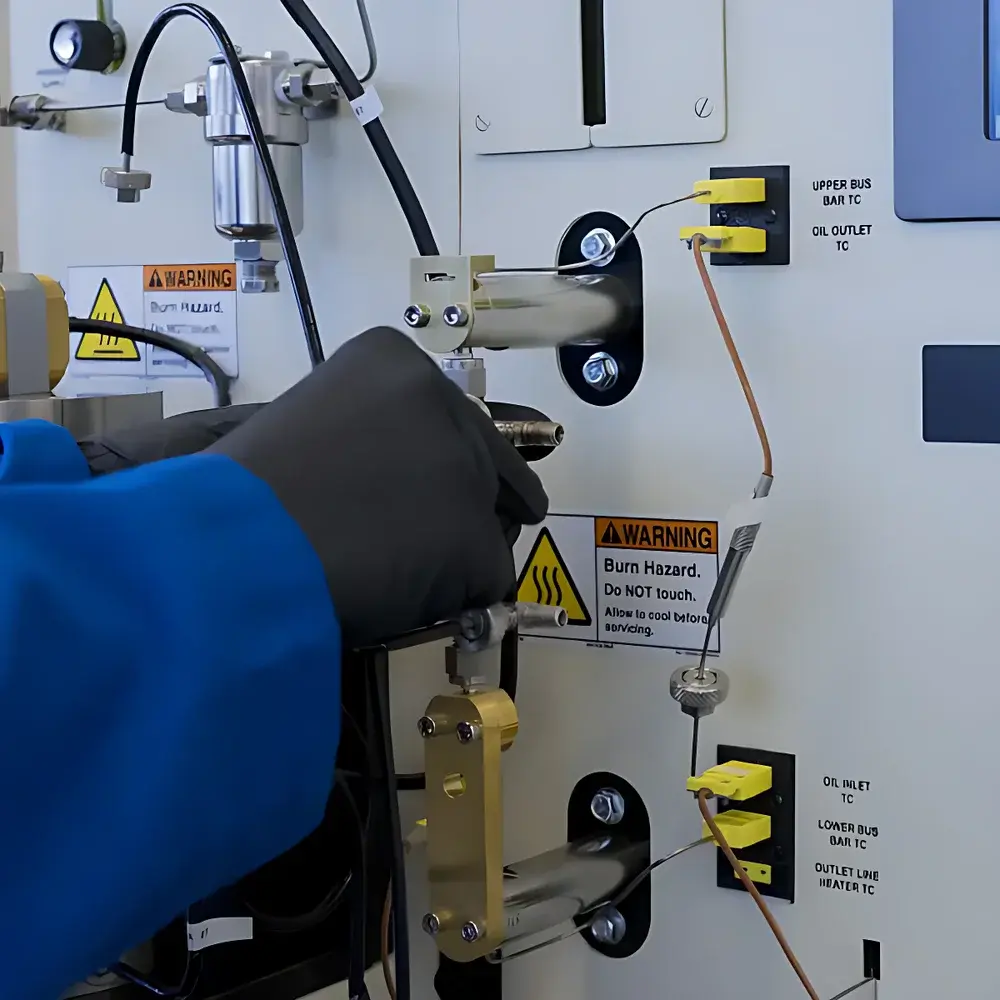
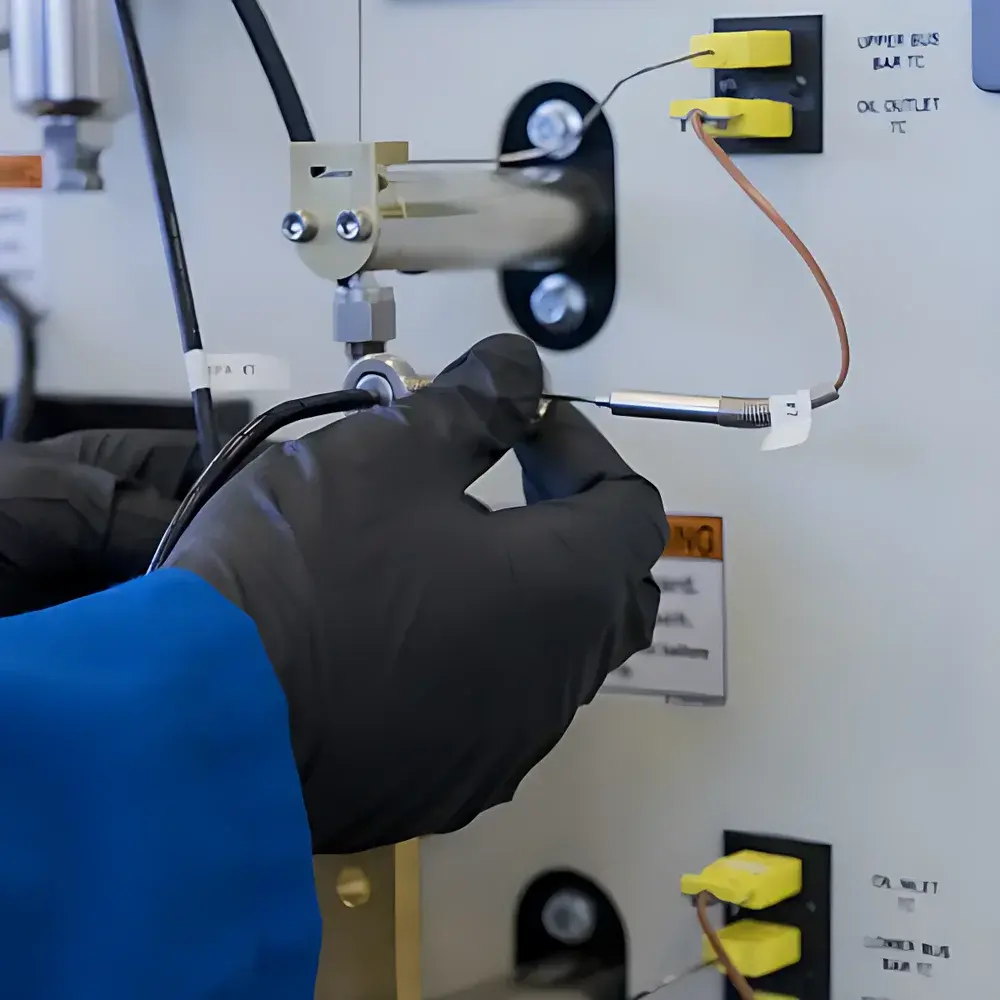
- Automated thermocouple positioning mechanism using stepper motor actuation to map axial temperature profiles along the heated tube length — generating traceable, spatially resolved thermal distribution data
- Dual-zone thermal management: separate control of sample reservoir temperature (100–210 °C) and test tube wall temperature ensures representative pre-heating and avoids premature thermal cracking prior to the active test zone
- Corrosion-resistant 316 stainless-steel fluid path components compliant with aviation-grade cleanliness requirements and compatible with synthetic ester- and polyol-based base stocks
Sample Compatibility & Compliance
The instrument accommodates sample volumes from 100 mL to 1 L, enabling both screening-level evaluations and full qualification testing per OEM and regulatory specifications. It supports all common aviation lubricant chemistries, including diester, polyol ester, and alkylated aromatic formulations. The system architecture and operational protocols are fully aligned with SAE AS5780 (Aerospace Standard for Evaluation of Thermal Oxidative Stability of Aircraft Turbine Engine Lubricants) and referenced test method SAE ARP 5996B. Data acquisition and instrument control logs meet GLP-compliant recordkeeping standards, with optional audit trail configuration supporting FDA 21 CFR Part 11 readiness when integrated with validated LIMS environments.
Software & Data Management
The embedded controller provides real-time monitoring of temperature, pressure, flow rate, elapsed time, and thermocouple position status via a color touchscreen interface. All operational parameters are logged at user-defined intervals (minimum 1-second resolution) and exported in CSV format for post-test analysis. Optional PC-based software enables automated report generation with customizable templates compliant with internal QA documentation requirements. Raw data files include metadata tags for instrument ID, operator ID, calibration certificate numbers, and environmental chamber conditions — facilitating traceability during regulatory audits or technical review submissions to airworthiness authorities.
Applications
- Qualification testing of new lubricant formulations against MIL-PRF-23699G and MIL-PRF-32321D specifications
- Comparative evaluation of antioxidant package efficacy under accelerated thermal stress
- Root-cause analysis of field-reported coking incidents in engine oil systems
- Supporting development of next-generation high-temperature synthetic lubricants for UHPT (Ultra-High Pressure Turbine) applications
- Verification of batch-to-batch consistency in manufacturing quality control laboratories
- Research into deposit adhesion strength, morphology, and elemental composition (when coupled with post-test SEM/EDS analysis)
FAQ
What test standard does the Falex 450-001-002 implement?
SAE ARP 5996B — the definitive dynamic coking test method for aviation lubricants, referenced in SAE AS5780 and military specifications.
Can the system be used for non-aviation lubricants such as industrial turbine oils?
Yes; while optimized for aviation-grade fluids, its operational envelope supports comparative thermal stability testing of other high-performance hydrocarbon and synthetic lubricants.
Is calibration traceable to NIST standards?
All temperature sensors, pressure transducers, and flow meters are supplied with individual calibration certificates traceable to NIST or equivalent national metrology institutes.
What maintenance is required to ensure long-term accuracy?
Annual verification of thermal uniformity across the heated tube, recalibration of flow and pressure sensors, and inspection of fluid-path seals and pump wear components — documented in the included Maintenance Logbook.
Does the system support remote monitoring or integration with plant SCADA systems?
Via optional Ethernet/IP or Modbus TCP interface modules, enabling real-time parameter streaming and alarm notification to centralized control systems.




