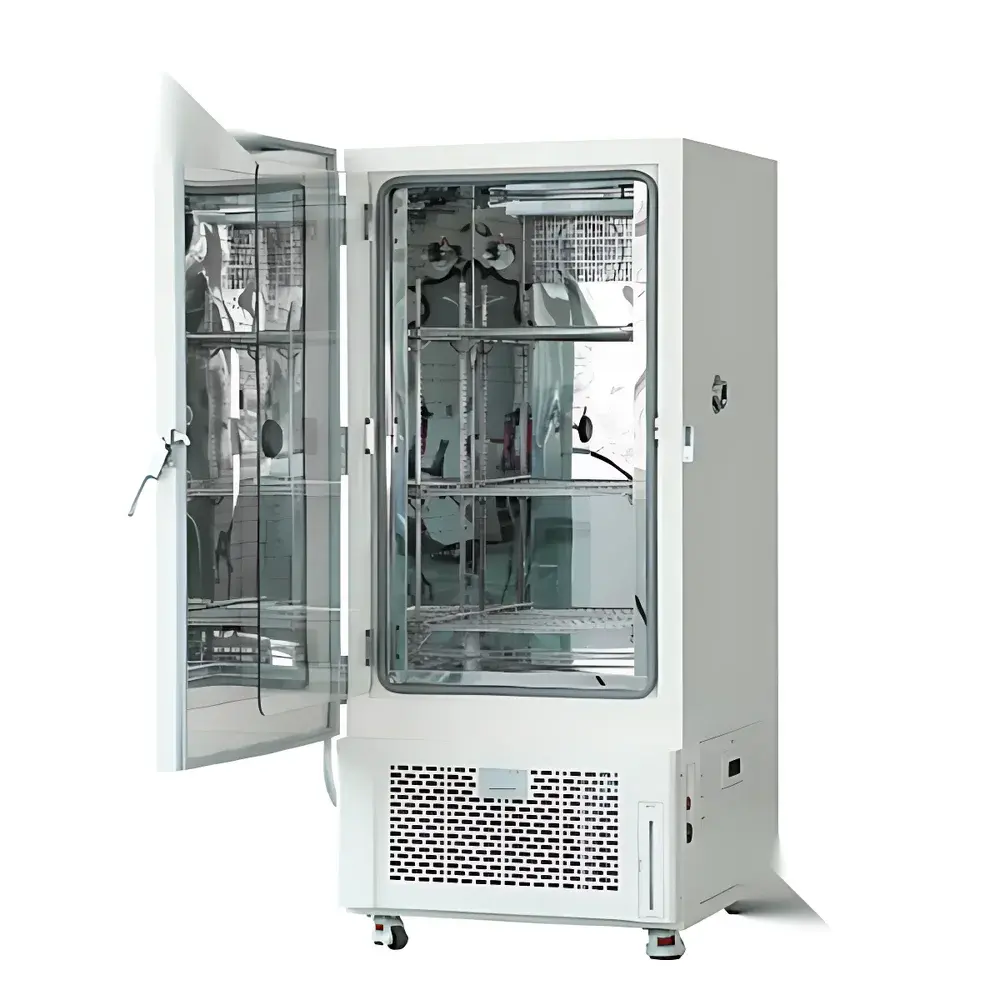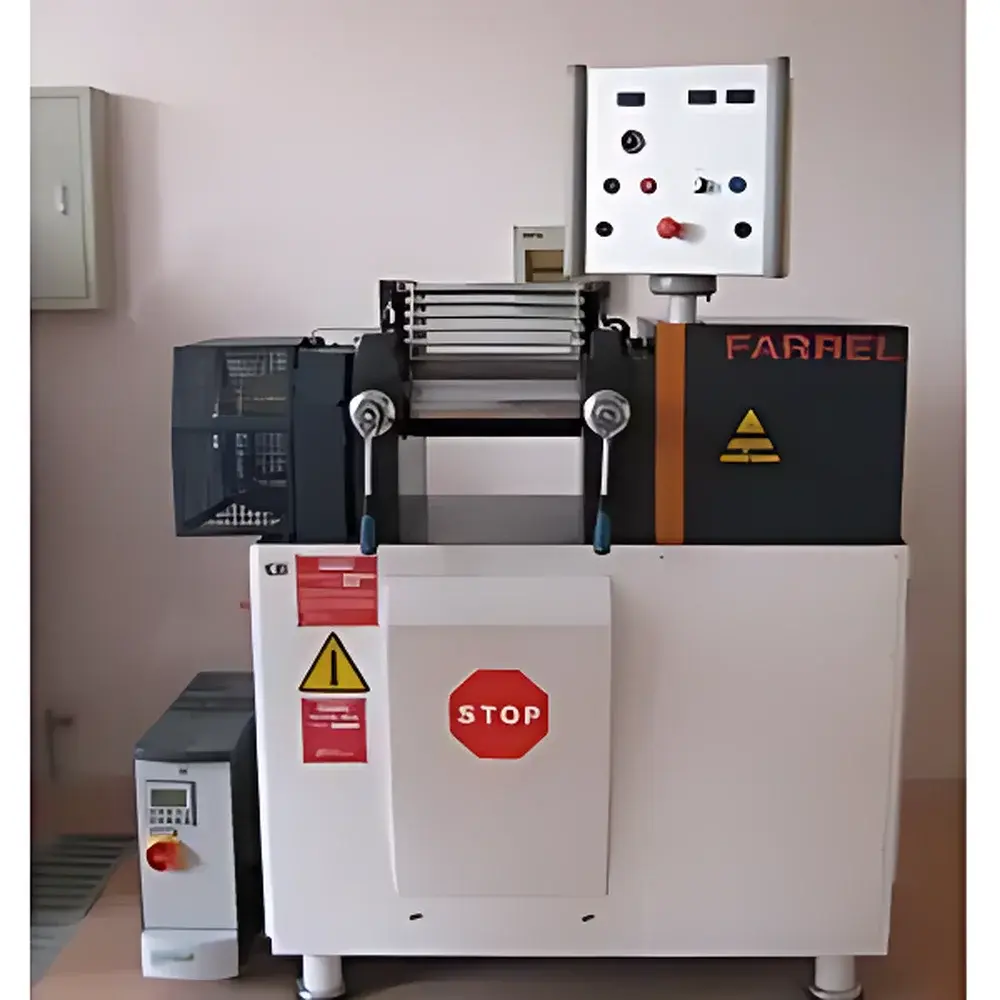
Farrel BR1600-GLT Laboratory-Scale Internal Mixer
| Brand | Farrel |
|---|---|
| Origin | USA |
| Model | BR1600-GLT |
| Type | Batch Internal Mixer |
| Chamber Net Volume | 160 L |
| Standard Fill Capacity (75% @ 1.0 g/cm³) | 120 kg |
| Rotor Type | Tangential ST™/NST™ or Interlocking NR-Series |
| Cooling System | Closed-Loop Water Circulation |
| Drive Configuration | Variable-Speed AC Motor |
| Control Interface | PLC-Based HMI with Recipe Management |
| Compliance | Designed to Support ASTM D3418, ISO 6601, and GLP/GMP-Ready Data Logging |
Overview
The Farrel BR1600-GLT is a laboratory-scale internal mixer engineered for high-fidelity replication of industrial-scale compounding processes. As a direct descendant of the original Banbury® and Intermix® technologies—pioneered by Farrel Corporation—the BR1600-GLT bridges R&D, process development, and pilot production in rubber, thermoplastic elastomer (TPE), and advanced polymer compound formulation. Its 160-liter net chamber volume enables statistically representative batch sizes while maintaining precise thermal and mechanical control over shear history, residence time, and energy input. The mixer operates on two fundamental rotor architectures: tangential (ST™/NST™) for high-shear dispersion of fillers such as carbon black or silica, and interlocking (NR-series) for gentle yet efficient distributive mixing of heat-sensitive polymers or masterbatches. All critical process parameters—including rotor speed (0–60 rpm), chamber wall temperature (±0.5 °C control accuracy), and torque monitoring—are continuously logged and synchronized to time-stamped batch records.
Key Features
- Modular rotor platform supporting both tangential ST™/NST™ and interlocking NR-series configurations for application-specific rheological profiling
- Closed-loop water cooling circuit integrated into chamber walls, rotor shafts, and tip zones—enabling independent thermal zoning across mixing zones
- PLC-controlled hydraulic ram actuation with programmable pressure profiles (0–15 bar) for consistent ram-down force and fill factor repeatability
- Reinforced chamber lining options including tungsten carbide cladding or plasma-sprayed ceramic coatings for abrasive compound formulations
- Large-diameter feed port (Ø420 mm) and bottom-discharge gate with pneumatically actuated sealing system to minimize dust emission and cross-contamination
- Real-time torque, temperature, and power consumption monitoring with ≥10 Hz sampling rate and embedded statistical process control (SPC) triggers
Sample Compatibility & Compliance
The BR1600-GLT accommodates raw materials ranging from natural rubber (NR), SBR, EPDM, and NBR to engineering thermoplastics (e.g., PP, TPU, PC blends) and filled composites containing up to 60 wt% mineral or nano-scale additives. It meets mechanical design criteria referenced in ASTM D3418 (Standard Test Method for Transition Temperatures of Elastomers) and ISO 6601 (Rubber—Determination of Mixing Characteristics). When configured with audit-trail-enabled firmware and user-access controls, the system supports FDA 21 CFR Part 11 compliance for regulated environments. Batch reports include digital signatures, version-controlled recipes, and immutable metadata required for GLP and GMP documentation.
Software & Data Management
The integrated Human-Machine Interface (HMI) runs on a real-time Linux OS with deterministic I/O handling. Operators define multi-stage mixing protocols—including ramped rotor speeds, timed ram sequences, and dynamic temperature setpoints—via drag-and-drop workflow editor. All sensor data are stored in SQLite-based local databases with optional OPC UA server export for integration into MES or LIMS platforms. Raw datasets (torque vs. time, temperature gradients, energy input kJ/kg) are exportable in CSV, HDF5, or ASTM E1447-compliant XML formats. Firmware updates follow IEC 62443-3-3 security guidelines, and password policies enforce role-based access (Operator, Technician, Administrator).
Applications
- Development and scale-up of silica-reinforced tire tread compounds requiring tight control over silane coupling agent dispersion
- Formulation of conductive polymer composites with carbon nanotubes or graphene where localized shear heating must remain below 120 °C
- Batch qualification of recycled rubber crumb blends prior to extrusion or calendering
- Accelerated aging studies using controlled oxidative mixing conditions (e.g., O₂-enriched purge gas integration)
- Validation of rheological models (e.g., Mooney-Rivlin, Cross-WLF) through controlled strain-rate sweeps under constant temperature
FAQ
What rotor configurations are available for the BR1600-GLT?
The unit supports interchangeable tangential ST™/NST™ rotors for high-intensity dispersion and interlocking NR-series rotors optimized for distributive mixing and thermal management.
Can the BR1600-GLT be integrated into an automated lab infrastructure?
Yes—it features native Modbus TCP and optional OPC UA connectivity for seamless integration with SCADA, LIMS, or robotic sample-handling systems.
Is validation documentation provided for IQ/OQ protocols?
Farrel supplies factory-verified calibration certificates for torque transducers and RTD sensors, along with customizable URS templates aligned with ISO 13485 and ASTM E2500.
What maintenance intervals are recommended for continuous operation?
Lubrication of gearboxes and hydraulic systems is scheduled every 1,000 operating hours; chamber seal inspection is advised after every 200 batches or when torque hysteresis exceeds ±3%.