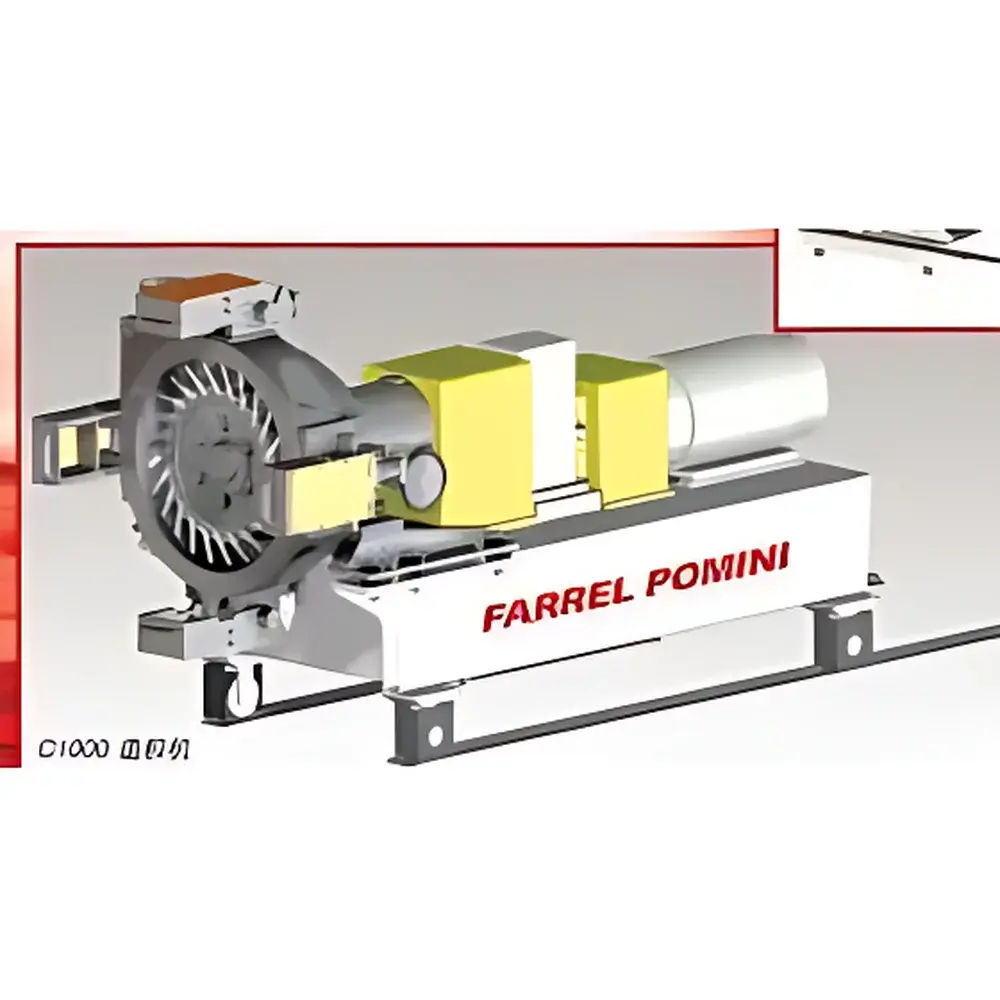
Farrel C1000 Underwater Pelletizer
| Brand | Farrel |
|---|---|
| Origin | USA |
| Model | C1000 |
| Type | Industrial Underwater Pelletizing System |
| Capacity Range | 220–66,000 kg/h (polyethylene & polypropylene) |
| Drive | Hydraulic |
| Cutting Chamber | Quick-Opening Design |
| Alignment | Automatic Hydraulic Axial Alignment |
| Die Plate | Customizable for Wide Polymer Range & Viscosity Profiles |
| Compliance | Designed for ISO 9001-aligned manufacturing environments and compatible with GMP-compliant polymer processing lines |
Overview
The Farrel C1000 Underwater Pelletizer is an industrial-grade polymer pelletizing system engineered for continuous, high-throughput production of uniform thermoplastic granules in extrusion-based compounding and masterbatch operations. Operating on the principle of underwater cutting—where molten polymer strands are extruded through a die plate directly into a temperature-controlled water bath and simultaneously severed by rotating blades—the C1000 delivers precise particle geometry, minimal fines generation, and exceptional batch-to-batch reproducibility. Its robust mechanical architecture integrates hydraulic actuation, real-time thermal compensation, and modular die plate design to accommodate diverse polymer families—including polyolefins (PE, PP), engineering resins (PA, PC, PBT), and filled or reinforced compounds—without compromising dimensional stability or operational uptime.
Key Features
- Hydraulically Actuated Quick-Opening Cutting Chamber: Enables tool-free access to the cutting zone within <60 seconds, minimizing line stoppage during blade replacement or die cleaning.
- Automatic Hydraulic Axial Alignment System: Compensates for thermal expansion-induced head displacement in real time, maintaining ±0.02 mm concentricity between cutter shaft and die plate across operating temperatures from 20 °C to 90 °C.
- Custom Die Plate Engineering: Supports interchangeable die configurations (12–120 holes) with optimized land length and orifice geometry for low-viscosity melts (e.g., LDPE) and high-viscosity systems (e.g., glass-filled PA6), validated per ASTM D3895 and ISO 1133 melt flow index correlation protocols.
- Integrated Hydraulic Clamp Assembly: Applies uniform clamping force (up to 120 kN) across the die face, preventing leakage under pressure differentials up to 10 bar and eliminating gasket degradation common in pneumatic alternatives.
- Tooling-Free Blade Adjustment: Pre-calibrated knife holders ensure repeatable radial positioning without micrometer readouts; blade-to-die gap is maintained at 0.05–0.15 mm via factory-set hydraulic stops.
Sample Compatibility & Compliance
The C1000 accommodates feedstocks ranging from virgin polyolefins and elastomer blends to highly abrasive mineral-filled compounds (up to 40 wt% CaCO₃ or talc) and thermally sensitive biopolymers (PLA, PHA). All wetted components—including stainless steel 316L cutter shafts, hardened alloy tool steels (HRC 60–62) for blades, and EPDM-sealed water circulation manifolds—meet FDA 21 CFR §177.2400 requirements for indirect food contact. The system’s control architecture supports audit-ready data logging aligned with 21 CFR Part 11 (electronic records/signatures), and its mechanical design conforms to ISO 13857 (safety distances) and IEC 60204-1 (electrical safety). Integration with PLC-based extrusion lines enables full traceability per ISO/IEC 17025 calibration management frameworks.
Software & Data Management
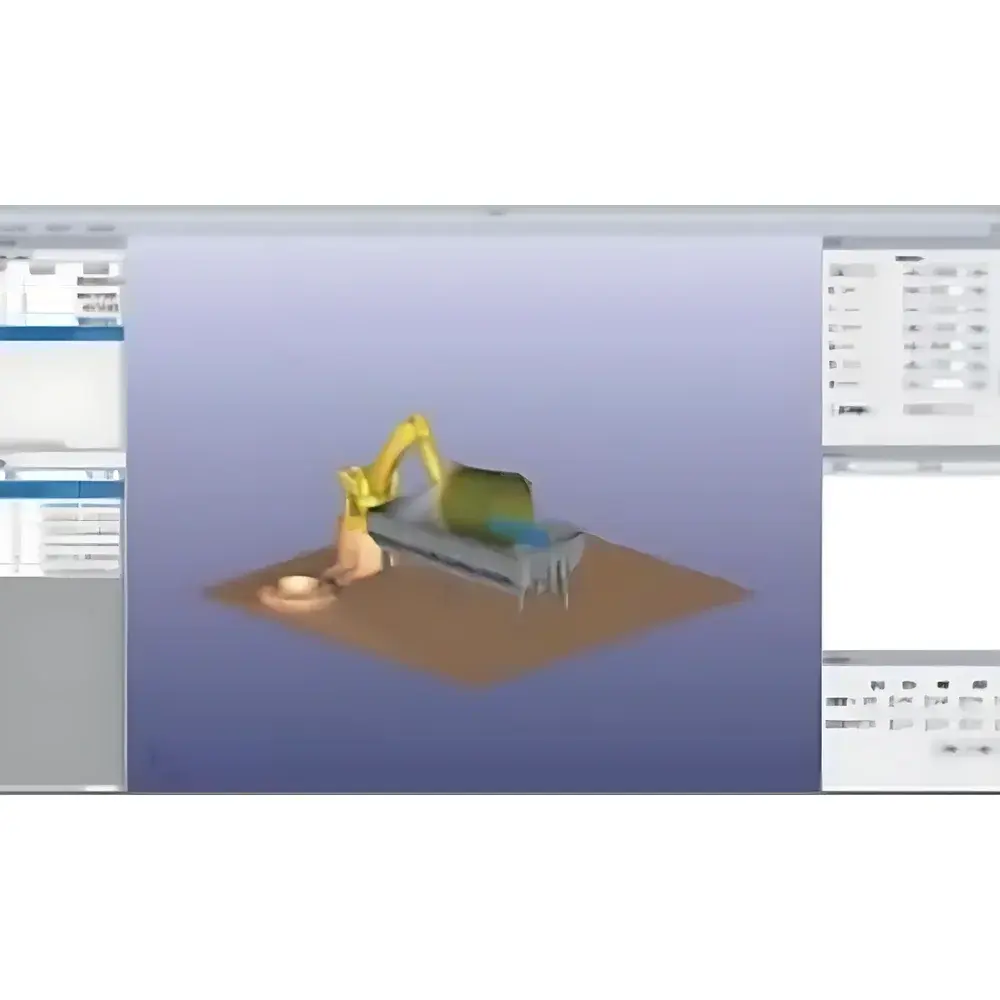
While the C1000 operates as a standalone unit with local HMI (7″ touchscreen, IP65-rated), it provides native Modbus TCP and Profibus DP interfaces for seamless integration into centralized MES/SCADA platforms. Process parameters—including cutter RPM (0–1,200 rpm), water temperature (±0.5 °C setpoint accuracy), and hydraulic pressure (0–200 bar, 0.1 bar resolution)—are logged at 1 Hz intervals and exportable in CSV or OPC UA format. Optional Farrel PelletIQ™ software adds statistical process control (SPC) dashboards, predictive maintenance alerts (based on hydraulic cycle count and temperature hysteresis), and deviation reporting against user-defined particle size distribution (PSD) targets per ISO 13320 laser diffraction validation.
Applications
- High-volume PE/PP pellet production for pipe, film, and injection molding grades
- Masterbatch manufacturing requiring narrow PSD (D90/D10 ≤ 1.8) and low dust content (<0.05 wt%)
- Recycled polymer reprocessing with variable melt viscosity and contaminant load
- Specialty compound lines involving flame-retardant, conductive, or UV-stabilized formulations
- GMP-compliant pharmaceutical polymer excipient granulation (non-sterile)
FAQ
What polymers are compatible with the C1000 system?
Polyethylene (LDPE, HDPE, LLDPE), polypropylene (homopolymer, copolymer), ABS, PS, PET, PA6/66, PBT, TPU, and filled compounds including glass fiber, calcium carbonate, and carbon black—subject to melt temperature and shear sensitivity constraints.
Is the C1000 suitable for laboratory-scale development?
No—the C1000 is a production-scale system with minimum throughput of 220 kg/h; Farrel offers the C200 series for pilot-line and R&D applications.
How often does the cutting blade require replacement?
Blade life ranges from 200–1,000 operating hours depending on polymer abrasivity, filler content, and nominal cut speed; automated wear monitoring is available via optional vibration sensors.
Can the system be retrofitted into existing extrusion lines?
Yes—standardized flange interfaces (DIN 2501, PN16), modular base frames, and configurable water return routing support integration with single-screw, twin-screw, and corotating extruders from major OEMs.
Does Farrel provide validation documentation for GMP environments?
Yes—Factory Acceptance Testing (FAT) reports, IQ/OQ protocols, and material traceability dossiers (including EN 10204 3.1 certificates) are supplied upon request.