
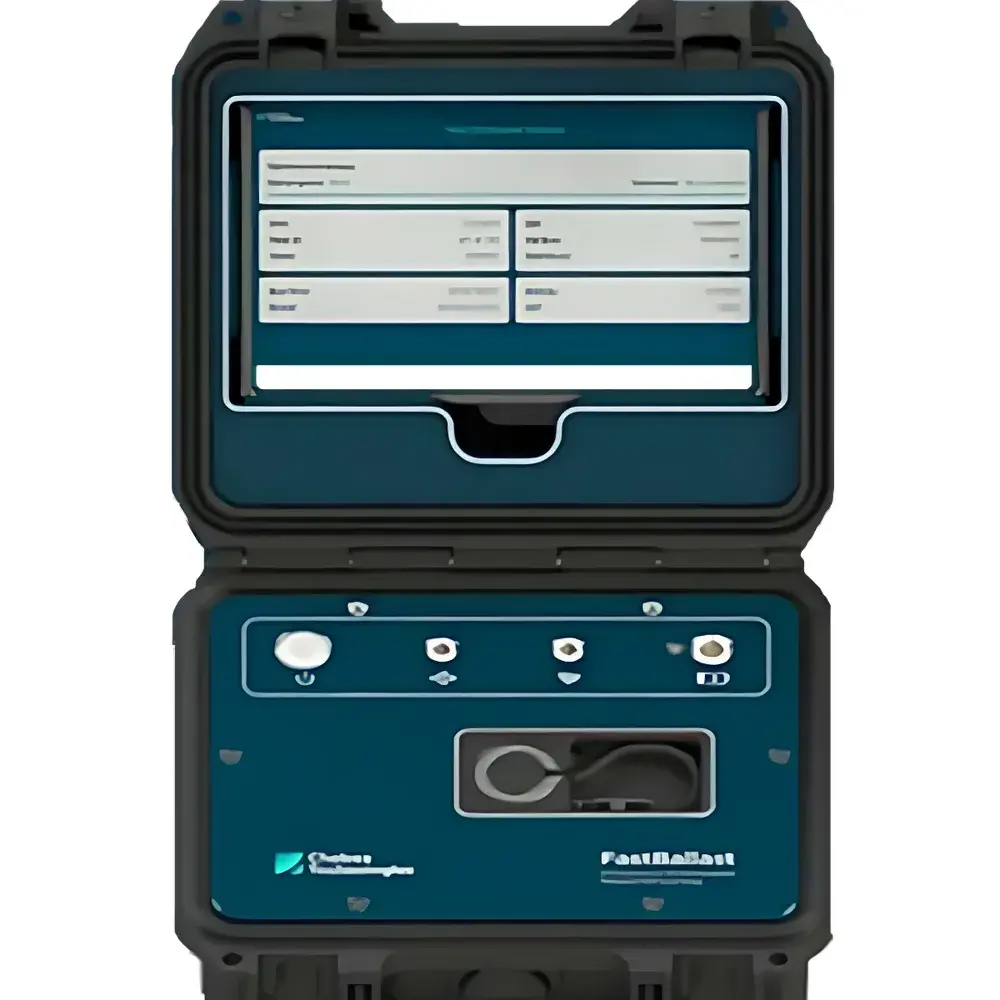
FastBallast Chlorophyll a and Algae Analyzer by Chelsea Technologies
| Brand | Chelsea |
|---|---|
| Origin | UK |
| Model | FastBallast |
| Detection Principle | Single-Turnover Active Fluorescence (STAF) |
| Measurement Range | 10–50 µm |
| Sensitivity | <1 cell/mL |
| Dynamic Range | 0–4000 cells/mL |
| Sample Volume | 20 mL |
| Analyzed Volume | 0.5 mL |
| Test Duration | <2 min (Level 1), <10 min (Level 2) |
| Dimensions | 273 × 246 × 122 mm |
| Weight | 4.5 kg |
| IP Rating (lid closed) | IP68 |
| Battery Life | 8 h continuous operation |
| Connectivity | Bluetooth / USB |
| Warranty | 1 year |
Overview
The FastBallast Chlorophyll a and Algae Analyzer is a portable Compliance Monitoring Device (CMD) engineered for rapid, field-deployable verification of ballast water treatment system (BWTS) performance against the International Maritime Organization’s (IMO) Ballast Water Management Convention Regulation D-2. It implements Chelsea Technologies’ proprietary Single-Turnover Active Fluorescence (STAF) methodology—a physiologically grounded optical technique that quantifies viable phytoplankton cells based on functional photosystem II (PSII) activity, rather than passive pigment concentration or morphological assumptions. Unlike conventional chlorophyll-a fluorometers or flow cytometers, FastBallast delivers size-resolved, viability-based enumeration of living phytoplankton within the critical 10–50 µm regulatory size class without chemical reagents, filtration, or laboratory infrastructure. Its design directly addresses the limitations of fixed fluorescence-per-cell (Fv/cell) assumptions—wherein natural physiological variability across species and environmental conditions introduces >100-fold uncertainty in cell density estimates. By integrating multi-tiered fluorescence kinetics analysis with empirical calibration against reference cultures and field-collected samples, FastBallast achieves measurement accuracy comparable to accredited shore-based laboratories while operating onboard vessels or at port inspection facilities.
Key Features
- Three-tiered STAF assay protocol: Level 1 (<2 min) for rapid pass/fail screening; Level 2 (<10 min) for quantitative, size-independent cell enumeration; Level 3 for detection bias correction in mixed-size assemblages
- No consumables required: Eliminates reliance on dyes, fixatives, filters, or calibration standards—reducing operational cost and logistical burden
- Robust field architecture: IP68-rated enclosure ensures reliable operation in high-humidity, saline, and vibration-prone marine environments
- Integrated tablet interface: Preloaded FastBallast software provides guided workflows, real-time data visualization, audit-ready reporting, and automatic compliance flagging per IMO D-2 thresholds
- Battery-powered autonomy: Internal rechargeable Li-ion battery supports eight hours of continuous operation—enabling full shift coverage without external power
- Traceable metrology: Each instrument is factory-calibrated using NIST-traceable PSII reference standards; calibration certificates and uncertainty budgets provided
Sample Compatibility & Compliance
FastBallast is validated for use with untreated, treated, and recirculated ballast water from diverse salinity regimes (0–40 PSU) and turbidity levels (<100 NTU). It detects viable eukaryotic phytoplankton—including diatoms, dinoflagellates, and cryptophytes—within the IMO-defined D-2 size fraction (10–50 µm). The system complies with ISO 3725:2023 “Water quality — Determination of viable phytoplankton in ballast water — Method using active fluorescence”, and meets the technical requirements outlined in IMO BWM.2/Circ.78 “Guidelines for approval of ballast water management systems”. Data outputs support GLP-compliant recordkeeping and are structured to align with electronic reporting formats mandated under Port State Control (PSC) inspection protocols. Instrument firmware and software are designed to meet FDA 21 CFR Part 11 requirements for electronic records and signatures where applicable.
Software & Data Management
The FastBallast software suite runs on an integrated Android tablet with preconfigured user roles (Operator, Supervisor, Auditor), configurable pass/fail thresholds, and tamper-evident digital logs. All measurements include embedded metadata: GPS coordinates, timestamp, operator ID, salinity/temperature inputs, and raw fluorescence decay curves. Reports are exportable in PDF and CSV formats, with optional integration into vessel management systems via secure API. Audit trails record every parameter change, result modification, or calibration event—supporting regulatory inspections and internal QA/QC reviews. Software updates are delivered over-the-air and undergo version-controlled validation per IEC 62304 Class B medical device software standards, adapted for marine instrumentation integrity assurance.
Applications
- Port State Control (PSC) inspections for rapid verification of D-2 compliance prior to vessel departure or entry
- Onboard BWTS performance monitoring during commissioning, routine maintenance, and operational audits
- Independent third-party verification testing for BWTS type approval and renewal surveys
- Research applications in marine biofouling risk assessment and phytoplankton community dynamics under ballast water treatment stress
- Training and competency assessment for shipboard officers and PSC inspectors under IMO Model Course 1.39
FAQ
Does FastBallast require laboratory validation before deployment?
No. Each unit ships with a full factory calibration certificate and reference validation report. Field verification using certified reference material (CRM) is recommended quarterly or after major maintenance.
Can FastBallast distinguish between viable and non-viable cells in aged or stressed populations?
Yes. STAF measures the quantum yield of photochemical energy conversion in PSII—functionally active only in metabolically intact cells. Cells with compromised membranes or inhibited electron transport do not generate measurable turnover fluorescence.
Is the system compatible with existing ballast water management documentation systems?
Yes. Exported reports conform to IMO’s standardized D-2 reporting template (MEPC.252(66)) and support automated ingestion into maritime e-reporting platforms such as THETIS-MRV and Port Community Systems.
What maintenance is required between deployments?
Routine cleaning of the optical cuvette and flow path with deionized water; annual recalibration at Chelsea-certified service centers; battery health check every six months.
Related Products







