
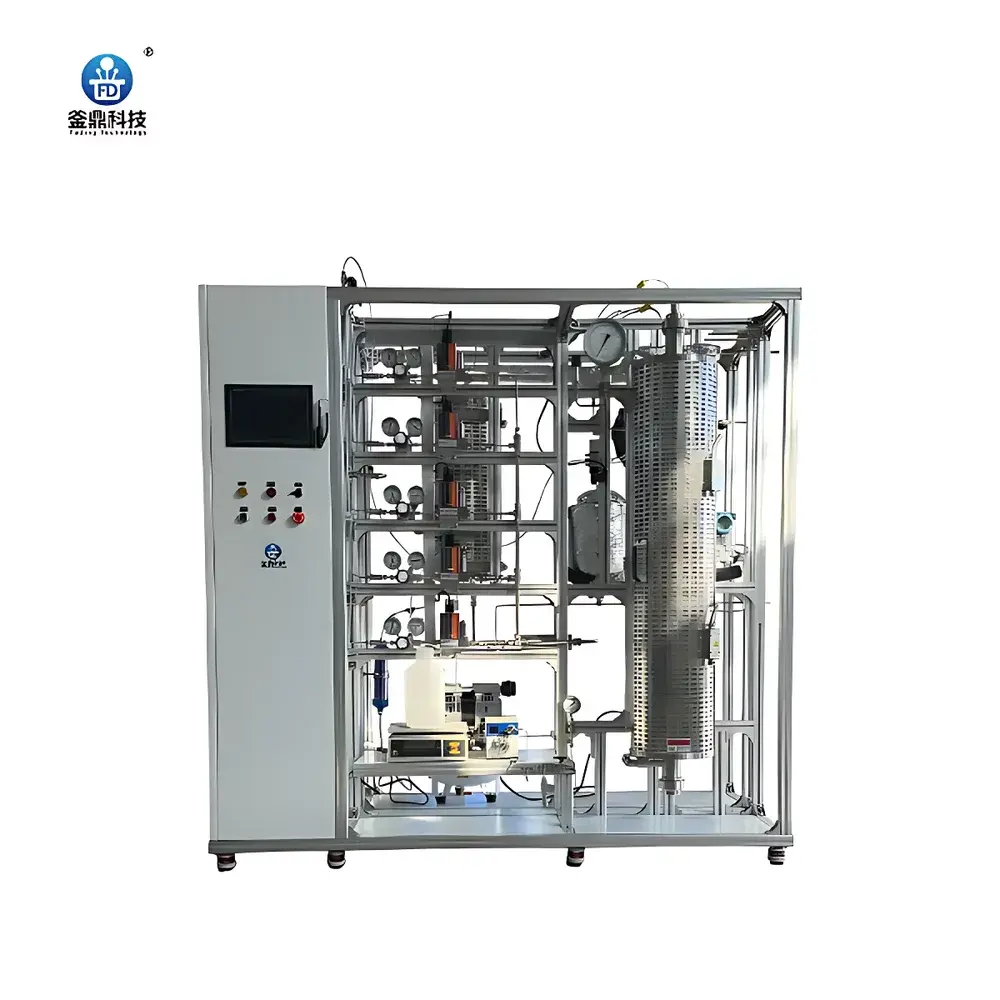
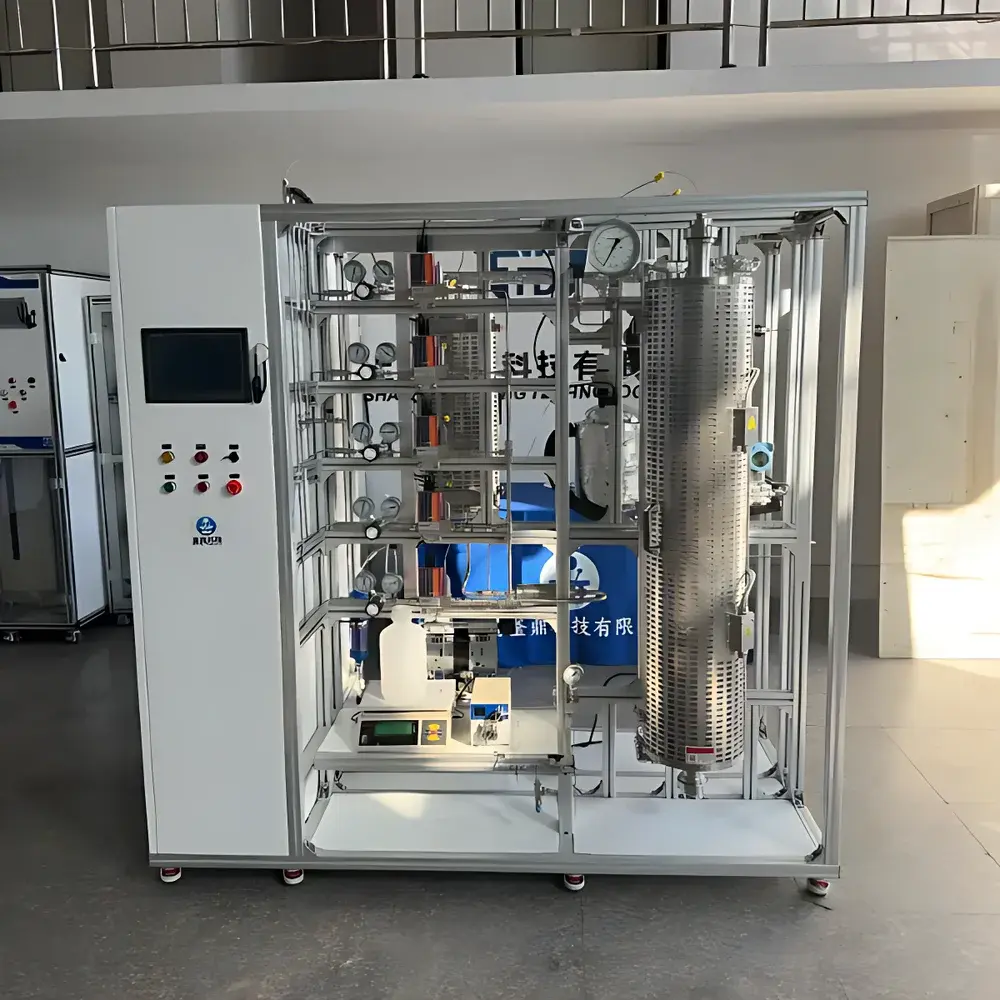
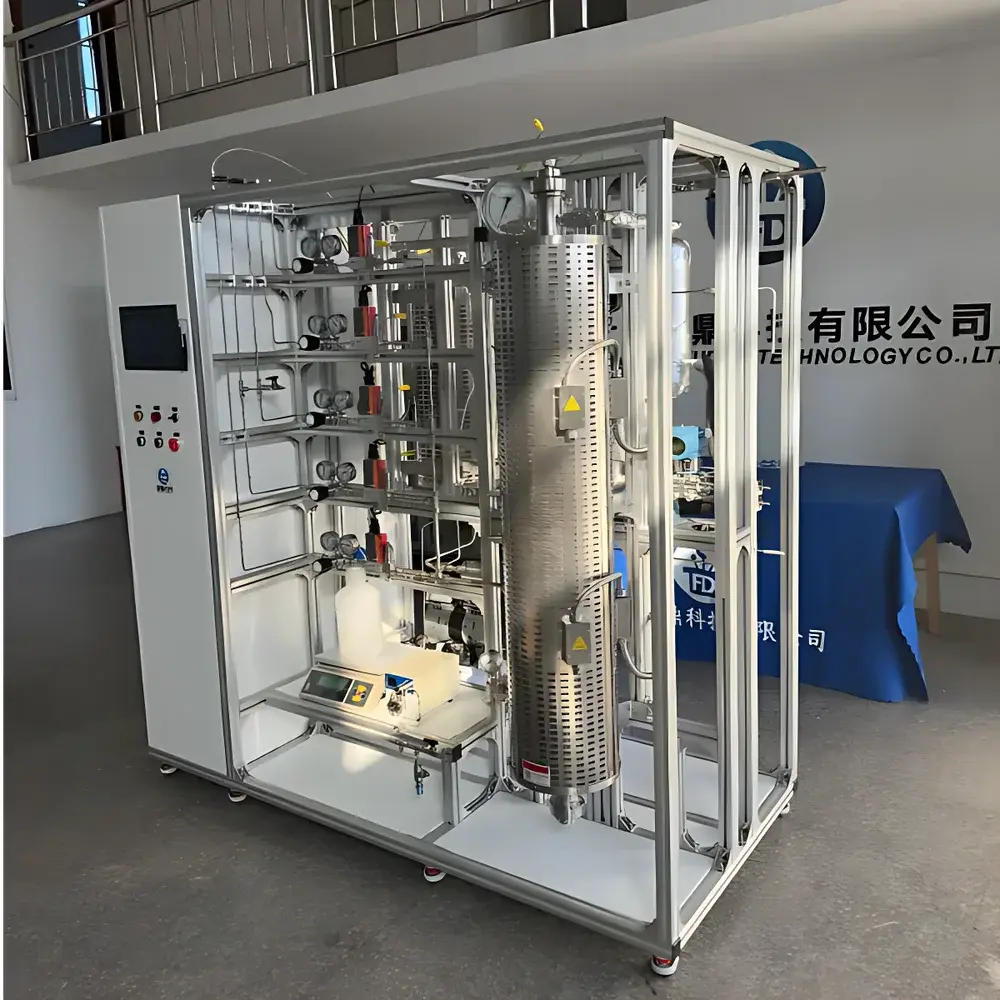
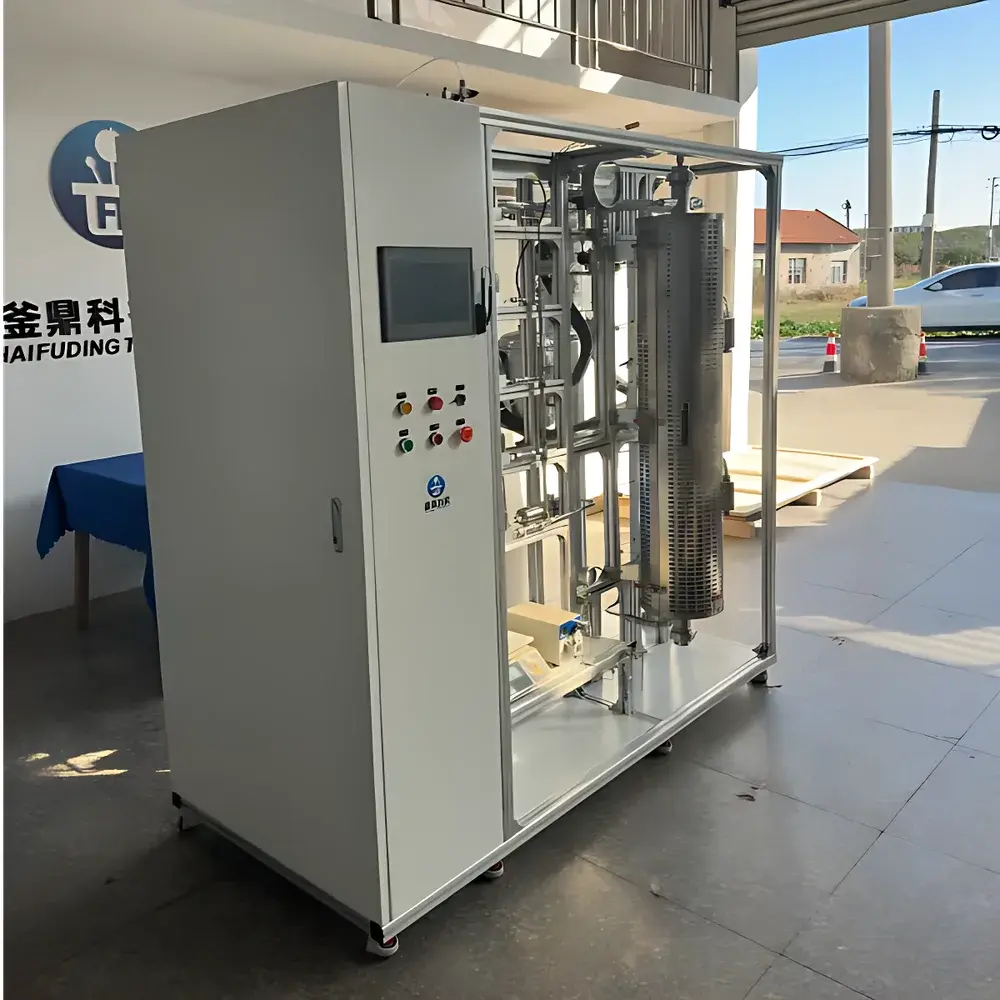
FD Catalyst FDGDC-1L Small-Scale Counter-Flow Catalytic Reactor (CFRR) System
| Brand | FD |
|---|---|
| Origin | Shanghai, China |
| Manufacturer | FD Catalyst Co., Ltd. |
| Model | FDGDC-1L |
| Design Pressure | 0.3 MPa |
| Maximum Operating Temperature | 750 °C |
| Catalyst Bed Volume | 1 L |
| Reactor Material | 316L Stainless Steel |
| Aspect Ratio (H/D) | ≥8:1 |
| Temperature Range | Ambient to 850 °C |
| Design Temperature | 900 °C |
| Feed Configuration | 1 Liquid + 5 Gas Inlets (N₂ purge included) |
| Gas Flow Rates | Air (30 NL/min), O₂ (6 NL/min), N₂ (24 NL/min), CH₄ (1 NL/min), H₂S (1 NL/min) |
| Control System | PLC + PC-based HMI |
| Optional Integrated Modules | Condenser + Gas-Liquid Separator + Online GC |
Overview
The FD Catalyst FDGDC-1L Small-Scale Counter-Flow Catalytic Reactor (CFRR) System is an engineered laboratory-scale platform designed for rigorous kinetic evaluation, catalyst screening, and process parameter optimization under continuous-flow conditions. Unlike conventional fixed-bed or co-current reactors, the FDGDC-1L implements a true counter-current flow architecture—where gaseous or liquid reactants flow axially opposite to the direction of solid catalyst movement (or staged catalyst zones)—to maximize interfacial contact time, minimize concentration gradients, and mitigate external mass-transfer limitations. This configuration is especially effective for exothermic reactions, fast surface kinetics, or systems involving high-viscosity feedstocks or condensable intermediates. The reactor core is constructed from ASTM A240 316L stainless steel, rated for sustained operation up to 750 °C and 0.3 MPa, with a validated design margin extending to 900 °C for short-term thermal qualification. Its high aspect ratio (≥8:1) ensures plug-flow behavior and uniform radial temperature distribution when coupled with multi-zone PID-controlled heating sleeves.
Key Features
- True counter-flow hydrodynamic configuration enabling extended residence time and enhanced gas–solid mass transfer efficiency
- Modular, scalable architecture supporting rapid reconfiguration for different catalyst forms—including pellets, extrudates, monoliths, and structured packings
- Integrated multi-gas/liquid feed system with independent mass flow controllers (MFCs) and calibrated pressure regulators for precise stoichiometric control
- Redundant safety layers: burst disc, pressure relief valve, thermocouple-based overtemperature cutoff, and real-time gas leak detection via integrated H₂S/O₂ sensors
- PLC-based automation with OPC UA-compliant communication protocol, enabling seamless integration into centralized lab control networks or MES environments
- Optional factory-integrated downstream train: thermostatically controlled condenser, phase separator with level monitoring, and certified GC interface (e.g., Agilent 7890/8890-ready)
Sample Compatibility & Compliance
The FDGDC-1L accommodates heterogeneous catalysts in standard physical formats—0.5–5 mm diameter pellets, 10–50 mm length extrudates, or ceramic/metallic monoliths with cell densities ranging from 100 to 600 cpsi. It supports both reducing and oxidizing atmospheres, including corrosive feeds containing H₂S, SO₂, NH₃, or steam. All wetted components comply with ASME BPVC Section VIII Div. 1 for pressure equipment certification. The system meets functional requirements for GLP-compliant catalyst testing per OECD TG 113 and ASTM D3226 (catalyst activity measurement). When equipped with audit-trail-enabled software and electronic signatures, it satisfies data integrity prerequisites under FDA 21 CFR Part 11 for regulated R&D workflows.
Software & Data Management
The system operates via FD-CatControl™ v3.2—a Windows-based SCADA application with deterministic sampling at ≤100 ms intervals. It provides synchronized acquisition of temperature profiles (up to 12 T/C inputs), pressure transducer readings, MFC setpoints/actuals, and optional GC chromatogram timestamps. Raw data are stored in HDF5 format with embedded metadata (operator ID, batch tag, calibration IDs), supporting traceability and post-hoc kinetic modeling (e.g., Langmuir-Hinshelwood regression in MATLAB or Python). Export modules generate ASTM E2500-compliant test reports and CSV/Excel-compatible datasets for third-party kinetic solvers such as Cantera or Reaction Workbench.
Applications
- Deactivation kinetics studies under realistic aging conditions (e.g., sulfur poisoning, coking, sintering)
- Transient response analysis (TAP, step-change, pulse experiments) for intrinsic rate determination
- Multi-variable optimization of space velocity (GHSV/LHSV), temperature ramping protocols, and redox cycling profiles
- Validation of microkinetic models prior to pilot-scale reactor design
- Regenerability assessment via in-situ oxidative/reductive treatment cycles with real-time CO₂/H₂O evolution monitoring
- Academic research on Fischer-Tropsch synthesis, selective catalytic reduction (SCR), hydrodesulfurization (HDS), and CO₂ hydrogenation
FAQ
What catalyst bed geometries are supported by the FDGDC-1L?
The reactor accepts cylindrical catalyst beds with diameters from 25 to 50 mm and heights up to 400 mm, accommodating total volumes of 1.0 ± 0.05 L. Custom liners for tapered or segmented beds are available upon request.
Can the system operate under vacuum or inert purge conditions?
Yes—the integrated N₂ purge line (24 NL/min, adjustable) enables full inertization, while the back-pressure regulator supports operation down to 5 kPa(a) absolute pressure.
Is remote monitoring and control possible?
Standard Ethernet/IP connectivity allows secure remote access via VPN; VNC or TeamViewer sessions may be configured for technical support under IT policy approval.
What documentation is provided with the system?
Each unit ships with Factory Acceptance Test (FAT) report, material certifications (EN 10204 3.1), electrical safety certificate (IEC 61000-6-4), and full operational manual including maintenance schedules and spare parts list.
How is temperature uniformity verified across the catalyst zone?
Pre-delivery thermal mapping is performed using 9-point calibrated thermocouples under nominal load; axial deviation is guaranteed ≤±2.5 °C within the active bed region.



