
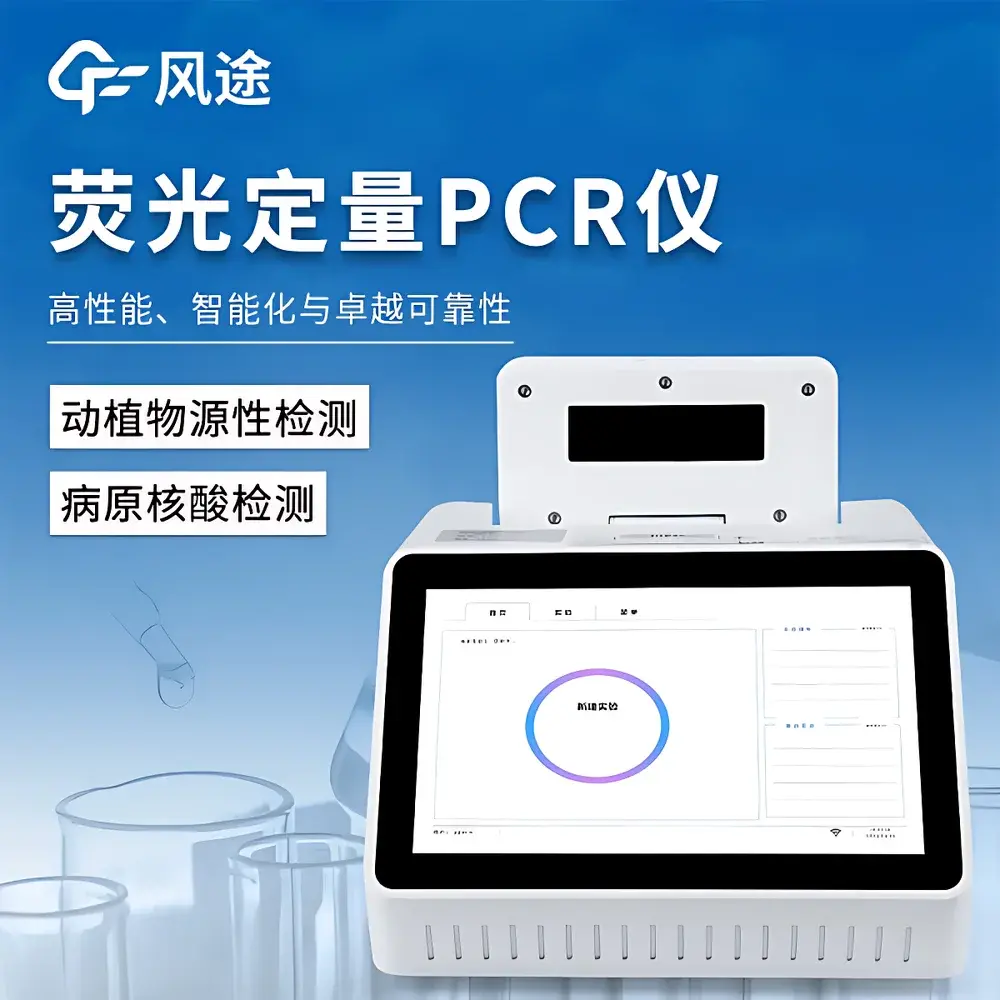
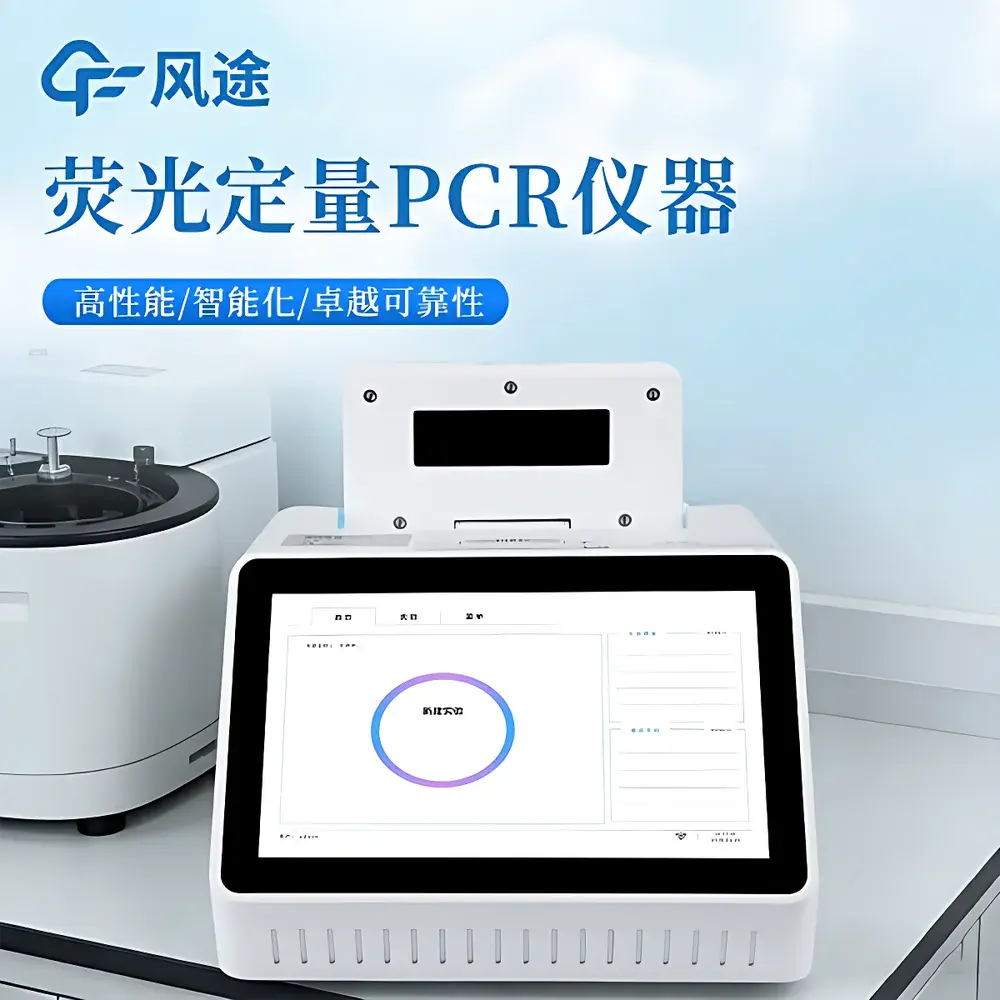
Fengtu FT-P108 Single-Channel 8-Well Real-Time Fluorescence Quantitative PCR System
| Brand | Fengtu |
|---|---|
| Origin | Shandong, China |
| Manufacturer Type | Authorized Distributor |
| Product Origin | Domestic (China) |
| Model | FT-P108 |
| Price | USD 4,500 (FOB Qingdao) |
| Sample Capacity | 8 × 0.2 mL tubes |
| Temperature Range | 4–99 °C |
| Thermal Accuracy | ±0.1 °C |
| Temperature Uniformity | ≤±0.25 °C |
| Max Heating/Cooling Rate | 5.5 / 5.0 °C/s |
| Excitation Wavelength | 460–480 nm |
| Emission Detection Range | 505–525 nm |
| Sensitivity | Single-copy DNA detection |
| Dynamic Range | 10¹–10¹⁰ copies |
| Linearity (R²) | ≥0.999 |
| Inter-well CV | <1% |
| Supported Chemistries | SYBR Green I, FAM |
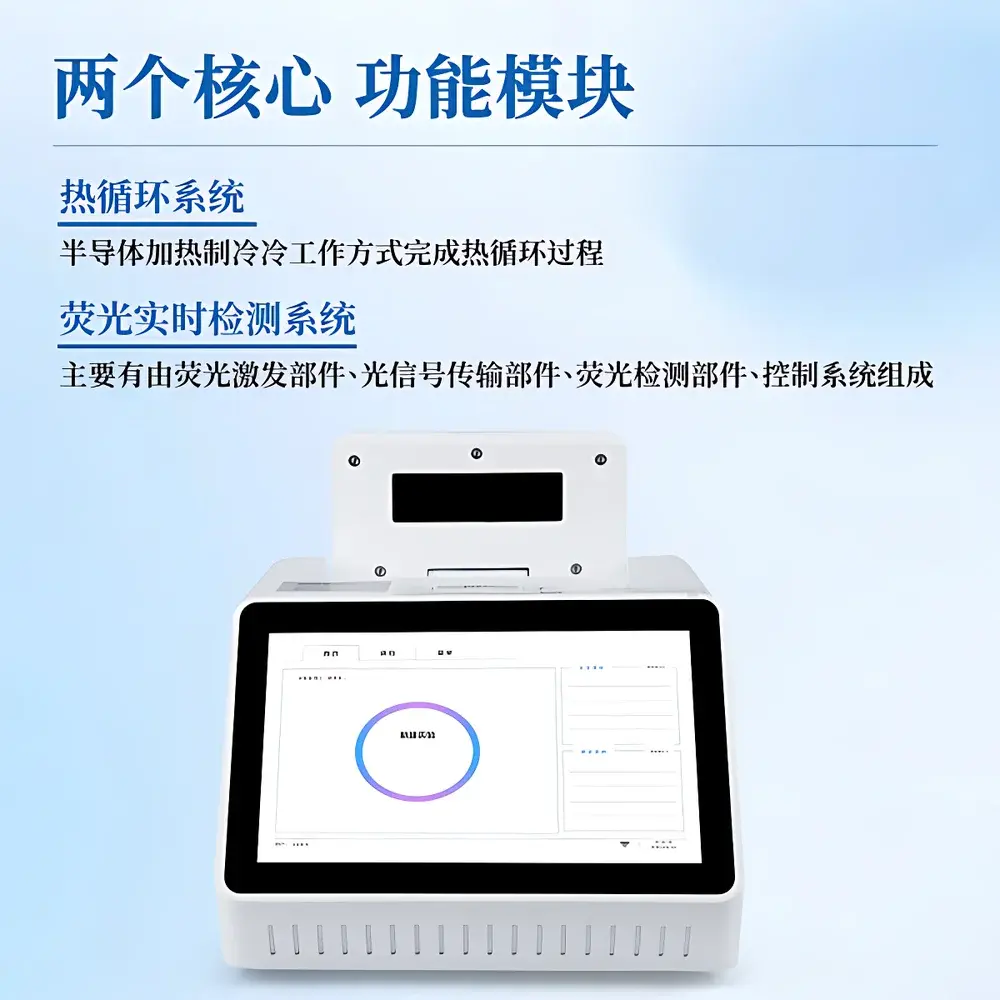
| Optical System | High-power LED + Photodiode detector |
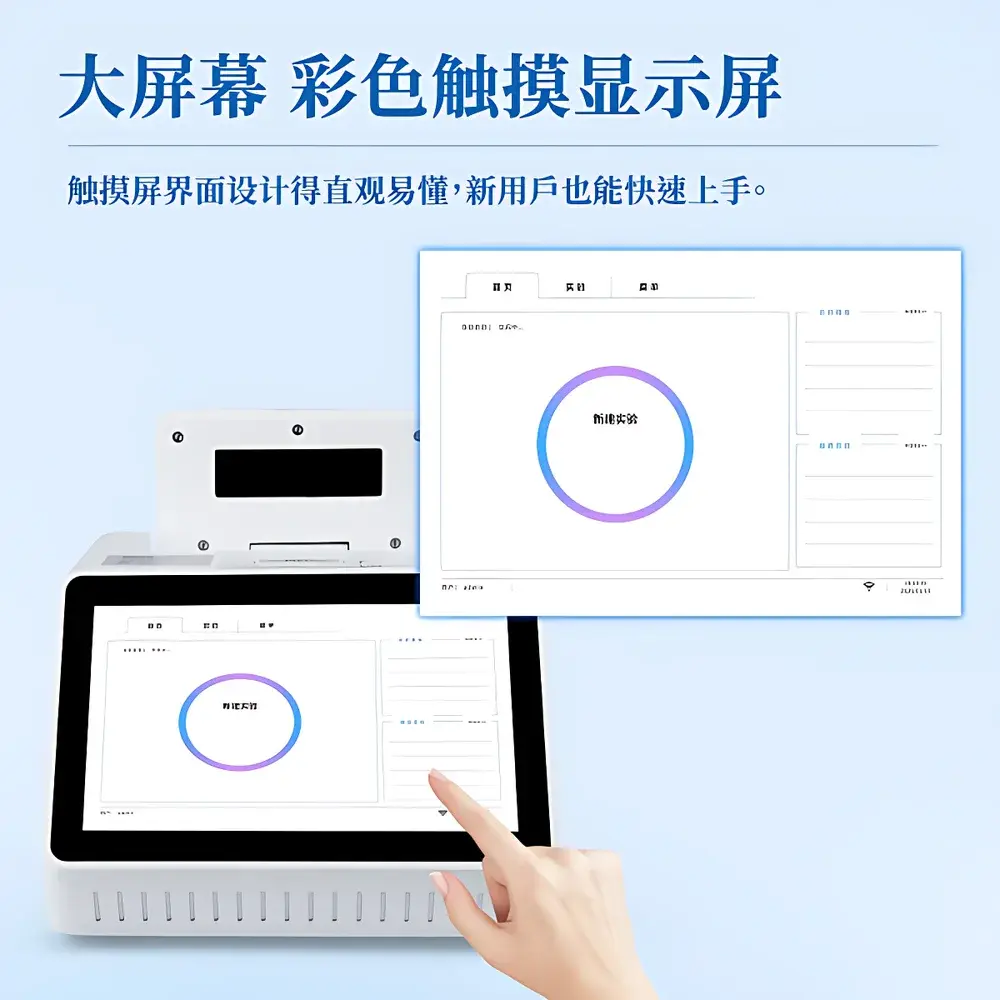
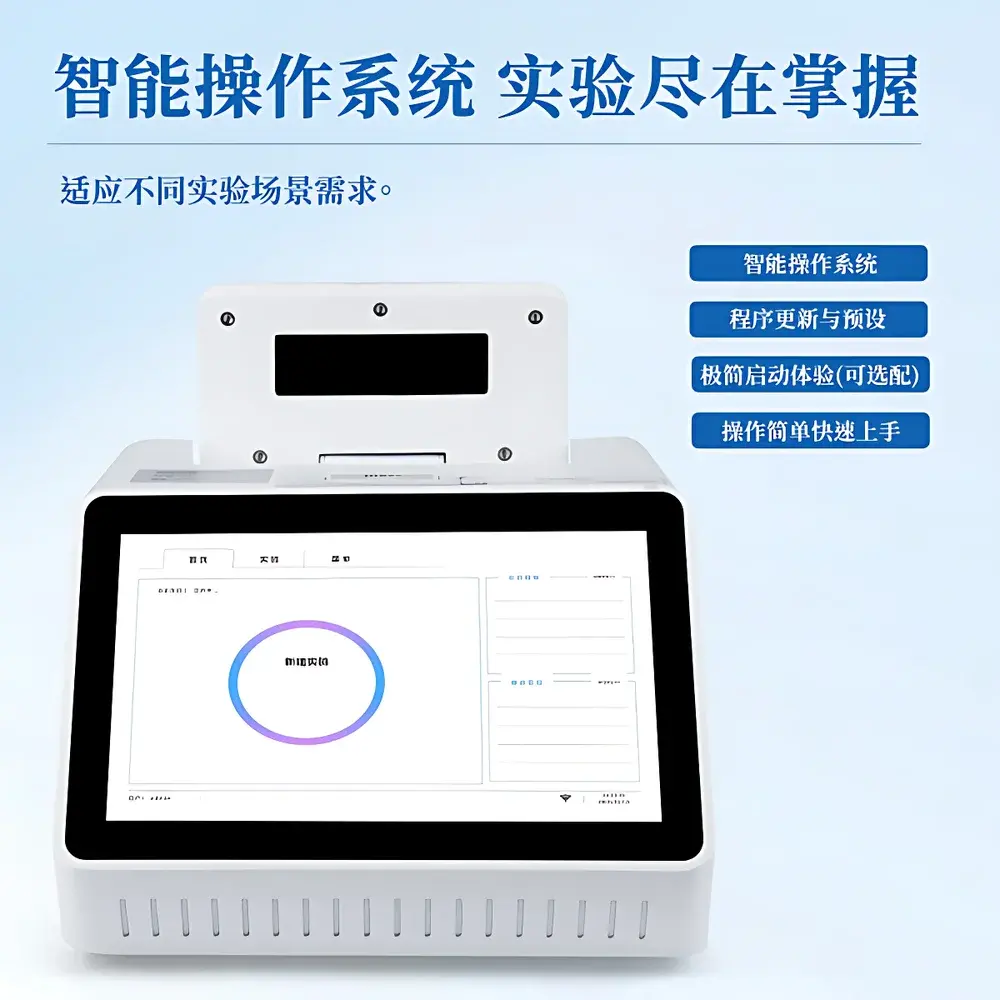
| Control Interface | Built-in Android touchscreen + PC software |
| Data Export | CSV, PDF, Excel |
| Compliance | CE-marked, ISO 13485-aligned design principles |
Overview
The Fengtu FT-P108 is a compact, single-channel real-time quantitative PCR (qPCR) system engineered for precision, reproducibility, and operational resilience in resource-conscious laboratory environments—particularly those serving animal husbandry, veterinary diagnostics, food safety surveillance, and field-deployable molecular testing. It operates on the principle of sequence-specific fluorescence detection during thermal cycling, leveraging solid-state LED excitation (460–480 nm) and narrow-band photodiode-based emission capture (505–525 nm) to quantify nucleic acid amplification in real time. Unlike multi-channel platforms requiring complex optical alignment and frequent recalibration, the FT-P108 adopts a fixed-optics architecture with per-well uniform light path geometry—eliminating inter-channel variability and obviating routine optical calibration. Its Peltier-driven aluminum reaction block ensures rapid thermal transitions (up to 5.5 °C/s heating, 5.0 °C/s cooling), while high-stability PT1000 sensors deliver temperature accuracy within ±0.1 °C and inter-well uniformity better than ±0.25 °C across all eight positions. Designed for long-term deployment in mobile labs, regional veterinary clinics, and feed-testing facilities, the instrument integrates industrial-grade thermal management, corrosion-resistant housing, and sealed electronics to prevent condensation ingress—extending service life beyond 10 years under routine use.
Key Features
- Single-channel, 8-well configuration optimized for targeted assays—ideal for pathogen screening (e.g., ASFV, PEDV, Brucella spp.), GMO verification, and meat-species authentication where assay multiplexing is unnecessary.
- Fixed-optics detection architecture: No moving parts, no lamp replacement, no optical recalibration—LED source lifetime exceeds 50,000 hours; photodiode detector requires zero maintenance over instrument lifetime.
- High-fidelity thermal control: Dual-stage TEC module with adaptive PID algorithm ensures stable ramping profiles and minimal overshoot; thermal cycler validated for ≤0.5 Ct variation across replicates (CV <1%) using standardized plasmid dilution series.
- Embedded Android OS with intuitive touchscreen interface: Supports offline operation, pre-loaded assay templates (e.g., SYBR Green-based detection of porcine circovirus type 2), and on-device baseline/threshold auto-calculation per run.
- Modular data handling: Local USB export (FAT32-formatted drives), Wi-Fi-enabled transfer to LIMS or network-attached storage, and direct printing via USB thermal, Bluetooth, or A4-compatible printers—all without external software dependencies.
- Robust mechanical design: 4.2 kg mass, shock-absorbing chassis, and IP20-rated enclosure meet transport durability requirements per IEC 60068-2-6 (vibration) and IEC 60068-2-27 (shock).
Sample Compatibility & Compliance
The FT-P108 accepts standard 0.2 mL single tubes and 8-well strip tubes—compatible with open-format reagents from major global suppliers (e.g., Thermo Fisher TaqMan, Bio-Rad SsoAdvanced, Qiagen QuantiTect). Its thermally isolated sample block prevents condensate migration onto Peltier elements, satisfying long-term reliability expectations outlined in ISO/IEC 17025:2017 Clause 5.5.2 (equipment suitability). While not FDA 510(k)-cleared, its hardware and firmware architecture aligns with key elements of ICH Q5A(R2) and OIE Terrestrial Manual Chapter 2.7.12 (molecular diagnostic validation), particularly regarding thermal homogeneity, signal linearity (R² ≥ 0.999 over 10-log range), and inter-run repeatability. All software-generated reports include embedded metadata (instrument ID, firmware version, operator tag, timestamp, thermal profile log)—supporting GLP-compliant record retention when paired with secure network storage.
Software & Data Management
The bundled qPCR analysis suite runs natively on the device’s Android 11 platform and offers dual-language (English/Chinese) UI switching without reboot. Core analytical functions include automatic baseline definition (adaptive windowing), threshold cycle (Ct) calculation with manual override, standard curve interpolation (linear/log fit), and HRM (high-resolution melt) analysis for SNP discrimination. Data files are stored in encrypted SQLite format; export options include CSV (raw fluorescence values), PDF (formatted report with amplification curves, melt peaks, and QC metrics), and Excel (tabular Ct/efficiency summaries). Critical audit trail features include timestamped event logging (e.g., lid open/close, power interruption, parameter modification) and persistent fault-code registry—enabling remote technical assessment via exported diagnostic logs. Software updates are delivered via signed OTA packages, maintaining integrity per NIST SP 800-161 supply chain risk management guidelines.
Applications
- Veterinary pathogen quantification: Swine fever virus (CSFV), avian influenza H5/H7 subtypes, Mycoplasma gallisepticum in poultry flocks.
- Food authenticity testing: Detection of bovine, equine, or porcine DNA in processed meat products per EU Regulation (EC) No 853/2004 Annex III.
- Transgenic feed screening: Screening of MON810, NK603, and GA21 maize events in compound feed matrices.
- Aquaculture biosecurity: Rapid detection of infectious salmon anemia virus (ISAV) and koi herpesvirus (KHV) in pond water concentrates.
- Entomological surveillance: Identification of Bursaphelenchus xylophilus (pine wood nematode) in wood chips using species-specific primers.
- Companion animal diagnostics: Canine parvovirus load monitoring in fecal samples for treatment response assessment.
FAQ
Does the FT-P108 support multiplex detection?
No—it is a dedicated single-channel system optimized for cost-sensitive, high-reproducibility single-target assays. Multiplexing requires spectral separation, which is not implemented in this optical configuration.
Is the instrument compatible with third-party qPCR master mixes?
Yes. The open reagent architecture accepts any SYBR Green I– or hydrolysis probe–based chemistry validated for 0.2 mL tube formats.
What is the recommended calibration interval?
Factory calibration remains valid for ≥36 months under normal operating conditions (18–35 °C ambient, ≤85% RH); annual verification using NIST-traceable reference standards is advised for GLP-regulated workflows.
Can raw fluorescence data be re-analyzed externally?
Yes. Exported CSV files contain time-resolved RFU values per well, enabling reprocessing in R (qpcR package), Python (qPCRtools), or commercial platforms such as Bio-Rad CFX Maestro.
Does the system comply with FDA 21 CFR Part 11?
The instrument does not include electronic signature functionality or audit-trail encryption required for full Part 11 compliance; however, its metadata-rich PDF exports and timestamped log files satisfy foundational ALCOA+ principles when integrated into validated LIMS environments.





