
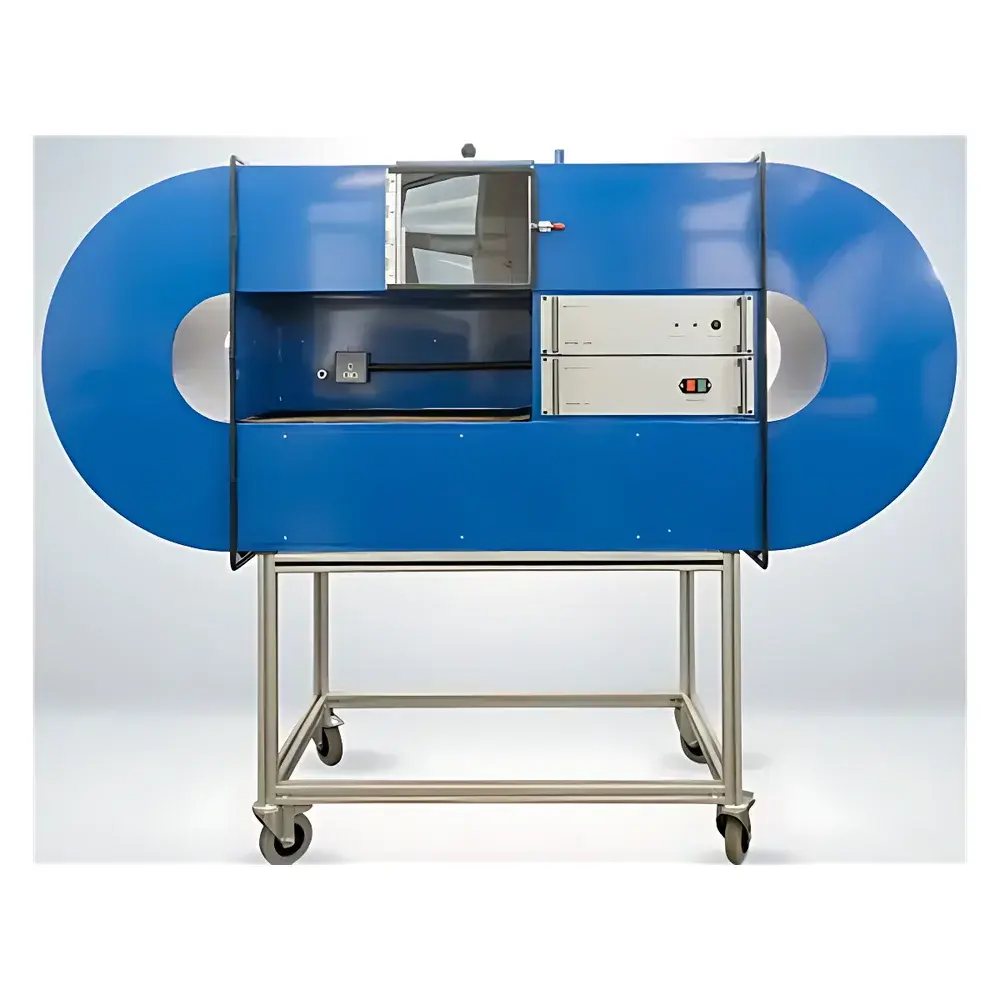
Fire Detection Tester 1000 Series (AWT)
| Brand | AWT |
|---|---|
| Origin | United Kingdom |
| Model | 1000 Series Fire Detector Test Chamber |
| Compliance | EN 54-7, EN 54-5, EN 14604, BS 5446-2, GB 4715-2024, GB 4716-2024 |
| Configuration Options | 1100 (smoke-only), 1300 (heat-only), 1400 (combined smoke/heat), 1700 (heat-only with active cooling), 1800 (combined smoke/heat with active cooling) |
| Form Factor | Benchtop |
| Application Domain | Factory QC, R&D Lab, Certification Testing |
Overview
The AWT Fire Detection Tester 1000 Series is a benchtop-certified test chamber system engineered for the functional verification and performance validation of point-type fire detectors in accordance with international fire safety standards. Unlike generic environmental chambers, this series employs purpose-built airflow dynamics, calibrated aerosol generation (for optical scattering and ionization-based smoke detection), and precisely controlled thermal ramp profiles to replicate real-world fire signatures under repeatable laboratory conditions. Each variant—1100, 1300, 1400, 1700, and 1800—is configured to meet distinct detector types and test protocols defined in EN 54-7 (optical/ionic smoke detectors), EN 54-5 (fixed-temperature and rate-of-rise heat detectors), EN 14604 (residential smoke alarms), BS 5446-2 (domestic heat alarms), and the latest Chinese national standards GB 4715-2024 and GB 4716-2024. The system operates on the principle of controlled stimulus delivery: smoke concentration is quantified via photometric attenuation or ion current modulation; temperature response is measured using traceable Pt100 sensors with ±0.2 °C accuracy over 0–100 °C range. Its compact footprint enables integration into production line final-test stations as well as ISO/IEC 17025-accredited calibration laboratories.
Key Features
- Benchtop form factor (W × D × H: 620 × 480 × 390 mm) optimized for space-constrained QA labs and factory floor deployment
- Modular configuration architecture supporting five standardized variants: 1100 (smoke-only), 1300 (heat-only), 1400 (dual-mode smoke + heat), 1700 (heat-only with Peltier-based active cooling for sub-ambient thermal recovery), and 1800 (dual-mode with integrated cooling for rapid cycle testing)
- Calibrated polydisperse smoke generation (ammonium chloride or titanium dioxide aerosol) with adjustable optical density (0.05–15.0 dB/m), compliant with EN 54-7 Annex B test sequences
- Thermal control subsystem delivering programmable heating ramps (0.1–15 °C/min) and stable dwell temperatures (±0.3 °C), with optional active cooling enabling <30 s recovery from 60 °C to 25 °C
- Integrated reference sensor suite including NIST-traceable Pt100 temperature probes and laser photodiode-based optical density monitors
- Front-access test chamber with quick-release door, transparent polycarbonate viewing window, and standardized 100 mm × 100 mm detector mounting interface per EN 54-7 Clause 6.2
Sample Compatibility & Compliance
The 1000 Series accommodates all standard point-type fire detectors with nominal dimensions ≤120 mm diameter × 75 mm height, including optical scatter, ionization, thermistor-based, and bimetallic fixed-temperature units. It supports both single- and multi-sensor configurations (e.g., smoke + heat combination units). All models are validated against mandatory conformity assessment requirements for CE marking (EN 54 series), UKCA (BS EN 54), and CCC certification (GB 4715-2024 / GB 4716-2024). Test reports generated using this system satisfy audit requirements under ISO/IEC 17025:2017 for accredited testing laboratories and align with GLP principles for R&D validation studies. The system’s documented uncertainty budget (k=2) for temperature and optical density measurements is included in the factory calibration certificate supplied with each unit.
Software & Data Management
Control and data acquisition are managed via AWT FireTest Suite v3.2—a Windows-based application supporting automated test sequencing per EN 54-7 Clauses 6–8 and EN 54-5 Annex A. The software records time-stamped sensor outputs at configurable sampling intervals (10 ms–1 s), generates compliance pass/fail flags based on threshold logic defined in the relevant standard clauses, and exports raw datasets in CSV and XML formats. Audit trail functionality complies with FDA 21 CFR Part 11 requirements, including electronic signatures, user role-based access control (administrator/operator), and immutable event logging. All test records include embedded metadata: operator ID, detector serial number, environmental conditions (ambient T/RH), calibration certificate expiry date, and instrument firmware revision.
Applications
- Final acceptance testing of fire detectors prior to shipment in manufacturing facilities
- Periodic functional verification during in-service maintenance (per BS 5839-1 and NFPA 72)
- Design verification and type testing during product development
- Third-party certification testing for notified bodies (e.g., LPCB, VdS, CNCA-approved labs)
- Training and competency assessment for fire alarm commissioning engineers
- Research into detector response characteristics under non-standard fire scenarios (e.g., smouldering vs flaming combustion)
FAQ
Does the 1000 Series support testing of addressable fire detectors?
Yes—when used with an external loop interface module (sold separately), the system can verify communication integrity and alarm confirmation timing for addressable devices compliant with EN 54-2 and EN 54-13.
Is calibration traceable to national standards?
All temperature and optical density sensors are calibrated annually by UKAS-accredited laboratories; certificates include measurement uncertainty statements referenced to NPL (UK) standards.
Can test parameters be customized beyond EN-defined sequences?
Yes—the AWT FireTest Suite allows creation of user-defined test profiles, including custom ramp rates, dwell durations, and combined smoke/heat exposure timelines, subject to hardware limits.
What maintenance is required between tests?
Daily cleaning of the chamber interior with isopropyl alcohol and periodic replacement of aerosol generation consumables (every ~200 tests); no routine recalibration is needed within the 12-month certificate validity period.
Related Products





