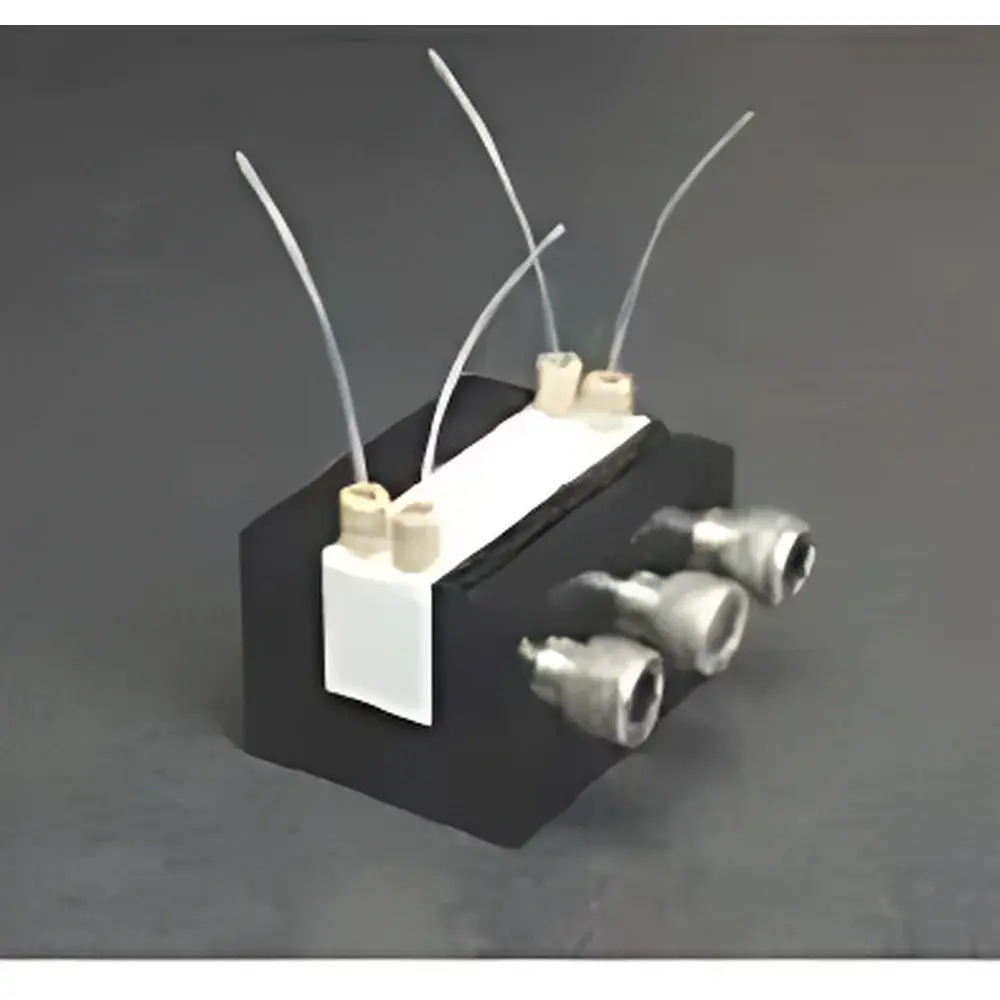
Flow-Thru DIALYZERTM
| Origin | USA |
|---|---|
| Manufacturer Type | Authorized Distributor |
| Origin Category | Imported |
| Model | Flow-Thru DIALYZERTM |
| Pricing | Available Upon Request |
Overview
The Flow-Thru DIALYZERTM is a precision-engineered, continuous-flow dialysis device designed for rapid, temperature-controlled sample processing in preclinical and clinical laboratory settings. Unlike static dialysis methods that rely on diffusion equilibrium over extended periods, this system operates on the principle of convective mass transfer across a semi-permeable membrane under controlled laminar flow conditions. The device enables dynamic equilibration between sample and dialysate compartments, significantly reducing dialysis time—typically achieving >95% small-molecule removal or exchange within minutes rather than hours. Its compact, submersible architecture supports integration into automated workflows, including microdialysis sampling systems, drug metabolism studies, and biomarker purification protocols where minimal sample handling and thermal stability are critical.
Key Features
- Continuous-flow design with integrated inlet/outlet tubing ports at both ends of the dialysis chamber, enabling uninterrupted sample perfusion and real-time dialysate collection.
- Chemically inert PTFE (polytetrafluoroethylene) housing and fluid-contact surfaces, ensuring compatibility with aggressive solvents, acidic/basic buffers, and protein-rich biological matrices without leaching or adsorption artifacts.
- Standardized membrane geometry optimized for high surface-area-to-volume ratio, supporting effective molecular weight cutoff (MWCO) performance across a range of commercially available regenerated cellulose or polyethersulfone membranes (e.g., 3.5 kDa, 10 kDa, 20 kDa).
- Submersible configuration allows full immersion in temperature-regulated water baths or circulating chillers, maintaining precise thermal control (±0.5 °C) throughout the dialysis process—critical for thermolabile analytes such as peptides, cytokines, and labile metabolites.
- Scalable operational volume range from 20 µL to 100 mL, accommodating both microscale assay development and larger-volume preparative applications without hardware modification.
- Modular mounting options—including rack-compatible brackets and magnetic base attachments—for stable positioning in incubators, cold rooms, or multi-instrument workstations.
Sample Compatibility & Compliance
The Flow-Thru DIALYZERTM is validated for use with human and animal-derived biofluids (plasma, serum, CSF, urine, tissue homogenates), cell culture supernatants, and formulated drug solutions. It meets material biocompatibility requirements per ISO 10993-5 (cytotoxicity) and USP (biological reactivity testing). While the device itself does not carry CE IVD or FDA 510(k) clearance, its construction and functional design align with Good Laboratory Practice (GLP) and current Good Manufacturing Practice (cGMP) documentation standards when deployed in regulated environments. Traceability of membrane lot numbers, PTFE certification data sheets, and calibration verification records support audit readiness for ISO/IEC 17025-accredited laboratories.
Software & Data Management
As a standalone hardware platform, the Flow-Thru DIALYZERTM requires no proprietary software or firmware. Flow rate, temperature, and duration parameters are managed externally via peristaltic pumps, syringe drivers, or programmable fluidic controllers compatible with standard analog/digital I/O interfaces (0–10 V, TTL, RS-232). Experimental metadata—including timestamps, bath temperature logs, and pump speed profiles—can be captured through third-party acquisition platforms (e.g., LabVIEW, MATLAB, or SCADA systems) and exported in CSV or HDF5 formats for integration into LIMS or ELN systems. Audit trails and electronic signatures may be implemented in accordance with FDA 21 CFR Part 11 when paired with compliant host instrumentation.
Applications
- Rapid buffer exchange prior to LC-MS/MS analysis of low-abundance plasma proteins and post-translational modifications.
- Desalting and detergent removal from membrane protein extracts prior to cryo-EM sample preparation.
- In vitro pharmacokinetic modeling using microdialysis probes coupled to continuous-flow dialysis chambers for real-time free fraction quantification.
- Preparative-scale purification of oligonucleotides and mRNA intermediates during process development under GMP-aligned conditions.
- Controlled release studies of nanoparticle-encapsulated therapeutics, where dialysis kinetics directly inform diffusion coefficient calculations per Fick’s first law.
- Neuropharmacology research involving ex vivo brain slice perfusates, where temperature stability and minimal shear stress preserve neuronal viability during metabolite extraction.
FAQ
What membrane types are compatible with the Flow-Thru DIALYZERTM?
Regenerated cellulose (RC), polyethersulfone (PES), and cellulose ester membranes with standard flat-sheet or tubular configurations are mechanically and chemically compatible. Membrane selection must match the target MWCO and solvent compatibility requirements of the application.
Can the device be sterilized for repeated use?
Yes—autoclaving at 121 °C for 15 minutes is validated for PTFE components; however, membrane integrity must be verified post-sterilization. Single-use membranes are recommended for GLP/GMP workflows to ensure batch consistency.
Is there a recommended maximum flow rate to avoid membrane damage?
For standard 10 kDa RC membranes, a linear flow velocity ≤1.5 cm/s is advised to prevent shear-induced pore deformation or delamination. Optimal flow rates should be determined empirically based on sample viscosity and desired dialysis efficiency.
How is temperature uniformity maintained during submersion?
Full submersion ensures conductive heat transfer equilibrium between the water bath and internal fluid path. Use of recirculating chillers with ±0.1 °C stability is recommended for applications requiring tight thermal control over extended durations (>4 h).