
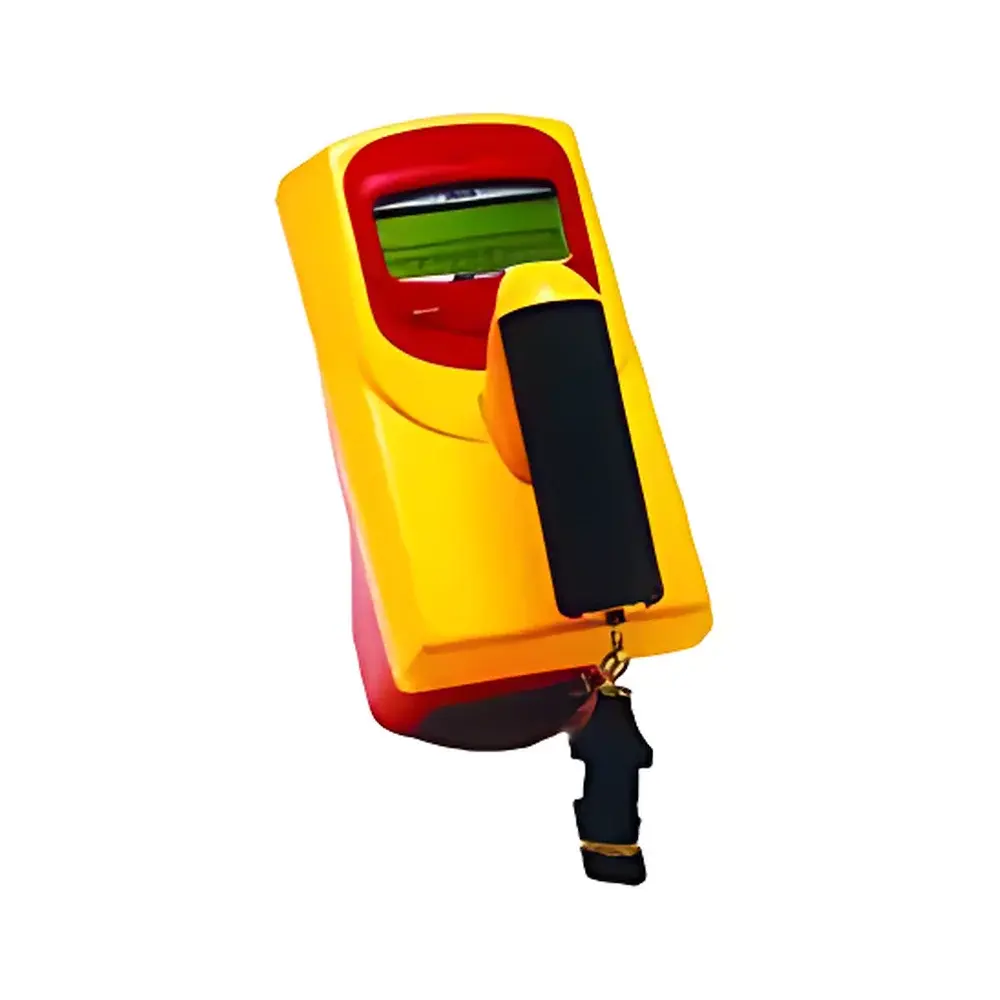
Fluke 451P Pressurized Ion Chamber Survey Meter
| Brand | Fluke |
|---|---|
| Origin | USA |
| Model | 451P |
| Detection Principle | Pressurized ionization chamber (300 cm³, 6 atm) |
| Radiation Types | γ-rays and X-rays ≥25 keV |
| Measurement Ranges | 0–500 μR/h to 0–5 R/h (or equivalent in Sv: 0–5 μSv/h to 0–50 mSv/h) |
| Accuracy | ±10% of reading (10–100% of full scale), calibrated with ¹³⁷Cs |
| Response Time | 1.8–4.8 s (10%–90% rise time, dependent on range and dose rate) |
| Power | Two 9 V alkaline batteries (200 h typical life) |
| Operating Environment | –20 °C to +50 °C, 0–100% RH |
| Dimensions | 10 × 20 × 15 cm (4 × 8 × 6 in) |
| Weight | 1.07 kg (2 lb 6 oz) |
| Display | Analog bar graph (100-segment, 6.4 cm) + 2.5-digit LCD with backlight |
| Interface | RS-232 for PC connectivity |
| Compliance | Designed for use in accordance with ANSI N42.17A, IEC 60846, and applicable radiation safety practices per NRC and IAEA guidance |
Overview
The Fluke 451P Pressurized Ion Chamber Survey Meter is a portable, battery-powered radiation survey instrument engineered for high-sensitivity detection and accurate measurement of gamma (γ) and X-ray photon fields in both field and laboratory environments. Its core sensing element is a 300 cm³ pressurized ionization chamber operated at 6 atmospheres—significantly enhancing charge collection efficiency and improving energy response across the diagnostic and industrial radiography range (≥25 keV). Unlike uncompensated Geiger-Müller or scintillation detectors, the 451P provides near-flat energy response over its operational range due to chamber geometry, gas composition, and pressure optimization—making it suitable for quantitative dose rate assessment where spectrally uncharacterized or mixed-field exposures may occur. The instrument meets fundamental requirements for radiation protection instrumentation as defined in ANSI N42.17A (American National Standard for Portable Radiation Detection Instrumentation) and aligns with IEC 60846-1:2014 for performance criteria of installed and portable radiation monitors. It is routinely deployed in nuclear medicine departments, industrial radiography facilities, decommissioning sites, and environmental monitoring programs requiring traceable, reproducible exposure rate measurements.
Key Features
- Pressurized ion chamber (300 cm³, 6 atm argon-based fill gas) delivering enhanced sensitivity and improved energy response for photons ≥25 keV
- Five auto-ranging measurement scales: 0–500 μR/h, 0–5 mR/h, 0–50 mR/h, 0–500 mR/h, and 0–5 R/h (with equivalent SI units displayed in μSv/h to mSv/h)
- Simultaneous analog bar graph (100-segment, 6.4 cm) and 2.5-digit LCD display with automatic backlight activation under low ambient light
- True auto-zero and auto-range functionality—no manual scaling or null adjustment required during operation
- Real-time peak-hold mode with audible indicator and visual flag on the bar graph for transient event capture
- Integrated cumulative exposure timer activated automatically upon power-on (30-second integration window)
- RS-232 serial interface supporting direct connection to Windows-based PCs for data logging, parameter configuration, and virtual instrument emulation
- Rugged, sealed enclosure rated for operation from –20 °C to +50 °C and 0–100% relative humidity; lightweight (1.07 kg) with ergonomic soft-grip handle
Sample Compatibility & Compliance
The Fluke 451P is designed exclusively for photon radiation fields and does not provide meaningful response to alpha or neutron radiation. Its chamber design ensures minimal angular dependence (<±5% over ±90° azimuth/elevation), enabling reliable use in non-collimated or scattered-field scenarios. Calibration is traceable to national standards via a certified ¹³⁷Cs reference source (10 µCi, model 62-103). The instrument supports dual-unit selection (R/h or Sv/h) at time of purchase, ensuring compatibility with regional regulatory frameworks—U.S. NRC licensees commonly specify R-based configurations, while EU and IAEA-affiliated users typically select Sv-based variants. It satisfies functional requirements for routine area monitoring under 10 CFR 20 and IAEA Safety Standards Series No. RS-G-1.9. While not inherently 21 CFR Part 11 compliant, audit-ready data export via RS-232 enables integration into validated GLP/GMP workflows when paired with appropriate software validation documentation.
Software & Data Management
The optional Fluke 451EXL software package operates under Microsoft Windows and communicates directly with the instrument via the built-in RS-232 port. It provides real-time graphical display of dose rate trends, configurable alarm thresholds (audible/visual), and timestamped storage of up to 2700 historical readings onboard. Data can be exported to CSV or Excel-compatible formats for post-processing, report generation, or inclusion in LIMS databases. The software allows user-defined instrument configuration—including unit preference, hold duration, background subtraction offset, and display brightness—without firmware modification. All parameter changes are logged with timestamps, supporting basic audit trail requirements. For regulated environments, organizations may validate the software installation per their internal SOPs, leveraging the instrument’s deterministic response and stable calibration history.
Applications
- Environmental radiation surveys around nuclear facilities, waste storage sites, and legacy uranium processing locations
- Quality assurance and periodic verification of X-ray room shielding integrity in hospitals and veterinary clinics
- Dose rate mapping during industrial radiography (e.g., pipeline weld inspection using Ir-192 or Se-75 sources)
- Emergency response screening following radiological dispersal device (RDD) incidents or transportation accidents
- Baseline characterization and long-term trend analysis in naturally occurring radioactive material (NORM) handling operations
- Training and demonstration in health physics education programs requiring stable, repeatable instrument response
FAQ
What radiation types does the Fluke 451P detect?
It measures exposure rate from X-ray and gamma-ray photons with energies ≥25 keV, and beta particles with energies ≥1 MeV. It is not sensitive to alpha particles, neutrons, or low-energy photons below its response threshold.
Is the 451P suitable for personal dosimetry?
No—it is a survey meter intended for area monitoring, not individual dose assessment. Personnel dosimeters (e.g., TLDs or OSL badges) must be used for regulatory compliance with occupational dose limits.
Can the instrument be recalibrated in the field?
Field recalibration is not supported. Users must return the unit to an accredited calibration laboratory or Fluke-authorized service center using traceable ¹³⁷Cs or ⁶⁰Co sources per ANSI N323B procedures.
Does the 451P meet IEC 61508 or SIL certification requirements?
It is not certified to functional safety standards such as IEC 61508 or SIL. It is classified as a general-purpose radiation survey instrument—not a safety-related system component.
How is data integrity ensured during RS-232 transfer?
All serial communications use standard ASCII protocol with checksum validation. No data compression or encryption is applied; raw values are transmitted verbatim for external validation and archival.
Related Products







