
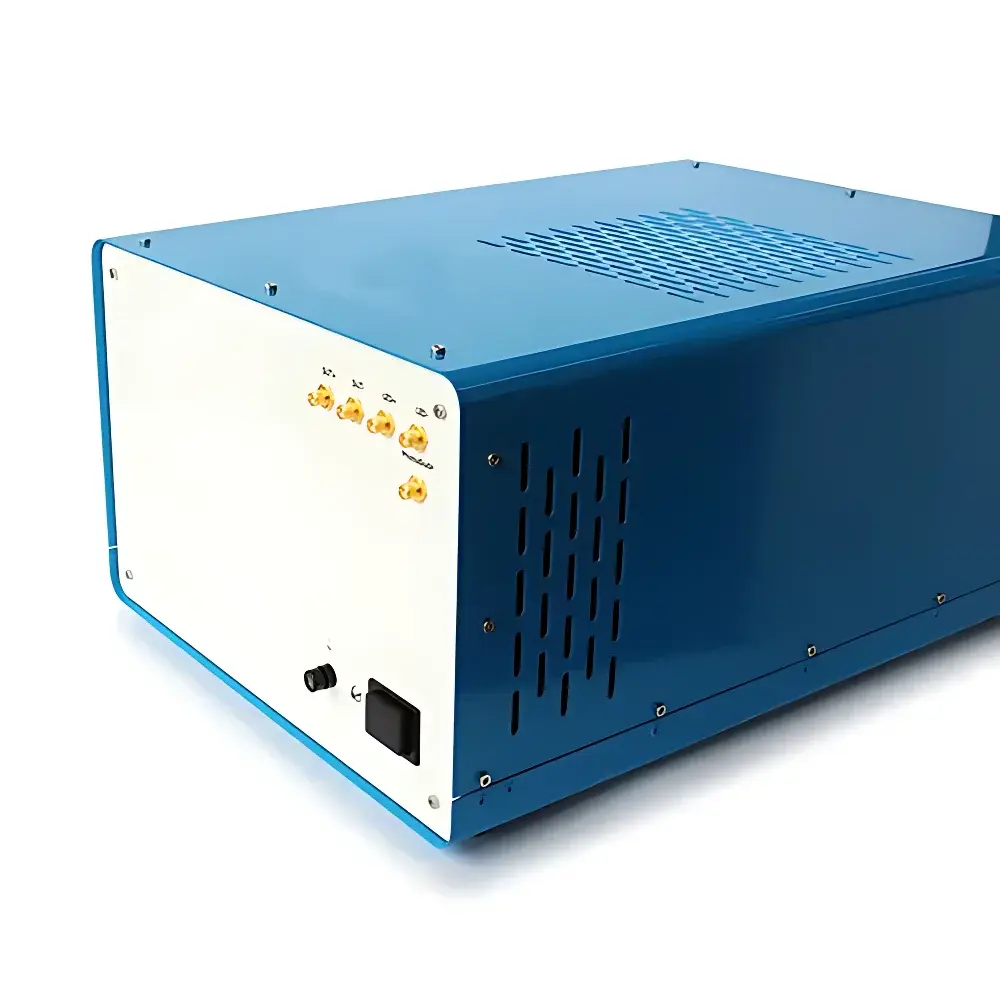
Fluxim PAIOS Transient Photocurrent/Photovoltage Measurement System
| Brand | Fluxim |
|---|---|
| Origin | Switzerland |
| Model | PAIOS |
| Price Range | USD 14,000 – 70,000 |
| Automation Level | Semi-Automatic |
| Effective Test Area | 20 mm² |
| Voltage Measurement Resolution | Sub-nanovolt (nV) |
| Current Measurement Resolution | Sub-picoampere (pA) |
| Sampling Rate | 60 MS/s |
| Time Resolution | 16 ns |
| Frequency Range | 10 mHz – 10 MHz |
| LED Rise Time | 100 ns |
| Current Range | ±100 mA |
| Voltage Range | ±12 V (optional ±60 V with SMU module) |
| Spectral Coverage (Multi-LED) | 360–1100 nm |
| Temperature Range (Optional Cryo/Hot Stage) | −120 °C to +150 °C |
Overview
The Fluxim PAIOS Transient Photocurrent/Photovoltage Measurement System is a modular, high-fidelity instrumentation platform engineered for quantitative carrier dynamics characterization in optoelectronic thin-film devices. Based on time-resolved charge transport physics, PAIOS implements a unified measurement architecture combining DC, AC, and transient electrical domain techniques with precisely synchronized optical excitation. Its core methodology relies on controlled perturbation—via voltage pulses, current steps, or intensity-modulated light—and high-bandwidth acquisition of resulting transient responses (current, voltage, or electroluminescence), enabling extraction of fundamental semiconductor parameters including carrier mobility, lifetime, trap density, recombination order, built-in field, and doping concentration. Designed specifically for research-grade analysis of perovskite solar cells (PSCs), organic photovoltaics (OPVs), OLEDs, QD-LEDs, and MIS heterostructures, PAIOS operates under rigorously defined bias-light-temperature conditions and supports full traceability in accordance with GLP-aligned laboratory practices.
Key Features
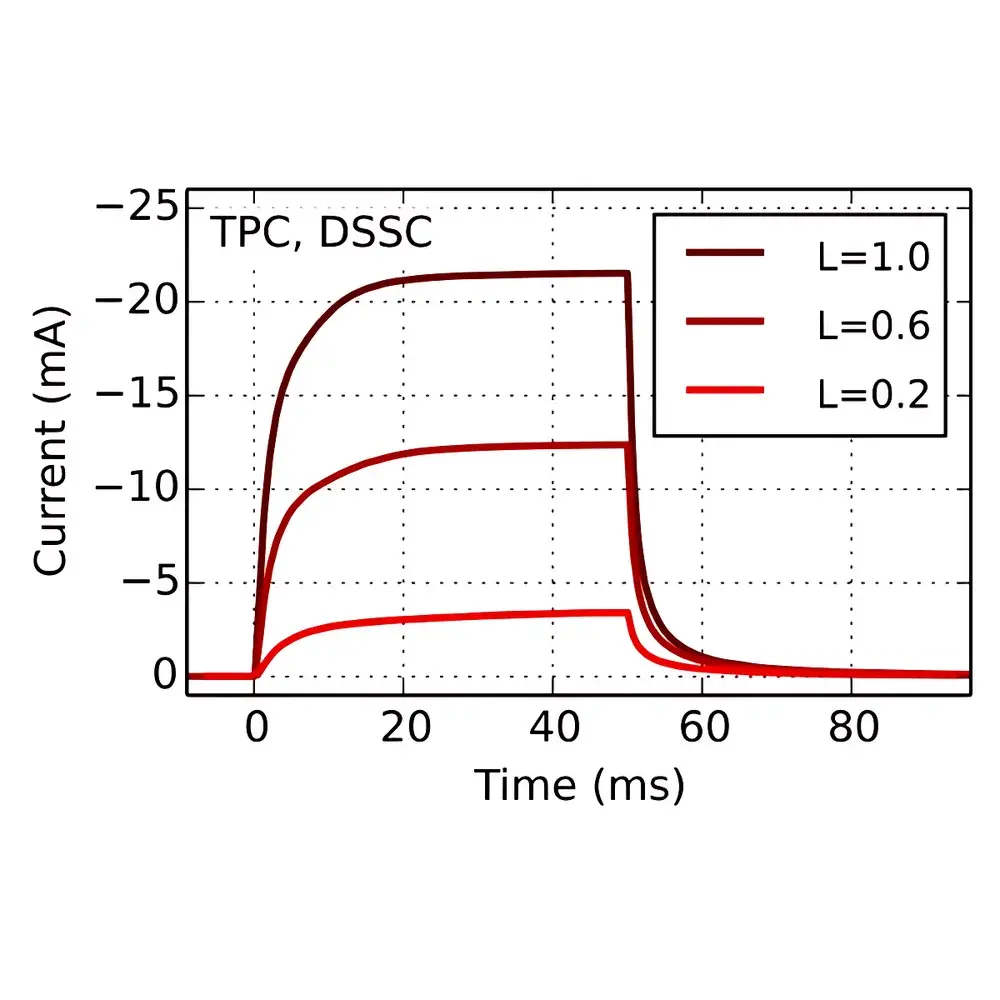
- Multi-modal transient measurement suite: TPC (Transient Photocurrent), TPV (Transient Photovoltage), Dark-CELIV, Photo-CELIV, Delaytime-CELIV, Injection-CELIV, MIS-CELIV, IMPS/IMVS, IS (Impedance Spectroscopy), C–V, C–f, DLTS, and Transient Electroluminescence (TEL)
- Sub-nanovolt voltage resolution and sub-picoampere current resolution—enabling detection of weak capacitive transients and low-injection carrier signals
- 60 MS/s real-time sampling with 16 ns temporal resolution, ensuring fidelity in fast carrier extraction and recombination kinetics (e.g., <100 ns trapping/detrapping events)
- Programmable multi-wavelength LED excitation (360–1100 nm), calibrated for EQE-relevant spectral coverage and compatible with standard J–V–L protocols
- Integrated voltage/current source with optional SMU extension (±60 V, 1 pA resolution) for high-impedance dark-characterization and SCLC mobility extraction
- Modular hardware design supporting cryogenic (−120 °C) and elevated temperature (up to +150 °C) operation via standardized thermal stage interfaces
- Full synchronization between electrical stimulus, optical pulse, and data acquisition—critical for artifact-free transient waveform capture
Sample Compatibility & Compliance
PAIOS accommodates standard device geometries up to 20 mm² active area, including spin-coated, evaporated, and blade-coated thin-film stacks on ITO/PEDOT:PSS, NiOₓ, SnO₂, or ZnO electron/hole transport layers. It supports both two-terminal (standard solar cell/OLED configuration) and three-terminal (MIS, gated structures) topologies. All measurement modes comply with ASTM F2891 (Standard Practice for Measuring Photocurrent Transients in Organic Photovoltaic Devices) and ISO 18593 (Electrical characterization of thin-film optoelectronic devices). Data acquisition and post-processing workflows are structured to support audit-ready documentation per FDA 21 CFR Part 11 requirements when deployed in regulated R&D environments (e.g., materials qualification for photovoltaic certification bodies).
Software & Data Management
The PAIOS Control & Analysis Suite (v5.x) provides instrument control, experiment sequencing, real-time visualization, and physics-based modeling. Raw transient waveforms are stored in HDF5 format with embedded metadata (bias point, light intensity, temperature, LED wavelength, filter settings). Built-in fitting engines implement analytical models for SCLC mobility, Shockley–Read–Hall lifetime, Langevin recombination, CELIV drift-diffusion inversion, and equivalent circuit modeling (ZView-compatible export). Batch processing supports parameter mapping across illumination intensities, temperatures, or voltage biases. Export options include CSV, MATLAB (.mat), and standardized JSON-LD for integration into LIMS or ELN systems. Audit trail logging records all user actions, parameter changes, and calibration events.
Applications
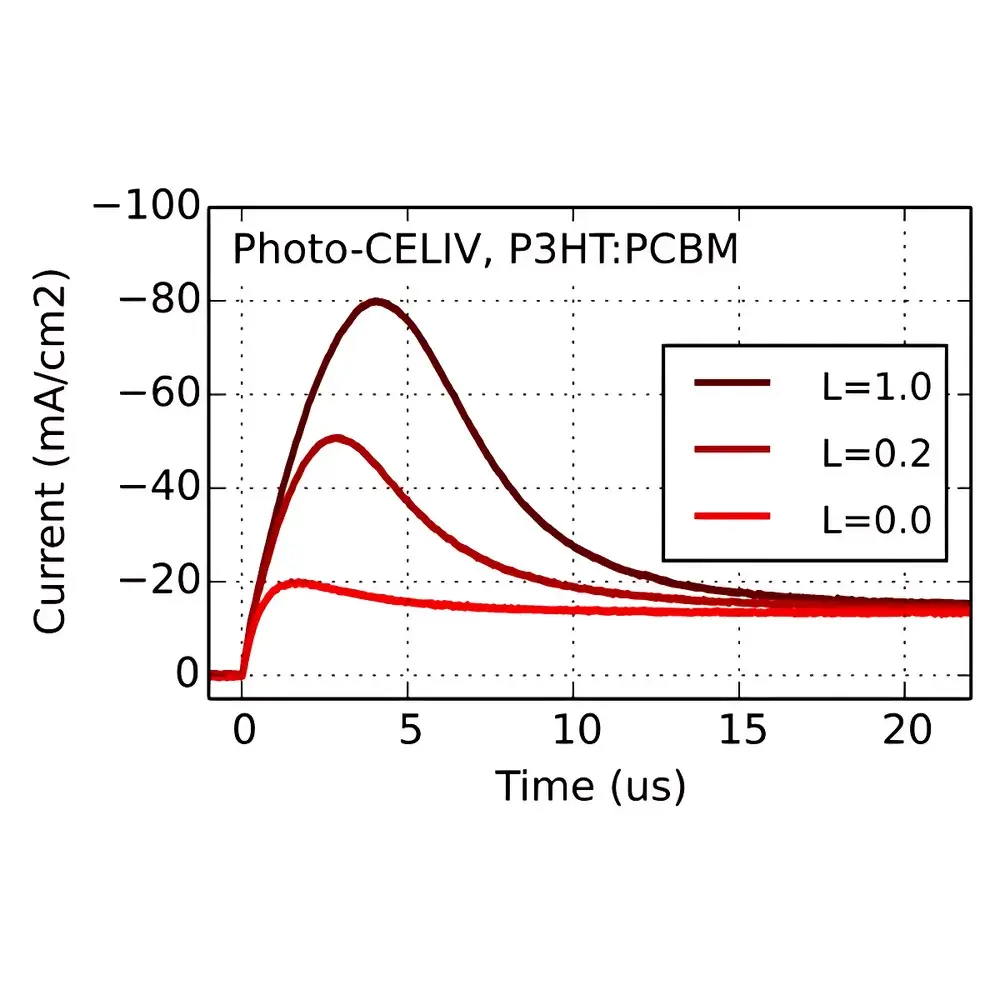
- Quantitative carrier mobility profiling in perovskite absorbers using Photo-CELIV and SCLC under inert atmosphere
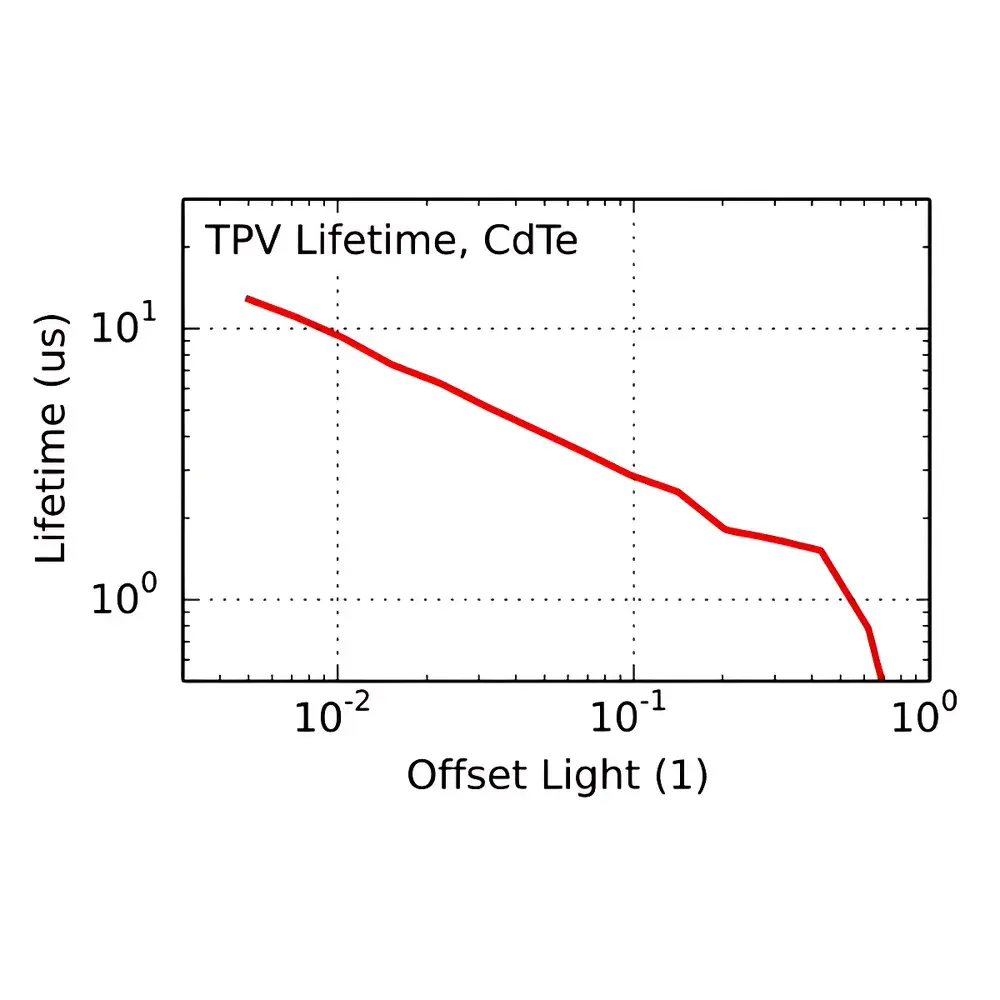
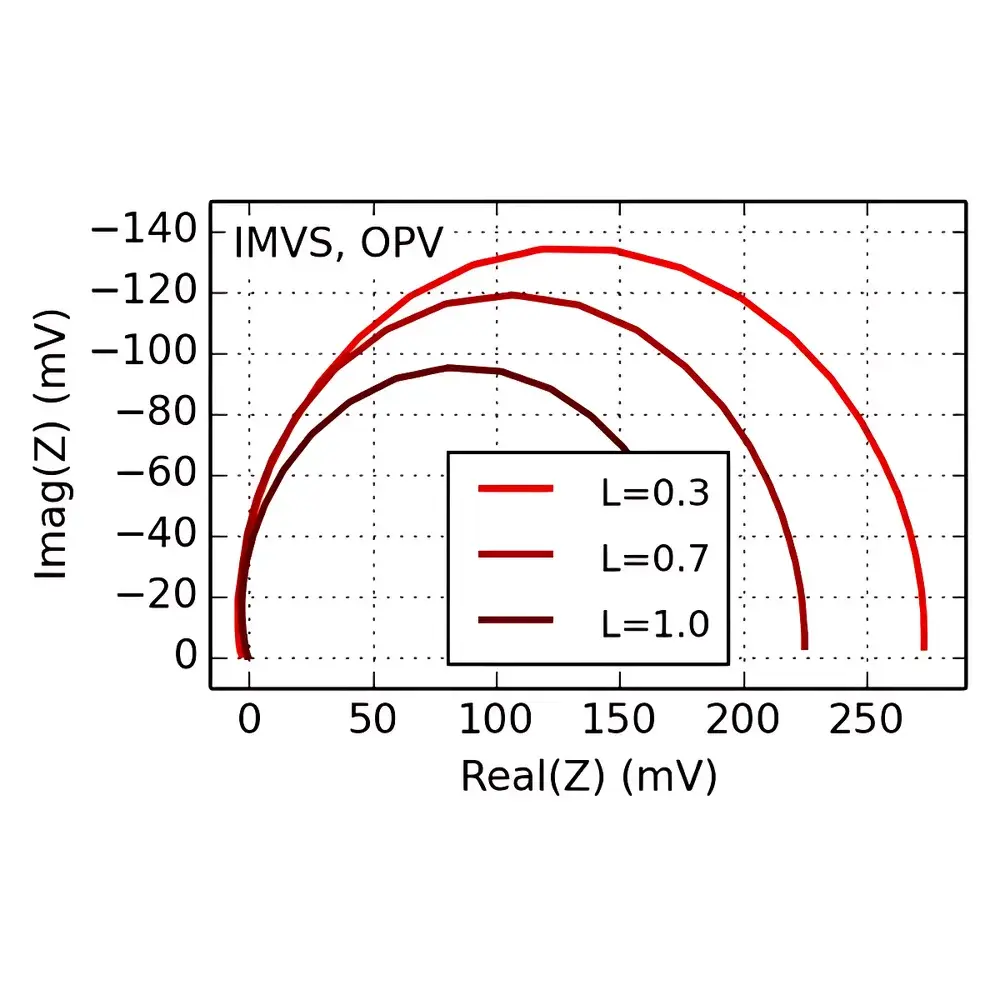
- Trap-assisted recombination analysis in OPV blends via TPV amplitude decay and IMVS phase-angle dispersion
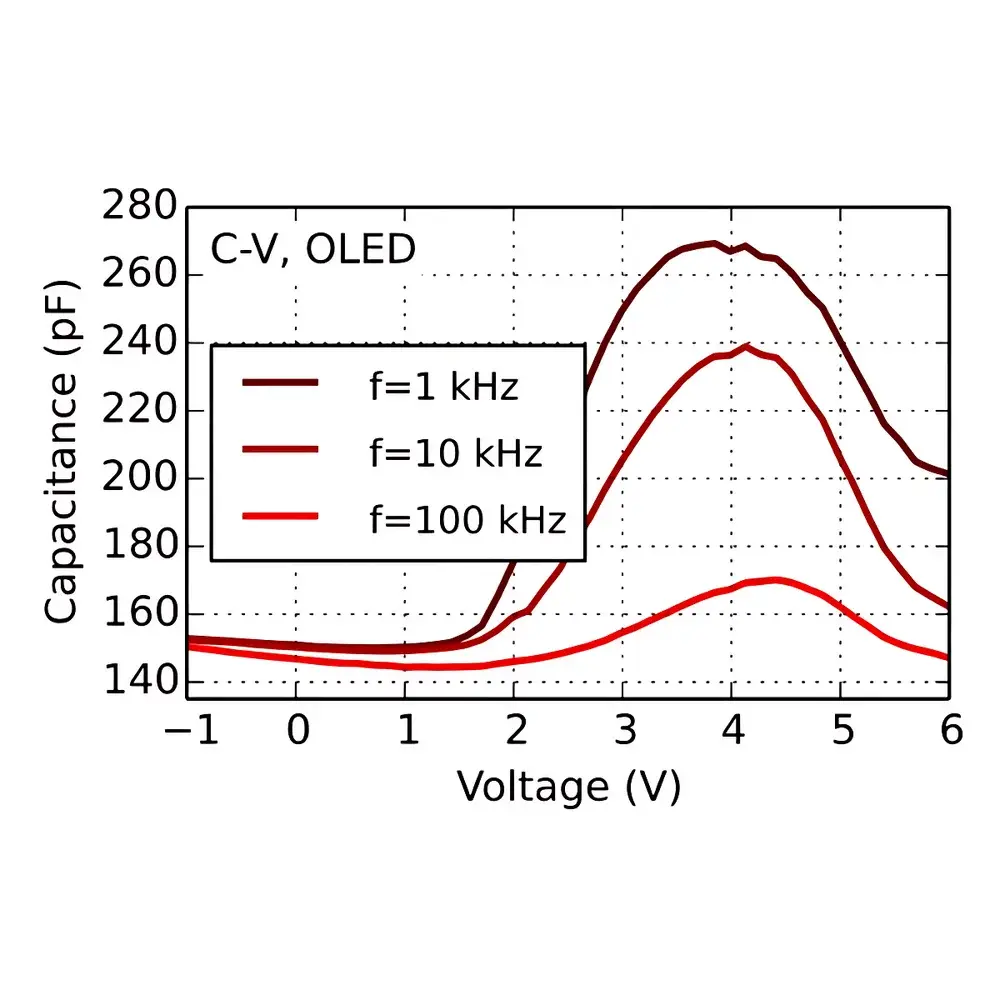
- Doping density and built-in potential extraction in planar heterojunction OLEDs via C–V sweeps at multiple frequencies
- Depth-resolved trap characterization in mixed-halide perovskites using DLTS with variable filling pulse conditions
- Charge extraction efficiency mapping in tandem solar cells via IMPS-derived transport times across subcell interfaces
- Electroluminescence lifetime quantification in phosphorescent OLEDs using TEL with nanosecond-gated detection
- Interface defect density estimation at ETL/perovskite junctions via frequency-dependent C–f dispersion
FAQ
What distinguishes PAIOS from conventional source-measure units (SMUs) used for J–V testing?
PAIOS integrates synchronized optical excitation, ultra-fast transient digitization, and physics-based analysis modules—not available in general-purpose SMUs—enabling direct inference of carrier dynamics rather than only steady-state electrical output.
Can PAIOS measure both solar cells and OLEDs without hardware modification?
Yes. The system ships with dual firmware configurations (Solar Cell Mode and OLED Mode), each optimized for relevant bias protocols, signal polarity conventions, and safety interlocks (e.g., reverse-bias limits for OLEDs).
Is calibration traceable to national standards?
Voltage and current channels are factory-calibrated against NIST-traceable references; optional annual recalibration service includes certificate of conformance to ISO/IEC 17025.
Does PAIOS support automated temperature-dependent measurements?
When paired with the optional cryo-hot stage controller, PAIOS executes fully scripted temperature ramps with synchronized electrical/optical acquisition—no manual intervention required.
How is data integrity ensured during long-duration transient experiments?
All acquisitions employ hardware timestamping, lossless compression, and cyclic redundancy checksums. The software enforces write-verification before finalizing HDF5 datasets.



