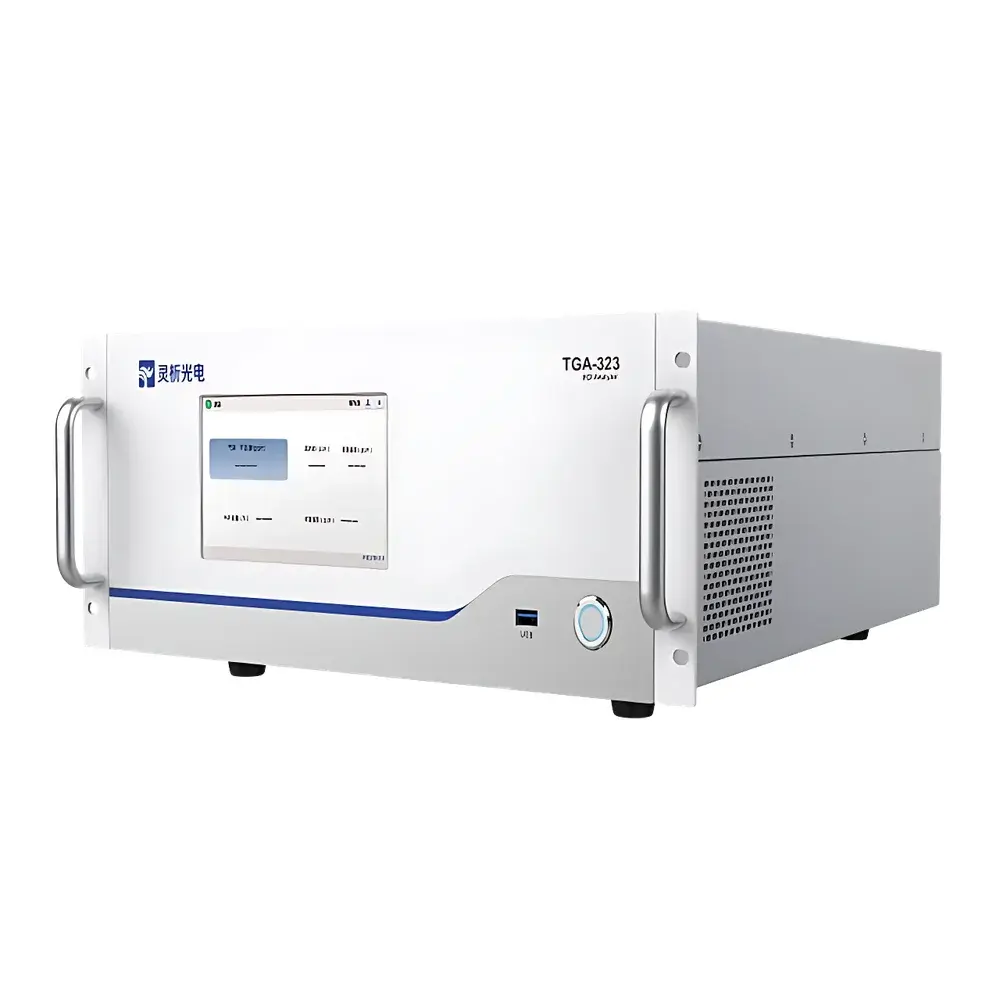
Focuslight TGA-323 High-Precision Trace Gas Analyzer
| Brand | LINGXI OPTOELECTRONICS |
|---|---|
| Origin | Zhejiang, China |
| Manufacturer Type | Authorized Distributor |
| Regional Classification | Domestic (China) |
| Model | TGA-323 |
| Pricing | Upon Request |
Overview
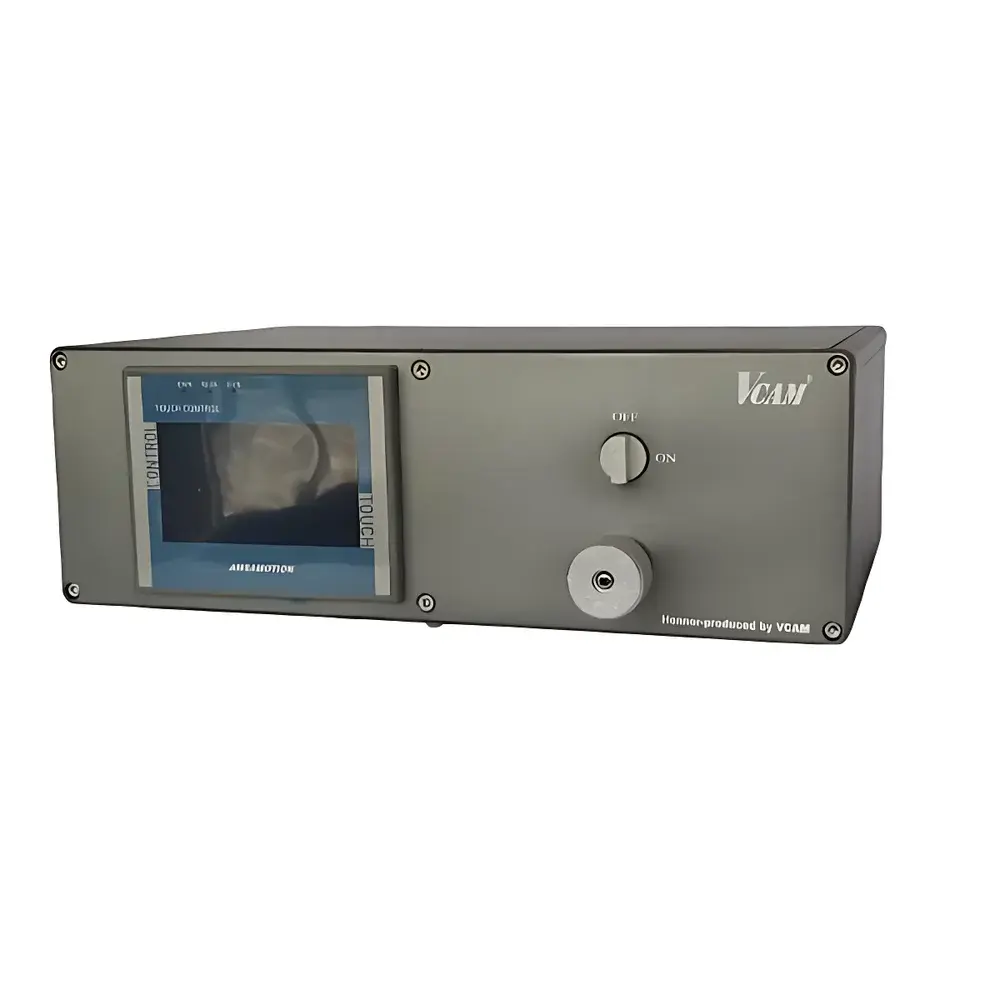
The Focuslight TGA-323 High-Precision Trace Gas Analyzer is an industrial-grade online gas analyzer engineered specifically for continuous air molecular contamination (AMC) monitoring in semiconductor manufacturing environments. It employs Cavity Ring-Down Spectroscopy (CRDS), a laser-based absorption technique that measures trace concentrations of hydrogen chloride (HCl) with exceptional specificity and sensitivity. In CRDS, a pulsed or continuous-wave laser is coupled into a high-finesse optical cavity formed by two ultra-reflective mirrors (>99.999% reflectivity). The decay time of light intensity within the cavity is measured with picosecond resolution; the presence of HCl molecules attenuates this decay rate in direct proportion to their concentration. This first-principles optical method eliminates reliance on chemical reactions or separation columns, enabling absolute quantification without calibration transfer artifacts. Designed for 24/7 operation in Class 1–10 cleanrooms, the TGA-323 delivers real-time, interference-free HCl data at parts-per-quadrillion (pptv) detection limits—critical for controlling etch residue, wafer defect rates, and tool uptime in advanced node fabrication (≤5 nm logic, 1α DRAM).
Key Features
- Sub-pptv detection limit for HCl (≤0.5 pptv RMS noise, 1σ, 100 s averaging), validated per ISO 14644-8 Annex D protocols for AMC instrumentation
- Zero-calibration architecture: factory-characterized spectral baseline with drift compensation algorithms; no field calibration gases or reference cells required
- Optimized fluidic path: all-wetted surfaces coated with proprietary inert fluoropolymer (perfluoroalkoxy, PFA-equivalent) to minimize HCl adsorption/desorption hysteresis
- Compact multi-pass optical cavity (effective path length >20 km) with volume <150 mL, enabling <30 s T90 response time from ambient to target concentration
- Integrated thermal management: ±0.02 °C cavity temperature stability and active pressure control (±0.05 kPa) to suppress spectroscopic broadening effects
- Self-diagnostic firmware with real-time mirror reflectivity monitoring and cavity alignment validation
Sample Compatibility & Compliance
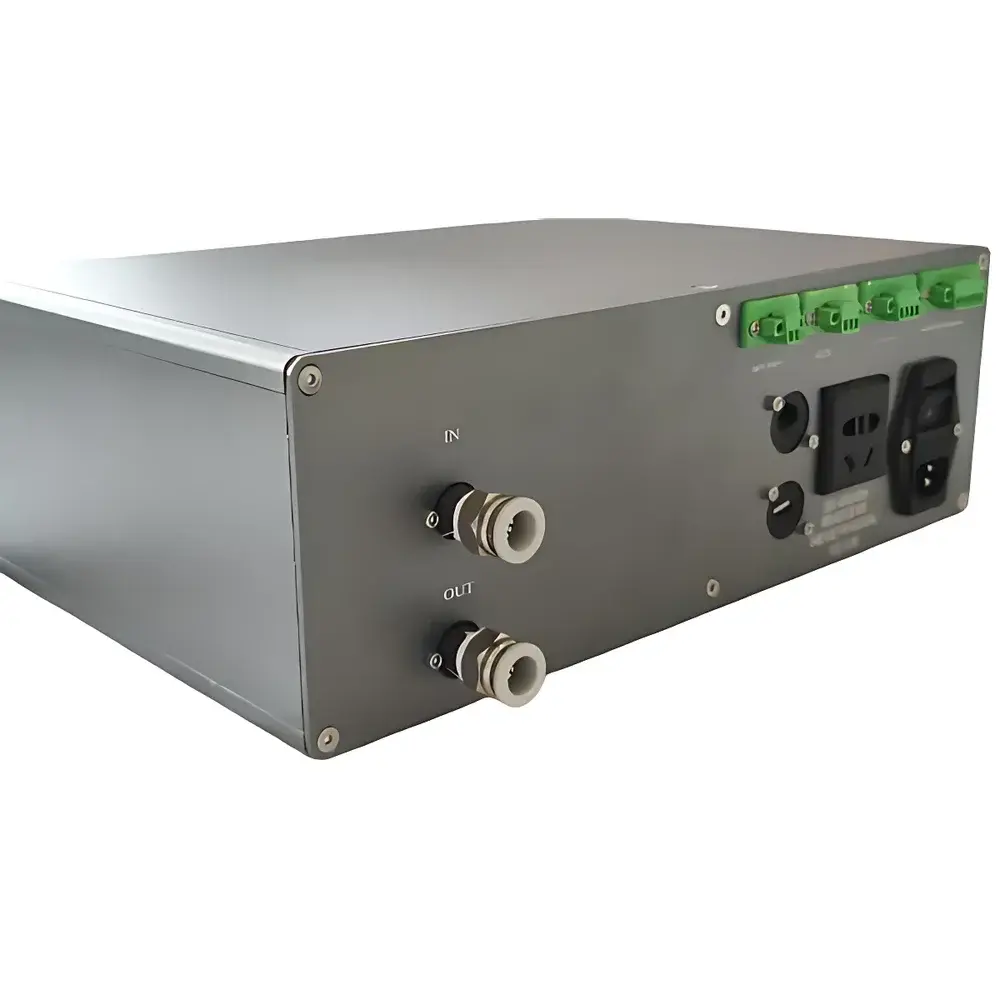
The TGA-323 is configured exclusively for HCl vapor analysis in ultrapure compressed air (UPCA), nitrogen (N2), and argon (Ar) process streams. It complies with SEMI F21-0321 (Specification for AMC Monitoring Equipment) and supports audit-ready data integrity per FDA 21 CFR Part 11 requirements when paired with optional secure logging modules. All materials in contact with sample gas—including Swagelok fittings, VCR seals, and internal tubing—meet ASTM F1980 standards for extractables in semiconductor applications. The analyzer is rated for continuous operation at 20–30 °C ambient, 30–60% RH non-condensing, and is compatible with standard cleanroom utility interfaces (e.g., 1/4″ VCR inlet, 4–20 mA analog output, Modbus TCP/Ethernet/IP).
Software & Data Management
The embedded Linux-based controller runs Focuslight AMC Suite v3.2, providing real-time spectral visualization, automatic baseline correction, and configurable alarm thresholds (LO/LO-LO/HI/HI-HI) with email/SNMP notifications. Raw decay-time datasets are stored locally (16 GB industrial SSD) with timestamped metadata (pressure, temperature, laser power, cavity Q-factor). Export formats include CSV (time-series), HDF5 (spectral archives), and PDF reports compliant with ISO/IEC 17025 documentation requirements. Optional cloud integration enables centralized fleet monitoring across multiple fab tools via TLS 1.3-secured API endpoints, with full GLP/GMP audit trails including user login history, parameter change logs, and data export records.
Applications
- Real-time HCl monitoring in FOUP (Front Opening Unified Pod) purge lines and loadport environments
- Continuous AMC surveillance in lithography track exhaust ducts and photoresist coating booths
- In-line verification of point-of-use (POU) gas purifier efficiency for HCl removal
- Qualification and routine verification of cleanroom air handling units (AHUs) per ISO 14644-8 Annex C
- Root-cause analysis of metal contamination events linked to HCl-induced corrosion in CMP slurry delivery systems
FAQ
Does the TGA-323 require periodic recalibration with certified gas standards?
No. The CRDS physics-based measurement principle eliminates the need for routine calibration. Factory characterization of mirror reflectivity, cavity geometry, and laser wavelength stability ensures long-term accuracy. Annual verification using NIST-traceable HCl permeation tubes is recommended for ISO 17025 accreditation.
Can the analyzer operate unattended for extended periods?
Yes. Designed for >6 months mean time between unscheduled interventions, it features predictive maintenance alerts for optical component aging and automated self-checks every 24 hours.
Is cross-sensitivity to other halogen compounds (e.g., Cl2, HF) compensated?
The TGA-323 uses narrow-linewidth (<10 MHz) distributed feedback (DFB) lasers centered at 1707.5 nm, where HCl exhibits its strongest rovibrational transition. Interference from Cl2 (absorption negligible at this wavelength) and HF (spectral separation >1 cm−1) is below detection threshold per IUPAC spectroscopic databases.
What data security protocols are implemented for remote access?
All remote connections enforce role-based access control (RBAC), mandatory MFA, encrypted session keys, and write-protected historical data archives. Firmware updates require signed digital certificates issued by Focuslight’s PKI infrastructure.