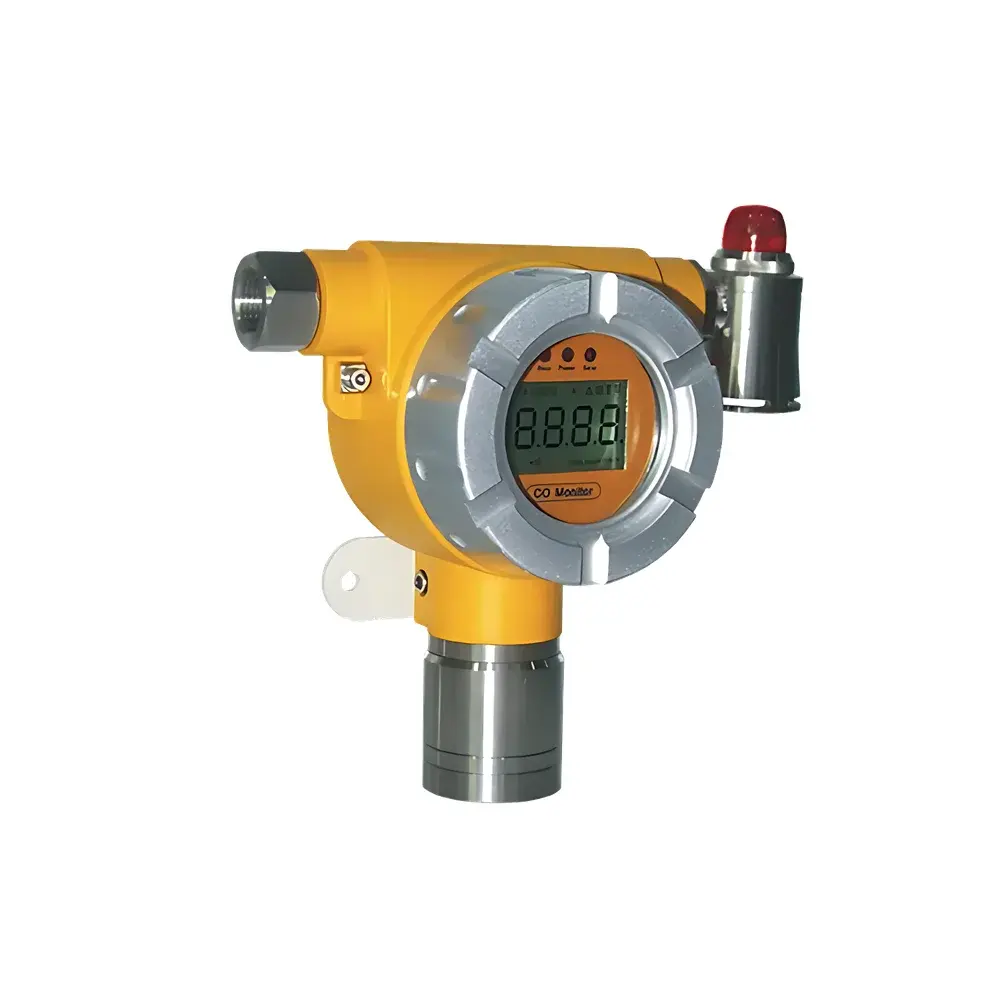
FPI GT-1020/1030/1031-TF Fixed Gas Detection and Alarm Transmitter
| Brand | FPI |
|---|---|
| Origin | Zhejiang, China |
| Manufacturer Type | Original Equipment Manufacturer (OEM) |
| Country of Origin | China |
| Model | GT-1020/1030/1031-TF |
| Pricing | Upon Request |
Overview
The FPI GT-1020/1030/1031-TF is a certified intrinsically safe and flameproof fixed gas detection transmitter engineered for continuous, real-time monitoring of toxic and combustible gases in hazardous industrial environments. Designed in accordance with IEC 60079-0, IEC 60079-1 (flameproof “d” enclosure), and IEC 60079-26 (equipment for Zone 1 and Zone 2), the series supports operation in classified areas where explosive atmospheres may occur due to the presence of flammable vapors, gases, or dusts. The GT-1020 variant employs electrochemical sensing technology optimized for low-concentration toxic gases (e.g., H₂S, CO, Cl₂, NH₃, SO₂), while the GT-1030 and GT-1031 models utilize catalytic bead (pellistor) sensors calibrated for combustible hydrocarbons (e.g., CH₄, C₃H₈, H₂) and hydrogen, respectively. All units operate on a robust transducer architecture that integrates signal conditioning, temperature compensation, and digital diagnostics into a single field-mounted housing.
Key Features
- Explosion-proof enclosure rated for Zone 1 and Zone 2 (Group IIA/IIB, T4–T6), compliant with ATEX, IECEx, and CNEx certification requirements.
- Modular sensor design: factory-sealed, plug-and-play electrochemical (GT-1020) or catalytic combustion (GT-1030/1031) sensor cartridges—field-replaceable without tools or instrument disassembly.
- Multi-protocol communication interface supporting 4–20 mA analog output (HART-enabled), RS-485 Modbus RTU, and optional Foundation Fieldbus or Profibus PA configurations.
- Integrated visual and audible alarm assembly (LED status indicators + 95 dB @ 1 m piezoelectric horn) with configurable relay outputs for external shutdown or ventilation activation.
- Corrosion-resistant housing fabricated from die-cast aluminum alloy with multi-stage surface treatment (electroplating + epoxy-polyester powder coating), rated IP66/IP67 for outdoor and washdown environments.
- Infrared bidirectional remote control enables zero/span calibration, parameter configuration, and diagnostic review without opening the enclosure—reducing exposure risk during maintenance in live hazardous zones.
- Onboard temperature-compensated linearization algorithm ensures measurement stability across –40 °C to +70 °C ambient operating range; typical response time (T90) < 30 s for GT-1020, < 15 s for GT-1030/1031.
Sample Compatibility & Compliance
The GT-1020/1030/1031-TF series is validated for use with standard calibration gases traceable to NIST or equivalent national metrology institutes. Sensor selection aligns with application-specific gas matrices: GT-1020 supports OSHA-permissible exposure limits (PELs) and TLV®-based toxic gas thresholds; GT-1030 complies with UL 2075 and EN 50194 standards for combustible gas detection; GT-1031 includes hydrogen-specific catalyst formulation resistant to silicon poisoning and halogen inhibition. All units meet EMC Directive 2014/30/EU, RoHS 2011/65/EU, and are designed to support SIL 2 functional safety integrity per IEC 61508 when integrated into a certified safety instrumented system (SIS).
Software & Data Management
Configuration and diagnostics are managed via FPI’s proprietary PC-based GasConfig Suite (v3.2+), which supports device commissioning, firmware updates, event log export (CSV), and audit trail generation compliant with FDA 21 CFR Part 11 requirements—including electronic signatures, user access levels, and immutable change history. Optional cloud connectivity via FPI Edge Gateway enables MQTT/HTTPS telemetry to SCADA, DCS, or IIoT platforms (e.g., Siemens Desigo, Honeywell Experion, Emerson DeltaV), with TLS 1.2 encryption and role-based API access control. Data retention supports GLP/GMP-aligned recordkeeping for up to 12 months of operational logs, alarm events, and calibration certificates.
Applications
This transmitter series serves as a foundational component in process safety management (PSM) systems across high-risk sectors. In metallurgical facilities, it monitors CO and NOₓ in sintering and blast furnace off-gas streams. Within petrochemical and chlor-alkali plants, GT-1020 units detect Cl₂ leakage at electrolysis cells, while GT-1030 units safeguard compressor stations and LNG transfer interfaces. Biopharmaceutical clean utilities employ GT-1020 for ethylene oxide sterilizer chamber purge verification. Natural gas distribution hubs deploy GT-1031 for hydrogen blending infrastructure monitoring. Fine chemical reactors benefit from dual-sensor deployment strategies—e.g., GT-1020 for HCl vapor and GT-1030 for solvent vapors—to satisfy layered protection requirements under CCPS guidelines.
FAQ
What certifications does the GT-1020/1030/1031-TF hold for international hazardous area use?
It carries ATEX (EU), IECEx (global), and CNEx (China) certifications for Zone 1/2, with documentation available upon request for specific gas groups and temperature classes.
Can the unit be integrated into existing DCS or safety PLC systems?
Yes—via 4–20 mA/HART analog integration or digital protocols including Modbus RTU over RS-485; SIL-certified configuration files are provided for SIS integration.
Is remote calibration traceable to national standards?
Calibration performed using NIST-traceable span gases and documented within GasConfig Suite fulfills ISO/IEC 17025 traceability requirements when executed by accredited personnel.
What is the expected service life of the electrochemical and catalytic sensors?
Typical operational lifespan is 24 months for GT-1020 electrochemical sensors and 36 months for GT-1030/1031 pellistors under normal operating conditions; automatic sensor health diagnostics alert users prior to end-of-life.
Does the device support predictive maintenance analytics?
Yes—embedded diagnostics monitor baseline drift, zero stability, and temperature correlation coefficients, feeding data to FPI’s Predictive Analytics Module for trend-based failure forecasting and maintenance scheduling.
Related Products