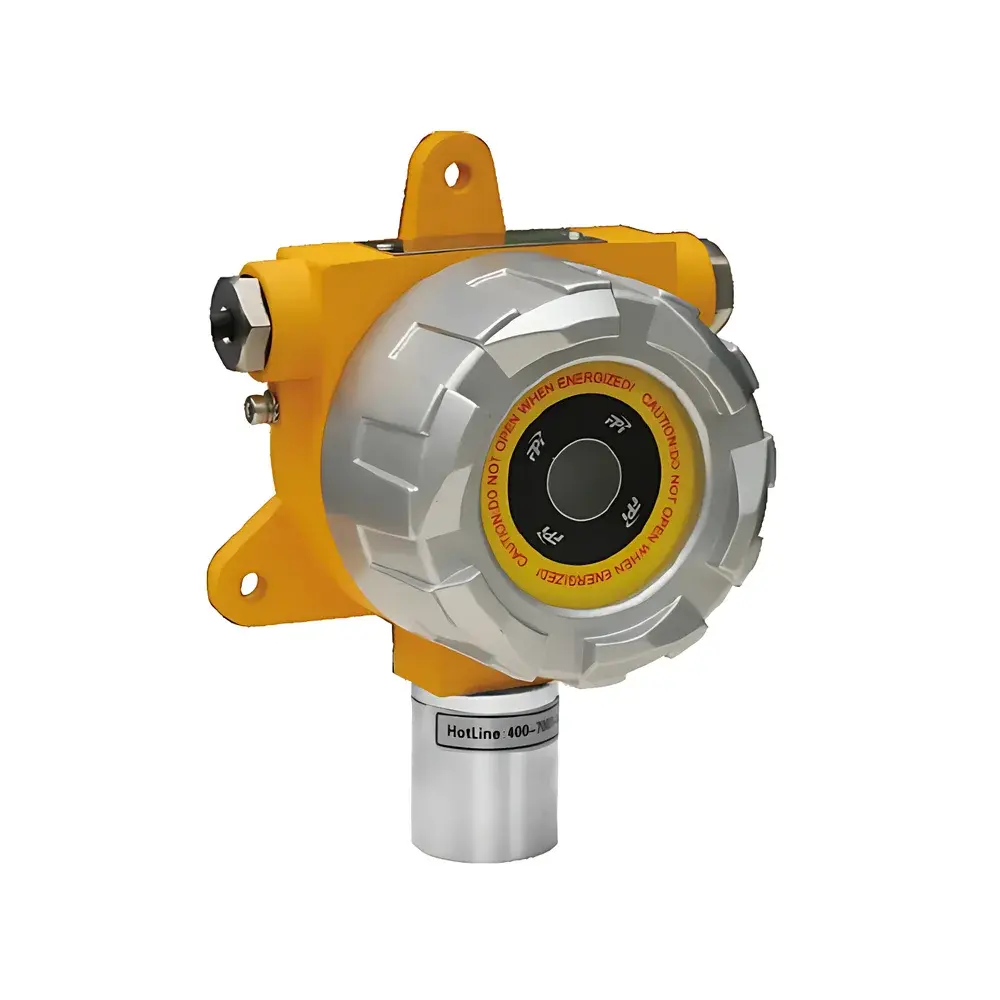
FPI GT-TL Series Intrinsically Safe Gas Detection Alarm Transmitter
| Brand | FPI |
|---|---|
| Origin | Zhejiang, China |
| Manufacturer Type | Original Equipment Manufacturer (OEM) |
| Country of Origin | China |
| Model | GT-TL |
| Pricing | Available Upon Request |
Overview
The FPI GT-TL Series Intrinsically Safe Gas Detection Alarm Transmitter is a certified hazardous-area instrument engineered for continuous, reliable detection of combustible and toxic gases in industrial process environments. Designed in accordance with IEC 60079-0, IEC 60079-11, and GB 3836.1/4 standards for explosion protection, the GT-TL series employs catalytic bead (pellistor) or electrochemical sensing technology—depending on gas type—to deliver stable, repeatable concentration measurements under demanding operational conditions. The GT-1020TL variant is configured as a display-free, flameproof (Ex d) transmitter optimized for integration into distributed control systems (DCS) or safety instrumented systems (SIS), while the GT-1030/1031-TL models incorporate local LED status indication and optional integrated audible/visual alarm modules. Its compact, IP66-rated aluminum housing ensures mechanical robustness and resistance to corrosion, dust, and water ingress in outdoor or semi-outdoor installations.
Key Features
- Infrared bidirectional remote control interface enables full field maintenance—including zero calibration, span adjustment, and alarm threshold configuration—without opening the enclosure, eliminating potential ignition risks and reducing downtime during routine servicing.
- Integrated temperature and concentration compensation algorithm ensures linear output response across an operating ambient temperature range of −20 °C to +50 °C, minimizing drift due to thermal variation and enhancing long-term measurement stability.
- Dual-color (red/green) LED status indicator provides immediate visual feedback: steady green indicates normal operation; flashing red signals alarm activation; alternating red/green denotes fault or calibration mode.
- Modular design supports optional plug-in sounder/strobe assembly compliant with IEC 61000-4 electromagnetic compatibility requirements, enabling standalone local alarm functionality without external annunciator hardware.
- 4–20 mA analog output with HART® protocol support allows seamless integration with legacy and modern process automation systems, supporting diagnostics, device configuration, and real-time health monitoring via host DCS or asset management platforms.
Sample Compatibility & Compliance
The GT-TL series is validated for detection of methane (CH₄), propane (C₃H₈), hydrogen sulfide (H₂S), carbon monoxide (CO), and other Class I, Group B–D gases per NEC/CEC classification. Sensor configurations are selected based on target gas molecular properties and required detection limits (e.g., 0–100% LEL for combustibles; 0–100 ppm for H₂S). All units undergo factory calibration traceable to NIST-certified reference standards and comply with ISO 9001 manufacturing quality controls. Documentation includes Ex certification reports (CNEx, CCCEx), RoHS 2011/65/EU compliance declarations, and conformity statements aligned with China’s GB/T 12358-2019 standard for portable and fixed gas detectors.
Software & Data Management
While the GT-TL series operates as a standalone analog transmitter without embedded firmware-based data logging, it is fully compatible with FPI’s centralized gas detection management platform—FPI GDS Suite v3.2—for system-level configuration, event history archiving, and audit trail generation. When connected via HART-enabled interfaces, the device supports diagnostic parameter readout including sensor age, zero drift history, and last calibration timestamp. All configuration changes performed via infrared remote are logged with timestamp and operator ID (when authenticated through paired handheld configurator), satisfying basic requirements for GLP/GMP-aligned maintenance records and supporting traceability for regulatory inspections.
Applications
- Refinery and petrochemical plant perimeter monitoring and flare stack area surveillance
- Natural gas compression stations and LNG terminal loading/unloading zones
- Chemical storage tank farms requiring low-cost, high-reliability point detection
- Wastewater treatment facilities monitoring H₂S in headworks and sludge handling areas
- Industrial boiler rooms and confined-space entry support systems where intrinsic safety and minimal footprint are critical
FAQ
Is the GT-TL series certified for use in Zone 1 hazardous locations?
Yes—GT-TL transmitters carry Ex d IIB T4 Gb (flameproof) or Ex ia IIC T4 Ga (intrinsically safe) certifications depending on model variant, permitting deployment in Zone 1 (gas) and Zone 21 (dust) classified areas per IEC 60079-10-1.
Can the infrared remote be used for bump testing?
No—the IR interface supports only zero calibration, span adjustment, and alarm setpoint modification. Bump testing requires exposure to certified test gas and must be verified using a calibrated reference instrument per OSHA 1910.120 and IEC 61511 functional safety guidelines.
What is the expected service life of the electrochemical sensor in GT-1031-TL?
Typical operational lifespan is 24–36 months under continuous exposure at ambient conditions; accelerated degradation may occur in high-humidity (>90% RH), high-temperature (>45 °C), or high-concentration environments. FPI recommends annual verification and replacement per manufacturer’s preventive maintenance schedule.
Does the GT-TL support Modbus RTU or Profibus PA communication?
No—the GT-TL series natively supports only 4–20 mA analog output with HART 7 digital overlay. Protocol conversion to Modbus RTU or Profibus PA requires an external signal conditioner or gateway device certified for use in hazardous areas.