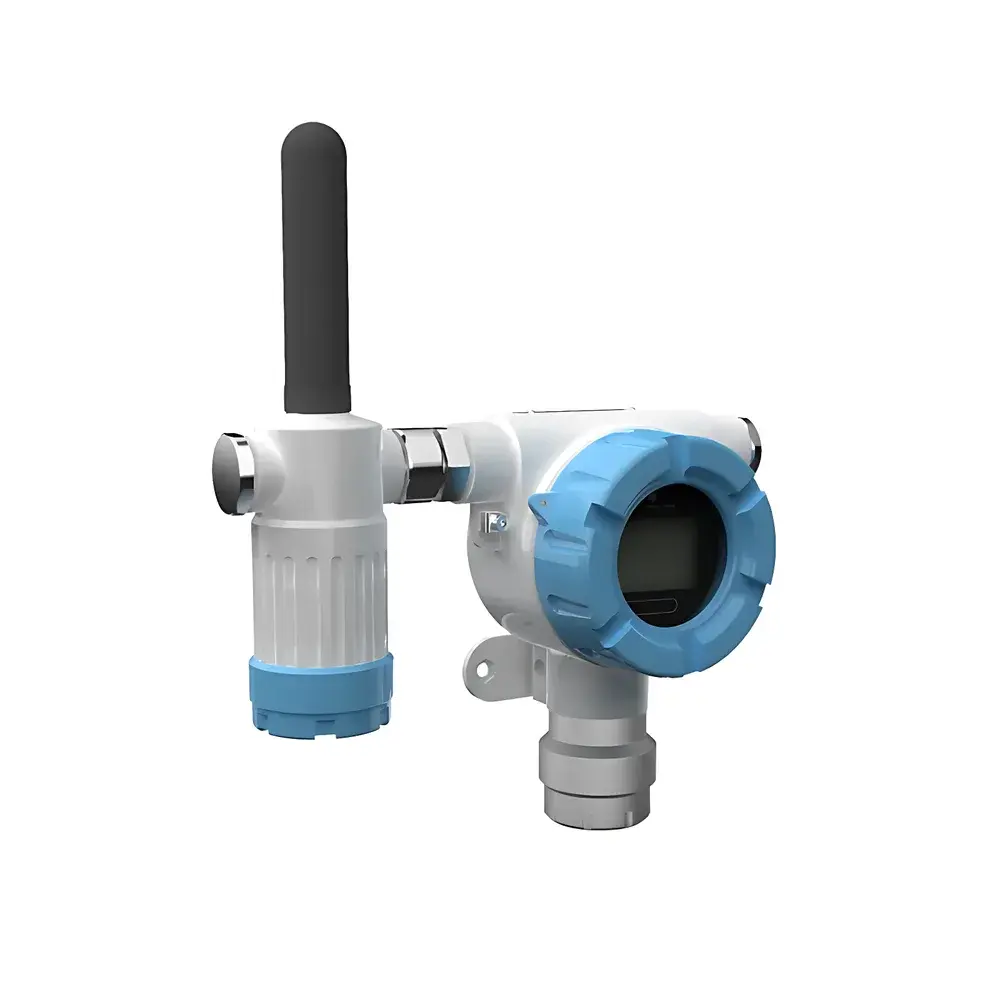
FPI GT-W Wireless Toxic Gas Detector
| Brand | FPI |
|---|---|
| Origin | Zhejiang, China |
| Manufacturer Type | Manufacturer |
| Origin Category | Domestic |
| Model | GT-W |
| Pricing | Upon Request |
Overview
The FPI GT-W Wireless Toxic Gas Detector is an intrinsically safe and flameproof (Ex d IIC T6) industrial gas monitoring instrument engineered for continuous, real-time detection of hazardous toxic gases in classified hazardous locations—specifically Zone 1 and Zone 2 environments per IEC 60079-0 and GB 3836 standards. It operates on a robust wireless Mesh communication architecture compliant with IEEE 802.15.4g, enabling reliable peer-to-peer and one-to-many data transmission without physical cabling. The device employs electrochemical or metal-oxide semiconductor (MOS) sensing technology—depending on configured sensor module—to deliver stable, repeatable concentration measurements for gases including H₂S, CO, Cl₂, NH₃, SO₂, NO₂, and other common industrial toxics. Its measurement principle relies on diffusion-controlled gas interaction with the active sensing element, generating a linear analog current output proportional to target gas concentration (ppm or %LEL, depending on sensor type). Designed for deployment in petrochemical plants, refineries, wastewater treatment facilities, and chemical storage areas, the GT-W meets functional safety requirements for early warning and process integrity assurance.
Key Features
- Intrinsically safe and flameproof dual-certified design (Ex d IIC T6), certified to GB 3836.1–2021 and GB 3836.2–2021 for use in explosive atmospheres.
- Wireless Mesh networking capability with up to 500 m line-of-sight communication range; supports self-healing topology and automatic node discovery when integrated with the GC-3010 Wireless Gas Alarm Controller.
- Field-serviceable modular sensor architecture: plug-and-play sensor cartridges with factory calibration data stored in onboard EEPROM—no manual zero/span adjustment required during replacement.
- Integrated high-capacity lithium-thionyl chloride (Li-SOCl₂) battery with ultra-low-power circuitry, enabling ≥12 months of continuous operation under typical duty cycles (sampling interval: 30 s, reporting interval: 2 min).
- Infrared bidirectional remote control interface compatible with FPI’s handheld IR remote (model IR-RH100); enables full configuration, alarm reset, bump test initiation, and diagnostics without opening the enclosure—preserving explosion-proof integrity.
- Multi-layer corrosion-resistant housing (electroless nickel plating + UV-stabilized polycarbonate + marine-grade stainless steel fasteners) rated IP66 for long-term reliability in high-humidity, saline, or chemically aggressive ambient conditions.
Sample Compatibility & Compliance
The GT-W is compatible with a standardized family of electrochemical and MOS-based toxic gas sensor modules, each pre-calibrated for specific target analytes and validated against NIST-traceable reference standards. Sensor interchangeability ensures rapid field adaptation across varying process hazards without hardware redesign. Regulatory compliance includes: CE marking per ATEX Directive 2014/34/EU (Category 2G), RoHS 2011/65/EU, EMC Directive 2014/30/EU, and China’s CNEX certification (CNEx19.1077X). The device supports audit-ready event logging—including alarm triggers, sensor fault codes, battery voltage trends, and remote command history—in alignment with ISO 9001:2015 quality management system requirements and internal GLP documentation practices.
Software & Data Management
Data from GT-W units is aggregated via the GC-3010 controller into a unified Modbus TCP or MQTT-enabled SCADA interface. FPI’s GasGuardian™ configuration software (v4.2+) provides centralized firmware updates, sensor lifecycle tracking, and automated calibration due-date alerts. All configuration changes and alarm acknowledgments are time-stamped and logged with user ID attribution, supporting FDA 21 CFR Part 11-compliant electronic record integrity when deployed in regulated pharmaceutical or biotech manufacturing environments. Historical trend data (1-second resolution, 30-day buffer) is exportable in CSV or OPC UA format for integration with MES or CMMS platforms.
Applications
- Continuous perimeter monitoring around sulfur recovery units and amine regeneration towers in oil & gas facilities.
- Confined space entry pre-check and real-time worker exposure monitoring in utility tunnels and pump stations.
- Leak detection at flange connections, valve packing, and sampling points in batch chemical synthesis lines.
- Emergency response readiness in municipal water treatment chlorine contact chambers and sludge digestion buildings.
- Compliance-driven ambient air quality surveillance in EPA Title V permitted facilities requiring sub-hourly toxic gas reporting.
FAQ
What hazardous area classifications does the GT-W support?
It is certified Ex d IIC T6, suitable for Zone 1 and Zone 2 gas groups IIA, IIB, and IIC per IEC 60079-10-1.
Can the GT-W operate without the GC-3010 controller?
No—the GT-W is a field node only; it requires the GC-3010 or compatible FPI gateway for network coordination, alarm relay output, and HMI visualization.
How is sensor calibration verified in the field?
Via infrared remote-initiated bump test using certified span gas; results are logged and compared against factory baseline drift thresholds.
Is battery replacement possible in-situ by maintenance personnel?
Yes—battery modules are sealed but serviceable using FPI-approved tools and documented procedures under hot-work permit conditions.
Does the device support HART or Foundation Fieldbus protocols?
No—it uses proprietary FPI Mesh RF protocol for sensor-to-controller communication; Modbus TCP or MQTT is available at the GC-3010 gateway level only.
Related Products