
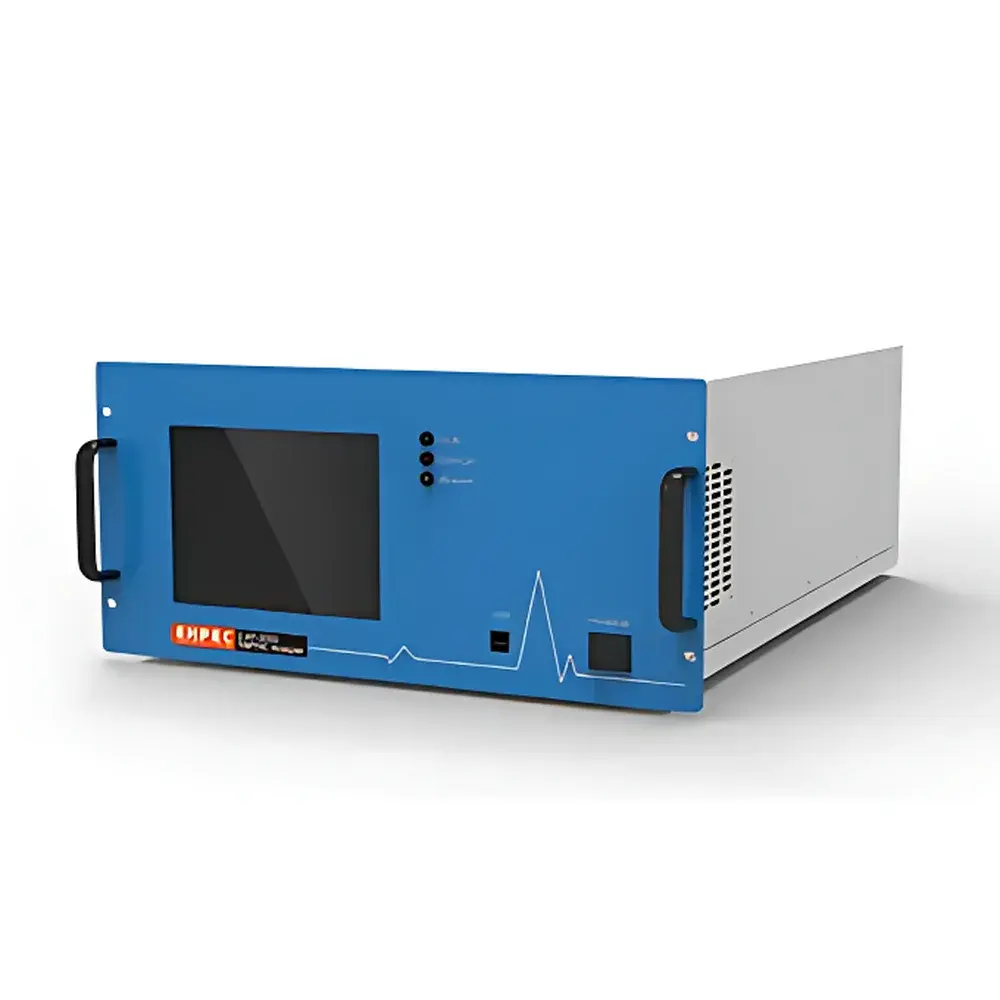
FPI Methane / Non-Methane Hydrocarbons (NMHC) Online Analyzer
| Brand | FPI |
|---|---|
| Origin | Zhejiang, China |
| Manufacturer Type | Original Equipment Manufacturer (OEM) |
| Product Category | Domestic |
| Model | Methane / NMHC Online Analyzer |
| Instrument Type | Continuous Emission Monitoring System (CEMS) |
| Detection Principle | Gas Chromatography with Flame Ionization Detection (GC-FID) |
| Thermal Design | Full-Stream 175 °C High-Temperature Heating |
| Column Configuration | Dual-Valve Dual-Column (Model 115) / Dual-Valve Triple-Column (Model 120) |
| Analysis Cycle Time | <90 s per cycle |
| Target Analytes | CH₄, Total NMHC, Benzene, Toluene, Xylenes (BTX) |
| Safety Feature | Auto-H₂ shutoff upon FID flameout |
| Compliance Basis | Aligned with HJ 38–2017, HJ 1012–2018, EPA Method 25A, ASTM D6420 |
Overview
The FPI Methane / Non-Methane Hydrocarbons (NMHC) Online Analyzer is an industrial-grade continuous emission monitoring system engineered for real-time, regulatory-compliant quantification of methane and total non-methane hydrocarbons in complex organic exhaust streams. Designed specifically for high-humidity, high-concentration, and thermally unstable flue gas environments—common in petrochemical, coating, printing, and surface treatment facilities—the instrument employs a full-thermal gas chromatography–flame ionization detection (GC-FID) architecture. All sample pathways—including sampling probe, transfer line, injection valve, separation columns, and detector chamber—are maintained at a constant 175 °C to prevent condensation, adsorption, or catalytic loss of volatile organic compounds (VOCs). This all-hot design eliminates water-induced matrix interference and ensures quantitative recovery of C₁–C₈ hydrocarbons, including reactive species such as alkenes and aromatics that are prone to wall losses in ambient-temperature systems.
Key Features
- Full-stream 175 °C high-temperature heating from probe tip to FID nozzle—eliminates water vapor condensation and minimizes adsorptive losses across the entire analytical train
- Dual-configuration platform: Model 115 utilizes dual-valve/dual-column GC-FID for simultaneous CH₄ and NMHC quantification; Model 120 extends capability with triple-column configuration for speciated analysis of benzene, toluene, ethylbenzene, and xylenes (BTEX)
- Automated, maintenance-free cyclic operation: fully self-contained sequence includes sample filtration, loop injection, carrier-gas-driven column elution, FID signal acquisition, and data reporting—no manual intervention required during continuous 24/7 operation
- Sub-90-second analysis cycle time enables near-real-time compliance reporting and supports dynamic process control feedback loops
- Integrated safety logic: FID flame status is continuously monitored; hydrogen supply is automatically terminated within 1.5 seconds of flame extinction, meeting IEC 61508 SIL2 functional safety requirements for hazardous area deployment
- Robust mechanical architecture with corrosion-resistant 316L stainless-steel flow paths, rated for weakly acidic gas matrices (pH ≥ 4.5) typical of post-scrubber or thermal oxidizer exhaust
Sample Compatibility & Compliance
The analyzer is validated for direct interfacing with stack ducts, process vents, and abatement system inlets/outlets under ISO 16000-6 and EPA Method 25A sampling protocols. It meets the performance criteria outlined in Chinese standard HJ 38–2017 (Determination of Methane and Total Hydrocarbons in Exhaust Gas—Gas Chromatography) and HJ 1012–2018 (Technical Specification for Online Monitoring Systems of Volatile Organic Compounds in Fixed Pollution Sources). When configured with optional data acquisition modules, the system supports audit-ready electronic records compliant with GLP/GMP documentation standards and provides timestamped raw chromatograms, calibration logs, and system diagnostic histories required for environmental regulatory inspections.
Software & Data Management
Embedded firmware runs on a deterministic real-time OS with dual-core ARM Cortex-A9 processor, supporting local display, Ethernet/IP communication, and Modbus TCP/RTU protocol stacks for integration into plant DCS or SCADA networks. The web-based interface (accessible via HTTPS) delivers live chromatograms, trend plots, alarm thresholds, and remote configuration of method parameters—including oven ramp profiles, valve timing, and FID bias voltage. All analytical data are stored in SQLite databases with SHA-256 hash-verified integrity; optional cloud synchronization enables centralized fleet monitoring and predictive maintenance analytics using historical uptime, column bleed rates, and detector response decay trends.
Applications
This analyzer is deployed in regulated emissions monitoring applications where speciated VOC data inform compliance with national and provincial air quality management plans. Typical use cases include: continuous monitoring of exhaust from regenerative thermal oxidizers (RTOs) and catalytic oxidizers in chemical manufacturing; real-time tracking of NMHC removal efficiency across activated carbon or zeolite adsorption beds; source apportionment of aromatic compounds in packaging printing facility stacks; and verification of emission reductions following installation of solvent recovery systems in automotive coating lines. Its high-temperature resilience makes it suitable for direct sampling upstream of wet scrubbers or downstream of high-temperature incineration units.
FAQ
What regulatory standards does this analyzer meet?
It conforms to HJ 38–2017 and HJ 1012–2018 for NMHC and BTEX measurement in China, and its GC-FID methodology aligns with U.S. EPA Method 25A and ASTM D6420 for total hydrocarbon determination.
Can the system operate unattended for extended periods?
Yes—designed for >30-day uninterrupted operation, it features automated zero/span calibration scheduling, column bake-out routines, and fault diagnostics with email/SNMP alerting.
Is the analyzer compatible with existing CEMS infrastructure?
It supports 4–20 mA analog outputs, Modbus RTU over RS-485, and Ethernet-based OPC UA for seamless integration into legacy or modern plant automation systems.
How is data integrity ensured for regulatory reporting?
All chromatographic data, calibration events, and system logs are cryptographically signed and archived locally with write-once-read-many (WORM) retention policies, satisfying requirements for audit trails under environmental data governance frameworks.
Does the system require external cooling or compressed air?
No—fully self-contained with integrated high-efficiency Peltier coolers for FID temperature stabilization and no reliance on instrument air or chilled water circuits.







