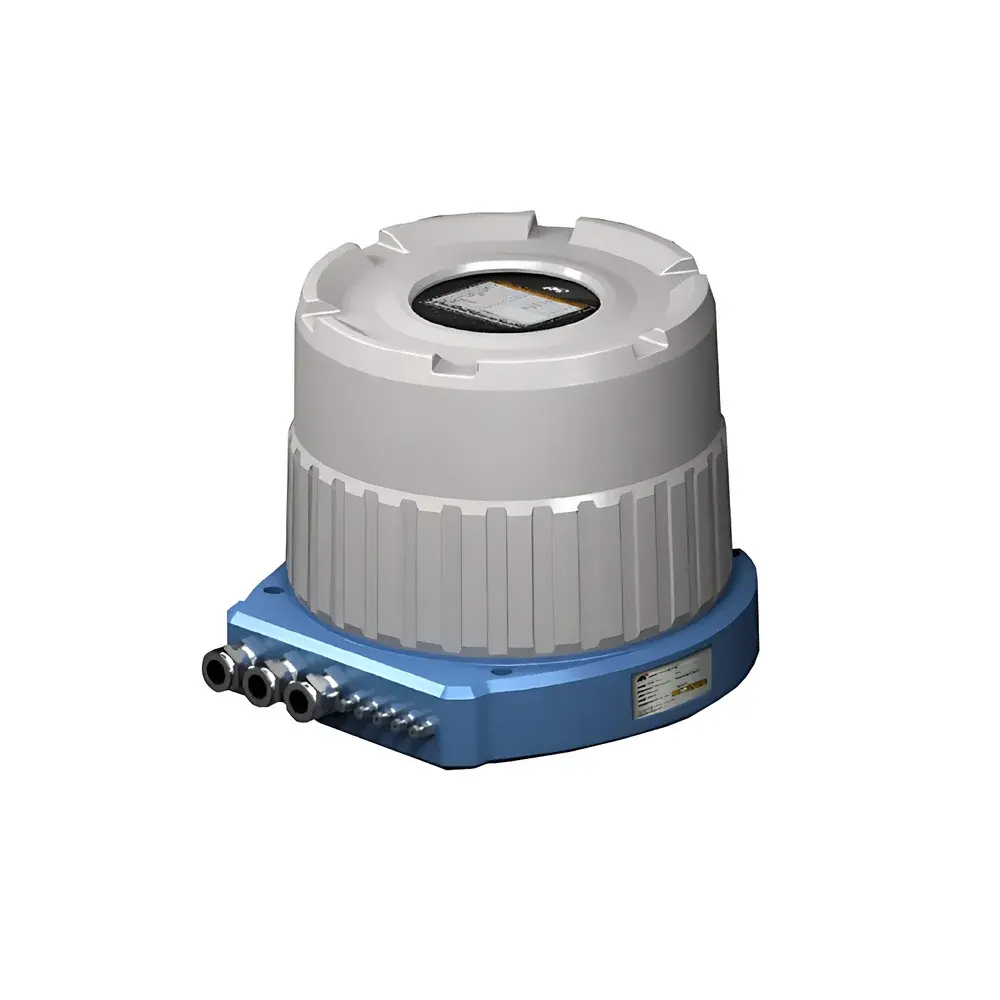
FPI ProGC-2000 Online Gas Chromatograph
| Brand | FPI |
|---|---|
| Origin | Zhejiang, China |
| Manufacturer Type | Original Equipment Manufacturer (OEM) |
| Country of Origin | China |
| Model | GC-2000 |
| Pricing | Upon Request |
Overview
The FPI ProGC-2000 Online Gas Chromatograph is an industrial-grade, continuous-duty gas chromatography system engineered for real-time compositional analysis of natural gas in transmission pipelines, city gate stations, and commercial end-user facilities. It operates on the fundamental principle of gas-phase separation via capillary column chromatography, coupled with thermal conductivity detection (TCD), to quantify key hydrocarbon and non-hydrocarbon species—including methane (C₁) through hexanes and heavier (C₆⁺), carbon dioxide (CO₂), nitrogen (N₂), and hydrogen sulfide (H₂S) where configured. The instrument delivers certified-quality data compliant with ISO 6974, ASTM D1945, and GPA 2145 standards for natural gas analysis. Its primary output parameters include higher heating value (HHV), lower heating value (LHV), relative density, compressibility factor (Z), and Wobbe index—enabling direct integration into custody transfer energy metering systems and process control loops.
Key Features
- High-Speed Separation Architecture: Equipped with narrow-bore fused-silica capillary columns and rapid oven temperature ramping (up to 240 °C/min), achieving full C₁–C₆⁺ separation in under 30 seconds per cycle.
- MEMS-Based Miniaturized Flow System: Integrates micro-electro-mechanical systems (MEMS) for carrier gas regulation, sample introduction, and detector thermal management—reducing overall footprint to φ320 mm × H300 mm and total mass to 25 kg.
- Intrinsically Robust Detection: Dual-channel MEMS micro-TCD with inert-coated tungsten-rhenium filaments and automatic filament protection circuitry prevents damage during carrier gas interruption or flow loss.
- Precision Pressure Control: Digital electronic pressure control (EPC) modules regulate both carrier and sample gas pressures across 0–300 kPa range with stability better than ±0.05 kPa—ensuring retention time reproducibility <0.02 min over 72-hour continuous operation.
- Adaptive Retention Time Locking: Real-time spectral alignment algorithm compensates for column aging, ambient temperature drift, or minor flow deviations—maintaining peak identification integrity without manual recalibration.
- Hazardous Area Certification: Fully rated for Zone 1 / Division 1 environments per IEC 60079-0, -1, -11 and ATEX Directive 2014/34/EU (Ex d IIC T5 Gb), enabling direct installation in classified natural gas processing enclosures.
Sample Compatibility & Compliance
The ProGC-2000 is validated for direct analysis of pipeline-grade natural gas, LNG vaporized streams, and mixed refrigerant blends (e.g., N₂/CH₄/C₂H₆/C₃H₈/i-C₄H₁₀/n-C₄H₁₀) within moisture-free, particulate-filtered sample streams (<0.1 µm filtration recommended). It meets traceability requirements under ISO/IEC 17025 for accredited laboratories and supports audit-ready documentation for GLP and GMP environments. Data integrity complies with FDA 21 CFR Part 11 when operated with optional secure software licensing and electronic signature modules.
Software & Data Management
The embedded Linux-based controller runs FPI ChromaView™ v3.x firmware, providing web-accessible configuration, real-time chromatogram visualization, automated calibration scheduling, and alarm-triggered event logging. Raw chromatographic data (peak areas, retention times, baseline offsets) are exported in ASTM E1319-compliant .csv and .cdf formats. Optional OPC UA server enables seamless integration into DCS/SCADA platforms (e.g., Siemens Desigo, Honeywell Experion, Emerson DeltaV) and enterprise MES systems. Audit trails record all method changes, user logins, and calibration events with immutable timestamps.
Applications
- Custody transfer energy metering at interstate pipeline interconnects and municipal gate stations
- Real-time monitoring of LNG liquefaction train refrigerant composition (e.g., C₁/C₂/C₃/N₂ ratios)
- Combustion optimization and emissions compliance reporting in gas-fired power plants
- Feedstock quality assurance in petrochemical crackers and hydrogen reformers
- Odorant concentration tracking (e.g., THT, TBM) in distribution networks per EN 13726
- Biogas upgrading verification (CH₄/CO₂ ratio, siloxane screening with optional pre-concentrator)
FAQ
What standards does the ProGC-2000 comply with for natural gas analysis?
It adheres to ISO 6974 (parts 1–5), ASTM D1945, GPA 2145, and GB/T 13610 for compositional analysis and calorific value calculation.
Can the system operate unattended for extended periods?
Yes—designed for 7×24 continuous operation with remote diagnostics, predictive maintenance alerts, and auto-recovery from minor pressure or temperature excursions.
Is hydrogen sulfide (H₂S) detection supported out-of-the-box?
H₂S quantification requires optional sulfur-specific column and detector configuration; standard configuration covers C₁–C₆⁺, CO₂, and N₂.
How is calibration maintained in field deployments?
Multi-point calibration is performed using certified gas standards; retention time locking and internal standard normalization minimize drift between calibrations.
What communication protocols are available for integration?
Standard Ethernet/IP with HTTP/HTTPS, Modbus TCP, and optional OPC UA or Profibus DP-V1 interfaces.