
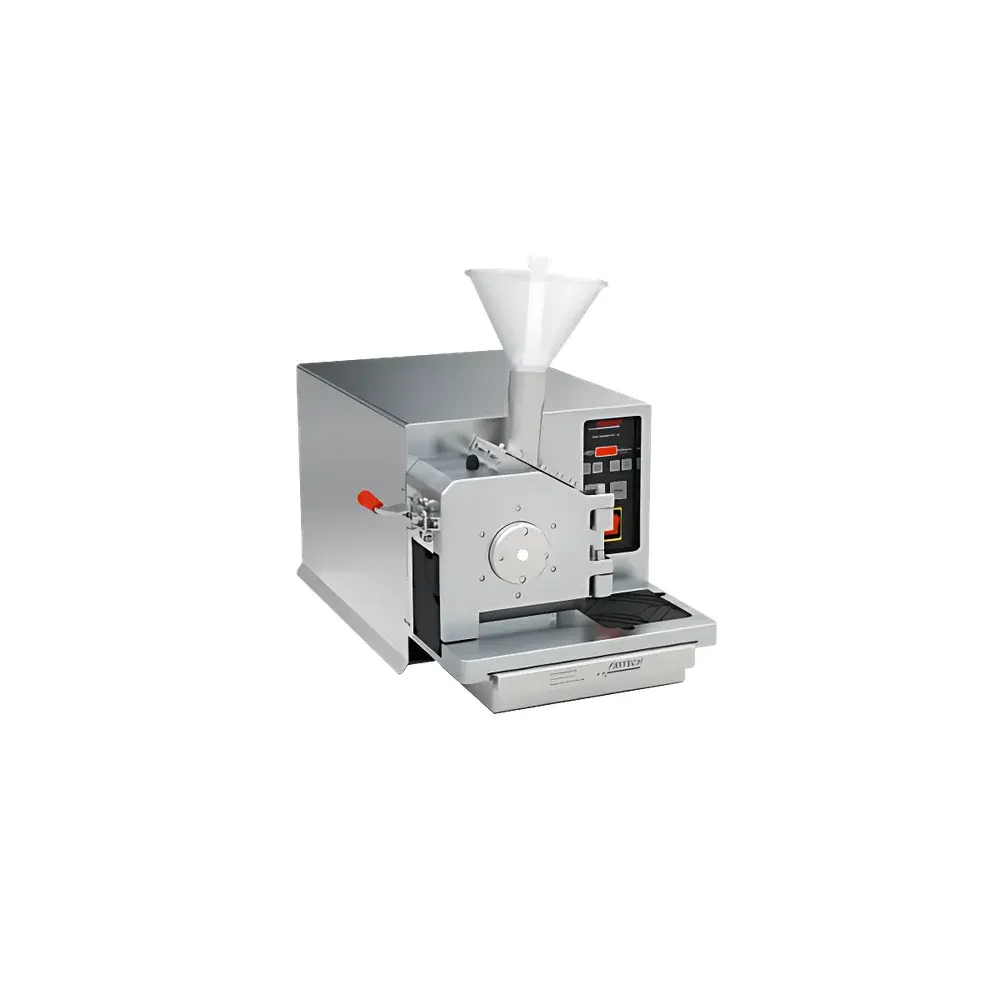
FRITSCH PULVERISETTE 19 Universal Cutting Mill
| Brand | FRITSCH |
|---|---|
| Origin | Germany |
| Model | PULVERISETTE 19 |
| Maximum Feed Size | 120 × 85 mm |
| Throughput | up to 85 L/h |
| Final Particle Size | 1–10 mm |
| Rotor Speed | 300–360 rpm |
| Motor Power | 2.2 kW (high-torque gear motor) |
| Net Weight | 75 kg |
| Gross Weight | 105 kg |
| Dimensions (W × D × H) | 45 × 65 × 63 cm |
| Cleanability | Full Access to Grinding Chamber & All Components |
Overview
The FRITSCH PULVERISETTE 19 Universal Cutting Mill is a robust, high-torque laboratory cutting mill engineered for reproducible pre- and intermediate-size reduction of soft to medium-hard, fibrous, or brittle materials. Operating on the principle of controlled mechanical shearing and impact between a rotating knife rotor and stationary counter-cutting elements, the instrument delivers consistent particle size distribution within the 1–10 mm range—ideal for homogenization prior to downstream analytical procedures such as XRF sample preparation, NIR calibration, or thermal analysis. Designed and manufactured in Germany to DIN EN ISO 9001-certified quality standards, the PULVERISETTE 19 integrates precision engineering with operational safety and long-term reliability, making it suitable for routine use in QC laboratories, research institutions, and industrial R&D environments where batch-to-batch comparability and material integrity are critical.
Key Features
- High-torque 2.2 kW gear motor ensures stable rotational speed (300–360 rpm) under variable load conditions, minimizing torque drop during high-volume processing.
- Tool-free, quick-release mechanism for both rotor assembly and sieve plate—enabling rapid configuration changes for different sample types without requiring wrenches or alignment fixtures.
- Externally adjustable cutting gap allows precise control over particle size output without disassembly; adjustment range accommodates varying hardness and fiber content across organic, inorganic, and composite feedstocks.
- Full-access grinding chamber with smooth, crevice-free stainless-steel surfaces facilitates complete manual cleaning; all wetted parts—including rotor knives, counter-cutting blades, and sieve inserts—are removable and compatible with standard lab cleaning protocols.
- Dust extraction port (Ø 100 mm) enables direct connection to centralized vacuum systems or portable industrial vacuums, maintaining continuous airflow to suppress dust accumulation and provide passive cooling during extended operation.
- Cutting tools and sieve plates constructed from chromium-free hardened steel comply with EU RoHS Directive 2011/65/EU and USP / elemental impurity requirements—ensuring no chromium leaching into sensitive samples such as pharmaceutical excipients or food-grade botanicals.
Sample Compatibility & Compliance
The PULVERISETTE 19 accepts feed materials up to 120 × 85 mm in dimension and processes at rates up to 85 L/h—making it suitable for heterogeneous bulk samples including granules, flakes, pellets, dried plant matter, polymers, ceramics, and recycled composites. Its cutting-based comminution mechanism avoids excessive heat generation typical of impact mills, preserving thermolabile components. The instrument conforms to IEC 61000-6-2 (EMC immunity) and IEC 61000-6-4 (EMC emission) standards. Optional documentation packages support GLP-compliant validation, including IQ/OQ templates aligned with ASTM E2500-13 and ISO/IEC 17025:2017 requirements for equipment qualification in regulated environments.
Software & Data Management
While the PULVERISETTE 19 operates via analog control panel (rotary speed selector, start/stop, emergency stop), its mechanical design supports integration into automated workflows. Digital tachometer outputs (0–10 V analog signal) and auxiliary relay contacts enable connection to external PLCs or LIMS for run-time logging and audit trail generation. For laboratories operating under FDA 21 CFR Part 11, optional FRITSCH LabSuite™ interface modules provide electronic signature-capable operation logs, user access controls, and timestamped parameter records—fully traceable for GMP audits.
Applications
- Preparation of representative subsamples for elemental analysis (XRF, ICP-OES) of ores, slags, and metallurgical products.
- Size reduction of agricultural biomass prior to enzymatic hydrolysis or pyrolysis studies.
- Homogenization of polymer blends and recycled plastics before melt flow index (MFI) testing per ASTM D1238.
- Processing of herbal matrices for pharmacognosy research and botanical extract standardization.
- Routine comminution of rubber compounds, foams, and elastomers for physical property testing (tensile, hardness, compression set).
FAQ
What materials are incompatible with the PULVERISETTE 19?
Materials with extreme hardness (e.g., tungsten carbide, sintered alumina >1500 HV), highly abrasive minerals (e.g., silicon carbide grit), or those generating explosive dust clouds (e.g., fine aluminum powder without inert gas purging) are not recommended.
Can the PULVERISETTE 19 be used for cryogenic grinding?
No—the instrument is not designed for sub-ambient operation; ambient temperature operation only is specified per manufacturer guidelines.
Is the 1–10 mm final fineness achievable across all sample types?
Final particle size depends on feedstock properties (moisture, elasticity, brittleness); the stated range reflects typical performance with dry, moderately friable materials under optimized gap and speed settings.
Does FRITSCH supply validation documentation for GMP compliance?
Yes—qualified users may request IQ/OQ protocols, calibration certificates traceable to DKD/DAkkS-accredited labs, and risk assessments compliant with ISO 14971 for inclusion in equipment qualification dossiers.



