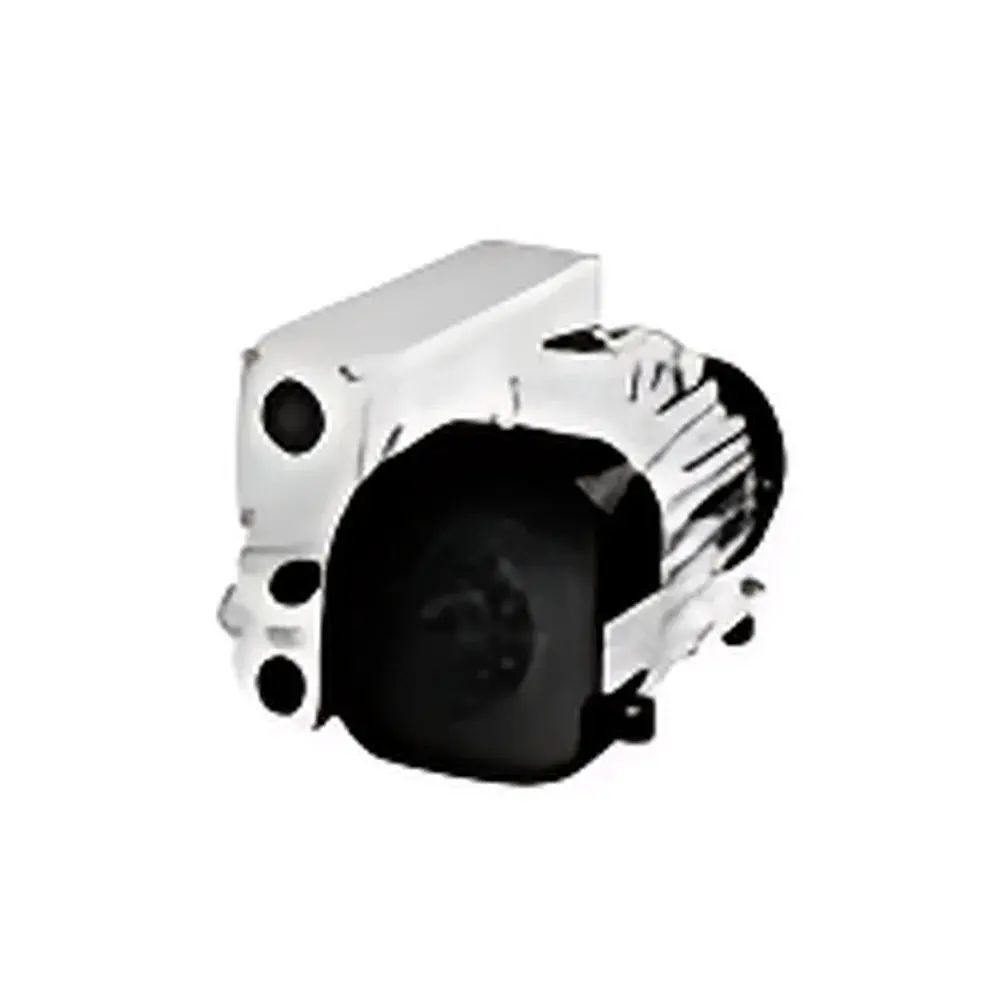
FS-Q-01 Compact Dual-Stage Diaphragm Vacuum Pump
| Origin | Imported |
|---|---|
| Manufacturer Type | Authorized Distributor |
| Model | FS-Q-01 |
| Flow Rate | 10 L/min (standard), 25 L/min or 50 L/min (high-flow configuration) |
| Ultimate Vacuum | ≤ 0.1 MPa (absolute) |
| Diaphragm Thickness | 3 mm |
| Continuous Duty Cycle | 3–4 hours |
| Peak Flow Rate | 22 L/min |
| Housing Material | Reinforced polymer (standard), optional metal housing |
| Diaphragm Material | Oil-resistant, fatigue-resistant elastomer with woven fabric reinforcement |
| Operating Limitation | Not suitable for corrosive gases or liquid ingress |
Overview
The FS-Q-01 is a compact, dual-stage diaphragm vacuum pump engineered for precision laboratory and field-deployable applications requiring reliable low-to-medium vacuum generation and controlled gas evacuation. Unlike rotary vane or piston-based systems, the FS-Q-01 employs a positive-displacement diaphragm mechanism—where oscillating elastomeric membranes alternately expand and compress internal chambers to draw in and expel gas. This design eliminates oil contamination risk, ensures maintenance-free operation over extended service intervals, and delivers consistent performance across variable backpressures. Its dual-stage architecture enables deeper ultimate vacuum levels (≤ 0.1 MPa absolute) while maintaining stable flow rates under load—making it particularly suited for applications where vacuum integrity must be preserved despite fluctuating system impedance, such as in gas sampling manifolds or closed-loop analytical instrumentation interfaces.
Key Features
- Compact footprint and lightweight construction (≤ 3.2 kg) facilitate integration into space-constrained instrument enclosures or portable test rigs.
- 3 mm thick reinforced diaphragm composed of oil-resistant synthetic rubber with embedded woven textile skeleton—optimized for >10,000 cycles of continuous flexing without fatigue-induced cracking or permeability drift.
- Selectably configurable airflow output: standard 10 L/min mode for low-power, long-duration operation; high-flow variants (25 L/min and 50 L/min) enabled via optimized valve timing and chamber geometry.
- Dual-stage compression path achieves higher compression ratios than single-stage equivalents, improving vacuum depth and reducing gas return leakage during hold phases.
- Integrated operational status indicator LED provides real-time visual confirmation of power delivery and motor activation—critical for remote or unattended deployment scenarios.
- Mechanically isolated mounting points and vibration-damped housing minimize acoustic emissions (< 52 dB(A)) and prevent resonance coupling with sensitive optical or microfluidic subsystems.
Sample Compatibility & Compliance
The FS-Q-01 is strictly intended for use with non-corrosive, dry, non-condensable gases—including ambient air, nitrogen, argon, helium, and carbon dioxide at standard temperature and pressure. It is not rated for halogenated compounds, sulfur oxides, ammonia, hydrogen sulfide, or solvent vapors—exposure to which will irreversibly degrade diaphragm integrity and compromise seal longevity. Liquid ingress into the intake or exhaust ports will cause immediate mechanical failure and void warranty coverage. While not certified to ISO 8573-1 Class 0 for oil-free air purity, its diaphragm-driven architecture inherently meets ISO 8573-1 Class 1 particulate and Class 0 oil aerosol requirements—making it compatible with ISO/IEC 17025-accredited environmental monitoring workflows when paired with appropriate inlet filtration (e.g., 0.2 µm PTFE membrane filters). No CE, UL, or ATEX certification is provided; users must verify local regulatory alignment prior to installation in safety-critical zones.
Software & Data Management
The FS-Q-01 operates as a standalone electromechanical device without embedded firmware, digital communication interfaces (e.g., RS-485, USB, or Modbus), or onboard data logging capability. Its control logic resides entirely in external power supply regulation and mechanical valve actuation—ensuring deterministic response time (< 150 ms from power-on to rated flow) and immunity to electromagnetic interference common in shared lab power environments. For integration into automated systems, users may interface the pump’s 24 VDC input terminals with programmable logic controllers (PLCs) or DAQ modules using dry-contact relay outputs or PWM-controlled DC drivers. All operational parameters—including duty cycle limits and thermal derating thresholds—are documented in the manufacturer’s technical manual per IEC 61000-6-2 EMC immunity standards and IEC 60068-2 environmental stress testing protocols.
Applications
- Gas chromatography (GC) carrier gas supply and detector purge circuits where oil-free, pulse-stable flow is mandatory.
- Portable air quality analyzers and EPA Method TO-15/TO-17 sampling pumps requiring Class I, Division 2 compatibility and battery-operable duty cycles.
- Vacuum-assisted liquid handling in clinical chemistry analyzers and point-of-care diagnostic platforms.
- Optical cavity evacuation for laser alignment systems and interferometric measurement setups sensitive to hydrocarbon outgassing.
- Environmental chamber pressure control in ASTM D3330 peel adhesion testers and ISO 5636-5 air permeability instruments.
- Pre-vacuum priming of microfluidic chip loading stations and capillary electrophoresis modules.
FAQ
Can the FS-Q-01 be used with aggressive solvents or acidic gases?
No. Exposure to corrosive vapors or condensable liquids will permanently damage the elastomeric diaphragm and internal check valves. Always install chemical-specific inline scrubbers or cold traps upstream if trace contaminants are present.
What is the recommended maintenance interval?
Under nominal operating conditions (≤ 4 hrs/day, clean ambient air), no scheduled maintenance is required. Diaphragm replacement is advised only after measurable flow decay (>15% at rated voltage) or visible surface crazing—typically beyond 12 months of intermittent use.
Is the pump suitable for continuous 24/7 operation?
No. The specified 3–4 hour continuous duty cycle reflects thermal equilibrium limits of the brushed DC motor and diaphragm material. For extended runtime, implement duty cycling (e.g., 3 min on / 1 min off) or integrate with a temperature-monitoring relay.
Does it comply with FDA 21 CFR Part 11 for regulated bioanalytical workflows?
As a non-networked, non-data-generating device, the FS-Q-01 falls outside Part 11 scope. However, its mechanical reliability supports ALCOA+ data integrity principles when used as a component within validated vacuum subsystems.