
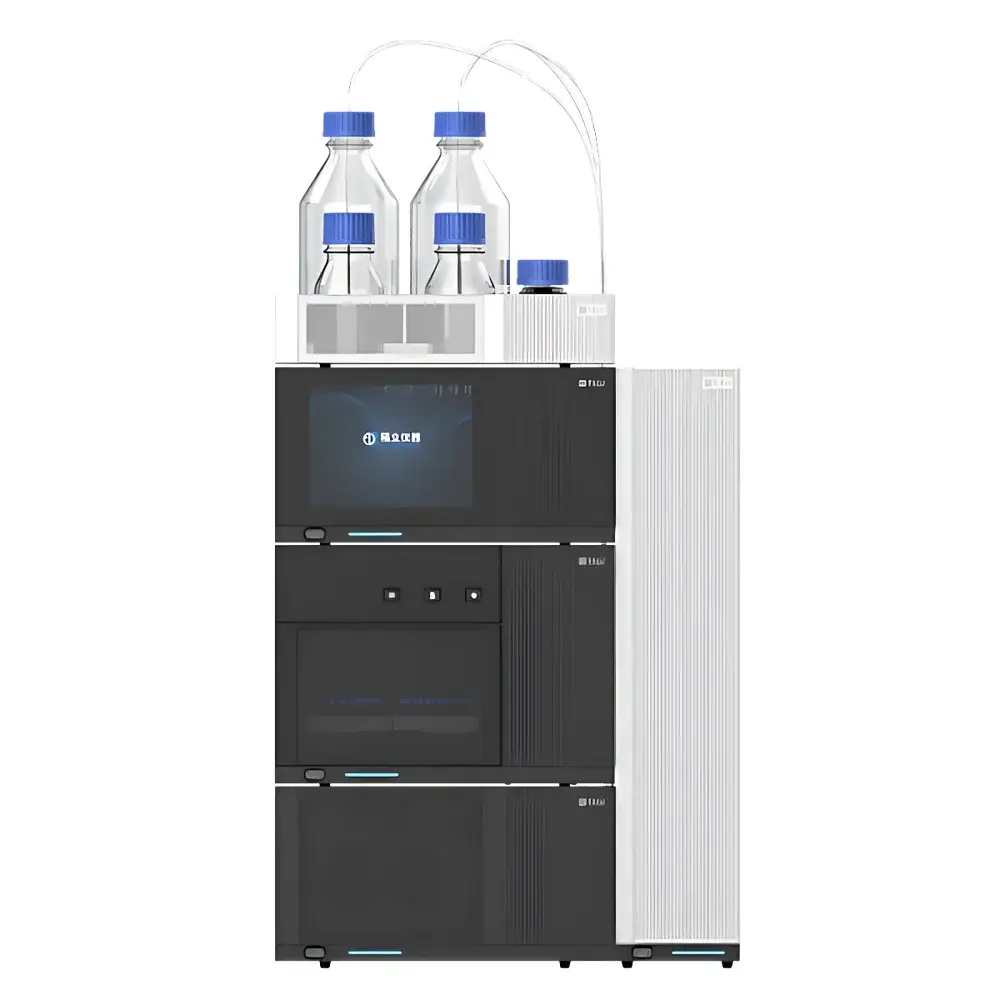
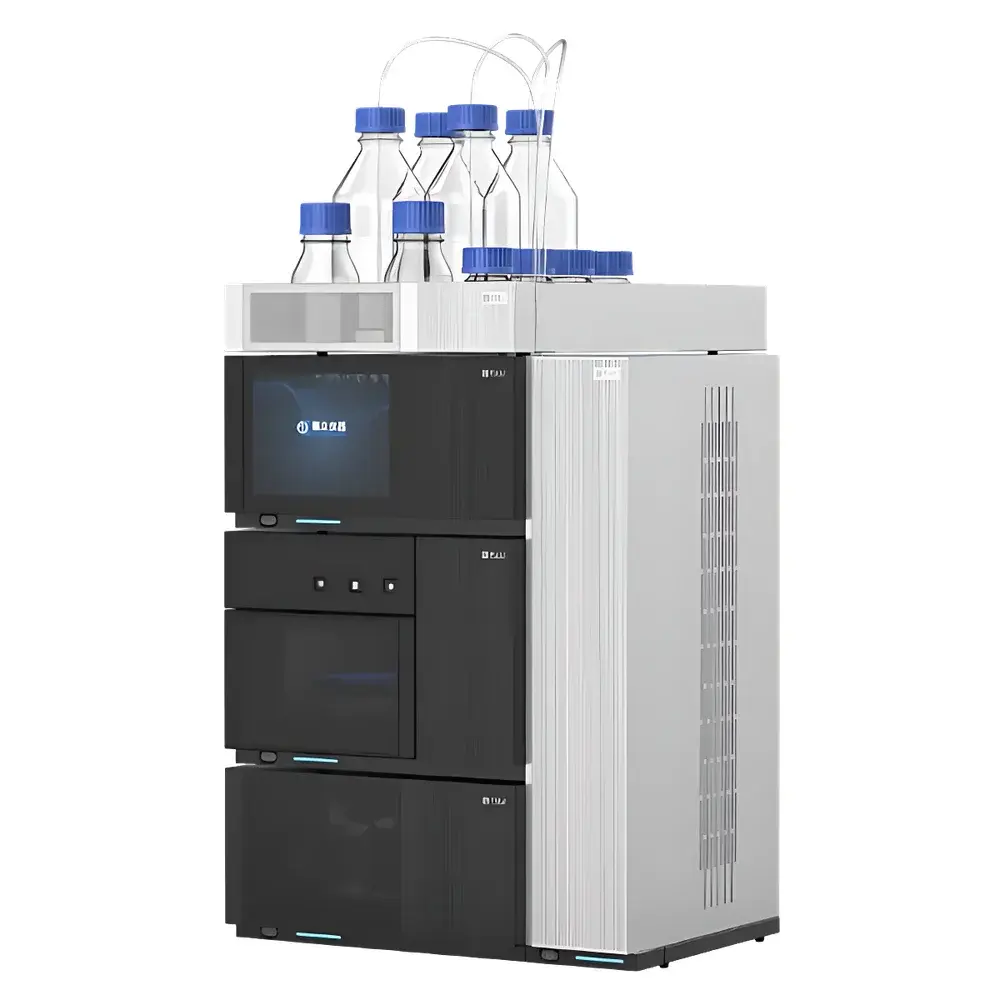
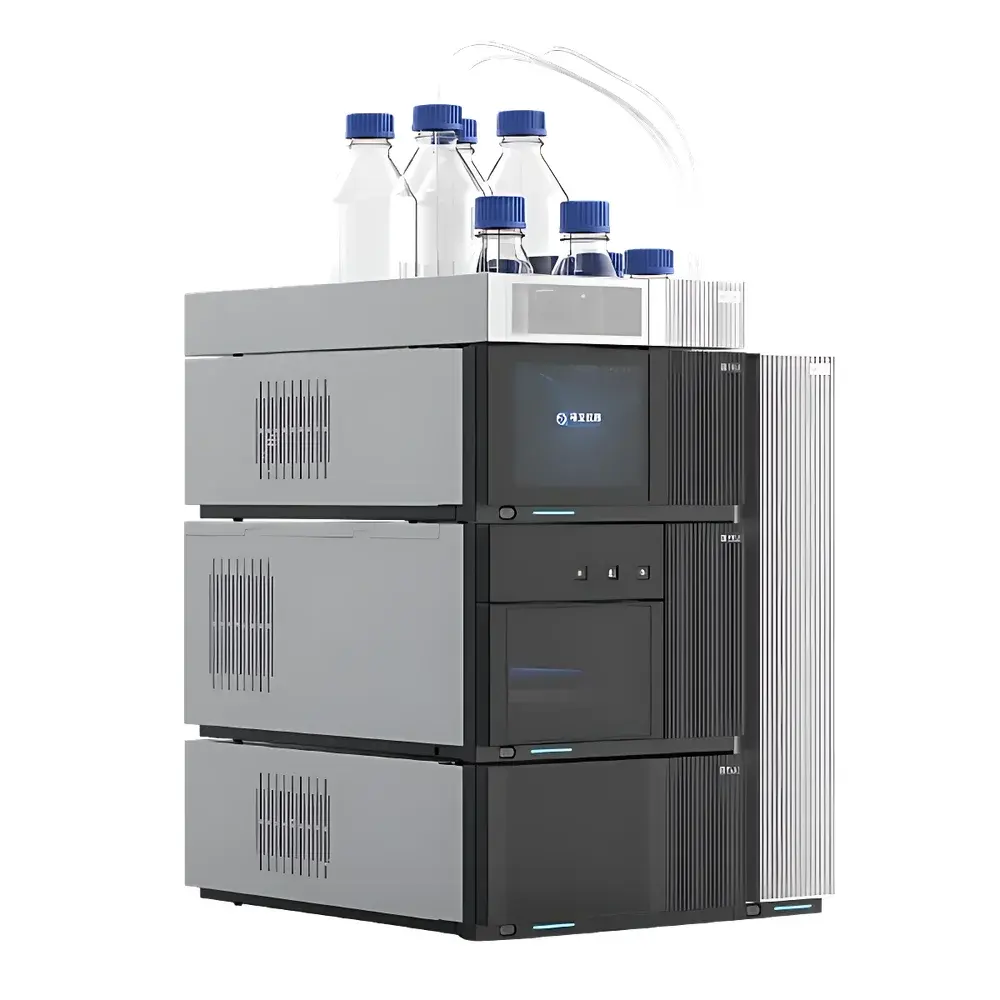
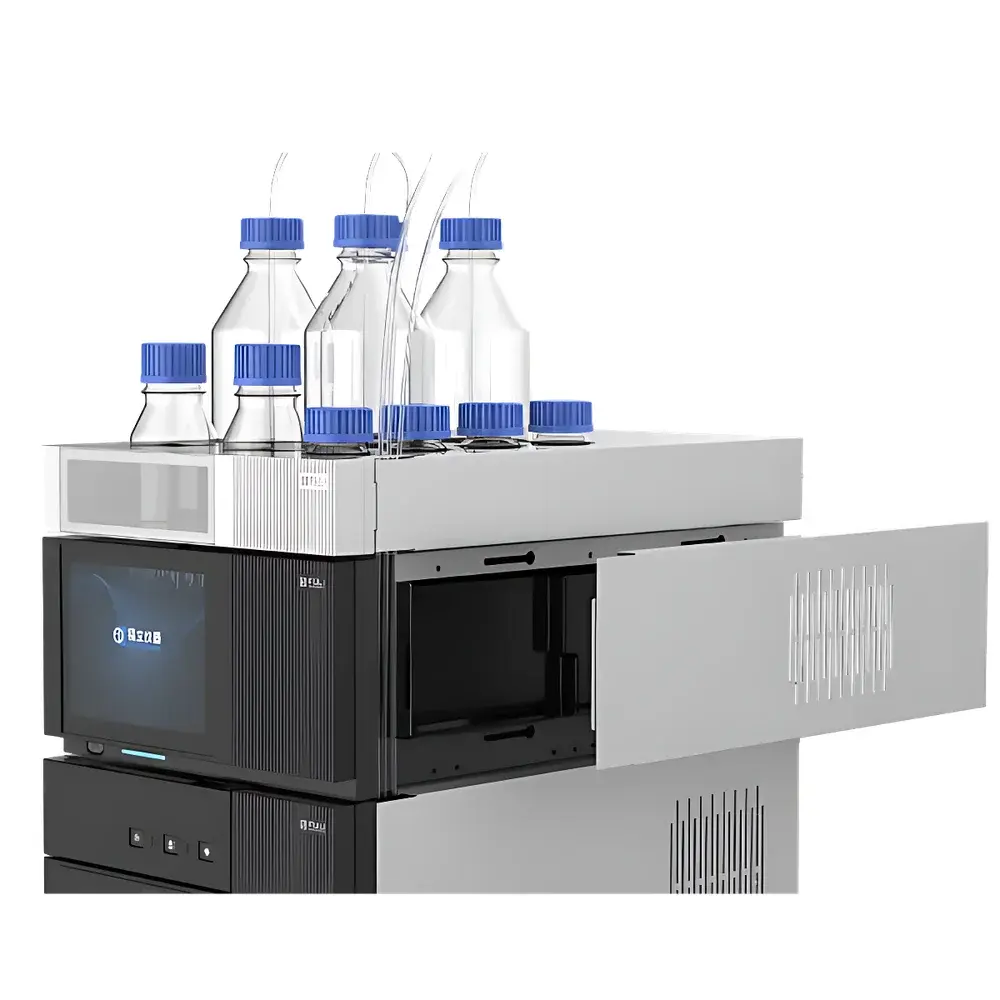
Fuli L75 Ultra-High-Performance Liquid Chromatograph (UHPLC)
| Brand | Fuli |
|---|---|
| Origin | Zhejiang, China |
| Manufacturer Type | Direct Manufacturer |
| Instrument Class | Ultra-High-Performance Liquid Chromatograph (UHPLC) |
| Application Scope | General-Purpose LC Analysis |
| Model | L75 |
| Pricing | Upon Request |
Overview
The Fuli L75 Ultra-High-Performance Liquid Chromatograph is an integrated, modular UHPLC system engineered for precision, robustness, and regulatory compliance in modern analytical laboratories. Built upon a unified platform architecture, the L75 combines high-pressure gradient delivery (up to 130 MPa), low-dispersion flow paths, and thermally stable column compartment control to deliver reproducible separations across diverse sample matrices—from small-molecule pharmaceuticals to complex natural product extracts. Its design adheres to core chromatographic principles: precise solvent metering via direct-drive dual-piston pumps, minimized dwell volume for rapid gradient response, and pressure-compensated flow control ensuring consistent retention time stability under variable backpressure conditions. As a general-purpose UHPLC platform, the L75 supports both conventional HPLC and sub-2-µm particle column applications without hardware reconfiguration.
Key Features
- Direct-Drive Dual-Piston Pump (P75): Patented screw-driven actuation eliminates cam-based mechanical transmission, reducing maintenance intervals and delivering ultra-low pulsation (<0.05% RSD) across the full pressure range (0–130 MPa). Integrated auto-purge eliminates manual venting—enabling unattended overnight operation.
- Intelligent Solvent Management (T75): Real-time solvent level monitoring via embedded capacitive sensors; predictive low-level alerts prevent gradient interruption. Side-sliding access panel conceals fluidic routing while simplifying leak inspection and tubing replacement.
- Modular Detection Architecture (D75): Standard UV-Vis detector with optional expansion to diode array (DAD), evaporative light scattering (ELSD), refractive index (RID), or fluorescence (FLD) detection—all sharing common optical path alignment and data synchronization protocols.
- Smart Autosampler (S75): Dual-mode injection capability: Split-loop (high-pressure, zero-dead-volume) and pulled-loop (low-diffusion, fixed-volume) configurations. Peltier-cooled sample tray (4–40 °C, ±0.5 °C stability) minimizes thermal degradation and condensation artifacts.
- Thermostatically Controlled Column Compartment (O75): Dual-zone temperature control (ambient to 85 °C) with independent inner/outer door operation. E-record function automatically logs column ID, inlet/outlet pressure, cumulative runtime, and thermal history—compatible with third-party columns via user-defined metadata tagging.
Sample Compatibility & Compliance
The L75 accommodates standard 2.1–4.6 mm ID columns packed with particles ranging from 1.7 µm to 5 µm, supporting reversed-phase, HILIC, ion-exchange, and size-exclusion applications. It complies with ISO/IEC 17025:2017 requirements for method validation and meets critical elements of FDA 21 CFR Part 11, including role-based user authentication, electronic signature capture, immutable audit trails for method changes and sequence edits, and encrypted raw data storage. System suitability testing (SST) parameters—including tailing factor, resolution, and %RSD of retention time—are automatically calculated and reportable per USP and ICH Q2(R2) guidelines.
Software & Data Management
LabMate CDS is a validated chromatography data system available in standalone and network-deployed editions. It supports seamless integration with LIMS via ASTM E1384-compliant interfaces and provides hierarchical permission controls aligned with GLP/GMP workflows. All acquisition, processing, and reporting functions operate within a single secure environment featuring version-controlled method templates, forced reprocessing locks, and automatic backup to NAS or cloud repositories. Audit trail entries include timestamp, operator ID, action type (e.g., “peak integration override”), and pre-/post-change parameter values—retained for ≥30 years as required by regulatory archiving policies.
Applications
The L75 serves as a primary analytical tool in pharmaceutical QC labs for assay quantitation, impurity profiling, and dissolution testing per USP monographs. In food safety laboratories, it enables multi-residue pesticide screening using QuEChERS-extracted samples. Environmental labs deploy it for PAH and PCB analysis in soil/water extracts per EPA Method 8330B. Academic research groups utilize its modularity for method development studies involving column chemistry screening, mobile phase optimization, and kinetic modeling of retention behavior.
FAQ
Does the L75 support 21 CFR Part 11 compliance out-of-the-box?
Yes—the LabMate CDS software includes built-in electronic signatures, audit trail generation, and data integrity safeguards validated per Part 11 Annex A requirements.
Can the system be upgraded from HPLC to UHPLC performance post-purchase?
No hardware upgrade is required: the P75 pump and low-volume fluidic path are inherently UHPLC-capable (≤130 MPa); only column and detector selection determine operational class.
Is column tracking data exportable to external databases?
Yes—E-record metadata is exportable in CSV/Excel format and programmatically accessible via LabMate CDS REST API for integration into enterprise asset management systems.
What is the maximum allowable dwell volume for gradient methods?
System dwell volume is ≤120 µL (measured per ISO 19219:2015), enabling sharp gradient transitions and high-resolution separation of co-eluting analytes.
Are service contracts and remote diagnostics available internationally?
Fuli offers global technical support through certified partners, including remote firmware updates, predictive maintenance alerts, and on-site calibration services traceable to NIST standards.
Related Products





