
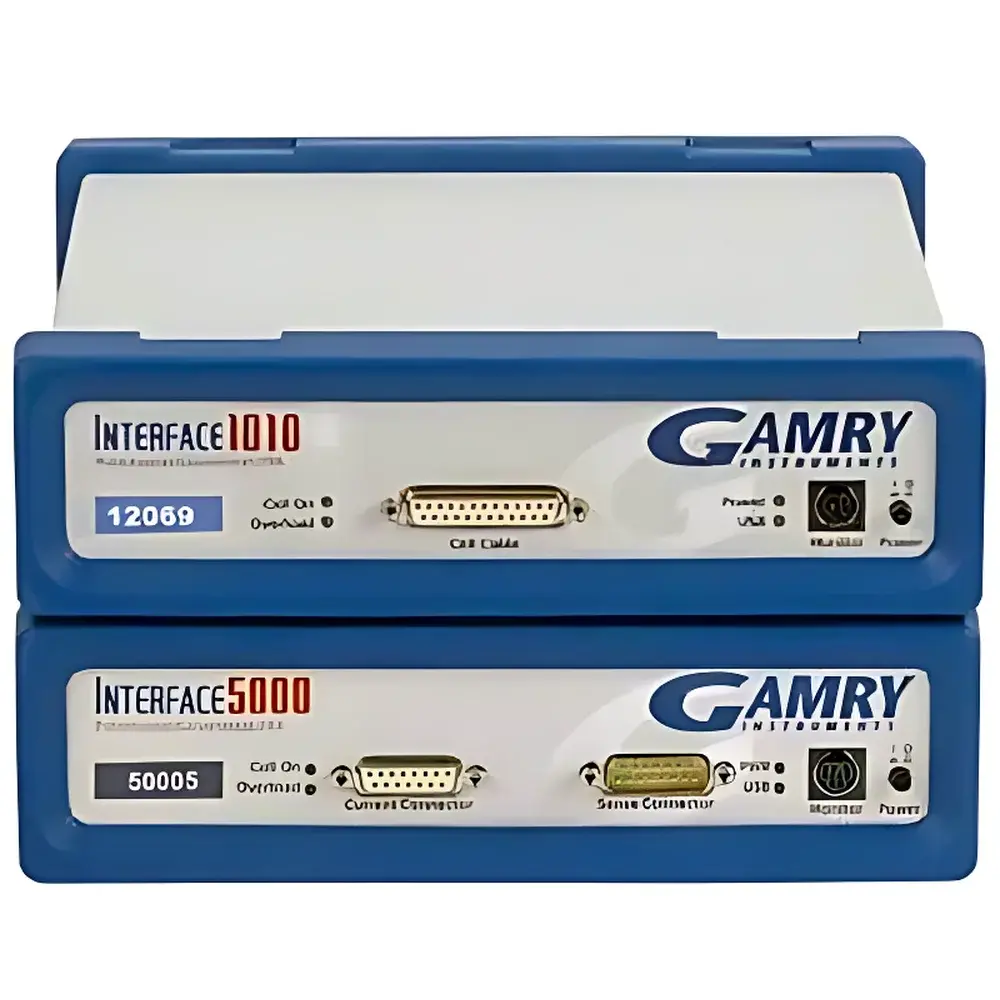
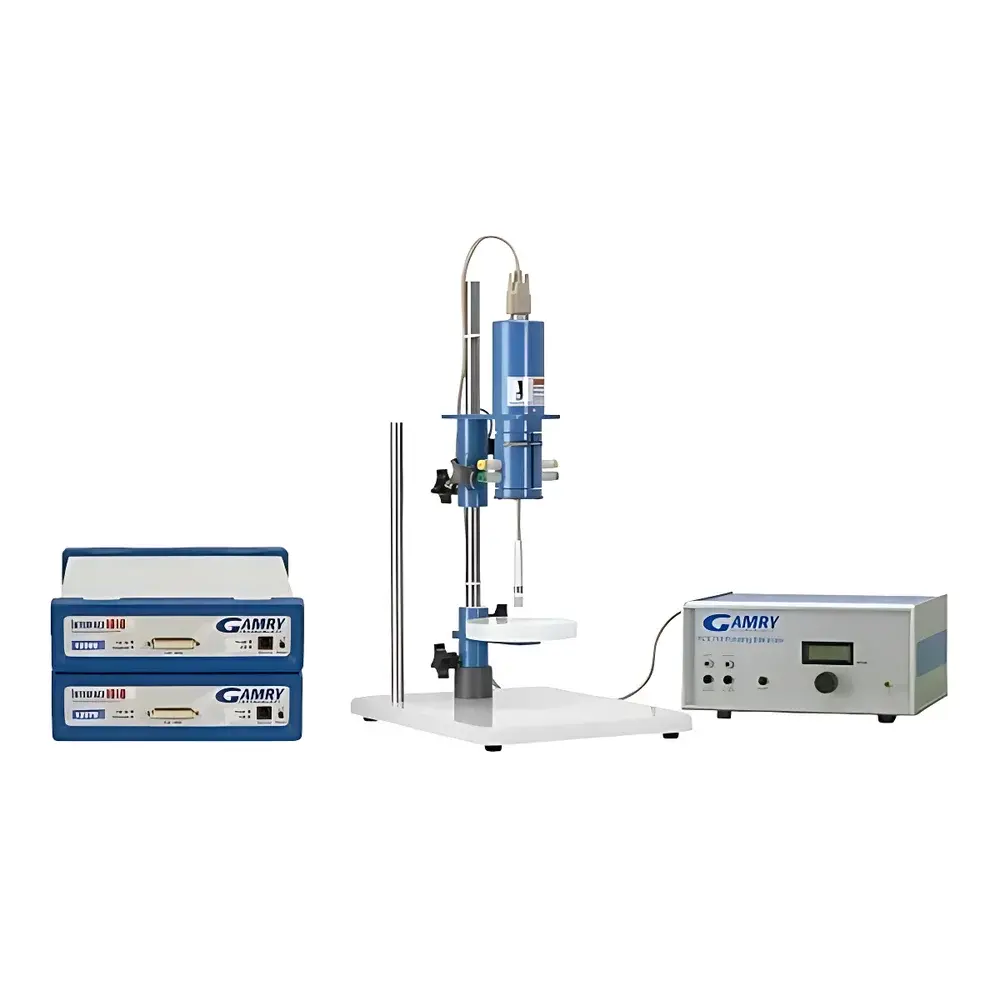
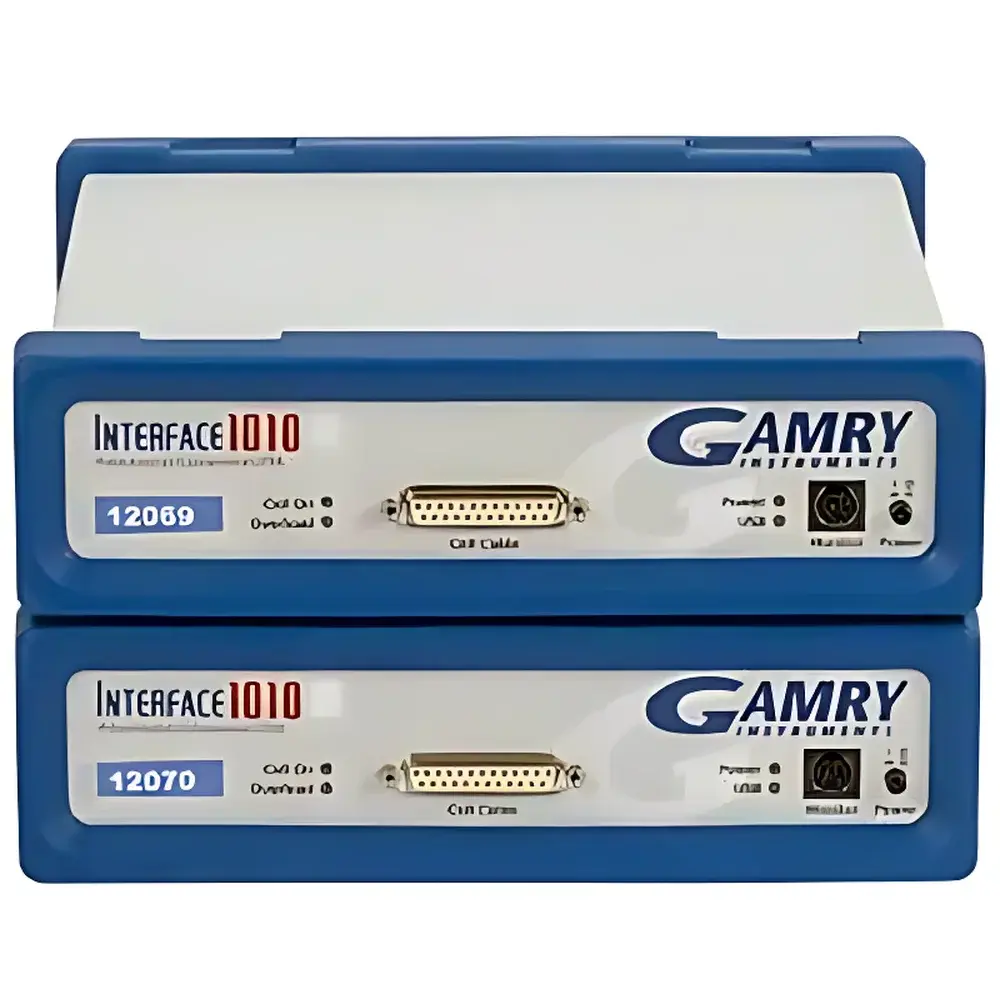
Gamry Interface Bipotentiostat Electrochemical Workstation
| Brand | Gamry |
|---|---|
| Origin | USA |
| Manufacturer Type | Authorized Distributor |
| Import Status | Imported |
| Model | Interface Bipotentiostats |
| Instrument Type | Electrochemical Workstation |
| Current Range | ±5 A |
| Current Resolution | 5 pA |
| Potential Accuracy | ±1 µV |
| Potentiostatic Range | ±12 V |
| EIS Frequency Range | 10 µHz – 1 MHz |
Overview
The Gamry Interface Bipotentiostat Electrochemical Workstation is a dual-channel, fully synchronized electrochemical measurement system engineered for advanced research requiring independent control and precise temporal coordination between two working electrodes. Unlike conventional dual-channel potentiostats with shared reference or counter electrode circuitry, the Interface Bipotentiostat integrates two electrically isolated, full-featured potentiostat channels—each with its own dedicated analog front-end, digital signal processing unit, and real-time clock synchronization. This architecture enables true concurrent operation: both channels can execute distinct electrochemical techniques—including potentiodynamic sweeps, chronoamperometry, and electrochemical impedance spectroscopy (EIS)—while maintaining sub-microsecond timing alignment. The system operates on the principle of controlled potential/current perturbation in three-electrode electrochemical cells, supporting rigorous quantification of charge transfer kinetics, interfacial capacitance, diffusion-limited currents, and reaction intermediates via coupled electrode responses. It is specifically optimized for applications demanding spatially or temporally resolved electrochemical interrogation, such as rotating ring-disk electrode (RRDE) analysis and scanning electrochemical microscopy (SECM), where simultaneous biasing and signal acquisition across two physically separated electrodes are essential.
Key Features
- Two fully independent potentiostat channels, each with ±12 V compliance, ±5 A current range, and 5 pA current resolution
- Potential accuracy of ±1 µV referenced to internal precision voltage standards traceable to NIST
- Integrated EIS capability spanning 10 µHz to 1 MHz with single-sine and multi-sine excitation options
- Hardware-level synchronization ensuring <100 ns inter-channel timing jitter for time-critical experiments (e.g., electrochemical time-of-flight, TOF)
- Modular design supporting six configurable dual-channel setups—including RRDE-dedicated, SECM-compatible, and general-purpose bipotentiostatic modes
- Galvanically isolated analog inputs/outputs to eliminate ground-loop interference in multi-instrument setups
- Compliance with IEC 61000-4 electromagnetic compatibility standards for laboratory-grade stability
Sample Compatibility & Compliance
The Interface Bipotentiostat supports standard three-electrode configurations (working, counter, reference) as well as specialized four-electrode arrangements required for RRDE and dual-working-electrode SECM probes. It interfaces seamlessly with commercial rotating disk/ring assemblies (e.g., Pine Research AFMSRCE, BASi RRE-3), microelectrode positioning systems, and environmental cells (temperature-controlled, gas-purged, or humidity-regulated). All firmware and hardware designs comply with ISO/IEC 17025 requirements for test and calibration laboratories. Data acquisition meets GLP/GMP documentation standards through optional audit-trail-enabled software modules compliant with FDA 21 CFR Part 11 for electronic records and signatures. Experimental protocols adhere to ASTM G102 (standard practice for calculation of electrochemical corrosion rates) and ASTM D6319 (standard test method for measuring oxygen reduction reaction activity).
Software & Data Management
Operation is managed via Gamry’s Framework™ software—a Windows-based platform offering intuitive experiment sequencing, real-time visualization, and post-acquisition analysis tools including Kramers–Kronig validation, equivalent circuit modeling (ECM), and derivative voltammetry. The software supports scripting via Python API (Gamry Python SDK) for custom protocol development, automated parameter sweeps, and integration into larger lab automation frameworks. Raw data files are stored in proprietary .DTA format with embedded metadata (timestamp, instrument ID, calibration history, user-defined notes) and exportable to ASCII, CSV, or MATLAB .MAT formats. Version-controlled experiment templates enable reproducible method deployment across multiple users and instruments, satisfying traceability requirements in regulated research environments.
Applications
- Rotating ring-disk electrode (RRDE) studies of catalytic oxygen reduction reaction (ORR) mechanisms and peroxide yield quantification
- Scanning electrochemical microscopy (SECM) feedback and generation-collection modes for localized kinetic mapping
- Electrochemical time-of-flight (TOF) measurements requiring rapid, coordinated switching between generator and collector electrodes
- Dual-working-electrode corrosion monitoring under simulated service conditions
- Multi-step redox cascade analysis in bioelectrochemistry and enzymatic fuel cells
- In-situ characterization of battery electrode materials during galvanostatic cycling with auxiliary reference monitoring
FAQ
Can the two channels operate completely independently—for example, running CV on one channel while performing EIS on the other?
Yes. Each channel functions as a standalone potentiostat with independent power supplies, analog-to-digital converters, and control loops.
Is hardware synchronization mandatory, or can channels be operated asynchronously?
Synchronization is configurable: hardware sync is enabled by default for time-critical applications but can be disabled for fully decoupled operation.
Does the system support four-electrode (two working, one reference, one counter) configurations?
Yes—dedicated wiring harnesses and firmware modes accommodate dual-working-electrode cells without shared current paths.
What calibration procedures are required before use?
Factory calibration is NIST-traceable; users perform routine verification using Gamry-supplied calibration resistors and low-noise voltage sources.
How is data integrity ensured during long-term EIS acquisitions spanning hours or days?
Continuous internal clock synchronization, checksummed data streaming, and automatic recovery from brief USB communication interruptions ensure uninterrupted recording.






