
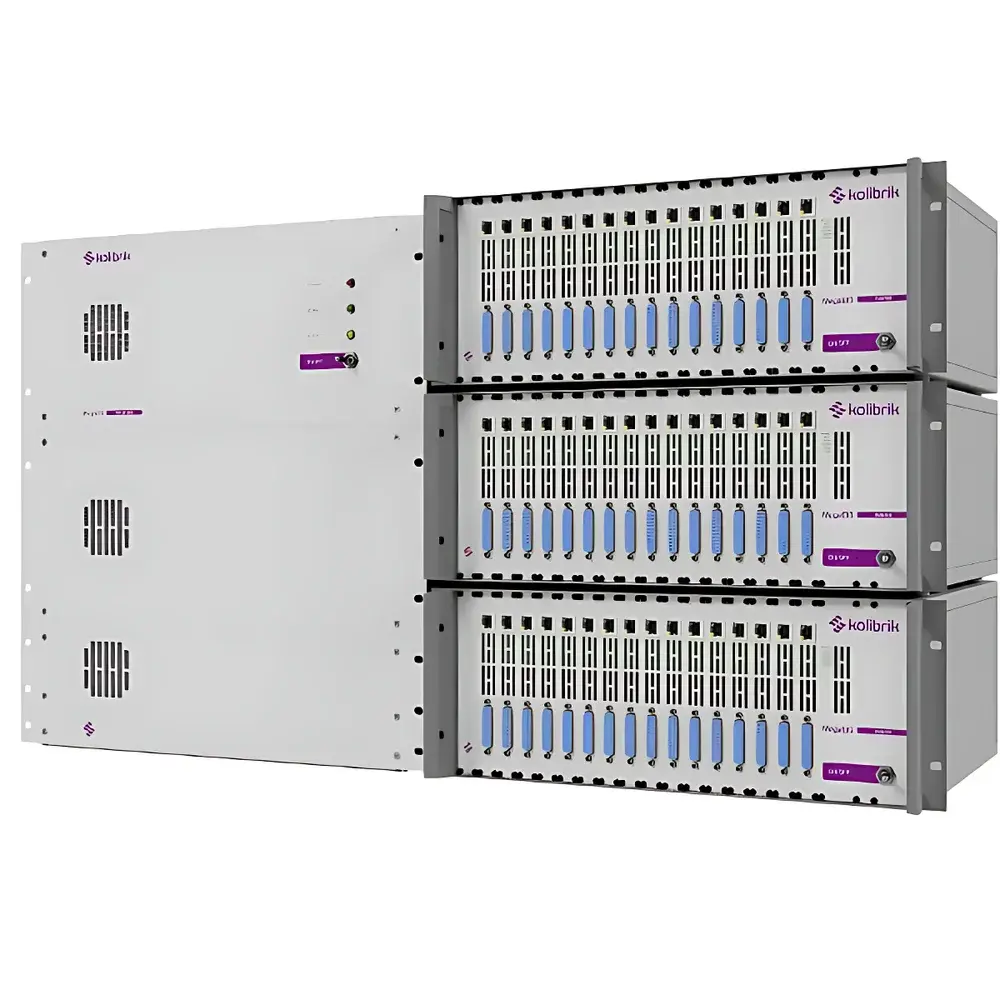
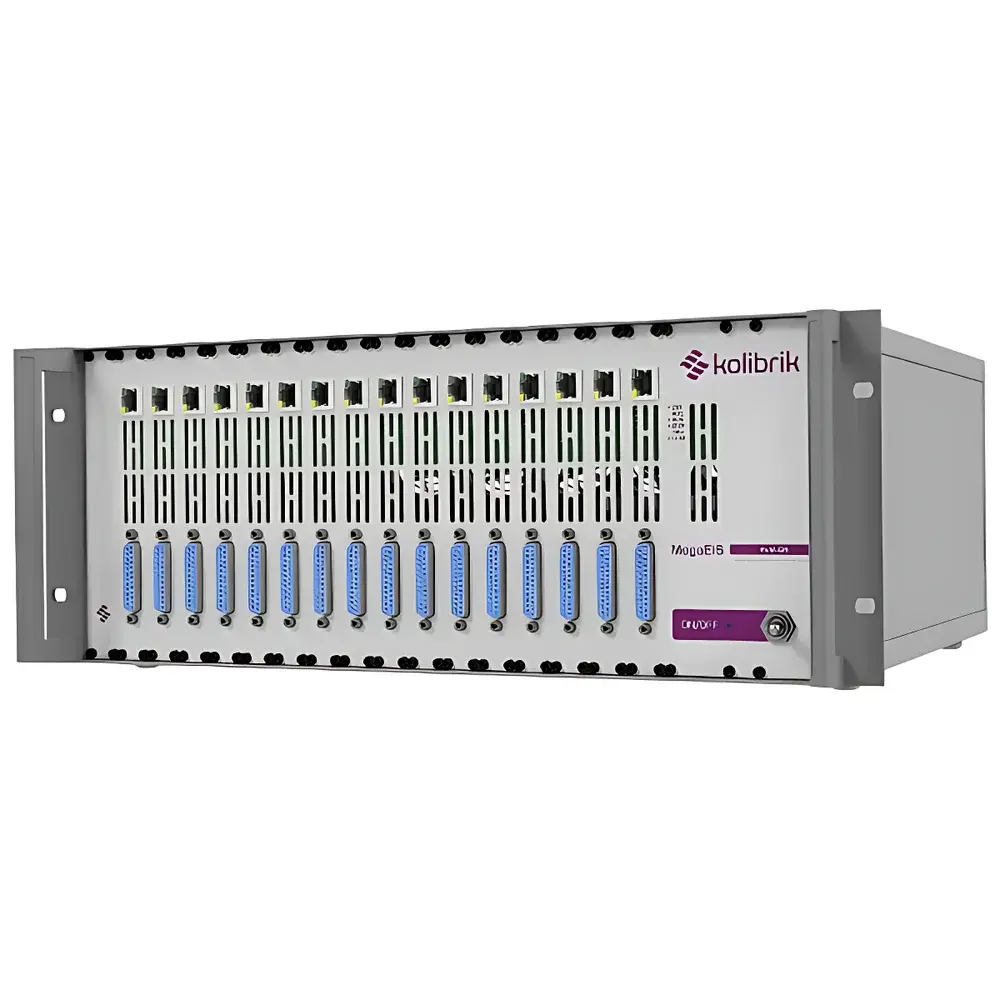
Gamry MegaEIS Multi-Channel High-Power Electrochemical Impedance Spectroscopy System
| Brand | Gamry |
|---|---|
| Origin | USA |
| Manufacturer Type | Authorized Distributor |
| Origin Category | Imported |
| Model | MegaEIS |
| Instrument Type | Electrochemical Workstation |
| Number of Channels | Up to 1000 simultaneous EIS channels |
| Current Range | ±2000 A |
| Current Accuracy | ±0.1 % of reading + 0.5 % of range |
| Potential Accuracy | ±0.1 % of reading + 0.1 % of range |
| Potentiostatic Range | ±1000 V |
| EIS Frequency Range | 1 mHz – 100 kHz |
| Internal Power Dissipation | Up to 20 kW per module |
| Cooling | Water-cooled |
| ADC Resolution | 24-bit (DC), 24-bit @ up to 1.25 MSps (EIS) |
| Input Protection | IP20 |
| Rack Mount | 19-inch modular cabinet |
Overview
The Gamry MegaEIS Multi-Channel High-Power Electrochemical Impedance Spectroscopy System is an engineered platform for in-situ, real-time electrochemical impedance spectroscopy (EIS) on large-scale electrochemical energy systems under operational load conditions. Unlike conventional single-cell potentiostats, the MegaEIS implements a distributed, modular architecture combining high-fidelity galvanostatic/potentiostatic control with synchronized multi-channel AC perturbation and spectral acquisition. Its core measurement principle relies on controlled small-amplitude sinusoidal voltage or current excitation superimposed on DC bias, followed by phase-resolved Fourier analysis of the resulting response—enabling quantification of complex impedance (Z*(ω) = Z′ + jZ″) across the 1 mHz–100 kHz bandwidth. This capability supports mechanistic deconvolution of interfacial charge transfer, mass transport limitations, ohmic resistances, and degradation signatures in devices operating at up to ±1000 V and ±2000 A.
Key Features
- Simultaneous acquisition across up to 1000 independent EIS channels—each with ±3 V differential input range and programmable gain—enabling full-stack cell-by-cell impedance mapping without multiplexing artifacts.
- Modular power architecture: scalable from 4 kW to 250 kW total system capacity via integrated load modules (up to 20 kW internal dissipation per rack) and optional external DC loads (up to 300 kW).
- High-precision 24-bit analog-to-digital conversion: DC measurements use low-noise, 50/60 Hz notch-filtered sampling; EIS measurements employ 1.25 MSps sampling with hardware-based FFT acceleration for phase coherence and reproducibility.
- Full compliance with electrochemical method standards: supports ASTM D7232 (fuel cell stack impedance), ISO 14687 (hydrogen purity impact on PEMFCs), and IEC 62282-3-100 (SOFC stack characterization).
- Water-cooled thermal management system rated for continuous operation at ambient temperatures up to 40 °C, ensuring long-term stability during accelerated lifetime testing.
- Integrated cell voltage monitoring (CVM) with ±1000 V electrostatic meter input, enabling concurrent DC polarization curve acquisition alongside EIS sweeps.
Sample Compatibility & Compliance
The MegaEIS is validated for use with proton exchange membrane fuel cells (PEMFC), alkaline and PEM electrolyzers, solid oxide fuel cells (SOFC) and electrolysis cells (SOEC), redox flow batteries (RFB), and high-power lithium-ion battery stacks. Its ±1000 V compliance allows direct integration into industrial-scale hydrogen production and storage infrastructure. The system meets electromagnetic compatibility requirements per EN 61326-1 (industrial environment) and safety standards per UL 61010-1 and IEC 61010-1. For regulated environments—including GMP-compliant manufacturing QA/QC labs—the software architecture supports 21 CFR Part 11 audit trails, electronic signatures, and role-based access control when deployed with Gamry Framework v9.2 or later.
Software & Data Management
Control and analysis are executed via Gamry Framework—a Windows-native application supporting script-driven automation using Python (via native API) or LabVIEW (through TCP/IP server interface). All EIS data are stored in standardized .DTA format compliant with EC-Lab and NOVA interoperability conventions. Real-time visualization includes Bode, Nyquist, and Cole-Cole plots with automated equivalent circuit fitting (e.g., R(QR)(QR) or transmission line models). Batch processing tools enable statistical comparison across hundreds of cells or time-series datasets. Raw time-domain waveforms and impedance spectra are exportable as CSV or HDF5 for third-party modeling (e.g., MATLAB, COMSOL Multiphysics coupling). Remote orchestration is supported through RESTful endpoints and OPC UA integration for factory-floor SCADA synchronization.
Applications
- R&D: In-operando diagnosis of catalyst layer degradation, membrane drying/flooding, and contact resistance evolution in PEMFC stacks during dynamic load cycling.
- Manufacturing QA: 100 % end-of-line EIS screening of electrolyzer stacks to verify uniformity of electrode microstructure and seal integrity before commissioning.
- Field service: Portable deployment for on-site diagnostics of SOFC systems—identifying localized anode oxidation or cathode delamination without disassembly.
- Materials development: Quantitative evaluation of novel bipolar plate coatings, gas diffusion layers, and catalyst supports under realistic current density gradients (0–2 A/cm²).
- Standards validation: Generation of reference impedance datasets for ISO/TC 197 working groups developing test protocols for hydrogen energy devices.
FAQ
Can the MegaEIS perform EIS while applying dynamic load profiles (e.g., automotive drive cycles)?
Yes. The system supports hybrid operation modes where EIS perturbations are embedded within user-defined current/voltage transients, enabling impedance tracking during transient states per SAE J2380 guidelines.
Is calibration traceable to NIST standards?
All voltage and current sensors are factory-calibrated against NIST-traceable references; annual recalibration services include certificate of conformance with uncertainty budgets per ISO/IEC 17025.
How is channel synchronization maintained across 1000 channels?
Hardware-level clock distribution ensures sub-microsecond timing alignment between all EIS acquisition modules; phase error remains below 0.1° across the full 1 mHz–100 kHz band.
Does the system support custom equivalent circuit modeling?
Yes—users may define arbitrary circuit topologies in Framework’s Circuit Builder module, including distributed elements (e.g., Warburg, constant phase elements) and nonlinear dependencies (e.g., voltage-dependent capacitance).
What cooling infrastructure is required for continuous 20 kW operation?
A closed-loop deionized water system with ≥3 L/min flow rate and ≤25 °C inlet temperature is mandatory; Gamry provides detailed thermal interface specifications for integration with facility chillers.




