
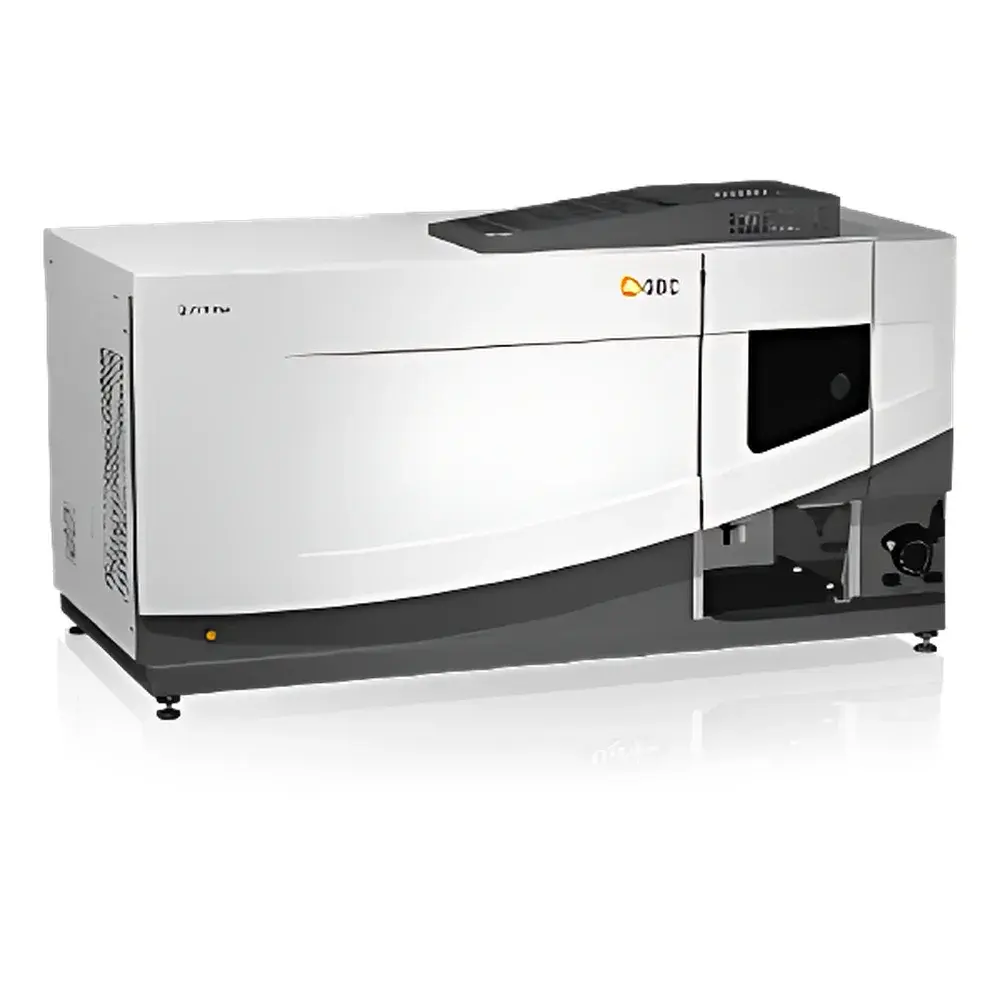
GBC Quantima / Integra ICP Optical Emission Spectrometer
| Brand | GBC |
|---|---|
| Origin | Australia |
| Manufacturer Type | Authorized Distributor |
| Origin Category | Imported |
| Model | Quantima / Integra |
| Instrument Type | Sequential Scanning ICP-OES |
| Detection Limit (Cu) | 0.7 ppb |
| Precision (RSD) | ≤0.5% |
| Long-Term Stability (RSD) | ≤1.0% |
| Wavelength Range | 160–800 nm |
| Optical Resolution | 0.006 nm (160–200 nm) |
| RF Generator Frequency | 40.68 MHz |
| Argon Consumption (aqueous samples) | <11 L/min |
Overview
The GBC Quantima and Integra are high-performance, sequential-scanning Inductively Coupled Plasma Optical Emission Spectrometers (ICP-OES) engineered for precision elemental analysis across environmental, geological, clinical, metallurgical, and regulatory laboratories. These instruments utilize robust 40.68 MHz self-oscillating radiofrequency (RF) generators—designed for maximum energy conversion efficiency and long-term plasma stability—coupled with a thermally stabilized optical bench and nitrogen-purged spectrometer architecture. Unlike vacuum-based systems, the nitrogen purge eliminates the need for routine vacuum pump maintenance while delivering equivalent UV spectral performance down to 160 nm. The core analytical principle relies on atomization, excitation, and ionization of sample aerosols in a high-temperature argon plasma (~6,000–10,000 K), followed by wavelength-resolved detection of characteristic atomic/ionic emission lines across a broad spectral range (160–800 nm). This enables quantitative multi-element analysis at trace and ultra-trace levels, with demonstrated detection capability for copper at ≤0.7 ppb under optimized conditions.
Key Features
- 40.68 MHz self-oscillating RF generator with high thermal efficiency and extended torch lifetime
- Thermally regulated monochromator housing ensuring optical path stability and minimizing wavelength drift
- Nitrogen-purged optical system enabling full UV-VIS-NIR coverage (160–800 nm) without vacuum maintenance
- Selectable grating options supporting either enhanced resolution (down to 0.004 nm) or increased sensitivity depending on application requirements
- 11% faster monochromator scanning speed versus conventional sequential ICP-OES platforms, reducing per-sample analysis time and argon consumption
- Integrated high-accuracy mass flow controllers for precise regulation of nebulizer, auxiliary, and plasma gas flows
- Argon humidifier module enabling direct analysis of high-matrix samples—including 40% total dissolved solids (TDS)—without dilution or matrix-induced signal suppression
- Organic solvent compatibility without oxygen addition hardware; supports kerosene, xylene, MIBK, and other common organic matrices
- Onboard recirculating chiller eliminating external cooling units and associated footprint, noise, and service overhead
- Plasma Ignition Protection (PIP) system suppressing hollow-torch formation and preventing quartz torch erosion during startup and transient operation
Sample Compatibility & Compliance
The Quantima and Integra accommodate liquid samples via concentric glass or V-groove nebulizers, with optional microflow and high-solids introduction systems. Solid sample analysis is supported through laser ablation coupling (LA-ICP-OES) using compatible third-party ablation cells. Both models comply with key international method frameworks including ASTM D1976, EPA Methods 200.7 and 6010D, ISO 11885, and EN 14802. The instrument’s software architecture supports audit trail functionality aligned with GLP and GMP data integrity principles, and optional 21 CFR Part 11 compliance packages are available for regulated environments requiring electronic signature and user access control.
Software & Data Management
Controlled via a native 32-bit Windows application, the system manages over 230 instrument parameters in real time. The software includes automated wavelength calibration, plasma optimization routines, and intelligent background correction algorithms. Semi-quantitative analysis leverages stored spectral libraries and intensity-based elemental screening without prior calibration. PlasmaCam integration provides live video monitoring of the plasma torch geometry and excitation zone—critical for troubleshooting matrix effects or torch misalignment. All raw spectra, method files, calibration curves, and QC reports are stored in a structured database with configurable backup protocols and export to CSV, PDF, or XML formats for LIMS integration.
Applications
These ICP-OES systems are routinely deployed in water quality testing (EPA-certified labs), geological exploration (multi-element rock digests), pharmaceutical excipient purity verification (USP /), semiconductor-grade reagent certification, food safety monitoring (As, Cd, Pb, Hg), and nuclear fuel cycle material assays. Their low argon consumption (<11 L/min for aqueous standards), tolerance for high-salt and organic matrices, and stable long-term RSD performance (≤0.5% for precision, ≤1.0% for stability) make them particularly suitable for high-throughput QA/QC operations where operational cost and uptime are critical metrics.
FAQ
Does the Quantima/Integra require vacuum pumping for UV analysis?
No—the nitrogen-purged optical path delivers full spectral response from 160 nm without vacuum components or associated maintenance.
Can it analyze seawater or brine samples directly?
Yes, when equipped with the argon humidifier and high-solids nebulizer, it handles up to 40% TDS without dilution.
Is organic solvent analysis possible without oxygen addition?
Yes—plasma stabilization in organic matrices is achieved via optimized gas flow dynamics and PIP control, eliminating the need for O2 injection hardware.
What level of software validation support is provided for regulated labs?
A validated installation qualification (IQ) and operational qualification (OQ) package is available, along with configurable 21 CFR Part 11 modules for electronic records and signatures.
How is wavelength accuracy maintained over time?
Through periodic internal holmium oxide and mercury lamp calibrations, combined with thermal stabilization of the optical bench to minimize mechanical drift.




