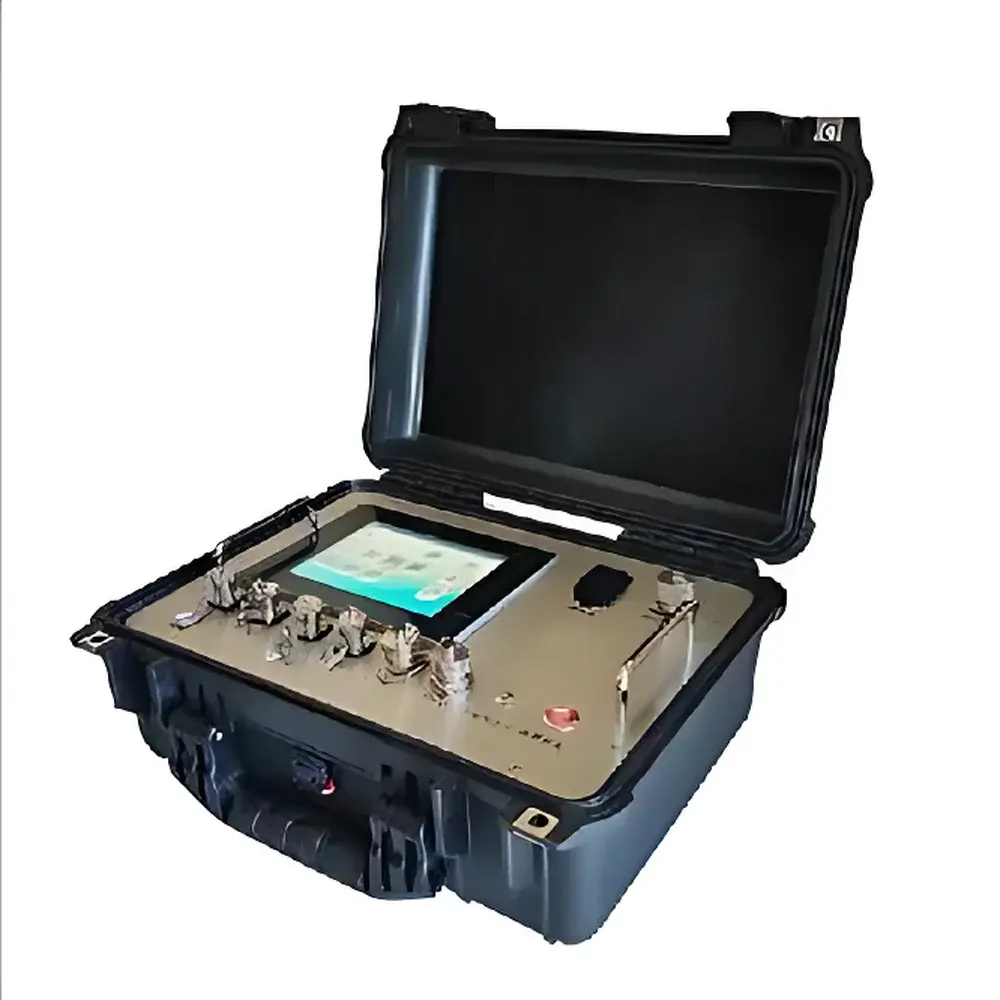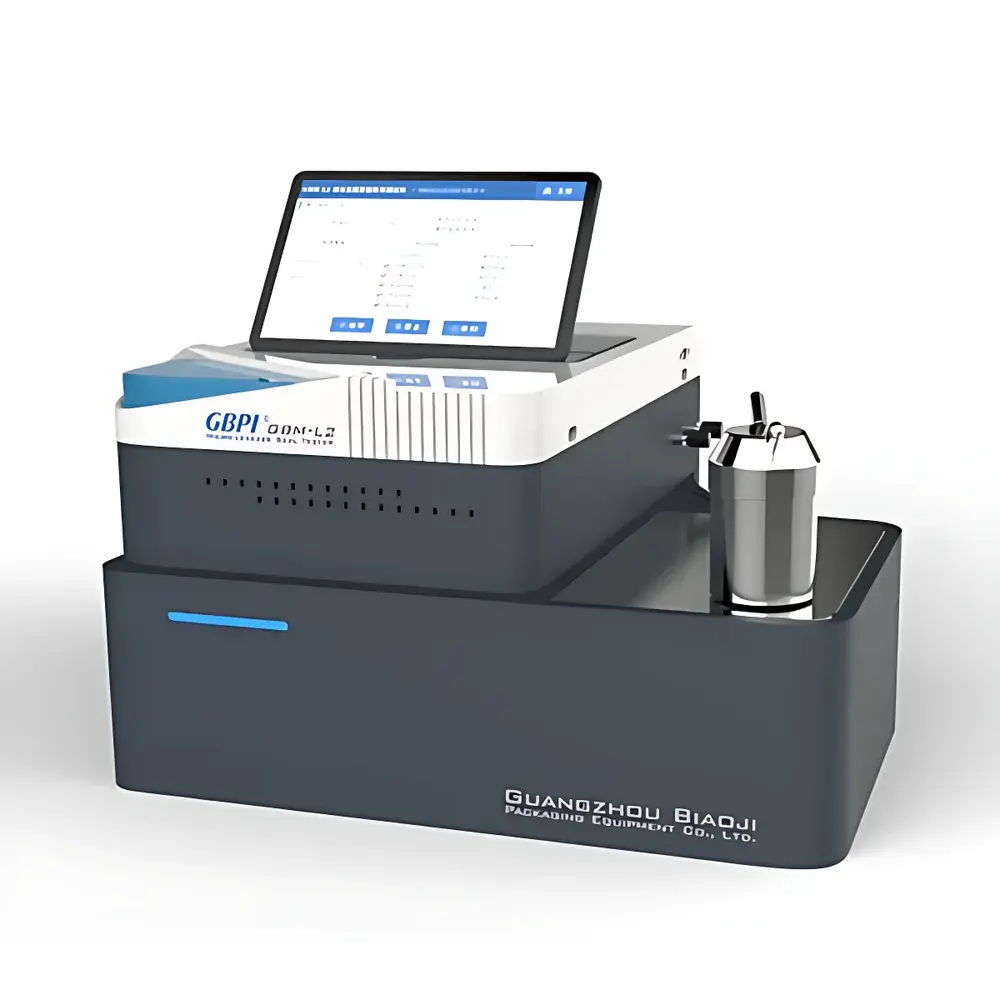
GBPI GBM-L2 Dual-Pressure Decay Micro-Leak Integrity Tester
| Brand | GBPI |
|---|---|
| Origin | Guangdong, China |
| Manufacturer Type | OEM Manufacturer |
| Origin Category | Domestic |
| Model | GBM-L2 |
| Price | USD 42,000 (FOB Guangdong) |
| Absolute Pressure Range | 0–300 kPa |
| Differential Pressure Range | ±2 kPa |
| Detection Sensitivity | 1–3 µm |
| Equilibration/Test Time | 1–3600 s |
| Vacuum Purge Time | 1–3600 s |
| Set Flow Rate | 0–3 mL/min |
| Sensor Configuration | Dual-sensor (absolute + differential pressure) |
| Test Chamber | Custom-engineered per sample geometry |
| Dimensions (W×D×H) | 495 × 455 × 280 mm |
| Ambient Temperature | 20–30 °C |
| Relative Humidity | ≤80% RH (non-condensing) |
| Power Supply | AC 220 V, 50 Hz |
| Compliance | ASTM F2338-09(2013), YY/T 0681.18–2020, USP <1207.2>, ASTM F2095 |
Overview
The GBPI GBM-L2 Dual-Pressure Decay Micro-Leak Integrity Tester is an engineered solution for non-destructive, quantitative leak detection in sterile and hermetically sealed primary packaging used across pharmaceutical, biotechnology, food, and chemical industries. It operates on two complementary physical principles—vacuum decay and pressure decay—enabling robust assessment of container closure integrity (CCI) without requiring tracer gases or destructive sampling. The instrument applies controlled vacuum or positive pressure to a custom-fitted, hermetically sealed test chamber containing the sample. Leakage is quantified by monitoring temporal pressure transients using high-stability absolute and differential pressure sensors. This dual-mode architecture addresses critical limitations of single-method approaches, particularly for freeze-dried vials where internal vacuum can mask micro-leaks during conventional vacuum decay testing. The system delivers objective pass/fail determinations based on statistically validated pressure drift thresholds, supporting regulatory expectations for risk-based CCI verification under ICH Q5C, USP , and Annex 1.
Key Features
- Dual-pressure methodology: Simultaneous vacuum decay and pressure decay modes eliminate false-negative results common in evacuated containers such as lyophilized vials.
- High-fidelity dual-sensor architecture: Integrated absolute pressure sensor (0–300 kPa, ±0.1% FS) and differential pressure sensor (±2 kPa, ±0.1% FS) enable precise resolution of minute pressure changes associated with leaks down to 1 µm equivalent orifice diameter.
- Imported critical components: Oil-lubricated vacuum pump (3 L/s pumping speed, ≤50 dB(A) noise, ultimate vacuum <1 Pa) and thermal mass flow controller (0.001 mL/min resolution, UK-sourced) support method qualification, sensitivity verification, and traceable leak simulation.
- GMP-compliant human-machine interface: 11-inch industrial-grade touchscreen with audit trail functionality, role-based user permissions (admin/operator/analyst), electronic signatures, and data export in CSV/PDF formats compliant with FDA 21 CFR Part 11 and EU Annex 11 requirements.
- Modular test chamber design: Fully customizable cavity geometry—including nested fixtures—for multi-format compatibility (e.g., 2R–30R vials, ampoules, pre-filled syringes, HDPE bottles, IV bags) without cross-contamination or mechanical stress.
Sample Compatibility & Compliance
The GBM-L2 supports a broad range of rigid and semi-rigid primary packaging formats subject to regulatory CCI requirements. Validated applications include glass and polymer-based vials (lyophilized and liquid-filled), molded and drawn glass ampoules, polymer and glass pre-filled syringes, ophthalmic dropper bottles, blow-fill-seal containers, and flexible IV bags. All test methods are aligned with compendial standards including ASTM F2338-09(2013) (Standard Test Method for Nondestructive Detection of Leaks in Packages by Vacuum Decay), USP (Package Integrity Evaluation – Sterile Products), YY/T 0681.18–2020 (Test Methods for Sterile Medical Device Packaging), and ASTM F2095 (Standard Test Method for Determining the Integrity of Seals in Flexible Barrier Materials). The system supports IQ/OQ/PQ documentation packages and integrates seamlessly into GLP/GMP quality systems requiring full data traceability and change control.
Software & Data Management
The embedded control software provides real-time visualization of pressure curves, automatic calculation of leakage rate (Pa/s or mL/min), and configurable pass/fail logic based on user-defined acceptance criteria. Each test record includes timestamp, operator ID, chamber ID, method parameters, raw sensor data, and final result status. Audit trails log all user actions—including parameter modifications, result overrides, and report generation—with immutable timestamps and digital signatures. Data storage complies with ALCOA+ principles (Attributable, Legible, Contemporaneous, Original, Accurate, Complete, Consistent, Enduring, Available) and supports automated backup to network drives or secure cloud repositories. Export formats include time-stamped CSV for statistical process control (SPC) analysis and PDF reports suitable for regulatory submissions.
Applications
- Final container closure integrity verification for lyophilized and liquid injectables prior to release.
- Stability study support: periodic CCI assessment over shelf life under accelerated and real-time conditions.
- Process validation: evaluation of stopper seating force, crimping parameters, and sealing equipment performance.
- Root cause analysis of sterility failures via correlation of leak size distribution with microbial ingress risk models.
- Supplier qualification: objective comparison of CCI performance across different stopper types, vial geometries, or sealing lines.
FAQ
What is the smallest detectable leak size for rigid containers?
The GBM-L2 achieves a verified detection limit of 1 µm equivalent orifice diameter for rigid packages under optimized test conditions (e.g., 300 s test duration, 90 kPa vacuum level).
Can the instrument validate both vacuum decay and pressure decay methods per USP ?
Yes—the dual-sensor architecture and independent pressure control pathways allow full compliance with Method A (vacuum decay) and Method B (pressure decay) as defined in USP .
Is the system compatible with 21 CFR Part 11 requirements?
Yes—audit trail, electronic signature, and user permission management modules are preconfigured to meet 21 CFR Part 11 Subpart B controls for closed systems.
How is test chamber customization handled?
GBPI provides engineering consultation to define chamber volume, sealing interface, and fixture layout; lead time for custom cavities is typically 4–6 weeks post-design approval.
Does the system support automated calibration verification?
Yes—integrated gas flow controller enables in-situ challenge testing using calibrated micro-orifices; calibration certificates are traceable to NIST standards.