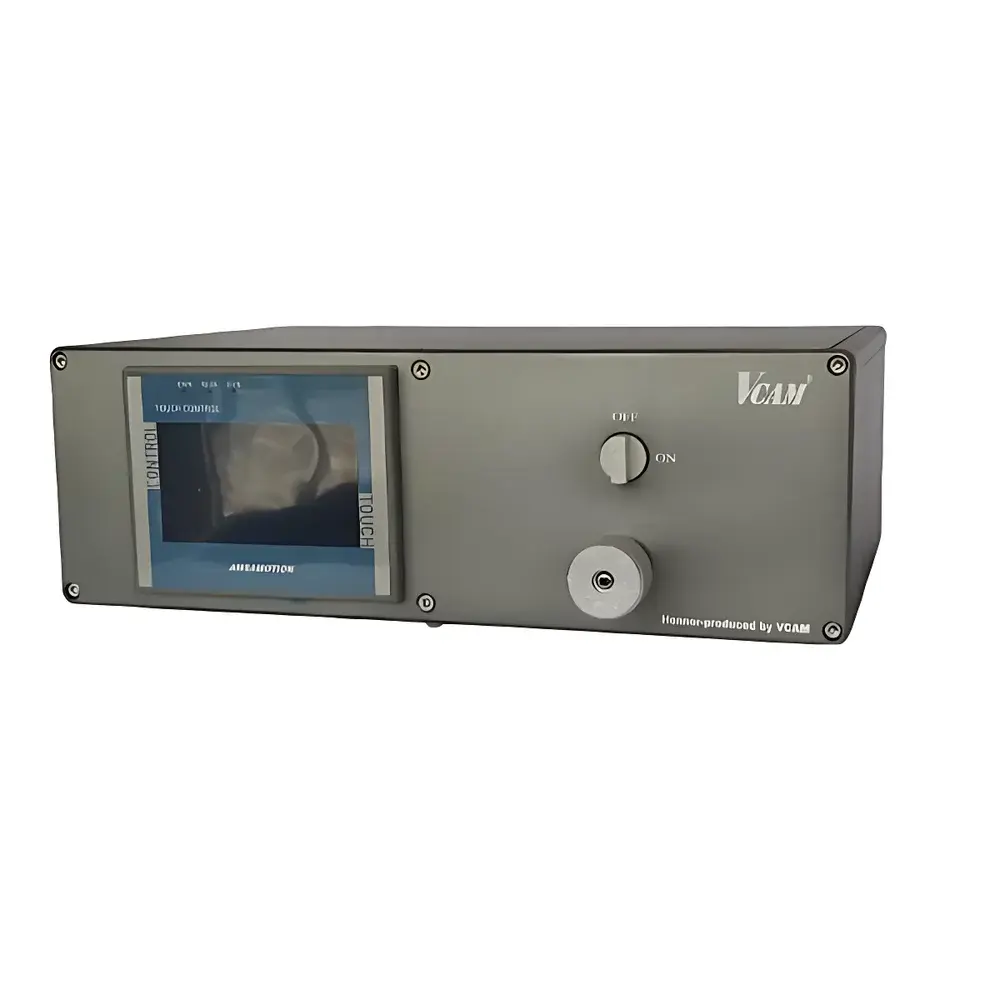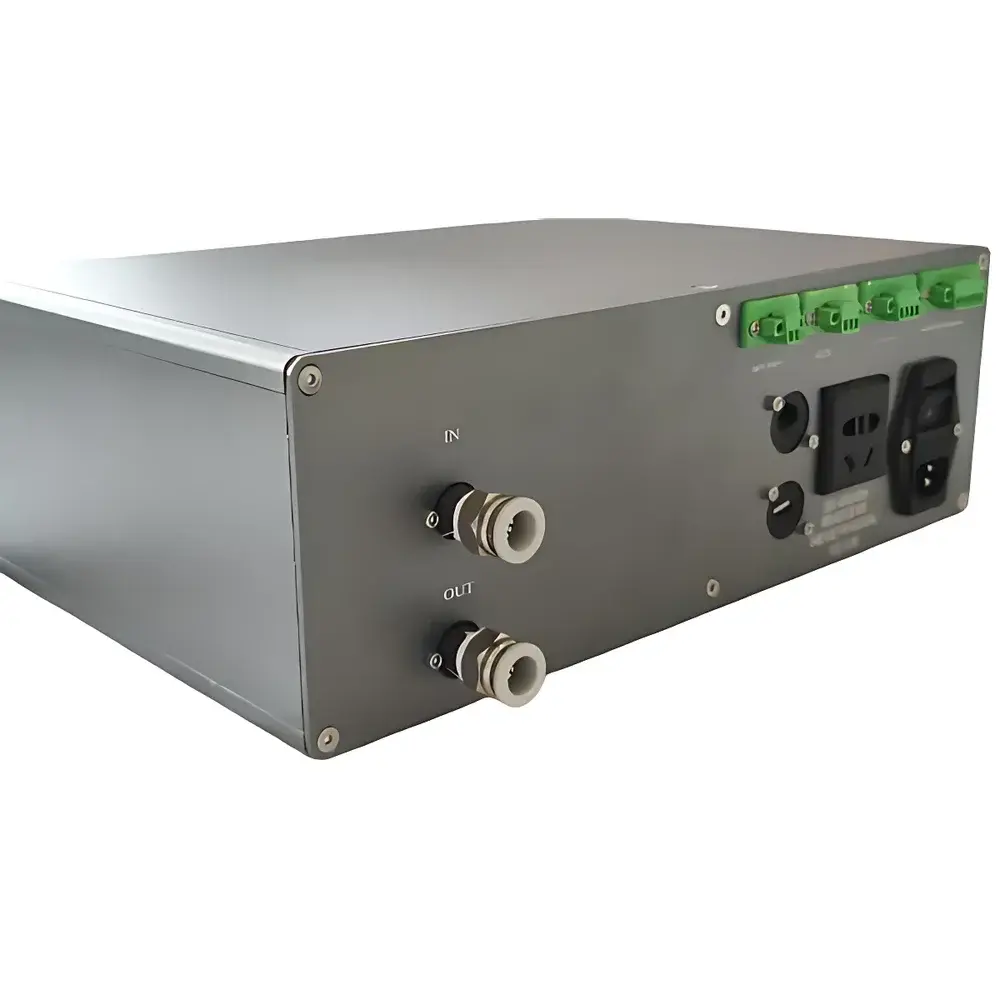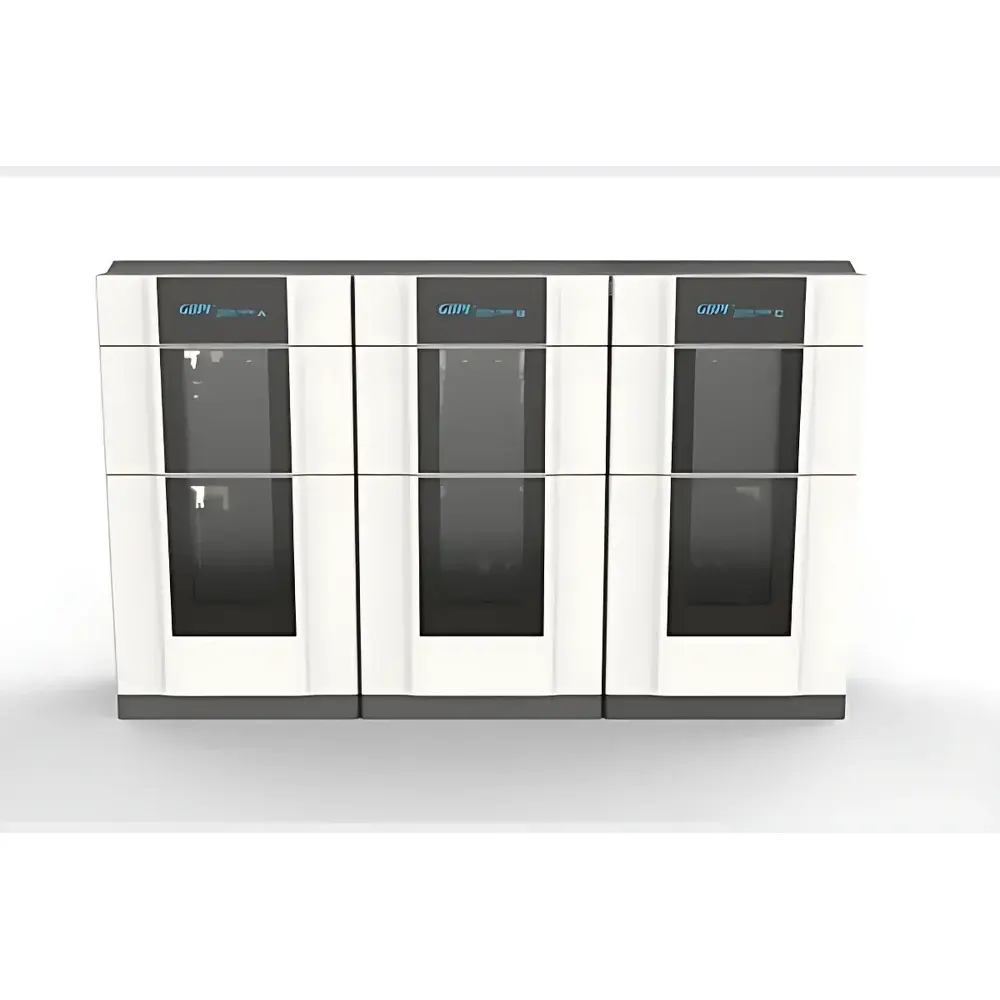
GBPI GBW-180 Biodegradation Testing System
| Brand | GBPI |
|---|---|
| Origin | Guangdong, China |
| Manufacturer Type | Direct Manufacturer |
| Country of Origin | China |
| Model | GBW-180 |
| Price Range | USD 70,000–112,000 (FOB Guangzhou) |
| CO₂ Detection Range | 0–10,000 ppm |
| CO₂ Detection Accuracy | ±1% FS |
| O₂ Detection Range | 0–25% |
| O₂ Detection Accuracy | ±1% FS |
| Pressure Detection Range | 0–100 kPa |
| Pressure Detection Accuracy | ±1% FS |
| Gas Flow Control Range | 0.01–10 L/min |
| Flow Control Accuracy | ±1.0% FS |
| Temperature Control Range | Ambient to 80 °C |
| Temperature Control Accuracy | ±0.5 °C |
| Reactor Volume per Chamber | 3 L |
| Max. Number of Simultaneous Reactors | 18 |
| Power Supply | AC 220 V, 50 Hz |
| Total Power Consumption | 5 kW |
| Dimensions (L×W×H) | 6950 × 1800 × 650 mm |
| Weight | 1500 kg |
Overview
The GBPI GBW-180 Biodegradation Testing System is an automated, multi-chamber respirometric platform engineered for standardized aerobic biodegradability assessment under controlled composting conditions. It operates on the principle of oxygen demand and CO₂ evolution quantification—measuring the cumulative carbon dioxide released by microbial metabolism during the decomposition of test materials in a defined compost matrix. This method aligns with internationally recognized respirometric protocols that correlate CO₂ production with ultimate aerobic biodegradation potential (expressed as % theoretical CO₂), enabling compliance-driven evaluation of polymeric materials, packaging films, agricultural mulches, and other organic substrates. The system maintains precise control over critical environmental parameters—including temperature (ambient to 80 °C, ±0.5 °C), relative humidity, airflow (0.01–10 L/min, ±1.0% FS), and headspace O₂ concentration—to replicate optimized composting kinetics per ISO 14855-1:2005, GB/T 19277.1–2011, and related standards. Its 18 independent reaction chambers allow parallel testing of replicates or diverse sample formulations, significantly reducing time-to-data while preserving statistical rigor and experimental reproducibility.
Key Features
- Eighteen fully independent 3 L reaction chambers with individual gas flow control, temperature regulation, and real-time CO₂/O₂ monitoring—enabling high-throughput comparative studies without cross-contamination.
- High-stability PID-fuzzy logic temperature control system with dual-stage heating/cooling capacity and integrated humidity management for consistent maturation-phase simulation.
- Industrial-grade mass flow controllers (MFCs) calibrated to ±1.0% full scale, ensuring repeatable aeration rates across all 18 channels under variable backpressure conditions.
- Trace-level CO₂ detection using certified NDIR sensors (0–10,000 ppm, ±1% FS) and electrochemical O₂ sensors (0–25%, ±1% FS), both factory-calibrated and supported by in-situ verification routines.
- Automated stirring mechanism per chamber, programmable for frequency, duration, and rest intervals—mimicking mechanical turning in industrial composting facilities.
- Integrated leak-tightness validation module performing automatic pressure decay tests prior to each run to confirm system integrity per ASTM D5338 Annex A2 requirements.
- Modular hardware architecture with field-replaceable sensor cartridges, sealed gas manifolds, and tool-less access panels—designed for minimal downtime and long-term operational stability in GLP-compliant laboratories.
Sample Compatibility & Compliance
The GBW-180 supports testing of solid, granular, and film-based organic materials—including polyethylene-based oxo-degradable films, PLA, PHA, starch-blends, paperboard composites, and natural fiber reinforcements—within standardized compost matrices per ISO 14855-1, ISO 14855-2, ISO 17556, GB/T 19277.1–2011, GB/T 19277.2–2013, GB/T 19811–2005, GB/T 29649–2013, GB/T 33797–2017, and GB/T 22047–2008. Each chamber accommodates up to 20 g of test material mixed with mature compost inoculum (C/N ratio 25:1, moisture 55±5%). The system meets essential instrumentation requirements for ISO/IEC 17025-accredited biodegradation testing labs, including documented calibration traceability, sensor drift monitoring, and environmental parameter logging at ≤1-minute intervals.
Software & Data Management
The embedded control software provides role-based access via three-tier security levels: Administrator, Operator, and Viewer. All user actions—including method creation, parameter modification, data export, and report generation—are logged with timestamps, usernames, and IP addresses in accordance with FDA 21 CFR Part 11 and EU Annex 11 principles. Audit trails cover system-level events, method execution history, and raw data modification records. Real-time graphs display CO₂ accumulation curves, O₂ depletion profiles, temperature/humidity trends, and flow rate stability per chamber. Test reports are auto-generated in PDF and Office-compatible formats, embedding metadata such as calibration certificates, environmental logs, and pass/fail determinations against specified thresholds (e.g., ≥90% theoretical CO₂ within 180 days). Data export supports CSV, Excel, and LIMS-integrated XML schemas.
Applications
- Regulatory submission support for EN 13432, ASTM D6400, and GB/T 20197 certification of compostable packaging.
- Comparative biodegradation kinetics of novel bio-based polymers under simulated industrial composting (58±2 °C) and home composting (25±3 °C) scenarios.
- Validation of microbial activity in compost amendments and inoculants through reference material testing (e.g., microcrystalline cellulose).
- Development of accelerated degradation protocols for thin-film applications, including photobiodegradable PE and additive-containing LDPE.
- Environmental fate assessment of pharmaceutical excipients, agrochemical carriers, and personal care ingredient residues in soil-compost systems.
FAQ
Does the GBW-180 comply with ISO 14855-1:2005 for regulatory submissions?
Yes—the system implements all mandatory environmental controls, gas analysis specifications, and data recording intervals required by ISO 14855-1:2005 and its Chinese equivalent GB/T 19277.1–2011.
Can the system operate at ambient temperature for home-compost simulation?
Yes—temperature setpoints are configurable from ambient to 80 °C in 0.1 °C increments, supporting both mesophilic (20–40 °C) and thermophilic (55–60 °C) composting regimes.
Is sensor calibration traceable to national standards?
All CO₂ and O₂ sensors ship with NIST-traceable calibration certificates; onboard zero/span verification routines allow daily performance checks without external equipment.
How is data integrity ensured during extended multi-week tests?
Continuous local storage with RAID-1 redundancy, automatic backup to network drives, and immutable audit logs prevent data loss or tampering—even during power interruptions.
What maintenance intervals are recommended for uninterrupted operation?
Sensor recalibration every 6 months, MFC verification quarterly, and full system leak-check before each test series—documented in the included Preventive Maintenance Logbook.