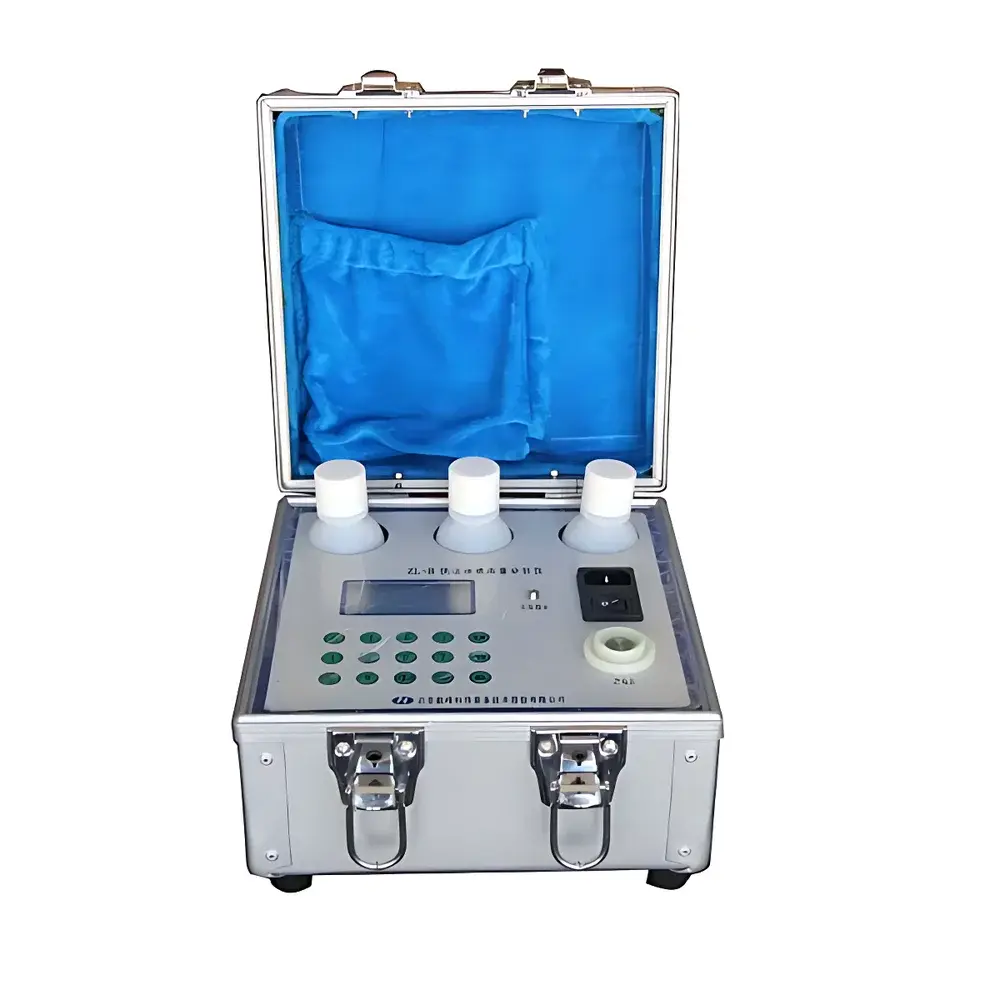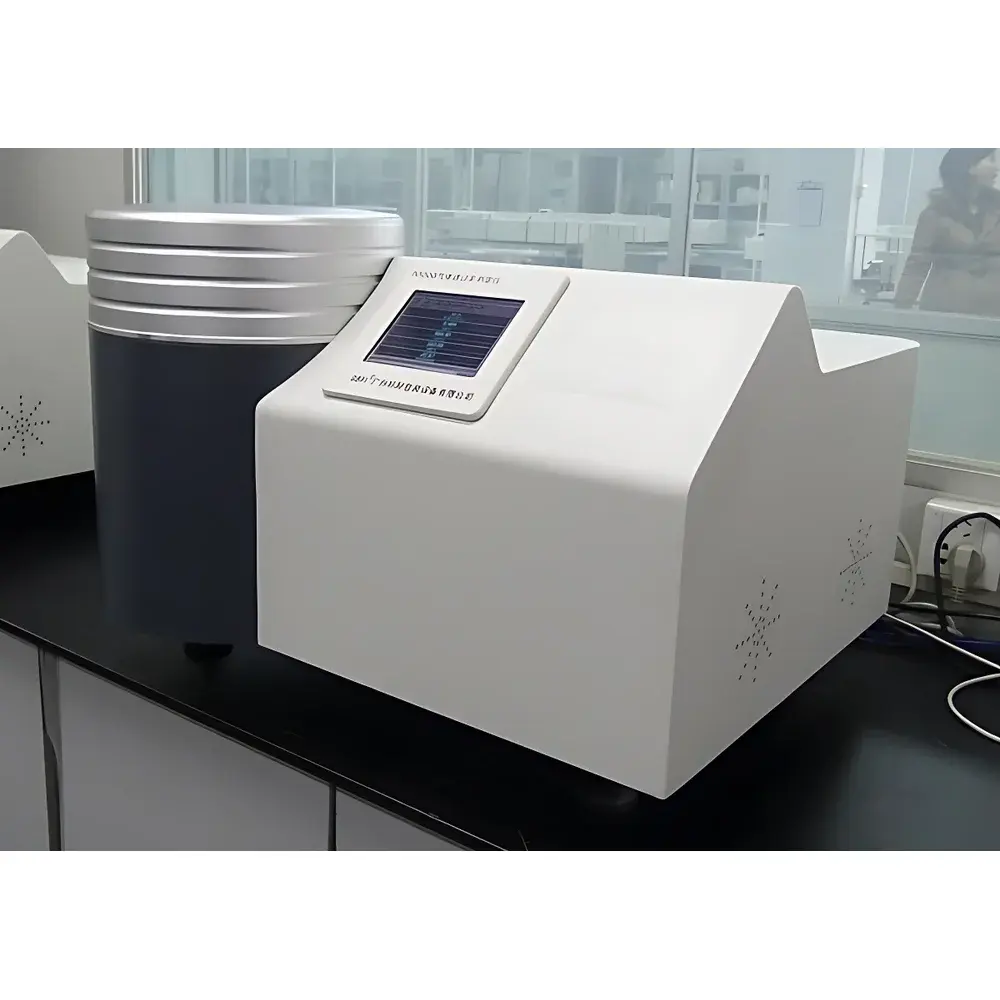
GBPI N500-G5 Differential Pressure Gas Permeability Tester
| Brand | GBPI |
|---|---|
| Origin | Guangdong, China |
| Manufacturer Type | OEM Manufacturer |
| Country of Origin | China |
| Model | N500-G5 |
| Price Range | USD 14,000 – 70,000 |
| Test Gases | O₂, CO₂, N₂ |
| Measurement Principle | Differential Pressure (Manometric) Method |
| Test Range | 0.02–50,000 cm³/(m²·24h·0.1 MPa) |
| Extended Range (with shroud) | up to 600,000 cm³/(m²·24h·0.1 MPa) |
| Resolution | 0.01 cm³/(m²·24h·0.1 MPa) |
| Temperature Control | 5–50 °C ±0.01 °C |
| Vacuum Level | <20 Pa |
| Vacuum Resolution | 0.1 Pa |
| Test Pressure Range | −0.1 to +0.1 MPa |
| Gas Supply Pressure | 0.2–0.8 MPa |
| Gas Inlet Port | 1/8″ NPT |
| Test Area | 50.24 cm² |
| Specimen Diameter | Φ110 mm |
| Max Specimen Thickness | ≤2 mm |
| Sample Capacity | 1 station (expandable) |
| Dimensions | 800 × 560 × 400 mm |
| Power | 1000 W |
| Electrical Supply | AC 220 V, 50 Hz |
| Compliance Standards | GB/T 1038–2000, ISO 2556:1974, ISO 15105-1:2007, ASTM D1434–2022, YBB 00082003–2015, JIS K7126-1:2006 |
Overview
The GBPI N500-G5 Differential Pressure Gas Permeability Tester is an engineered solution for precise, traceable, and standards-compliant measurement of gas transmission rates (GTR) through polymeric films, laminates, foils, and rigid packaging structures. It operates on the differential pressure (manometric) principle—where a controlled pressure gradient is maintained across a sealed test specimen, and the time-dependent accumulation of permeant gas in a calibrated measuring chamber is quantified via high-stability pressure transducers. This method is fundamentally aligned with ISO 15105-1 and ASTM D1434, enabling direct determination of oxygen (O₂), carbon dioxide (CO₂), and nitrogen (N₂) transmission rates under defined temperature and partial pressure conditions. The instrument is purpose-built for laboratories requiring regulatory-grade data integrity in packaging development, quality control, and stability testing—particularly where barrier performance directly impacts product shelf life, sterility assurance, or active pharmaceutical ingredient (API) protection.
Key Features
- Dual-mode pressure control architecture: Combines active vacuum generation (<20 Pa base pressure) with programmable differential pressure regulation (±0.1 MPa range), enabling stable, user-defined transmembrane gradients essential for low- and ultra-low-permeability materials—including aluminum-coated films and metallized PET.
- High-resolution thermal management: Electromagnetic step-controlled heating/cooling system achieves ±0.01 °C temperature stability over 5–50 °C, minimizing thermal drift during extended tests (e.g., 72+ hour OTR measurements per ISO 15105-1 Annex B).
- Modular hardware design: Pressure sensors, vacuum pump, and gas handling modules are functionally isolated—facilitating field-level calibration, sensor replacement, and preventive maintenance without full-system downtime.
- Embedded ARM-based controller: Enables standalone operation via integrated 7-inch color touchscreen; all real-time parameters (differential pressure, chamber pressure, temperature, cumulative gas volume) are displayed with configurable curve overlays and zoomable historical views.
- Three-tier permeability mode selection: Optimized algorithms automatically adjust sampling frequency, integration time, and pressure ramp profiles for low-, medium-, and high-barrier materials—reducing measurement uncertainty for both 0.02 cm³/(m²·24h·0.1 MPa) foil substrates and 50,000 cm³/(m²·24h·0.1 MPa) breathable nonwovens.
Sample Compatibility & Compliance
The N500-G5 accommodates flat specimens up to Φ110 mm and ≤2 mm thickness—including monolayer plastics (LDPE, PP), coextruded structures, aluminized films, ceramic-coated barriers, elastomeric sheets, and rigid thermoplastics. With optional container adapters (bottle, pouch, cup fixtures), it extends compliance to ASTM F1140/F1140M burst-test-aligned configurations for flexible and semi-rigid packaging. All measurement protocols adhere strictly to the gravimetric and manometric validation requirements of ISO 2556, GB/T 1038, and YBB 00082003–2015. Instrument certification includes traceable calibration using GBW(E)130541/2 national reference standards for gas permeability—certified by the State Administration for Market Regulation (SAMR), China—ensuring metrological equivalence with NIST-traceable permeation standards.
Software & Data Management
Compliant with FDA 21 CFR Part 11 and EU Annex 11 requirements for computerized systems, the embedded software implements role-based access control (administrator, operator, reviewer), electronic signatures, and comprehensive audit trails. Each data point—including method edits, parameter overrides, calibration events, and report exports—is timestamped, user-identified, and immutable. Raw data reside in a local SQLite database with encrypted backups; reports export natively to PDF, Excel (.xlsx), and CSV formats—with customizable templates supporting GLP/GMP header blocks (test ID, analyst, instrument ID, environmental conditions). All system logs—including sensor diagnostics, vacuum cycle status, and thermal ramp history—are retained for ≥12 months and available for regulatory inspection.
Applications
- Pharmaceutical primary packaging qualification (blister lidding, cold-form foil, PTP strips)
- Food packaging shelf-life modeling (MAP, vacuum-sealed trays, retort pouches)
- Medical device sterile barrier system (SBS) validation per ISO 11607-1
- EV battery separator and solar backsheet permeability screening
- Regulatory submission support for USP , EP 3.2.1, and JP 17
- QC release testing of coated optical films, contact lens substrates, and transdermal patch membranes
FAQ
What gas types can be tested—and are gas-specific calibration kits required?
The N500-G5 supports O₂, CO₂, and N₂ out-of-the-box. No gas-specific calibration is needed—the manometric method measures volumetric accumulation independent of gas identity; only temperature and pressure corrections (applied automatically) are required per ISO 15105-1 Section 7.
Does the system meet 21 CFR Part 11 requirements for electronic records?
Yes. Full audit trail logging, electronic signature enforcement, and role-based permission tiers are implemented at firmware level—not as add-on software modules.
Can the instrument measure containers without modifying the test chamber?
Container testing requires optional fixture kits (e.g., bottle cradle, pouch clamp). These mount externally and interface via the same pressure/vacuum manifold—no internal chamber modification is necessary.
How is traceability ensured for routine calibration?
Certified national standard reference materials (GBW(E)130541/2) are supplied with each instrument. Users perform routine verification by running the certified film per GB/T 1038 Annex C; deviation alerts trigger automatic recalibration prompts.
Is remote monitoring or network integration supported?
The embedded system supports Ethernet TCP/IP for local network data streaming and SNMP-based health monitoring—but does not include cloud connectivity or vendor-hosted dashboards, preserving data sovereignty per ISO/IEC 27001-aligned lab policies.