
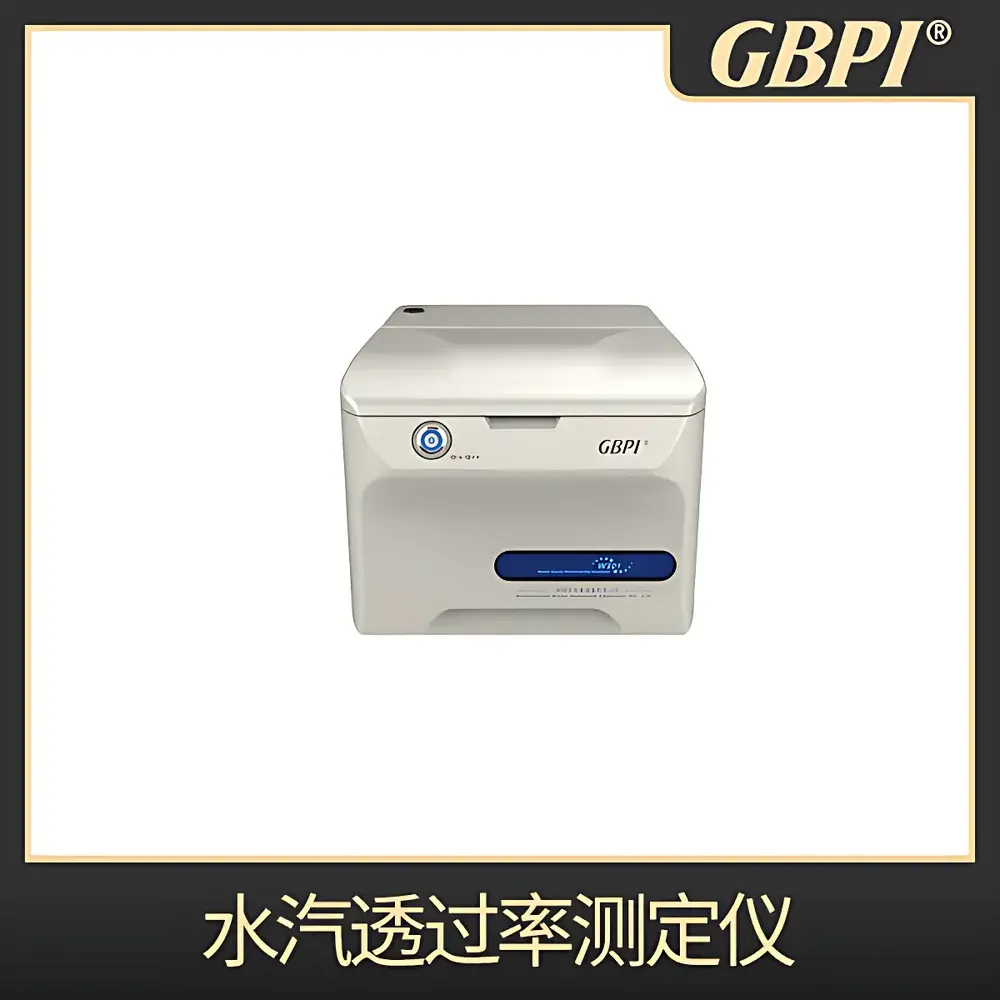
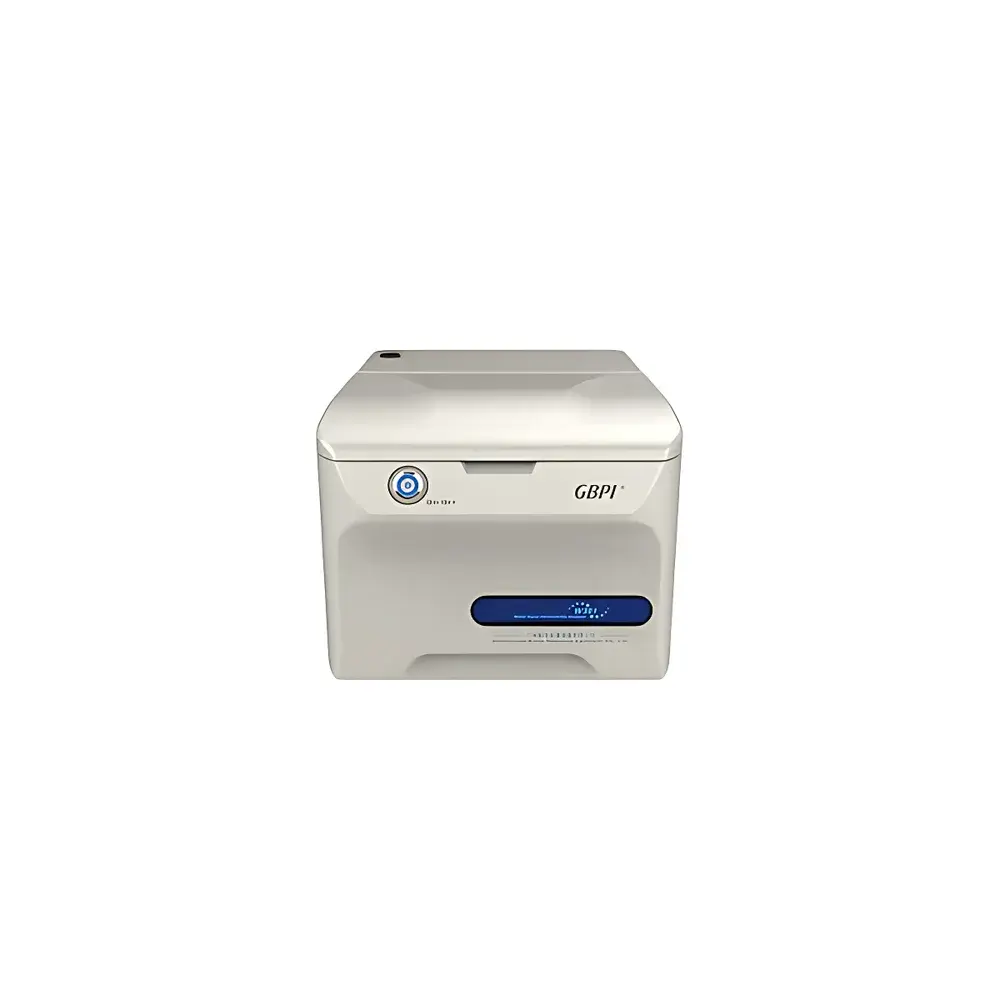
GBPI W301-1 Gravimetric Water Vapor Transmission Rate Tester
| Brand | GBPI |
|---|---|
| Origin | Guangdong, China |
| Manufacturer Type | OEM Manufacturer |
| Country of Origin | China |
| Model | W301-1 |
| Pricing | Upon Request |
| Test Principle | Gravimetric (Cup Method) |
| Standards Compliance | GB/T 1037–1988, GB/T 16928–1997, ASTM E96/E96M–2016, ASTM D1653–2013, ISO 2528–1995, TAPPI T464, DIN 53122–1, JIS Z0208–1976, YBB00092003–2015 |
| Measurement Range | 0.1–10,000 g/(m²·24h) |
| Resolution | 0.001 g/(m²·24h) |
| Temperature Control Range | 15–55 °C |
| Temperature Accuracy | ±0.1 °C |
| Humidity Control Range (Desiccant Method) | ≤10 %RH |
| Humidity Accuracy | ±1 %RH |
| Test Area | 50.24 cm² |
| Specimen Diameter | Φ90 mm |
| Max Specimen Thickness | 3 mm |
| Sample Capacity | 1 unit per test chamber |
| Power Consumption | 450 W |
| Supply | AC 220 V, 50 Hz |
Overview
The GBPI W301-1 Gravimetric Water Vapor Transmission Rate (WVTR) Tester is an engineered solution for precise, traceable, and standards-compliant measurement of water vapor permeation through packaging materials and functional barriers. Operating on the gravimetric cup method—defined in ISO 2528, ASTM E96, and GB/T 1037—the instrument quantifies mass gain or loss of a sealed test cup containing desiccant (or water) over time, under controlled temperature and relative humidity conditions. This principle delivers high reproducibility for low-to-high permeability materials, including ultra-high-barrier substrates such as aluminum foil, metallized films, and multilayer laminates used in pharmaceutical blister packaging, medical device pouches, and flexible electronics encapsulation.
Key Features
- Traceable metrological validation: Certified reference materials (CRM) with National Standard Substance Certificate (GBW(E)130543/4) and Manufacturing License for Measuring Instruments (Guo Zhi Biao Wu) are integrated into routine calibration protocols—ensuring data comparability across laboratories and regulatory submissions.
- Precision environmental control: Electromagnetic programmable stepwise temperature regulation enables stable, drift-free operation from 15 °C to 55 °C (±0.1 °C), eliminating external chiller/heater dependencies and minimizing thermal gradients across the test chamber.
- High-resolution gravimetry: Dual-range analytical balance system achieves 0.001 g/(m²·24h) resolution—critical for evaluating nanolayer-coated PET, SiOx/AlOx barrier films, and next-generation solar backsheet materials where WVTR values fall below 0.1 g/(m²·24h).
- Modular specimen adaptability: Interchangeable fixtures support flat films (Φ90 mm, ≤3 mm thick), rigid sheets, and 3D containers (bottles, trays, pouches) via optional accessories—enabling direct compliance testing per ASTM F1249 (for container WVTR) and YBB00092003–2015 (Chinese pharmacopoeial standard for pharmaceutical packaging).
- GMP-aligned software architecture: Compliant with Annex 11 (Computerized Systems) and aligned with FDA 21 CFR Part 11 requirements, the system enforces role-based user permissions, electronic signatures, and immutable audit trails for all test events, parameter changes, and report generations.
Sample Compatibility & Compliance
The W301-1 accommodates a broad spectrum of sample geometries and material classes: polymer films (LDPE, PP, PET, PA), coextrusions, vacuum-metallized substrates, ceramic-coated foils, elastomeric seals, and rigid thermoplastics. Its 50.24 cm² defined test area and desiccant-based low-RH environment (≤10 %RH, ±1 %RH) meet the stringent conditioning requirements for high-barrier validation in sterile packaging (ISO 11607–1), transdermal patch development (USP ), and OLED encapsulation QC. All test methods adhere to internationally harmonized protocols—including ASTM E96 BW (desiccant method), ISO 2528 dry-cup configuration, and Chinese national standards GB/T 1037 and YBB00092003—supporting cross-jurisdictional regulatory filings.
Software & Data Management
The embedded Windows-based application provides real-time visualization of four synchronized data streams: temperature, relative humidity, specimen weight, and calculated WVTR. Curve overlays support comparative analysis across batches; historical datasets are indexed in a local SQL Server database with configurable retention policies. Reports comply with GLP/GMP documentation standards: each includes instrument ID, operator credentials, calibration certificate IDs, environmental logs, raw weight timestamps, and statistical summaries (mean, SD, RSD). Export formats include PDF (with digital signature), CSV, and XML for LIMS integration. Audit trail records capture timestamped entries for every action—from method loading to result approval—satisfying inspection readiness for FDA, EMA, and NMPA audits.
Applications
- Pharmaceutical packaging qualification: blister lidding foils, cold-form foil, sachets for hygroscopic APIs
- Medical device packaging validation: Tyvek®/PET pouches, peel-open trays per ISO 11607
- Flexible electronics: moisture ingress testing of encapsulation layers in OLED lighting panels and photovoltaic backsheets
- Food packaging R&D: shelf-life modeling for retort pouches, cheese wrappers, and coffee laminates
- Regulatory submission support: generation of GxP-compliant data packages for ANDA, NDA, and MDR technical files
FAQ
What standards does the W301-1 formally support?
The instrument is validated for GB/T 1037–1988, ASTM E96/E96M–2016 (Method BW), ISO 2528–1995, and YBB00092003–2015, with documented traceability to national primary standards.
Can it test rigid containers such as bottles or cups?
Yes—using optional container adapters that maintain seal integrity and defined diffusion area, enabling compliance with ASTM F1249 and ISO 15106–3 for 3D package evaluation.
Is the system compliant with 21 CFR Part 11?
The software implements electronic signatures, audit trail logging, and access controls aligned with Part 11 expectations; full validation documentation (IQ/OQ/PQ) is available upon request.
How is calibration traceability maintained?
Each unit ships with a factory calibration certificate linked to GBW(E)130543/4 certified reference materials; users perform periodic verification using the same CRM batch.
What maintenance is required for long-term stability?
Annual sensor verification and chamber seal inspection are recommended; modular design allows field replacement of load cells, humidity sensors, and temperature probes without full-system downtime.





