
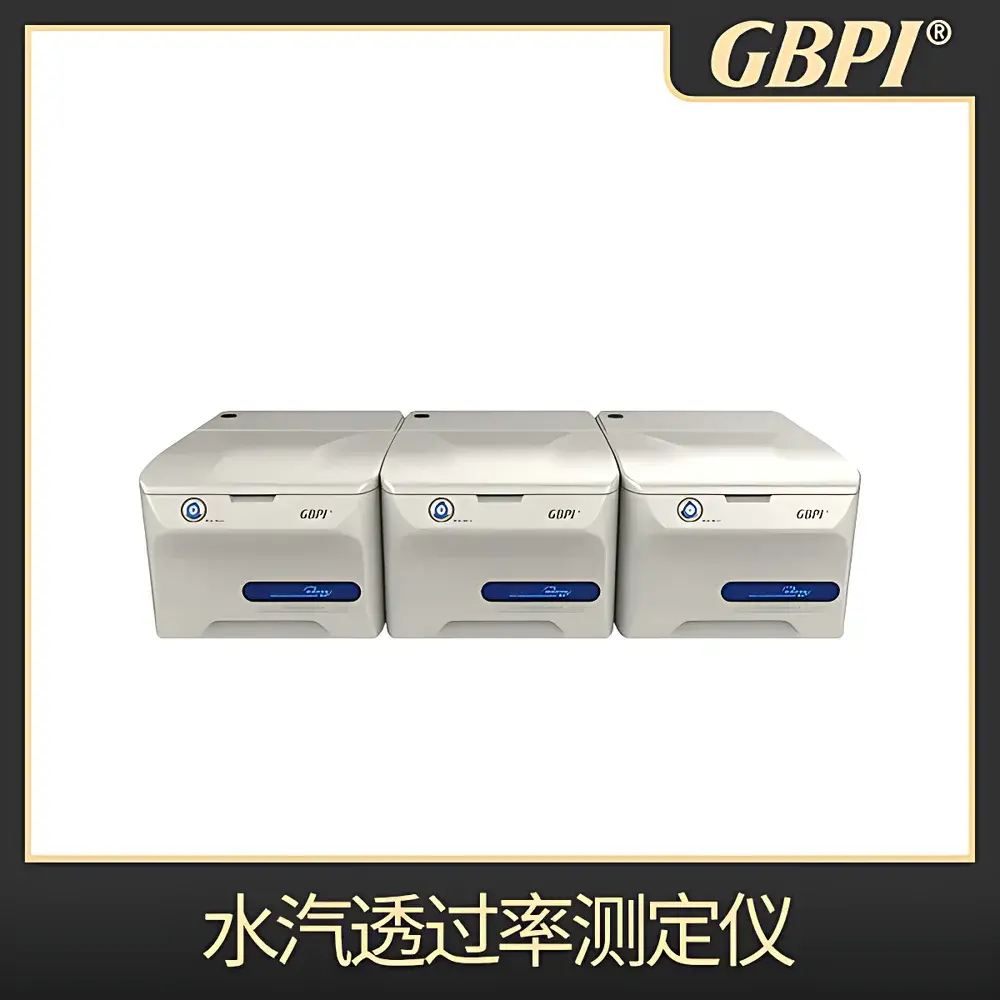
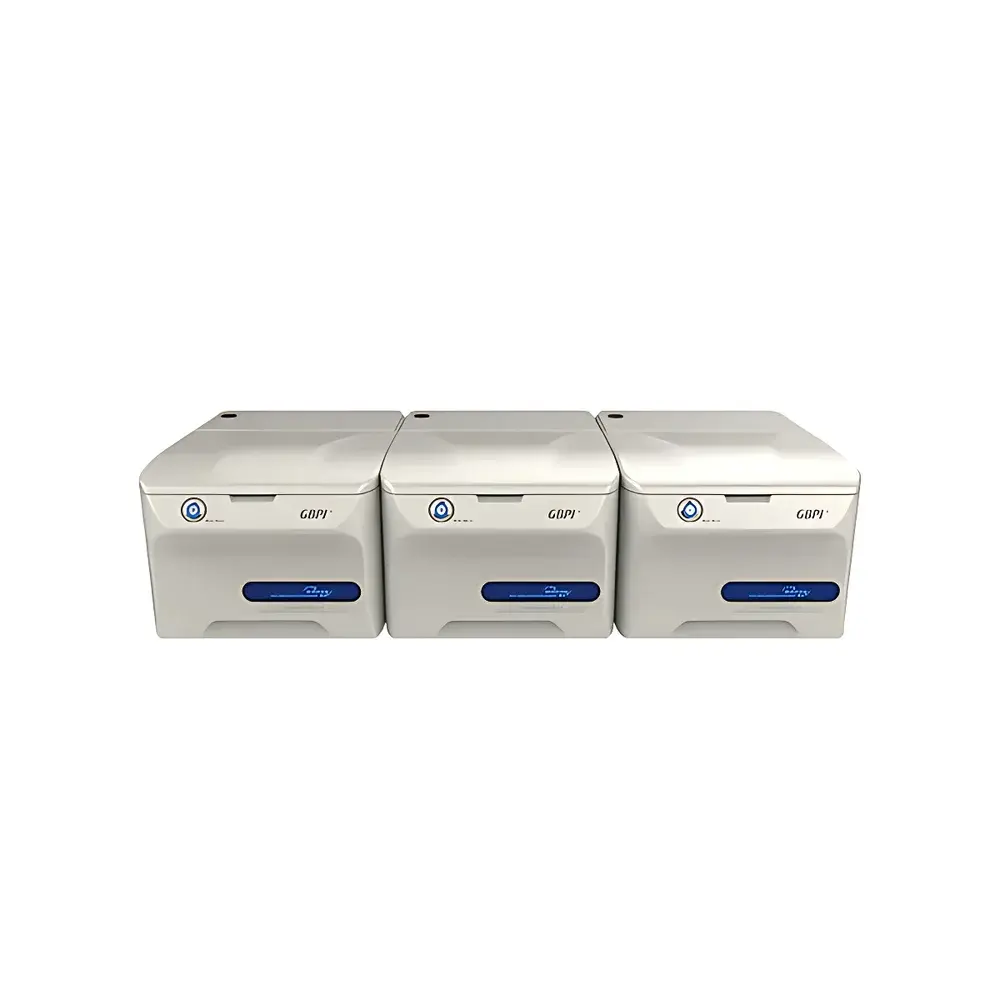
GBPI W303 Gravimetric Water Vapor Transmission Rate Tester
| Brand | GBPI |
|---|---|
| Origin | Guangdong, China |
| Manufacturer Type | Manufacturer |
| Country of Origin | Domestic (China) |
| Model | W303 |
| Pricing | Upon Request |
| Test Principle | Gravimetric (Weight Gain/Loss Method) |
| Standards Compliance | GB/T 1037–1988, GB/T 16928–1997, ASTM E96/E96M–2016, ASTM D1653–2013, ISO 2528–1995, TAPPI T464, DIN 53122-1, JIS Z0208–1976, YBB00092003–2015 |
| Measurement Range | 0.1–10,000 g/(m²·24h) |
| Resolution | 0.001 g/(m²·24h) |
| Temperature Control Range | 15–55 °C |
| Temperature Accuracy | ±0.1 °C |
| Humidity Control Range (Desiccant Method) | ≤10 %RH |
| Humidity Accuracy | ±1 %RH |
| Test Area | 50.24 cm² |
| Specimen Diameter | Φ90 mm |
| Max Specimen Thickness | 3 mm |
| Specimen Capacity | 3 units per test cycle |
| Power Supply | AC 220 V, 50 Hz |
| Rated Power | 450 W |
Overview
The GBPI W303 Gravimetric Water Vapor Transmission Rate (WVTR) Tester is an engineered precision instrument designed for the quantitative determination of water vapor permeation through packaging materials and functional barriers under controlled environmental conditions. It operates on the gravimetric principle—measuring mass change over time in a desiccant-filled test cup sealed with the specimen—fully compliant with the cup method defined in ISO 2528, ASTM E96/E96M, and GB/T 1037. This methodology delivers traceable, reproducible results essential for regulatory submissions, material qualification, and shelf-life modeling in pharmaceutical, food, medical device, and electronics packaging development. The system is calibrated using GBW(E)130543/4 certified reference materials issued by China’s National Institute of Metrology, ensuring metrological traceability to national standards and enabling cross-laboratory data comparability.
Key Features
- High-precision electromagnetic step-programmable temperature control (15–55 °C, ±0.1 °C), eliminating external chiller/heater dependencies and enhancing thermal stability.
- Dual-channel environmental regulation: independent control of chamber temperature and desiccant-side relative humidity (≤10 %RH, ±1 %RH), critical for low-permeability barrier testing.
- Integrated high-resolution analytical balance with automatic overload protection and real-time drift compensation, delivering resolution down to 0.001 g/(m²·24h).
- Modular hardware architecture supporting rapid field maintenance and component-level replacement—minimizing downtime and total cost of ownership.
- GMP-aligned software with full 21 CFR Part 11 compliance: role-based user authentication, electronic signatures, immutable audit trails for all test events, parameter changes, and data exports.
- Three-specimen capacity per test cycle with standardized 50.24 cm² exposure area (Φ90 mm), optimized for statistical robustness without compromising throughput.
Sample Compatibility & Compliance
The W303 accommodates flat and rigid specimens up to 3 mm thick—including polymer films (PET, PE, PP), metallized laminates, aluminum foil, ceramic substrates, rubber sheets, and composite boards. Optional fixtures extend capability to 3D containers (bottles, pouches, trays) via custom cup adapters. All test protocols adhere to internationally harmonized standards: ASTM E96 (desiccant and water methods), ISO 2528 (gravimetric cup method), GB/T 1037 (Chinese national standard), and YBB00092003–2015 (Chinese pharmaceutical packaging regulation). Data generated satisfies GLP/GMP documentation requirements for quality control laboratories and regulatory filings with NMPA, FDA, and EMA.
Software & Data Management
The dedicated Windows-based application provides full lifecycle test management—from method definition and instrument calibration to report generation and database archiving. Real-time visualization includes synchronized plots of weight gain, temperature, RH, and calculated WVTR; users may toggle curve visibility and overlay historical datasets. All raw sensor readings are timestamped and stored in an encrypted local SQL database with configurable backup intervals. Reports conform to ISO/IEC 17025 documentation practices: auto-inclusion of instrument ID, operator, calibration certificate numbers, environmental logs, uncertainty estimates, and pass/fail status against predefined specification limits. Export formats include PDF, CSV, and XML for LIMS integration.
Applications
This instrument serves as a primary tool in packaging R&D and QC labs evaluating moisture barrier performance across industries: pharmaceutical blister packaging integrity verification; food packaging shelf-life prediction; solar backsheet durability assessment; flexible OLED encapsulation validation; transdermal patch permeation screening; and high-barrier film qualification for lithium-ion battery separators. Its sensitivity range (0.1–10,000 g/(m²·24h)) supports both ultra-low-permeability materials (e.g., SiOx-coated PET) and highly hygroscopic substrates (e.g., uncoated paperboard), making it suitable for comparative benchmarking, accelerated aging correlation studies, and supplier qualification audits.
FAQ
What standards does the W303 comply with?
It fully implements GB/T 1037–1988, ASTM E96/E96M–2016, ISO 2528–1995, and six additional international and industry-specific standards listed in its technical documentation.
Can the W303 test rigid containers such as bottles or trays?
Yes—via optional container-specific test cups and sealing fixtures, enabling WVTR measurement on 3D geometries while maintaining ASTM-defined cup geometry constraints.
Is the software compliant with FDA 21 CFR Part 11?
Yes—the system includes electronic signatures, audit trail logging, user access controls, and data immutability features validated per Part 11 Annex A guidance.
How is instrument accuracy verified?
Using GBW(E)130543/4 certified national reference materials issued by China’s National Institute of Metrology, with documented calibration certificates traceable to SI units.
What maintenance is required for long-term stability?
Routine desiccant replacement, balance calibration with certified weights, and annual verification of temperature/humidity sensors using NIST-traceable probes.






