
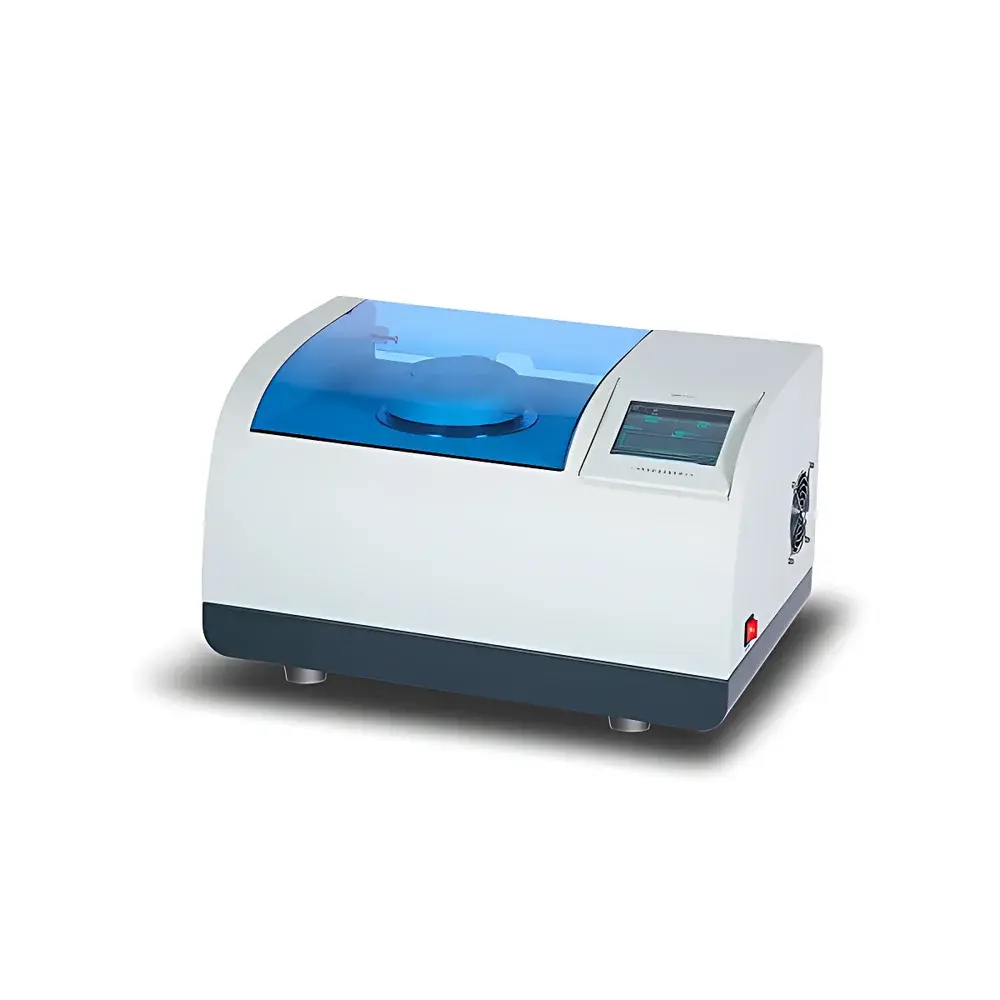
GBPI W401-i Water Vapor Transmission Rate (WVTR) Tester for Lithium-ion Battery Separator Films
| Brand | GBPI |
|---|---|
| Model | W401-i |
| Origin | Guangdong, China |
| Manufacturer Type | Direct Manufacturer |
| Country of Origin | China |
| Price Range | USD 14,000–28,000 |
| Test Range | 0.001–100 g/(m²·24h) |
| Resolution | 0.001 g/(m²·24h) |
| Temperature Control Range | 15–45 °C (optional up to 60 °C) |
| Temp. Accuracy | ±0.1 °C |
| Humidity Range | 30–90 %RH |
| RH Accuracy | ±1 %RH |
| Test Area | 50.24 cm² (down to 0.785 cm² with optional fixtures) |
| Specimen Size | Φ100 mm |
| Max. Thickness | ≤3 mm |
| Sample Capacity | 1 unit per test |
| Carrier Gas | ≥99.999% N₂ (user-supplied) |
| Gas Pressure | ≥0.1 MPa |
| Flow Rate | 5–120 mL/min |
| Gas Inlet | 1/8″ stainless steel tubing |
| Dimensions | 600 × 400 × 330 mm |
| Weight | 80 kg |
| Power | 750 W, AC 220 V, 50 Hz |
Overview
The GBPI W401-i Water Vapor Transmission Rate (WVTR) Tester is a gravimetric-coupled infrared detection system engineered for high-precision, trace-level measurement of water vapor permeation through thin polymeric and composite materials—specifically optimized for lithium-ion battery separator films, packaging barriers, and functional laminates. It operates on the principle of dynamic carrier gas transport: a controlled humidity gradient is established across a sealed test specimen mounted in a dual-chamber diffusion cell; dry nitrogen sweeps the downstream side, carrying permeated water vapor to a high-stability infrared moisture sensor calibrated traceably to NIST-traceable standard reference materials. This method conforms to the fundamental physical model described in ASTM F1249 and ISO 15106-2, ensuring thermodynamic consistency and interlaboratory reproducibility. Unlike cup-based or electrolytic methods, the W401-i delivers real-time, continuous WVTR quantification under precisely regulated temperature (±0.1 °C) and relative humidity (±1 %RH) conditions—critical for evaluating the microstructural integrity and long-term electrochemical stability of battery separators exposed to ambient moisture ingress.
Key Features
- Traceable metrology: Fully compliant with GB/T 26253–2010 and YBB 00092003–2015; certified by China’s National Institute of Metrology with GBW(E)130543/4 Standard Reference Material accreditation for instrument validation.
- Modular dual-gas humidity control: Independent dry-air and saturated-humid-air streams blended via mass flow controllers enable stable, programmable RH setpoints from 30 to 90 %RH without condensation risk.
- ARM-based embedded architecture: Standalone operation via 7-inch color touchscreen; no external PC required for routine testing, data visualization, or report generation.
- Multi-mode barrier assessment: Configurable high-/medium-/low-permeability modes optimize signal-to-noise ratio for materials ranging from ultra-high-barrier aluminum-coated films (WVTR < 0.01 g/m²·24h) to hydrophilic medical patches.
- GMP-aligned software platform: Role-based access control (Administrator, Operator, Reviewer), full audit trail (system, method, and run-level), electronic signatures, and 21 CFR Part 11–compliant data integrity safeguards.
- Expandable test geometry: Standard 50.24 cm² aperture; optional mini-cell fixtures support down to 0.785 cm² for small-area battery separator coupons or patterned substrates.
Sample Compatibility & Compliance
The W401-i accommodates rigid and flexible planar specimens ≤3 mm thick and Ø100 mm in diameter—including microporous polyolefin separators (PE, PP, ceramic-coated), PVDF membranes, metallized PET, pharmaceutical blister lidding, OLED encapsulation films, and solar backsheet laminates. Container testing (bottles, pouches, trays) is supported via optional custom fixtures. All hardware and firmware comply with ISO/IEC 17025 calibration traceability requirements. The system meets analytical validation criteria outlined in ICH Q5C (stability testing of biopharmaceuticals) and USP (permeation testing of packaging systems). Environmental conditioning parameters adhere strictly to ASTM D618 preconditioning guidelines prior to test initiation.
Software & Data Management
The integrated GBPI TestSuite v4.x software provides intuitive workflow configuration: method templates (e.g., “Li-Battery Separator Quick Scan”, “Pharma Blister Stability”) predefine temperature ramp profiles, RH dwell times, and endpoint criteria. Real-time plotting displays four synchronized time-series curves: chamber temperature, RH, sensor output (ppm H₂O), and calculated cumulative WVTR. All raw sensor voltages, environmental logs, and metadata are stored in an encrypted SQLite database with immutable timestamps. Reports export natively to PDF, Excel (.xlsx), and CSV formats; XML schema supports LIMS integration. Audit trails record user login/logout events, parameter modifications, calibration actions, and result approvals—retained for ≥36 months per GLP retention policy.
Applications
- Lithium-ion battery R&D: Quantifying moisture permeability of separator films to predict electrolyte decomposition, HF generation, and cycle-life degradation.
- Pharmaceutical packaging qualification: Validating moisture barrier performance of cold-form blisters, sachets, and desiccant-lined vials per FDA guidance.
- Flexible electronics encapsulation: Assessing WVTR of thin-film barriers for OLED lighting panels and wearable sensors.
- Medical device regulatory submission: Generating GxP-compliant data for 510(k) or MDR Annex II technical documentation.
- Quality control laboratories: Routine batch release testing of food-grade laminates, infant formula pouches, and sterile barrier systems.
FAQ
What carrier gas is required, and why must it be ≥99.999% pure nitrogen?
Ultra-high-purity nitrogen eliminates background moisture and hydrocarbon interference, ensuring baseline stability and minimizing detection limit uncertainty—critical for sub-0.01 g/m²·24h measurements.
Can the W401-i test curved or non-planar battery pouches?
Yes—using the optional container fixture kit, which includes vacuum-sealed clamping rings and conformal gasketing to maintain leak-tight integrity during dynamic RH cycling.
Is third-party calibration support available?
GBPI maintains ISO/IEC 17025-accredited calibration services; certificates include as-found/as-left data, measurement uncertainty budgets, and traceability to NIM SRMs.
How does the system handle sensor drift during extended runs?
The ARM controller executes automated zero-point verification at user-defined intervals using internal dry-gas purge cycles; drift compensation algorithms apply real-time correction based on baseline deviation history.
Does the software support multi-user environments in shared lab networks?
Yes—domain-authenticated login, configurable network share paths, and concurrent session management ensure secure collaborative use across QC, QA, and R&D teams.




