
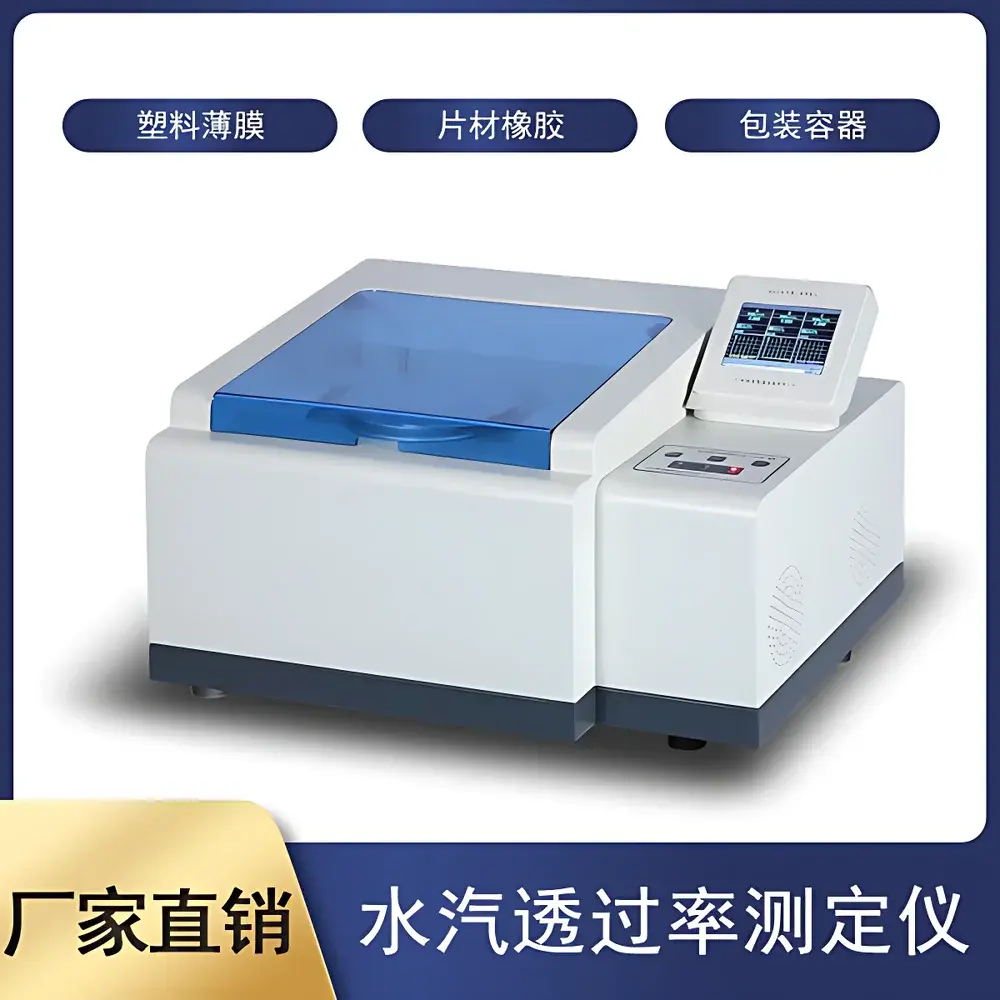
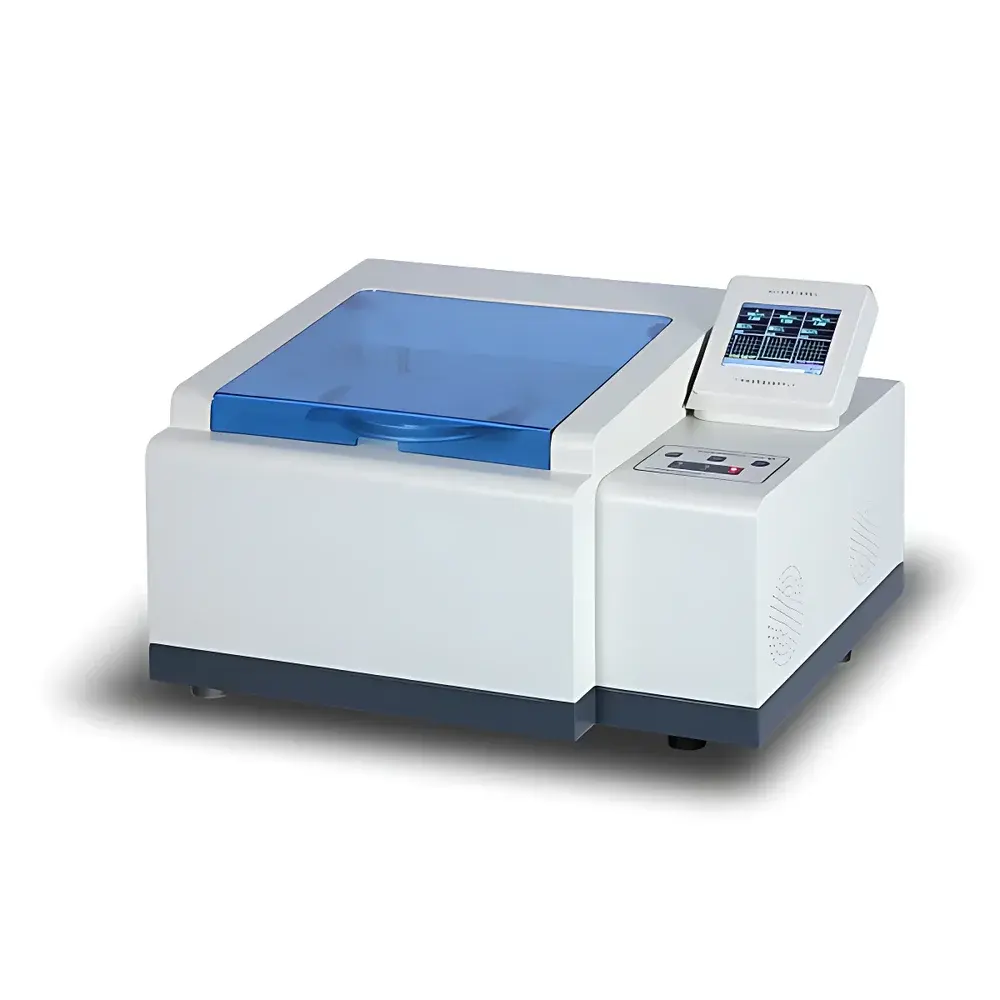
GBPI W501 Gravimetric Water Vapor Transmission Rate (WVTR) Tester
| Brand | GBPI |
|---|---|
| Origin | Guangdong, China |
| Manufacturer Type | Direct Manufacturer |
| Country of Origin | China |
| Model | W501 |
| Pricing | Upon Request |
| Measurement Principle | Gravimetric (Weight Gain) Method |
| Standards Compliance | GB/T 1037–1988, GB/T 16928–1997, ASTM E96/E96M–2016, ASTM D1653–2013, TAPPI T464, ISO 2528–1995, DIN 53122–1, JIS Z0208–1976, YBB00092003–2015 |
| Test Range | 0.1–10,000 g/(m²·24h) |
| Accuracy | 0.001 g/(m²·24h) |
| Weight Resolution | 0.1 mg |
| Temperature Control Range | 15–55 °C |
| Temp Stability | ±0.1 °C |
| Humidity Control Range | 30–90% RH and 100% RH |
| RH Accuracy | ±1% RH |
| Test Area | 86.54 cm² |
| Specimen Diameter | Φ125 mm |
| Max Thickness | ≤5 mm |
| Purge Air Velocity | 0.5–2.5 m/s |
| Interface | Φ4 mm polyurethane tubing |
| Air Supply Pressure | ≥0.2 MPa |
| Dimensions | 680 × 550 × 375 mm |
| Weight | 50 kg |
| Power | 500 W |
| Voltage/Frequency | AC 220 V, 50 Hz |
Overview
The GBPI W501 Gravimetric Water Vapor Transmission Rate (WVTR) Tester is a precision-engineered instrument designed for quantitative determination of water vapor permeation through packaging and barrier materials under controlled temperature and humidity conditions. It operates on the gravimetric (weight gain) principle in accordance with standardized cup-based methodology: a conditioned specimen separates an upper test chamber—flushed with humidified nitrogen—from a lower desiccant chamber. Water vapor diffuses across the sample and is irreversibly absorbed by desiccant (e.g., anhydrous calcium chloride or silica gel), resulting in measurable mass increase over time. The rate of weight gain is directly converted to WVTR in g/(m²·24h), enabling traceable, SI-aligned quantification of moisture barrier performance. This method is widely accepted for its fundamental metrological clarity, minimal dependence on sensor drift, and direct correlation with real-world shelf-life modeling—particularly critical in pharmaceutical packaging, food preservation, flexible electronics encapsulation, and renewable energy component qualification.
Key Features
- High-accuracy gravimetric measurement system with 0.1 mg analytical balance resolution and automated drift compensation algorithms.
- Dual-stream humidity control architecture using independent dry and saturated gas flows, delivering stable RH setpoints from 30% to 100% RH with ±1% RH accuracy.
- Electromagnetic programmable step-control for temperature regulation (15–55 °C), achieving ±0.1 °C uniformity across the test chamber.
- Integrated ARM-based embedded control system enabling standalone operation—no external PC required for routine testing, data logging, or report generation.
- Multi-level user access management aligned with Annex 11 (Computerized Systems) of EU GMP and FDA 21 CFR Part 11 requirements, including role-based permissions (Administrator, Operator, Reviewer), audit trails for system events, method changes, and data modifications.
- Modular hardware design with field-replaceable sensor modules—including imported electrochemical humidity sensors with auto-range protection—to minimize downtime and simplify maintenance.
- Three-tier permeability mode selection (low/mid/high barrier) optimized for materials ranging from LDPE films to aluminum-laminated composites and metallized PET, ensuring optimal signal-to-noise ratio across the full 0.1–10,000 g/(m²·24h) dynamic range.
Sample Compatibility & Compliance
The W501 accommodates diverse geometries and material classes per ISO 2528 and ASTM E96 protocols. Flat specimens include monolayer and multilayer polymer films (e.g., BOPP, PET, PA, EVOH), coated papers, foil laminates (Al/PET, Al/PE), glassine, and fiber-based composites. Rigid and semi-rigid containers—such as PET bottles, HDPE fuel tanks, aluminum beverage cans, vacuum-sealed pouches, and thermoformed trays—are testable using optional fixture kits that maintain seal integrity and eliminate edge leakage. Specialized accessories enable evaluation of medical device components (sterile wound dressings, transdermal patches), photovoltaic backsheet laminates, lithium-ion battery enclosures, and single-use foodservice items (paper cups, molded fiber bowls). All test configurations comply with GLP documentation standards and support full traceability via calibrated reference standards certified under CNAS-accredited reference material programs (GBW(E)130543/4).
Software & Data Management
The embedded HMI features a 7-inch color capacitive touchscreen with intuitive workflow navigation. Real-time visualization includes synchronized plots of chamber temperature, relative humidity, cumulative mass gain, and calculated WVTR—each curve toggleable for comparative analysis. Test methods are stored as editable templates with configurable ramp rates, equilibration durations, and endpoint criteria. Raw data and metadata (operator ID, timestamp, environmental logs, calibration history) are written to an internal SQLite database with automatic daily backup to USB storage. Reports conform to ISO/IEC 17025 reporting guidelines and export natively to PDF, Excel (.xlsx), and CSV formats. Audit trail records capture all user actions—including login/logout sequences, parameter edits, result overrides, and report exports—with immutable timestamps and digital signatures.
Applications
- Pharmaceutical packaging validation: blister cavity WVTR for moisture-sensitive APIs; HDPE/PP bottle barrier assessment per YBB00092003–2015.
- Food packaging development: shelf-life prediction for snack bags, coffee pouches, and frozen meal trays using accelerated permeation modeling.
- Renewable energy materials: moisture ingress rate quantification for PV backsheet multilayers (PET/EVA/PE) under IEC 61215 thermal cycling profiles.
- Automotive component qualification: fuel permeation resistance of blow-molded polyethylene fuel tanks per SAE J1742.
- Medical device regulatory submission: WVTR verification of sterile barrier systems (Tyvek®/PET laminates) per ISO 11607–1.
- Consumer electronics protection: encapsulation integrity testing of OLED display edge seals and flexible printed circuit board conformal coatings.
FAQ
What standards does the W501 comply with?
The instrument meets the technical and procedural requirements of GB/T 1037–1988, ASTM E96/E96M–2016, ISO 2528–1995, and seven additional national and international standards for gravimetric WVTR testing.
Can the W501 test irregularly shaped containers?
Yes—using optional custom fixtures and sealing gaskets, it supports bottles, jars, pouches, and tubs per ASTM F1249 (modified cup method) and ISO 15106–3 protocols.
Is calibration traceable to national standards?
Yes—GBPI provides certified reference standards (GBW(E)130543/4) accredited by the State Administration for Market Regulation (SAMR), enabling on-site verification without third-party intervention.
Does the system support 21 CFR Part 11 compliance?
Yes—the software implements electronic signatures, role-based access control, and comprehensive audit trails meeting FDA requirements for regulated environments.
What maintenance is required for long-term stability?
Routine desiccant replacement, periodic balance calibration using certified weights, and annual verification of RH and temperature sensors using NIST-traceable references are recommended.





