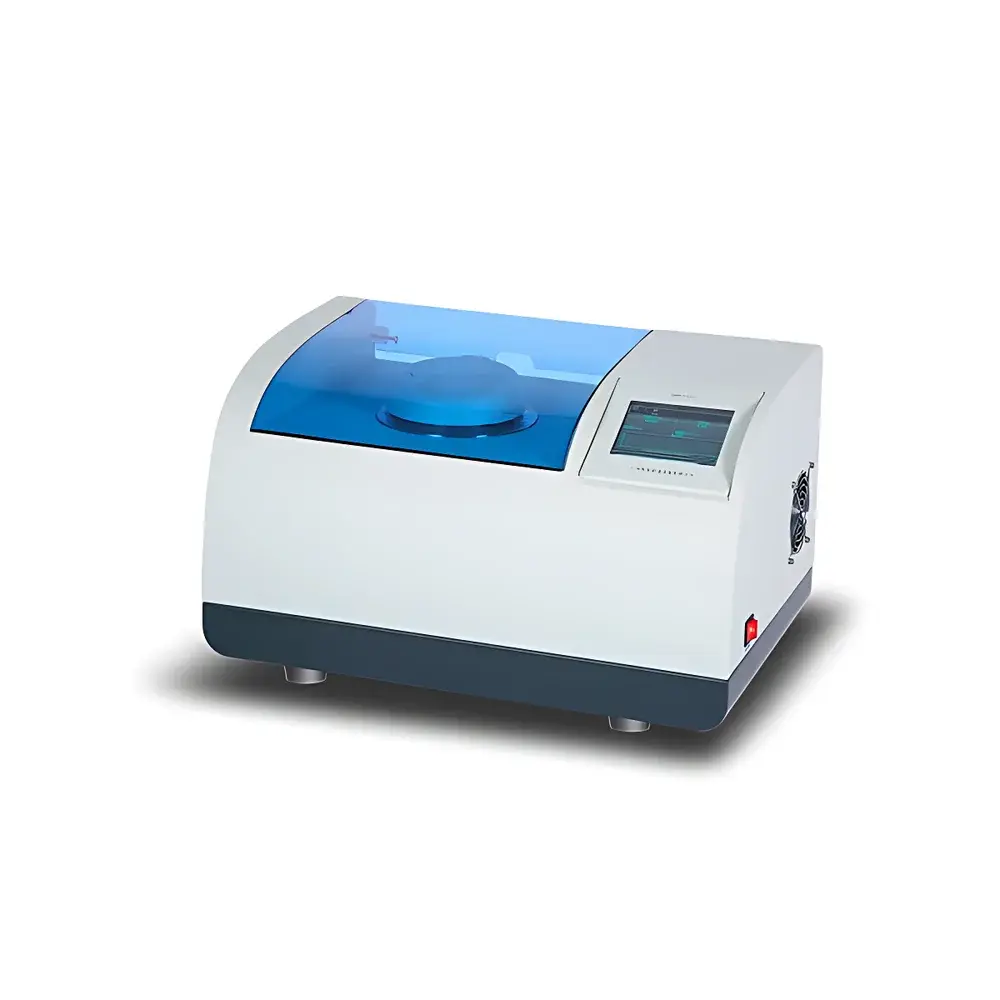
GBPI Y110-D Isostatic Oxygen Permeation Analyzer
| Brand | GBPI |
|---|---|
| Origin | Guangdong, China |
| Manufacturer Type | Direct Manufacturer |
| Region | Domestic (China) |
| Model | Y110-D |
| Price Range | USD 14,000 – 70,000 |
| Test Range | 0.02–16,500 cm³/(m²·24h) [up to 260,000 cm³/(m²·24h) with mask accessory] |
| Accuracy | 0.001 cm³/(m²·24h) |
| Temperature Control | 15–45 °C ±0.1 °C |
| Humidity Control | 30–90 %RH ±1 %RH |
| Test Area | 50.24 cm² (down to 0.785 cm² with optional fixture) |
| Specimen Size | Ø100 mm |
| Max Thickness | ≤3 mm |
| Sample Quantity | 1 per test |
| Carrier Gas Pressure | ≥0.1 MPa |
| Gas Inlet | Φ3 mm tubing / 1/8″ NPT |
| Dimensions | 600 × 400 × 330 mm |
| Weight | 80 kg |
| Power | 750 W, AC 220 V, 50 Hz |
| Compliance | GB/T 19789–2005, YBB 00082003–2015, ASTM D3985, ASTM F2622, ASTM F1927, ASTM F1307, ISO 15105-2, DIN 53380-3, JIS K-7126-B |
Overview
The GBPI Y110-D Isostatic Oxygen Permeation Analyzer is a precision instrument engineered for the quantitative determination of oxygen transmission rate (OTR) through flat films, sheets, and rigid packaging containers under controlled temperature and relative humidity conditions. It operates on the principle of isostatic (equal-pressure) coulometric detection: oxygen molecules permeating through a sealed test specimen are carried by a nitrogen stream into an electrochemical oxygen sensor, where they undergo a stoichiometric reduction reaction generating a current proportional to O2 flux. This method ensures high reproducibility, low detection limits, and compliance with internationally recognized gravimetric and coulometric reference protocols. Designed for laboratories requiring regulatory-grade data integrity—particularly in pharmaceutical packaging validation, medical device barrier assessment, and food shelf-life modeling—the Y110-D delivers traceable, auditable results aligned with GMP, GLP, and FDA 21 CFR Part 11 requirements.
Key Features
- Traceable Metrology Framework: Certified by China’s State Administration for Market Regulation (SAMR) with National Standard Substance Certification (GBW(E)130497/8) and Manufacturing License for Measuring Instruments (‘Guo Zhi Biao Wu’). Enables dual-mode calibration using certified reference films or standard gases—fully integrated into the software workflow without external tools.
- High-Fidelity Environmental Control: Dual-stream humidity generation (dry + saturated gas mixing) achieves ±1 %RH stability across 30–90 %RH; electromagnetic step-programmed PID temperature control maintains ±0.1 °C uniformity within the test chamber (15–45 °C range).
- Modular Test Configuration: Standard 50.24 cm² test area (Ø100 mm specimen); optional mini-fixtures reduce active area to 0.785 cm² for micro-scale or high-barrier materials (e.g., Al foil, SiOx-coated PET). Optional mask assembly extends upper OTR limit to 260,000 cm³/(m²·24h) for ultra-permeable elastomers or foams.
- Embedded ARM-Based Control Architecture: Fully autonomous operation—no PC required for routine testing. Real-time acquisition of OTR, O2 concentration, temperature, and RH with synchronized four-channel plotting; zoom, pan, and overlay functions support comparative kinetic analysis.
- GMP-Compliant Software Platform: Role-based access control (Administrator, Operator, Reviewer, Viewer), configurable permission matrices, and full audit trail logging—including system events, method edits, and raw data modifications—with immutable timestamps and user attribution.
Sample Compatibility & Compliance
The Y110-D accommodates planar specimens up to 3 mm thick and Ø100 mm diameter, including polymer films (LDPE, PP, EVOH), metallized laminates, ceramic substrates, rubber sheets, and rigid thermoformed trays. With optional container fixtures, it quantifies OTR through bottles, pouches, cups, and blister cavities—enabling direct correlation between material-level barrier performance and final-packaging integrity. Regulatory alignment includes pharmacopoeial standards (YBB 00082003–2015), Chinese national methods (GB/T 19789–2005), and key ASTM/ISO benchmarks: D3985 (coulometric sensor), F2622 (instrumental OTR), F1927 (high-OTR films), F1307 (rigid containers), ISO 15105-2 (differential pressure method equivalence), DIN 53380-3, and JIS K-7126-B. All test reports embed metadata compliant with ALCOA+ principles (Attributable, Legible, Contemporaneous, Original, Accurate, Complete, Consistent, Enduring, Available).
Software & Data Management
Control and analysis are executed via GBPI’s proprietary Windows-native application, featuring intuitive drag-and-drop method setup, real-time curve visualization, and automated pass/fail evaluation against user-defined specification limits. Raw data are stored in encrypted SQLite databases with SHA-256 hashing; export options include CSV, PDF (with digital signature fields), and Office-compatible formats (DOCX, XLSX). The system supports 21 CFR Part 11-compliant electronic signatures, automatic backup scheduling, and networked deployment with centralized license management. Audit trails record every action—including login/logout, parameter changes, calibration events, and report generation—with irreversible linkage to operator ID and system clock.
Applications
- Pharmaceutical primary packaging validation (blister foil, cold-forming aluminum, PTP films)
- Medical device sterilization barrier qualification (Tyvek®, pouch laminates, tray lids)
- Food packaging shelf-life prediction (coffee bags, snack pouches, vacuum-sealed trays)
- Electronics encapsulation integrity (OLED backsheet, flexible display barriers)
- Regulatory submission support for ANDA, NDA, and MDR technical documentation
- Material development R&D (nanocomposite films, bio-based polymers, multilayer coextrusions)
FAQ
What gas purity is required for carrier and sensing streams?
Carrier nitrogen and zero-air (or synthetic air) must be ≥99.999% purity, delivered at 0–0.4 MPa via calibrated regulators. Impurities (e.g., residual O2, moisture) directly impact baseline stability and detection limit.
Can the instrument validate container OTR without destructive sampling?
Yes—using GBPI’s optional container test kits (e.g., Y110-CV series), intact bottles, pouches, and tubs are pressurized with inert gas and monitored for O2 ingress over time, adhering to ASTM F1307 methodology.
Is third-party metrological verification available?
GBPI provides factory calibration certificates traceable to NIM (National Institute of Metrology, China) and supports on-site verification by accredited labs (e.g., CNAS-certified providers) using SRMs per ISO/IEC 17025.
How does the system handle sensor drift during extended runs?
The electrochemical O2 sensor incorporates auto-zero compensation and dynamic range adaptation. A built-in diagnostic mode monitors signal-to-noise ratio, response time, and baseline offset—triggering alerts when maintenance thresholds are approached.
What environmental conditions are mandatory for installation?
A vibration-isolated bench (200 × 80 × 80 cm), ambient temperature 23 ± 2 °C, and stable RH 40–60 % are recommended. Power supply must be filtered 220 V AC, 50 Hz, with dedicated grounding and surge protection.