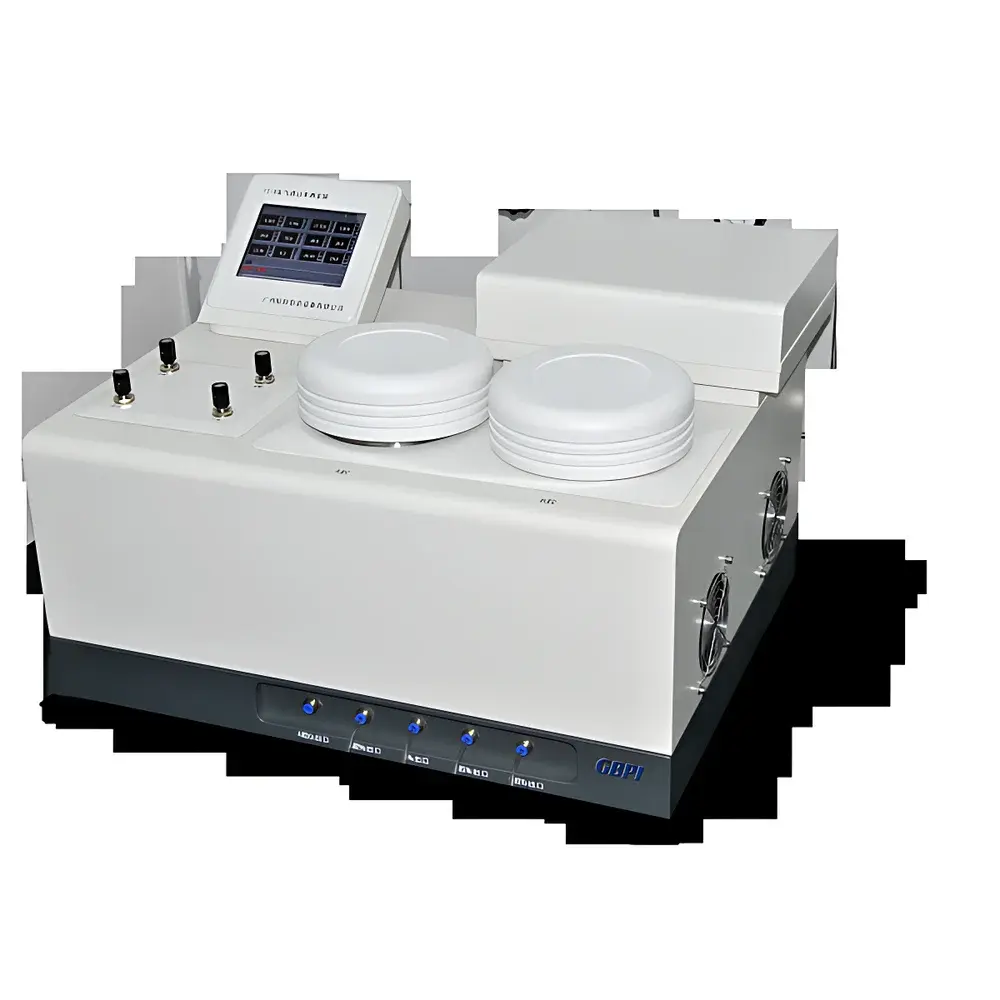
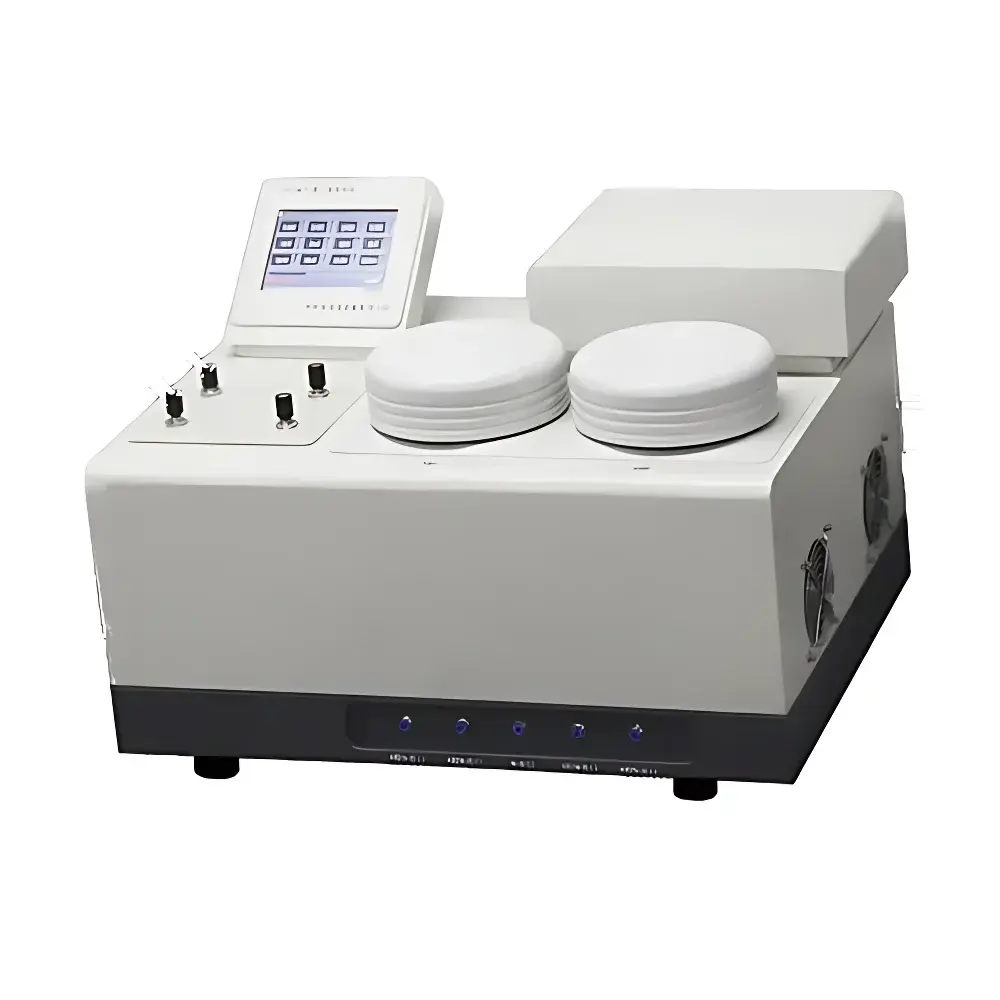
GBPI Y210 Oxygen Transmission Rate (OTR) Tester for Pharmaceutical Packaging Materials
| Brand | GBPI |
|---|---|
| Origin | Guangdong, China |
| Manufacturer Type | Direct Manufacturer |
| Country of Origin | China |
| Model | Y210 |
| Pricing | Upon Request |
| Measurement Principle | Differential Pressure (Manometric) Method |
| Standards Compliance | ISO 2556:2001, ISO 15105-1:2007, ASTM D1434–82 (Reapproved 2003), GB/T 1038–2000, YBB 00082003–2015 |
| Measurement Range | 0.02–50,000 cm³/m²·day·0.1 MPa (expandable to 600,000 cm³/m²·day·0.1 MPa) |
| Accuracy | ±0.01 cm³/m²·day·0.1 MPa |
| Temperature Control Range | 5–50 °C |
| Temp. Stability | ±0.01 °C |
| Humidity Control | 0% RH standard |
| Humidity Accuracy | ±2% RH |
| Vacuum Capability | ≤20 Pa base pressure |
| Test Gas | O₂, CO₂, N₂ |
| Specimen Thickness | ≤2 mm |
| Test Area | 50.24 cm² (Φ80 mm) |
| Power Supply | 220 V AC, 50 Hz |
Overview
The GBPI Y210 Oxygen Transmission Rate (OTR) Tester is a precision-manufactured differential pressure (manometric) permeation analyzer engineered for rigorous barrier performance evaluation of pharmaceutical packaging materials. It quantifies the steady-state flux of oxygen—expressed as volume per unit area per unit time under standardized partial pressure gradient—through flexible films, laminates, blister foils, IV bags, pouches, and other primary and secondary packaging substrates. The instrument operates on the fundamental principle of Fick’s first law of diffusion, where a constant pressure differential is maintained across a conditioned specimen sealed between two isolated chambers: a high-pressure upstream gas reservoir and a low-pressure downstream detection chamber. As oxygen molecules permeate through the test material, minute pressure increases in the evacuated downstream chamber are continuously monitored via high-resolution capacitive pressure transducers. Real-time integration of pressure rise rate, test area, thickness (if required), and applied differential pressure enables direct calculation of OTR in accordance with internationally harmonized gravimetric and manometric protocols.
Key Features
- Robust dual-chamber architecture with hermetic sealing and automated leak-check routines ensuring measurement integrity and long-term reproducibility (CV < 2% across repeated runs).
- Advanced electromagnetic stepwise temperature control system delivering ±0.01 °C stability over the full 5–50 °C operating range; programmable ramp rates support accelerated aging simulations and kinetic studies.
- Dual-mode environmental conditioning: standard dry operation (0% RH) or optional integrated humidity generator enabling controlled 5–100% RH exposure—critical for evaluating moisture-sensitive barrier layers such as EVOH or PVDC-coated structures.
- High-sensitivity vacuum manifold with ultimate pressure <20 Pa and 0.1 Pa resolution, coupled with active pressure regulation to maintain precise differential setpoints from –0.1 to +0.1 MPa.
- Real-time graphical display of OTR, chamber pressure, ΔP, and temperature on the built-in 7-inch TFT LCD interface; synchronized data logging at user-defined intervals (1–60 s).
- Automated calibration routines including certified reference film validation (e.g., SRM 1472) and zero-pressure drift compensation, supporting audit-ready traceability.
- Modular gas handling system compatible with ultra-high-purity O₂ (99.999%), N₂, and CO₂; equipped with dedicated stainless-steel 1/8″ tubing, precision regulators, and redundant safety interlocks against overpressure events.
Sample Compatibility & Compliance
The Y210 accommodates specimens up to 2 mm thick with a fixed test area of 50.24 cm² (Φ80 mm), optimized for regulatory-grade testing of pharmaceutical blisters, sachets, alu-alu laminates, cold-form foil, and polymer-based infusion containers. Its mechanical clamping system ensures uniform stress distribution without edge leakage—a common source of error in high-barrier measurements. The platform meets essential requirements for GLP-compliant laboratories, including electronic signature support, audit trail generation (per FDA 21 CFR Part 11), and raw data export in CSV and PDF formats. All test methods align with pharmacopoeial and packaging standards: ISO 2556:2001 (plastics—determination of oxygen transmission rate—manometric method), ISO 15105-1:2007 (plastics—film and sheeting—determination of gas transmission rate—part 1: oxygen), ASTM D1434–82 (reapproved 2003), GB/T 1038–2000 (Chinese national standard), and YBB 00082003–2015 (Chinese Pharmacopoeia packaging guidance for sterile preparations).
Software & Data Management
GBPI’s proprietary OTRControl v4.2 software provides full instrument orchestration—from method definition and parameter scheduling to real-time curve visualization and report generation. Each test session automatically archives metadata (operator ID, timestamp, environmental conditions, calibration status), raw pressure-time datasets, and derived OTR values with uncertainty estimation. Reports conform to ICH M4 Q5 and USP documentation expectations, featuring configurable headers, digital signatures, and revision-controlled templates. Data exports support LIMS integration via ODBC and comply with 21 CFR Part 11 Annex 11 requirements through role-based access control, electronic audit trails, and immutable record retention. Optional IQ/OQ documentation packages are available for GMP facility qualification.
Applications
- Stability-indicating OTR screening of primary packaging during formulation development and container closure integrity assessment (CCIT).
- Comparative evaluation of barrier enhancement strategies—including metallization, SiOx/AlOx coatings, nanocomposite blends, and multilayer coextrusions.
- Accelerated shelf-life modeling via Arrhenius-based temperature-dependent permeation studies.
- Regulatory submission support for ANDA, NDA, and MA applications requiring documented barrier performance under ICH Q5C and Q1E guidelines.
- QC release testing of incoming packaging rolls, preformed blisters, and final sealed units per pharmacopoeial monographs.
FAQ
What gases can be tested besides oxygen?
The Y210 supports quantitative transmission rate measurement for nitrogen (N₂), carbon dioxide (CO₂), and other non-reactive permanent gases when configured with appropriate sensor calibration and gas supply lines.
Is humidity control mandatory for pharmaceutical testing?
No—0% RH is the default configuration. However, optional humidity control (5–100% RH) is recommended for evaluating hygroscopic barrier systems where moisture-induced crystallinity changes significantly affect OTR, such as PVOH- or EVOH-containing laminates.
How is instrument calibration verified?
Calibration is performed using NIST-traceable reference films (e.g., GBPI-certified SRM 1472) and independent pressure transducer verification with dead-weight testers; all procedures are documented in the included calibration logbook.
Does the system support multi-specimen sequential testing?
Yes—the Y210 features a single-test-chamber design optimized for high-precision single-sample analysis; for throughput-critical environments, multiple units can be networked and managed centrally via OTRControl Server.
What safety certifications does the instrument carry?
The Y210 complies with IEC 61010-1:2010 (Safety Requirements for Electrical Equipment for Measurement, Control, and Laboratory Use) and carries CE marking for EMC and Low Voltage Directive conformity.
Related Products