
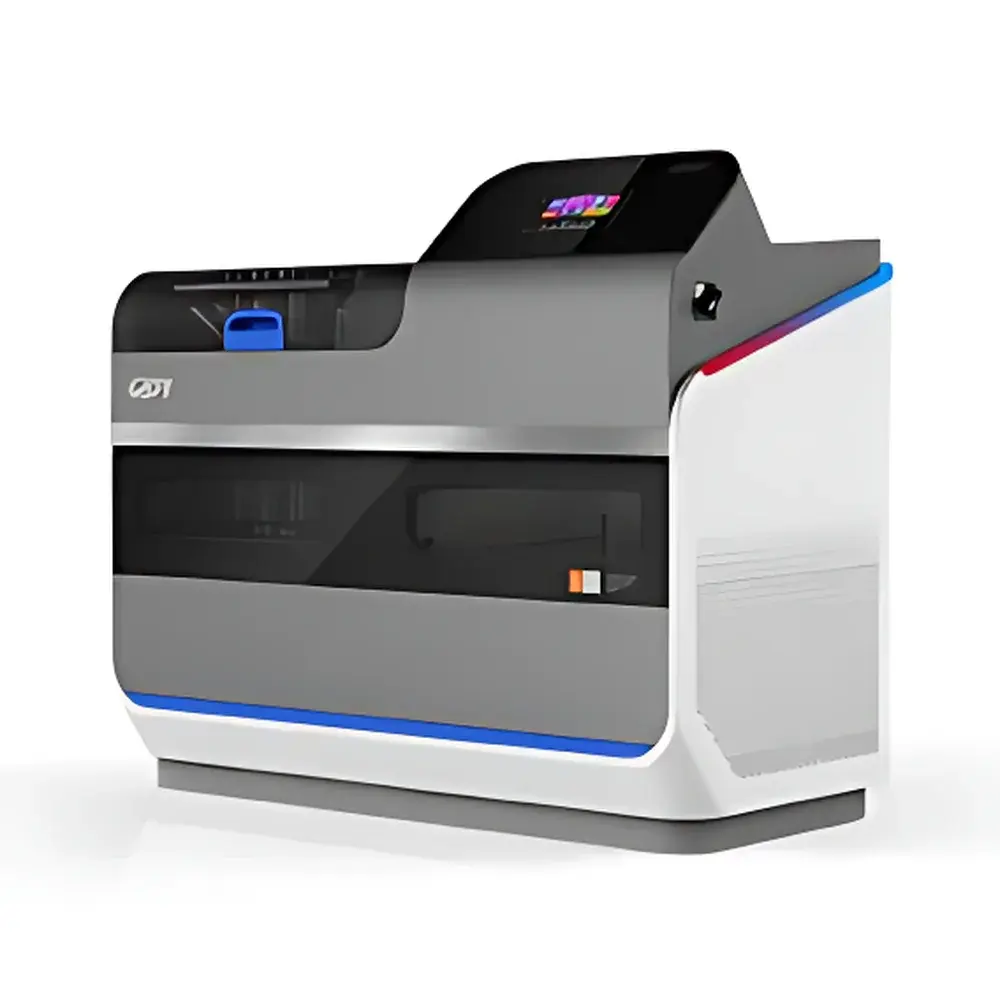
GBPI ZF1800A Fully Automated Total Migration Tester
| Brand | GBPI |
|---|---|
| Model | ZF1800A |
| Origin | Guangdong, China |
| Manufacturer Type | Direct Manufacturer |
| Category | General Analytical Instrument for Food Contact Materials Testing |
| Measurement Range | 0.167–167,000 mg/dm² |
| Resolution | 0.0001 mg/dm² |
| Balance Capacity | 0–200 g / Readability: 0.1 mg |
| Water Bath Temp Control | 68.3–100 °C |
| Heating Chamber Temp Control | 68.3–117.9 °C |
| Cooling Chamber Temp Control | <27.5 °C |
| Temp Accuracy | ±3 °C |
| Sample Capacity | 1–18 independent test positions |
| Evaporation Dish Volume | 0–200 mL |
| Dimensions (L×W×H) | 180 × 90 × 120 cm |
| Power Supply | 220 V, 50 Hz |
| Power Consumption | 1500 W |
Overview
The GBPI ZF1800A Fully Automated Total Migration Tester is an integrated gravimetric analytical system engineered for precise determination of non-volatile residue—commonly referred to as total migration—in food contact materials (FCMs) under standardized regulatory conditions. It operates on the principle of controlled solvent evaporation followed by high-accuracy mass measurement of residual solids after repeated drying and cooling cycles until constant weight is achieved. This methodology conforms strictly to the gravimetric endpoint definition specified in ISO 10993-12, FDA 21 CFR §170–189, and key Chinese national standards including GB 31604.8–2016 (determination of total migration into food simulants), GB 31604.1–2015 (general principles for migration testing), and YBB pharmaceutical packaging standards (e.g., YBB00342002–2015). The instrument supports both aqueous and organic food simulants—including 3% acetic acid, 10% ethanol, 20% ethanol, 50% ethanol, and olive oil—enabling compliance with multi-condition migration protocols required for polyolefin, rubber, epoxy-phenolic coated metal, cellulose-based, and lacquered packaging systems.
Key Features
- Dual-Climate Independent Chamber Architecture: Separate heating, cooling, and ambient conditioning zones enable simultaneous thermal ramping and stabilization—eliminating cross-chamber thermal interference and reducing cycle time by up to 40% compared to single-chamber designs.
- Automated Water Bath Evaporation System: Integrated water bath with auto-fill, level sensing, temperature regulation, and overheat/dry-run protection ensures reproducible solvent removal without manual intervention or operator variability.
- Closed-Solvent Recovery Loop: All evaporation occurs within a sealed cavity; vapors are condensed and collected via an internal condenser and solvent recovery module—preventing atmospheric release and minimizing occupational exposure to volatile organic compounds (VOCs).
- Nitrogen Purge Capability (Optional): Built-in inert gas inlet supports accelerated evaporation under nitrogen blanket, particularly beneficial for oxygen-sensitive simulants or low-boiling solvents such as heptane or isooctane.
- Negative Pressure Test Environment: Vacuum-assisted chamber sealing maintains consistent sub-atmospheric pressure during evaporation—enhancing solvent removal efficiency and suppressing bumping or splashing in viscous or foaming simulants.
- 18-Position Independent Test Stations: Each station features dedicated evaporation dish holders, individual thermal sensors, and isolated mass monitoring—allowing heterogeneous sample sets (e.g., PET trays, HDPE bottles, aluminum foil laminates) to be processed concurrently with full data traceability per position.
- ARM-Based Embedded Control System: Touchscreen HMI integrates instrument control, method execution, real-time weight trending, and audit-ready reporting—no external PC required for routine operation.
Sample Compatibility & Compliance
The ZF1800A accommodates diverse FCM geometries and compositions, including but not limited to: thermoplastic containers (PP, PE, PS), rubber gaskets and seals (natural, SBR, EPDM), epoxy-phenolic coated tinplate, PVC and PVDC-coated films, regenerated cellulose casings, and paperboard laminates. Its design satisfies functional requirements of multiple international regulatory frameworks: GB/T 5009.156–2016 (evaporation residue in food packaging), GB/T 9740–2008 (non-volatile residue in chemical reagents), and pharmacopeial monographs referenced in YBB00102005–2015 (residue testing for parenteral container closures). All hardware and software components comply with GLP principles and align with Annex 11 (Computerized Systems) of EU GMP guidelines. Data integrity is enforced through role-based access control, electronic signatures, and immutable audit trails covering user login, method modification, weight recording, and report generation.
Software & Data Management
The embedded software platform is developed in accordance with current Good Manufacturing Practice (cGMP) Annex 11 and FDA 21 CFR Part 11 requirements. Access requires authenticated login with tiered permissions—Administrator, Operator, and Reviewer roles—each configurable for specific system functions (e.g., calibration, method editing, report export). Every action—including balance tare, parameter adjustment, or result override—is timestamped and logged with user ID, IP address (if networked), and contextual metadata. Real-time dashboards display live weight curves, migration rate trends, chamber temperature profiles, and humidity stability metrics across all 18 stations. Final reports include raw weight sequences, final constant-weight validation logic, calculated migration values (mg/dm²), uncertainty estimates, and compliance status against selected standards. Export formats include PDF (with digital signature), Excel (.xlsx), and CSV for LIMS integration.
Applications
- Regulatory migration testing for food packaging manufacturers seeking GB, ISO, or FDA clearance
- Quality assurance of sealants, gaskets, and closure liners used in beverage and infant formula containers
- Validation of coating durability on metal cans subjected to acidic or alcoholic food simulants
- Stability assessment of biopolymer-based packaging (e.g., PLA, PHA) under accelerated migration conditions
- Method development and interlaboratory comparison studies for total migration quantification
- Pharmaceutical primary packaging evaluation per YBB compendial methods for extractables screening
FAQ
What food simulants are compatible with the ZF1800A?
The system supports aqueous simulants (distilled water, 3% acetic acid, 10% and 20% ethanol), fatty simulants (olive oil, isooctane), and alternative solvents approved under GB 31604.8–2016 and ISO 10993-12.
Does the instrument meet FDA 21 CFR Part 11 requirements?
Yes—the software implements electronic signatures, audit trail logging, role-based access control, and data immutability features fully aligned with Part 11 technical and procedural criteria.
Can the ZF1800A perform simultaneous tests at different temperatures?
No—while chambers operate independently, the heating and cooling modules share a common setpoint control architecture; however, sequential multi-temperature protocols can be scheduled via the method editor.
Is vacuum pumping included as standard equipment?
A vacuum pump is optional and must be specified at time of order; the system includes vacuum ports and pressure sensors to interface with third-party pumps meeting ≤10 mbar ultimate vacuum specification.
How is balance calibration performed?
Internal calibration uses a certified 200 g weight supplied with the system; external verification follows ASTM E899–19 procedures using NIST-traceable masses and environmental correction factors.



