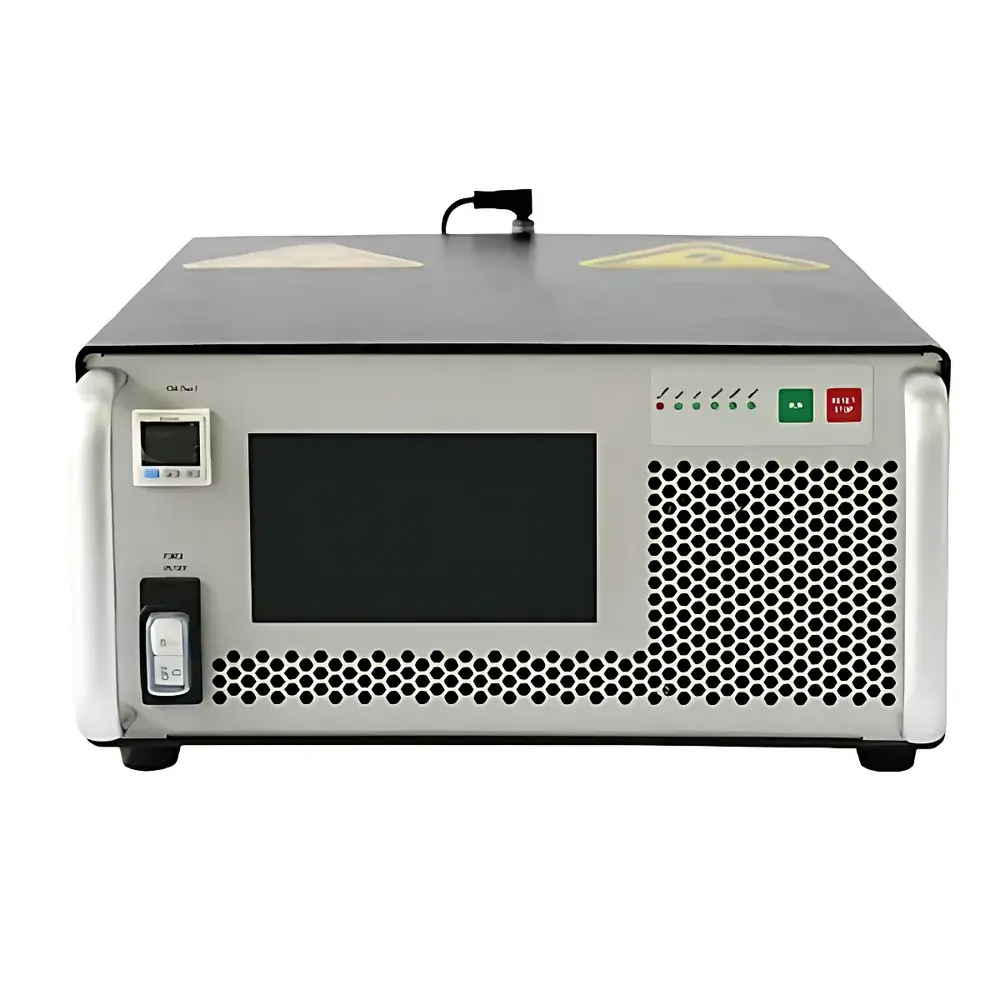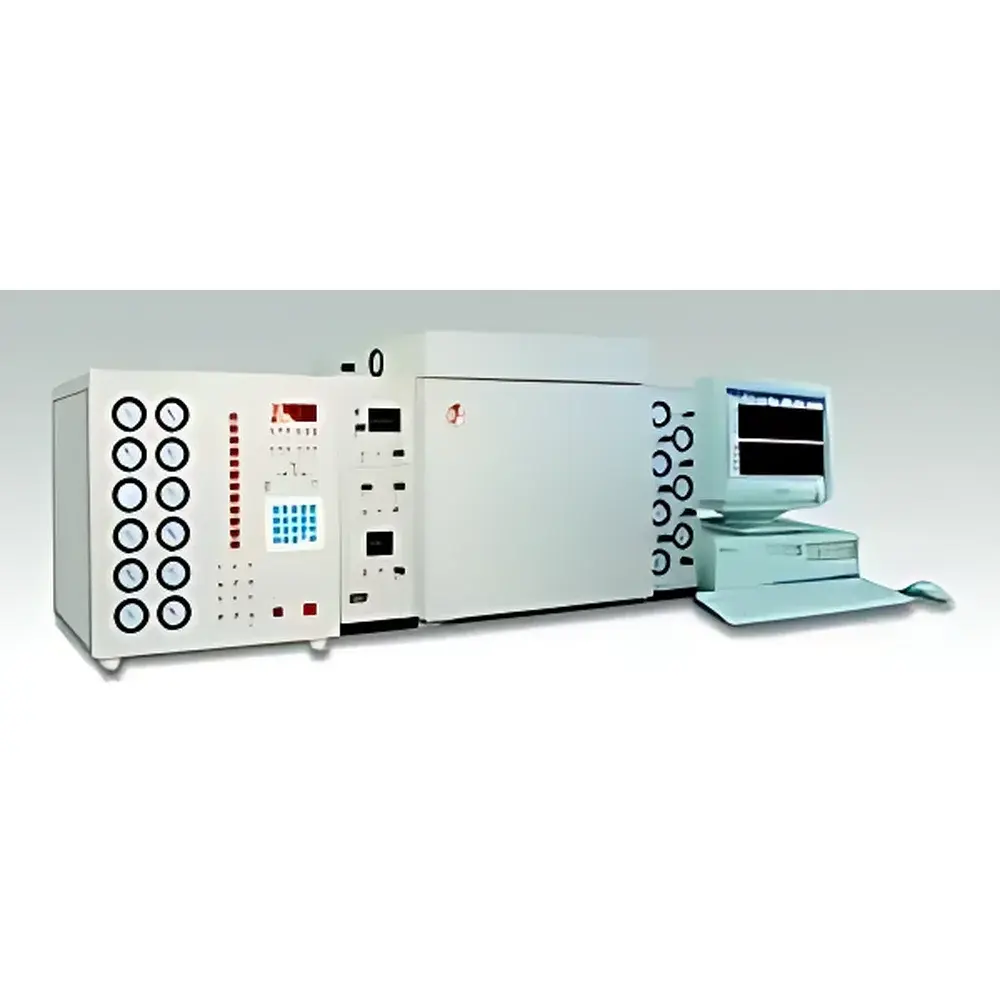
GC-4085 Mine Gas Multi-Point Online Gas Chromatograph
| Origin | Beijing, China |
|---|---|
| Manufacturer Type | Authorized Distributor |
| Origin Category | Domestic (PRC) |
| Model | GC-4085 |
| Pricing | Upon Request |
Overview
The GC-4085 Mine Gas Multi-Point Online Gas Chromatograph is a purpose-engineered industrial gas chromatography system designed for continuous, real-time monitoring of gaseous species in underground coal mine environments. Based on the scientific outcomes of China’s Eighth Five-Year National Key Technology R&D Program (“Prevention and Control of Major Coal Mine Accidents”) and the National Natural Science Foundation of China, the GC-4085 implements a robust online analytical architecture centered on dual-temperature-zone column ovens, parallel triple-column separation, and configurable detector modules—including thermal conductivity detectors (TCD) and flame ionization detectors (FID). It operates on the fundamental principle of gas-phase partitioning chromatography: sample gases are introduced via vacuum-assisted multi-channel polymeric tubing networks (12–32 sampling points), separated across three simultaneously active capillary or packed columns with differential selectivity, and quantified with high reproducibility using calibrated detector responses. Its primary operational objective is early detection of spontaneous coal oxidation through time-resolved tracking of key indicator gases—CO, C2H2, C2H4, CH4, H2, and CO2—enabling predictive fire risk assessment and inertization process verification in accordance with mine safety management protocols.
Key Features
- Dual independent column oven system: High-temperature and low-temperature zones enable simultaneous optimization of light gas (H2, O2, N2) and heavy hydrocarbon (C3H8, C4H10) separations.
- Triple-column parallel configuration with automated valve switching: Achieves full-component analysis—including major explosion gases (H2, O2, N2, CH4, CO, CO2) and trace fire markers (C2H2, C2H4, C2H6)—in a single injection cycle (4–8 min).
- Modular detector compatibility: Interchangeable TCD (sensitivity ≥ 5000 mV·mL/mg) and FID (detection limit ≤ 1.0 × 10⁻¹¹ g/s) support broad dynamic range and compound-class-specific quantification.
- Integrated pre-cut column protection system: Three guard columns minimize contamination of analytical columns, extending service life and ensuring uninterrupted operation under harsh mine ambient conditions.
- Hybrid sampling interface: Supports both automated vacuum-driven multipoint pipeline sampling and manual injection via gas-tight sample bulbs for laboratory validation or offline calibration.
- Explosion hazard evaluation module: Implements ASTM E681-compliant triangular flammability diagram calculation post-analysis to assess instantaneous gas mixture explosivity.
Sample Compatibility & Compliance
The GC-4085 is validated for direct analysis of raw mine air, sealed-area headspace, and inertized zone effluent without prior chemical derivatization. Sample introduction occurs at ambient pressure and temperature, with integrated moisture and particulate filtration upstream of the injection valve. The system complies with ISO 8573-1:2010 (compressed air purity classes) for sampling line integrity and meets electromagnetic compatibility requirements per IEC 61326-1 for industrial environments. While not certified to ATEX or IECEx standards as a whole-system unit, its field-deployed components—including sampling manifolds and control cabinets—are rated for Zone 1/21 hazardous locations when installed per GB 3836.1–2010 (Chinese equivalent of IEC 60079-0). Data acquisition and reporting align with GLP principles, supporting audit-ready electronic records with timestamped metadata.
Software & Data Management
Control and data handling are managed via embedded Windows-based software with deterministic real-time scheduling. The application supports scheduled cyclic analysis (user-defined intervals from 5 to 60 minutes), automatic baseline correction, retention time locking, and peak integration using valley-to-valley algorithms. All chromatograms, quantitative results, and system diagnostic logs are stored in encrypted SQLite databases with SHA-256 hashing. Export options include CSV, PDF reports (with configurable templates), and OPC UA server integration for SCADA interoperability. Audit trail functionality satisfies FDA 21 CFR Part 11 requirements for electronic signatures, user access logging, and immutable record retention—essential for regulatory review in safety-critical mining operations.
Applications
- Early warning of spontaneous combustion: Continuous tracking of CO/C2/C2H4 ratios and their temporal gradients during coal oxidation.
- Fire zone status assessment: Quantitative evaluation of O2 depletion, CO stabilization, and C2H2 emergence to determine extinction progress in sealed goafs.
- Inert gas injection monitoring: Real-time verification of N2 or CO2 concentration rise and O2 suppression kinetics during fire suppression campaigns.
- Underground coal gasification (UCG) process control: Monitoring syngas composition (H2/CH4/CO/CO2/CnHm) to optimize oxidant injection rates and ensure stable reaction front propagation.
- Post-ventilation safety clearance: Confirming explosive limits (LEL/UEL) compliance before personnel re-entry into previously isolated sections.
FAQ
What gas species can the GC-4085 quantify simultaneously in one run?
It quantifies H2, O2, N2, CH4, CO, CO2, C2H4, C2H6, C2H2, C3H8, and C4H10—covering both major atmospheric components and trace fire indicators.
Is the system suitable for unattended operation in remote mine sites?
Yes. It supports fully autonomous 24/7 cycling, local alarm triggering (relay outputs), remote diagnostics via Ethernet, and redundant data storage to withstand intermittent network outages.
How does the GC-4085 handle column contamination in dusty, high-humidity mine air?
Three dedicated pre-cut columns intercept particulates and condensables upstream of the analytical columns; combined with programmable back-flush routines, this extends column lifetime beyond 18 months under typical operating conditions.
Can the instrument be integrated into existing mine safety monitoring platforms?
Yes. It provides Modbus TCP and OPC UA interfaces, enabling seamless data ingestion into centralized platforms such as Vaisala’s ViewSystem, Siemens Desigo CC, or custom-built MES/HMI dashboards.
What calibration protocol is recommended for long-term accuracy?
Daily zero/span checks using certified gas standards (NIST-traceable, ±2% uncertainty) are advised; full multi-point calibration every 30 days ensures compliance with ISO/IEC 17025 traceability requirements for safety-critical measurements.