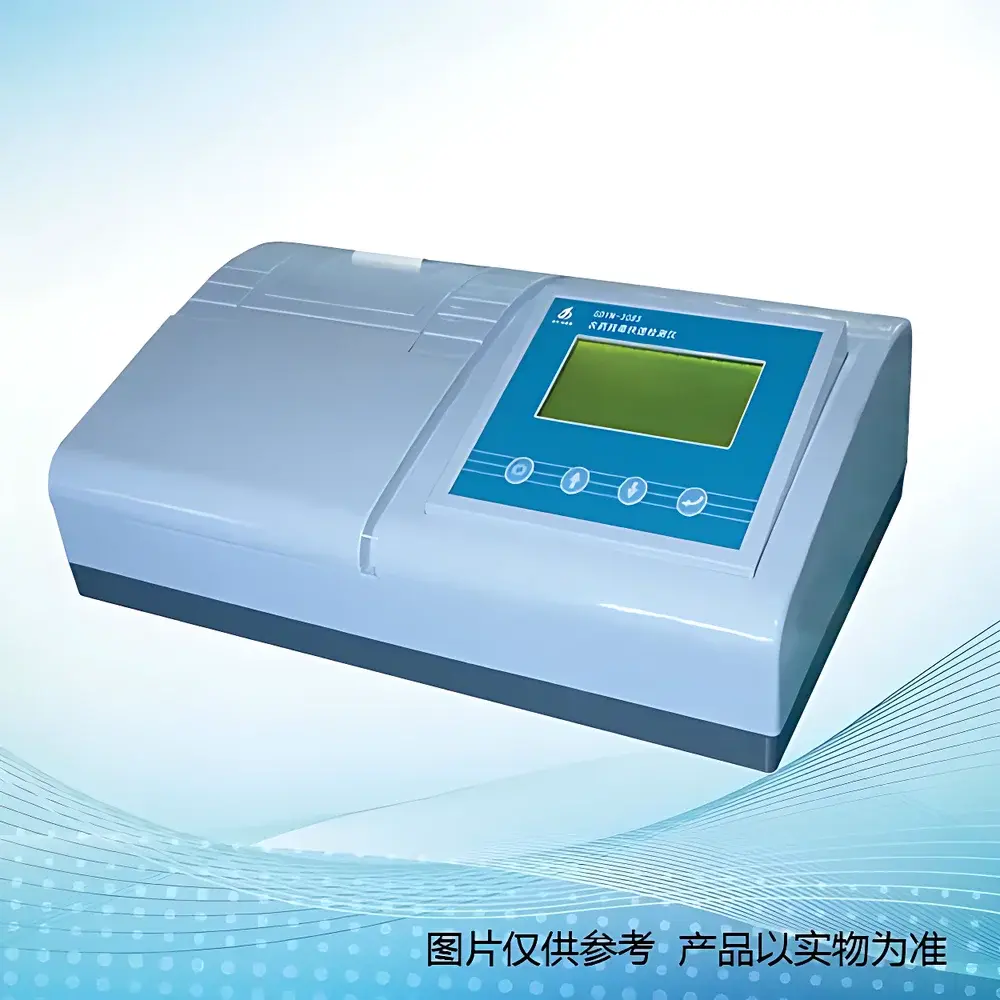
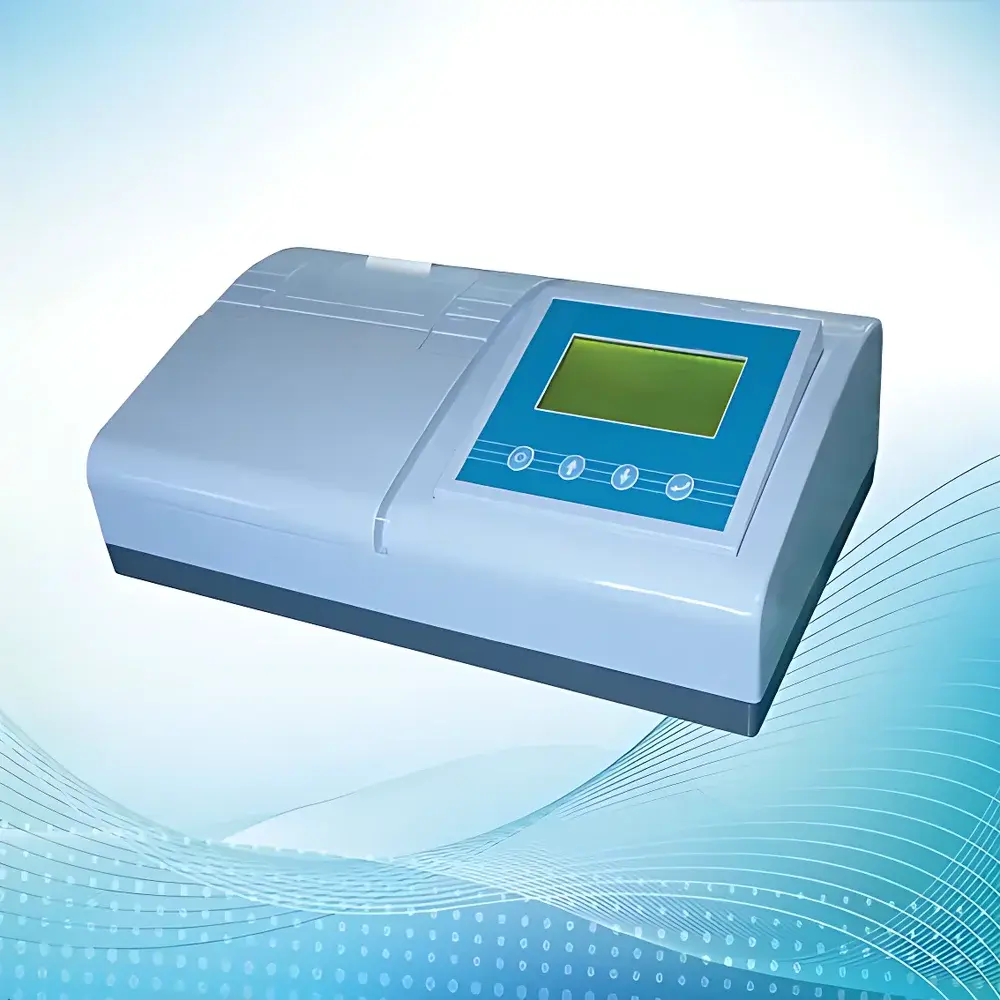
GDYN-308S Pesticide Residue Rapid Tester by Jilin University Xiaotian’e
| Brand | Jilin University Xiaotian’e |
|---|---|
| Origin | Jilin, China |
| Manufacturer Type | Direct Manufacturer |
| Origin Category | Domestic (China) |
| Model | GDYN-308S |
| Pricing | Available Upon Request |
| Detection Principle | Acetylcholinesterase (AChE) Inhibition Assay |
| Target Analytes | Organophosphorus & Carbamate Pesticides |
| Sample Throughput | 8 samples per run |
| Detection Time | ≤13 minutes per batch |
| Detection Limit | 0.1–3.0 mg/kg |
| Inhibition Rate Range | 0–100% |
| Measurement Accuracy | ±10% (relative to reference standard) |
Overview
The GDYN-308S Pesticide Residue Rapid Tester is a benchtop enzymatic inhibition analyzer engineered for field-deployable and laboratory-based screening of organophosphorus and carbamate pesticide residues in fresh fruits and vegetables. It operates on the internationally recognized acetylcholinesterase (AChE) inhibition principle—where residual pesticides inhibit the enzymatic activity of AChE, resulting in measurable changes in colorimetric signal intensity proportional to residue concentration. Compliant with GB/T 5009.199–2003, the Chinese national standard for pesticide residue detection in food, the GDYN-308S delivers rapid, semi-quantitative results without requiring chromatographic infrastructure or certified reference laboratories. Its design prioritizes operational robustness in non-ideal environments—including agro-processing facilities, farmers’ markets, regulatory inspection stations, and mobile food safety units—while maintaining analytical consistency across operator skill levels.
Key Features
- Simultaneous analysis of up to eight samples per assay cycle, enabling high-throughput preliminary screening without cross-contamination risk.
- Integrated single-chip microcontroller architecture supporting real-time data acquisition, internal calibration management, and user-guided workflow navigation.
- Backlit monochrome LCD display with native Chinese interface—optimized for intuitive menu-driven operation by field technicians and quality assurance personnel with minimal instrument training.
- Dedicated sample preparation module included: homogenizer, centrifuge adapter, and filtration accessories designed specifically for fruit/vegetable matrixes to ensure consistent extract clarity and enzyme compatibility.
- Pre-packaged, single-use reagent kits containing lyophilized AChE, substrate (indoxyl acetate), chromogen, and buffer—each lot traceably calibrated against national reference standards.
- Built-in data handling functions including timestamped result storage (≥500 records), statistical summary (mean, SD, CV%), and USB export capability for external audit or LIMS integration.
Sample Compatibility & Compliance
The GDYN-308S is validated for use with common horticultural commodities including leafy greens (e.g., spinach, lettuce), solanaceous produce (tomatoes, peppers), cucurbits (cucumbers, zucchini), and pome/stone fruits (apples, peaches). Sample preparation follows standardized homogenization and aqueous extraction protocols outlined in GB/T 5009.199–2003. While not intended for definitive quantification under ISO/IEC 17025 accreditation, the instrument meets criteria for initial compliance screening per China’s GB 2763–2021 maximum residue limits (MRLs) and supports Good Agricultural Practice (GAP) verification workflows. Its output serves as documented evidence for internal quality gates, supplier audits, and pre-market clearance checks prior to GC-MS or LC-MS/MS confirmation.
Software & Data Management
The embedded firmware provides full local control—no external PC required for routine operation. All measurement parameters (reaction time, temperature compensation offset, blank normalization mode) are configurable via on-device menus. Stored results include sample ID, operator code, date/time stamp, inhibition percentage, pass/fail flag relative to preset thresholds (e.g., 50% inhibition = presumptive positive), and raw absorbance values. Data export via USB flash drive generates CSV-formatted files compatible with Excel, JMP, or laboratory information management systems (LIMS). Audit trail functionality records all configuration changes and calibration events, satisfying basic documentation requirements under China’s Food Safety Law (Article 42) and supporting traceability in GLP-aligned environments.
Applications
- Routine surveillance testing at wholesale distribution centers and cold-chain hubs to verify vendor compliance before bulk dispatch.
- On-site verification during farm-gate inspections to support traceability programs and reduce post-harvest rejection rates.
- Training and capacity-building in rural extension services where access to centralized analytical labs is limited.
- Internal QC checkpoints in fresh-cut processing lines to monitor wash efficacy and detect carryover contamination.
- Regulatory rapid-response deployments during outbreak investigations involving suspected pesticide-related acute toxicity cases.
FAQ
What regulatory standards does the GDYN-308S comply with?
It conforms to GB/T 5009.199–2003 (determination of organophosphorus and carbamate pesticides in vegetables and fruits) and aligns with screening-level performance expectations in GB 2763–2021.
Can this instrument quantify exact pesticide concentrations?
No—it provides inhibition-rate-based semi-quantitative classification (e.g., “below cutoff”, “suspect”, “positive”) rather than absolute mass-concentration values; confirmatory analysis requires GC-MS or LC-MS/MS.
Is reagent stability affected by ambient temperature or humidity?
Lyophilized reagents remain stable for ≥12 months when stored at 2–8 °C; once reconstituted, working solutions must be used within 4 hours at room temperature (15–30 °C).
Does the system support multi-language firmware updates?
Firmware is localized to Simplified Chinese only; no English or other language UI variants are available.
How frequently must the instrument be recalibrated?
Calibration verification using control standards is recommended before each daily use; full recalibration is required after sensor replacement or firmware update.