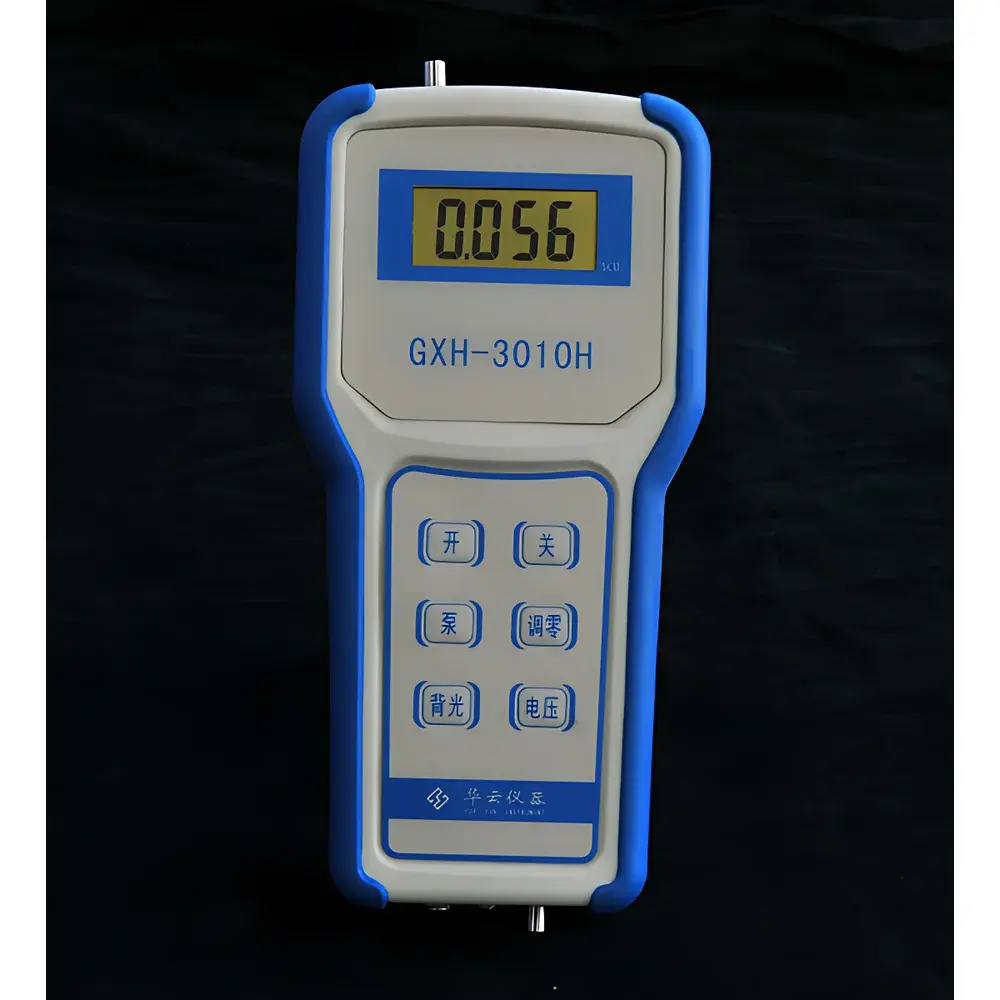
GDYQ-121SD Fluorescent Whitening Agent Detector by Jida Xiaotian’e
| Brand | Jida Xiaotian’e |
|---|---|
| Origin | Jilin, China |
| Manufacturer Type | OEM Producer |
| Region Classification | Domestic (China) |
| Model | GDYQ-121SD |
| Pricing | Upon Request |
| Light Sources | 254 nm UV, 365 nm UV, and Visible Light |
| Imaging Sensor | CCD |
| Interface | USB 2.0 |
| Power Supply | AC 220 V ±20 V, 50–60 Hz / Rechargeable Li-ion Battery (12.6 V / 2600 mAh) |
| Power Consumption | ≤20 W |
| Operating Temperature | 0–40 °C |
| Relative Humidity | ≤90 % RH |
| Image Storage Capacity | >1000 images |
| Detection Time | ≤60 s per sample |
| Compliance Standard | NY/T 1257–2006 (Pesticide Residue & Fluorescent Substance Testing in Edible Fungi) |
Overview
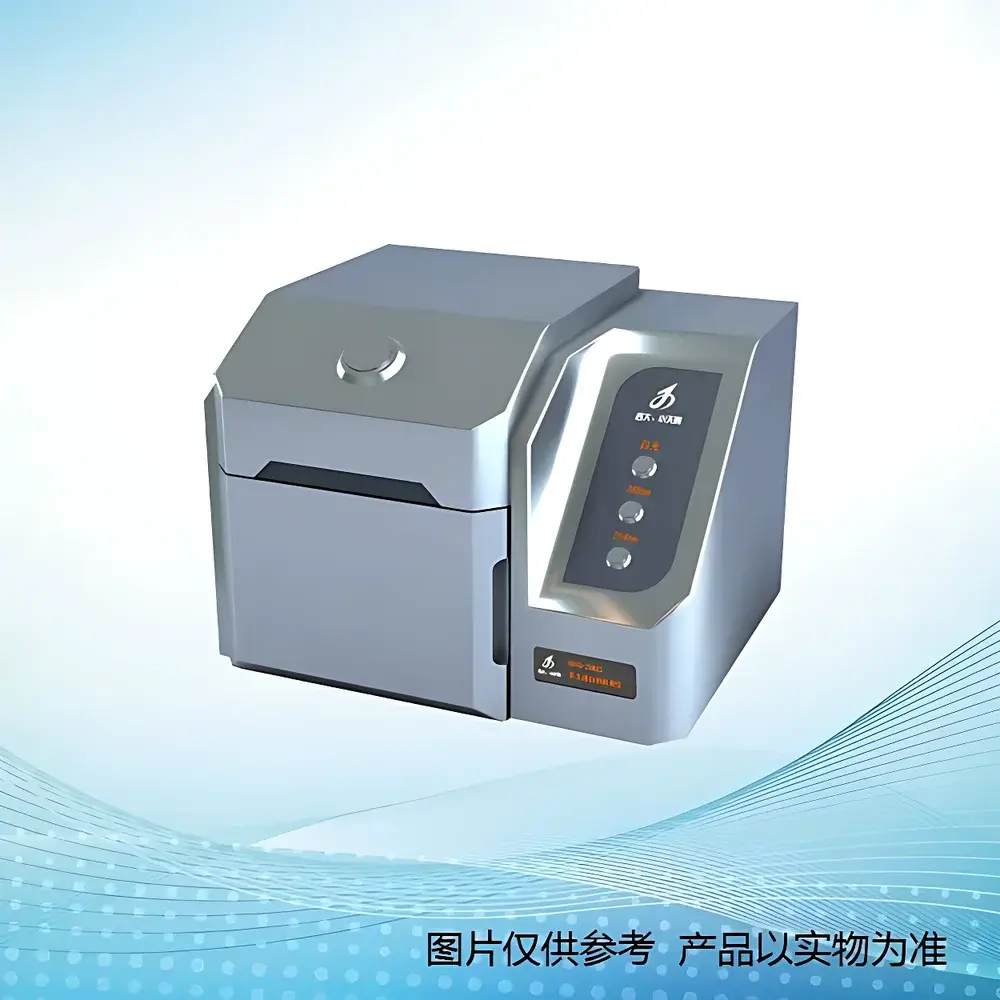
The GDYQ-121SD Fluorescent Whitening Agent Detector is a portable, field-deployable analytical instrument engineered for rapid qualitative and semi-quantitative detection of fluorescent whitening agents (FWAs) — including optical brighteners such as stilbene derivatives and coumarin analogs — in agricultural commodities, particularly edible fungi (e.g., mushrooms, wood ear), herbs, and processed food matrices. It operates on the principle of ultraviolet-induced fluorescence: FWAs absorb UV radiation at characteristic wavelengths (254 nm and 365 nm) and re-emit visible light in the blue-violet spectral region (typically 420–470 nm), enabling visual and digital identification under controlled dark-field conditions. Designed to meet the technical requirements of China’s Ministry of Agriculture standard NY/T 1257–2006, the GDYQ-121SD supports regulatory screening workflows in quality control laboratories, farm-gate inspection stations, and mobile food safety units where benchtop fluorometers or HPLC systems are impractical.
Key Features
- Triple-light-source architecture with independently switchable 254 nm and 365 nm UV lamps, each equipped with precision interference filter sets to maximize spectral purity and irradiance at target excitation bands.
- Optically shielded dark chamber design featuring a UV-blocking observation window (equipped with polycarbonate + dichroic coating) that attenuates >99.9% of incident UV radiation while transmitting visible fluorescence emissions — ensuring operator ocular safety without compromising real-time visual assessment.
- High-sensitivity monochrome CCD imaging module with 12-bit dynamic range and automatic exposure control, delivering low-noise fluorescence images with spatial resolution sufficient to distinguish localized fluorescence hotspots across heterogeneous samples.
- Integrated embedded system with onboard image capture, timestamping, and lossless compression; capable of storing ≥1000 annotated images via internal flash memory or external USB 2.0 mass storage devices.
- Dual-power operation mode: mains-powered continuous use (220 V ±20 V, 50–60 Hz) or battery-operated field deployment (12.6 V / 2600 mAh lithium-ion pack, providing ≥4 hours of active scanning time per full charge).
- Compact, ruggedized housing rated IP52 for dust resistance and limited moisture protection — suitable for ambient environments ranging from cold-chain receiving bays (0 °C) to tropical market inspection points (40 °C, ≤90% RH).
Sample Compatibility & Compliance
The GDYQ-121SD is validated for direct surface screening of intact or homogenized edible fungi (fresh, dried, or salted), herbal materials, and starch-based food products suspected of illegal FWA adulteration. Sample preparation requires minimal pretreatment — typically aqueous extraction or direct placement on the observation platform — aligning with the streamlined protocol outlined in NY/T 1257–2006. While not a quantitative HPLC-grade system, its fluorescence intensity output correlates semi-quantitatively with FWA concentration when used with standardized reference controls. The instrument’s optical configuration and operational parameters conform to national agricultural testing guidelines and support documentation traceability required under China’s GB/T 27404–2008 (Laboratory Quality Control Guidelines for Food Microbiology and Chemistry Testing). For international users, its design principles are consistent with ISO/IEC 17025:2017 clause 7.2.2 (method validation) when deployed as a prescreening tool within a tiered analytical strategy.
Software & Data Management
The GDYQ-121SD includes proprietary Windows-compatible software (v3.2+) supporting USB 2.0 tethered acquisition, side-by-side image comparison, region-of-interest (ROI) intensity profiling, and batch export in TIFF/PNG formats. All captured images are automatically embedded with EXIF metadata including date/time stamp, illumination mode (254 nm / 365 nm / visible), exposure duration, and user-defined sample ID. The software implements audit-trail functionality: every image annotation, brightness/contrast adjustment, or classification label (e.g., “Positive”, “Negative”, “Indeterminate”) is logged with operator ID and timestamp — facilitating GLP-aligned record retention and internal QA review. Exported datasets comply with common LIMS ingestion formats (CSV, XML) and may be integrated into enterprise food safety management platforms.
Applications
- Routine surveillance of commercial mushroom batches for unauthorized optical brighteners (e.g., Blankophor® analogs) used to mask discoloration or aging.
- On-site verification of organic certification claims by detecting synthetic FWAs inconsistent with permitted processing aids.
- Training and capacity building in regional agricultural extension centers for frontline inspectors conducting rapid food fraud assessments.
- Pre-screening triage prior to confirmatory analysis by LC-MS/MS or GC-MS in central reference laboratories — reducing instrument queue time and consumables cost.
- Research applications in food authenticity studies, including method development for fluorescence spectral fingerprinting of adulterated botanicals.
FAQ
Does the GDYQ-121SD provide quantitative concentration values?
No — it delivers qualitative and semi-quantitative fluorescence response data. Quantification requires correlation with calibration curves generated using certified FWA standards under identical optical and sample-handling conditions.
Is the instrument compliant with FDA or EU food safety regulations?
It is designed to meet Chinese national standard NY/T 1257–2006. While not pre-certified for FDA 21 CFR Part 11 or EU Regulation (EC) No 1881/2006, its data integrity features (audit trail, metadata embedding) support alignment with those frameworks when implemented within a validated laboratory quality system.
Can the battery be replaced in the field?
Yes — the rechargeable Li-ion module is user-serviceable using standard Torx T8 tools; replacement batteries are available as spare parts with full electrical and mechanical compatibility certification.
What maintenance is required for long-term reliability?
Annual verification of UV lamp irradiance output (using NIST-traceable radiometer), periodic cleaning of optical filters with lens-grade isopropyl alcohol, and CCD sensor dust inspection using LED-lit loupe — all documented in the included Maintenance Logbook.
Is third-party software integration supported?
Yes — DLL libraries and COM interface specifications are provided under NDA for custom LIMS or ELN integration; REST API extensions are available upon request for cloud-based analytics platforms.