Gel-Pak Vertec® VFM FAC Chip Carrier
| Brand | Gel-Pak |
|---|---|
| Origin | USA |
| Model | Gel-Pak Vertec® VFM |
| Material | Vertec TPE elastomer (FDA/USP compliant) & semiconductor-grade polycarbonate |
| Surface resistivity | >1×10¹⁴ Ω |
| Storage temperature | −10 to +65 °C |
| Outgassing (70 °C, 2 h, static headspace GC-MS per IDEMA M8-98) | Total volatile organics ≤0.32 ppm |
| Contact area on FAC device | ≤10% (edge-only) |
| Channel options | 5–7 channels (5-channel variant features six TPE retention ridges) |
Overview
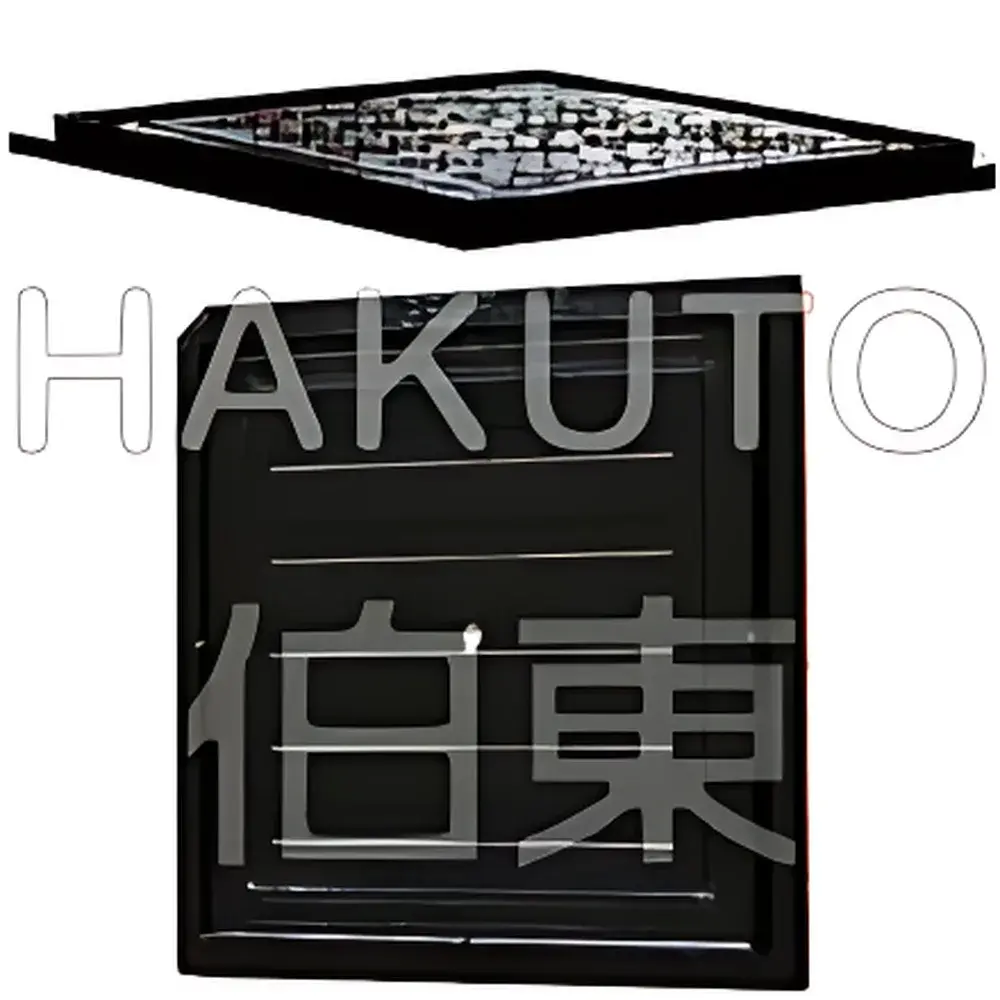
The Gel-Pak Vertec® VFM FAC Chip Carrier is an engineered handling and transport solution specifically designed for fast-axis collimator (FAC) optical components used in high-power laser diode modules and fiber-coupled pump sources. Unlike generic wafer or die carriers, the VFM platform addresses the unique mechanical fragility, surface sensitivity, and contamination control requirements of FAC lenses—precision micro-optical elements typically fabricated from fused silica or BK7 glass with anti-reflective coatings. The carrier operates on a non-adhesive, edge-contact principle: proprietary Vertec thermoplastic elastomer (TPE) ridges engage only the peripheral margin of the FAC chip (<10% total surface area), eliminating contact with the critical optical aperture and coating zones. This design minimizes risk of micro-scratching, particle generation, and electrostatic discharge (ESD)-induced damage during manual loading, automated pick-and-place, or long-term storage.
Key Features
- Edge-only mechanical retention: Six precisely dimensioned TPE ridges (on 5-channel configuration) provide stable, low-stress clamping without contacting the FAC’s functional optical surface.
- Ultra-low outgassing architecture: Compliant with IDEMA M8-98 microcontamination standards; total volatile organic compound (VOC) emission ≤0.32 ppm under 70 °C/2 h static headspace GC-MS testing—validated for cleanroom Class 100 and ISO Class 5 environments.
- Electrostatically safe construction: Semiconductor-grade polycarbonate tray body with surface resistivity >1×10¹⁴ Ω ensures compatibility with ESD-sensitive FAC assemblies and eliminates charge accumulation during handling.
- Material biocompatibility and purity: Vertec TPE meets FDA 21 CFR §177.2600 and USP / biological reactivity and extractables criteria—critical for applications requiring trace-metal-free packaging in photonic module assembly lines.
- Modular channel scalability: Available in 5-, 6-, and 7-channel configurations to support varying production throughput and FAC array geometries; all variants maintain identical ridge pitch, height tolerance, and thermal stability profile.
Sample Compatibility & Compliance
The VFM carrier accommodates standard FAC chips measuring up to 2.0″ × 2.0″ (50.8 mm × 50.8 mm), with nominal thicknesses ranging from 0.3 mm to 1.0 mm. Its geometry supports both rectangular and trapezoidal FAC footprints common in 9xx nm and 14xx nm pump laser platforms. The system complies with industry-standard contamination control protocols including SEMI F20 (cleanroom particulate limits), ISO 14644-1 Class 5, and JEDEC J-STD-033D moisture sensitivity level (MSL) handling guidelines when stored within specified temperature/humidity ranges. While not a measurement instrument per se, the VFM is routinely qualified as part of GMP-compliant photonic component manufacturing workflows where material traceability, lot-controlled packaging validation, and audit-ready documentation (e.g., CoA, outgassing reports) are mandatory.
Software & Data Management
As a passive mechanical carrier, the Gel-Pak Vertec® VFM requires no embedded firmware, drivers, or software interface. However, its design enables seamless integration into traceable automated handling systems via standardized machine vision fiducials and robotic gripper alignment notches. Each production lot is supplied with a Certificate of Analysis (CoA) documenting batch-specific outgassing test results (per ASTM E595 and IDEMA M8-98), material certifications (FDA/USP), and dimensional inspection reports. For customers operating under FDA 21 CFR Part 11 or ISO 13485 quality management systems, Gel-Pak provides full material traceability down to polymer resin lot numbers and compounding records upon request—supporting IQ/OQ documentation packages and internal audit readiness.
Applications
- Transport and storage of FAC arrays between epitaxial wafer dicing, lens mounting, and hermetic sealing stages.
- Intermediate buffer staging in automated FAC pick-and-place stations using vacuum or mechanical end-effectors.
- Cleanroom-compatible intermediate packaging for shipment to Tier-1 laser module integrators under controlled nitrogen purge or dry-air environments.
- Reflow-compatible temporary holding during solder reflow of FAC-to-heat-sink subassemblies—Vertec TPE maintains structural integrity up to 125 °C for short-duration thermal excursions.
- Reference-grade packaging for metrology labs performing wavefront error, focal length, or M² characterization—where zero surface interaction preserves optical calibration integrity.
FAQ
What is the maximum operating temperature for the Vertec TPE in continuous use?
The Vertec TPE exhibits stable mechanical performance up to 85 °C for indefinite exposure; short-term thermal excursions to 125 °C (≤5 minutes) are permissible during reflow-associated handling.
Can the VFM carrier be cleaned and reused?
Yes—validated cleaning protocols include ultrasonic agitation in ultra-pure water (UPW) followed by Class 100 nitrogen blow-off; IPA wiping is not recommended due to potential TPE swelling.
Does Gel-Pak provide custom cavity depth or ridge geometry for non-standard FAC thicknesses?
Yes—custom engineering services include cavity depth adjustment (±0.05 mm tolerance), ridge width modulation, and bespoke channel layouts, subject to minimum order quantities and NRE fees.
Is the polycarbonate tray compatible with plasma ashing or oxygen plasma treatment?
No—the tray material is not rated for direct plasma exposure; it is intended solely for ambient or inert-gas handling environments.
How is outgassing data generated and reported for each production lot?
Each lot undergoes third-party GC-MS analysis per IDEMA M8-98 at an ISO/IEC 17025-accredited laboratory; full chromatograms and quantitative VOC tables are included in the CoA.