
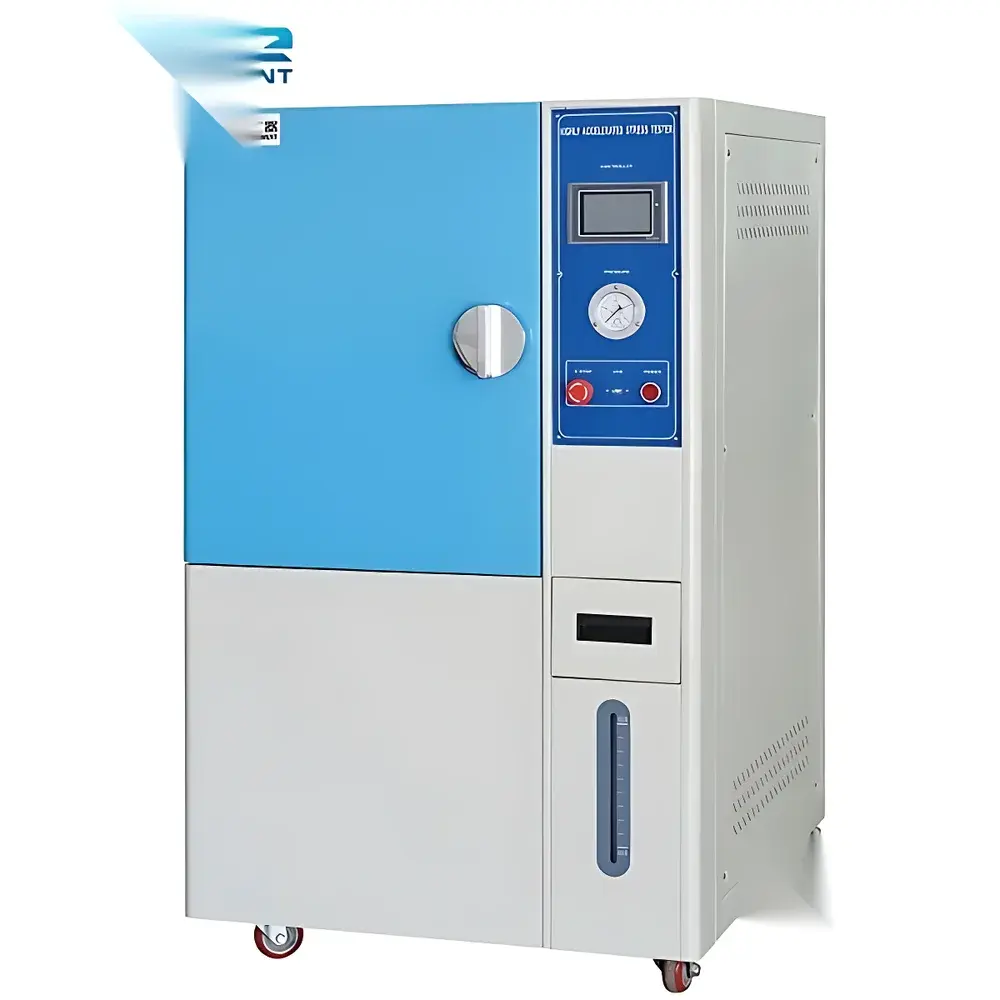
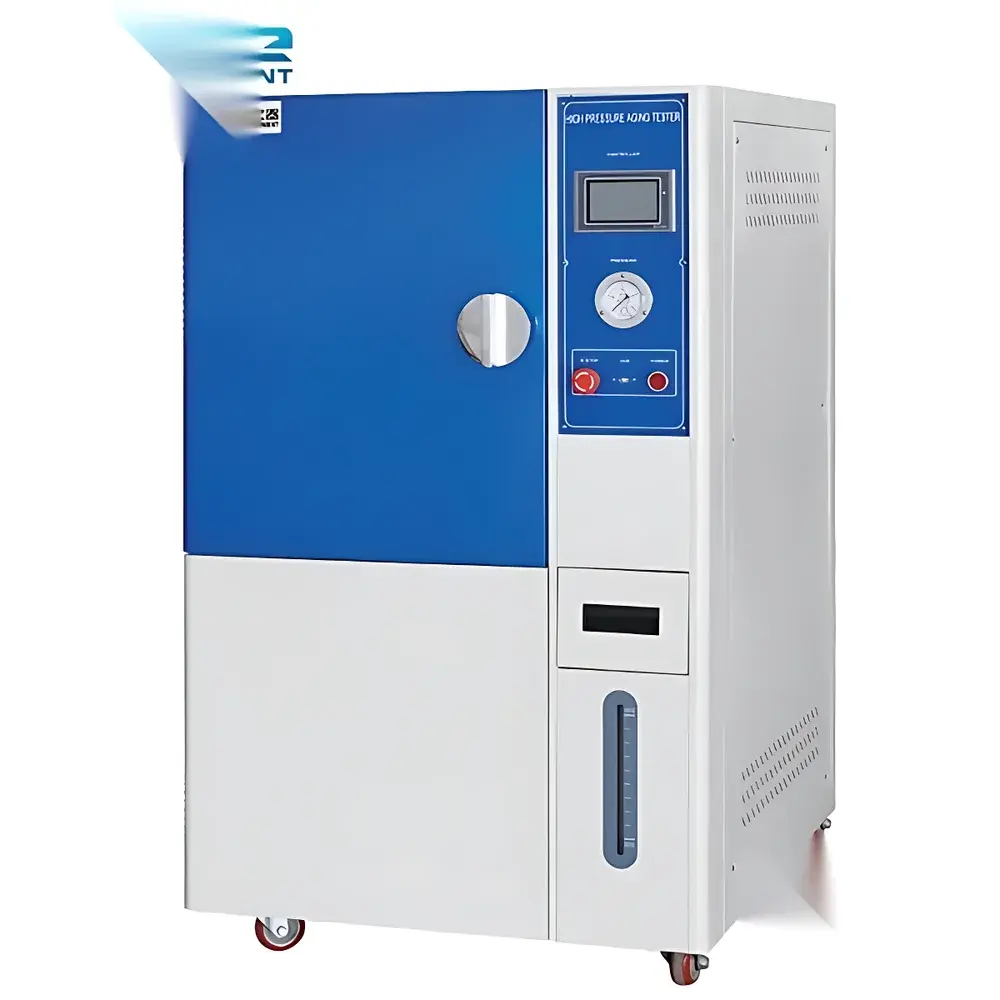
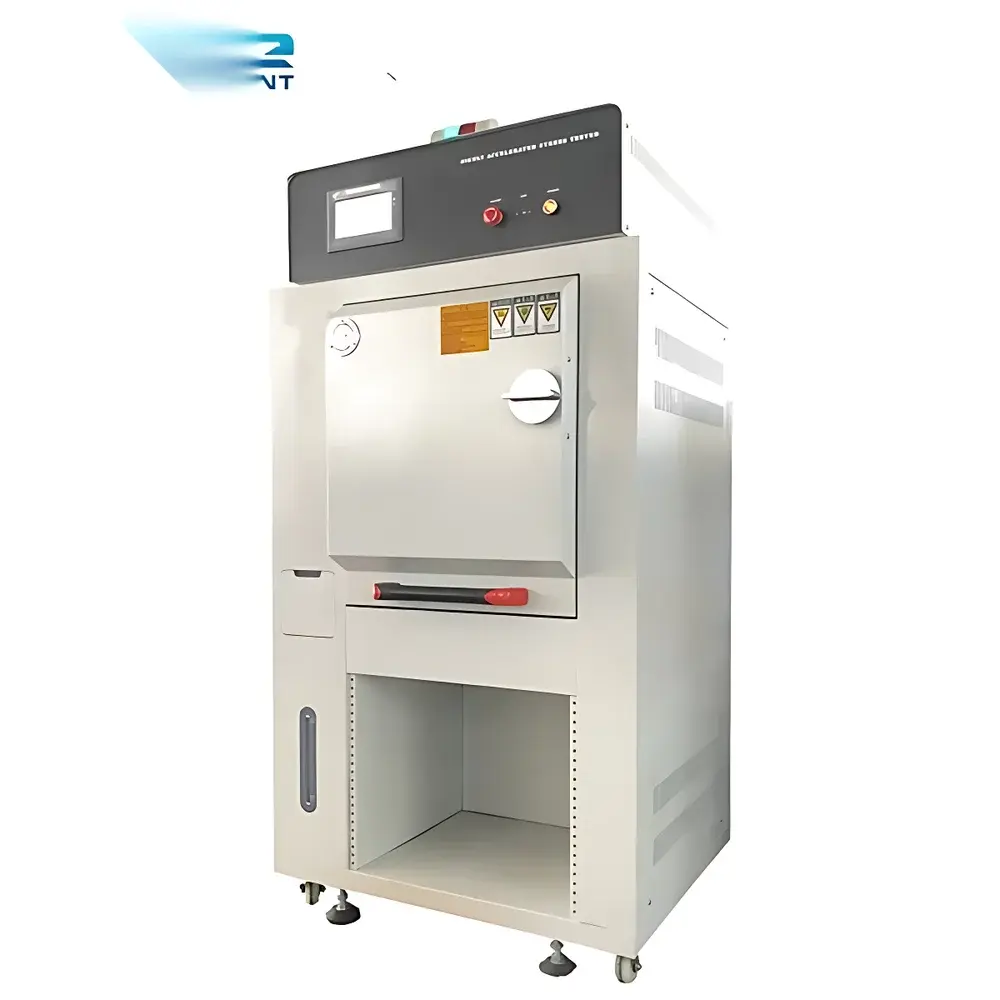
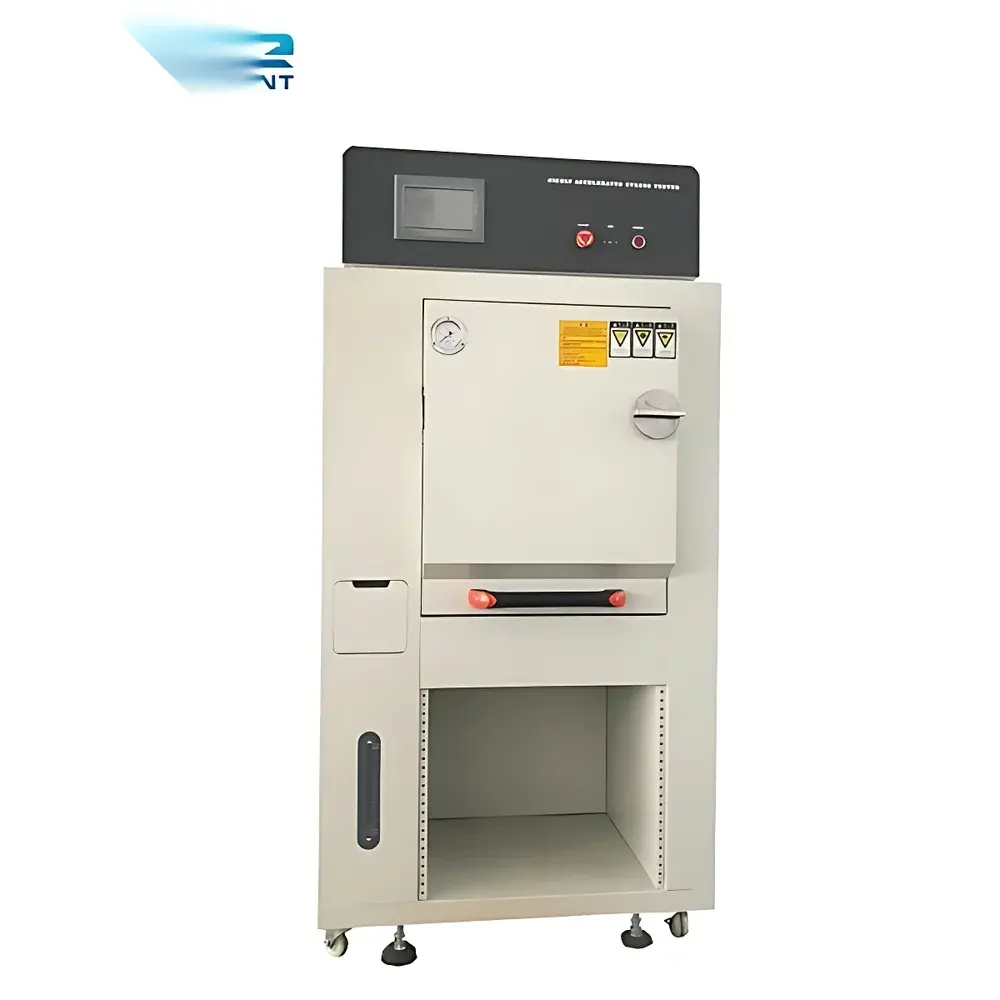
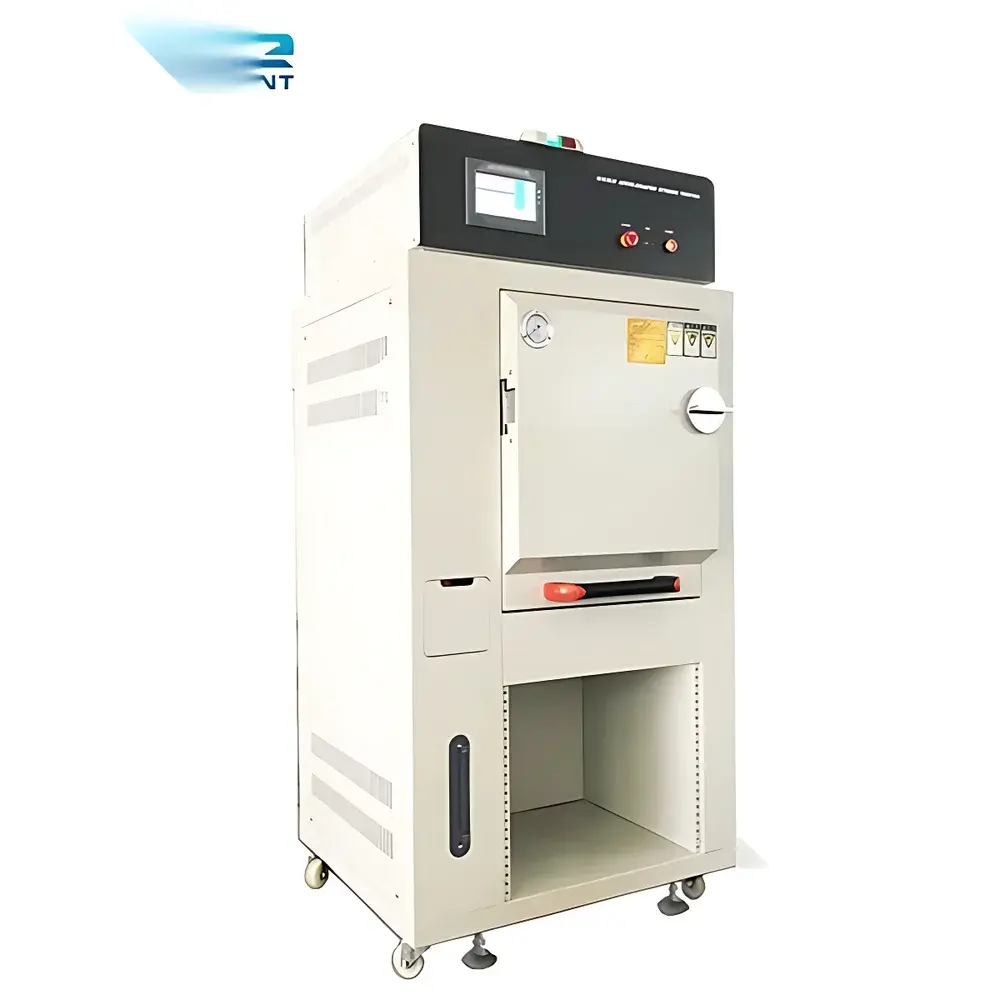
Generic Brand HAST Chamber for PCB Reliability Testing
| Brand | Other Brands |
|---|---|
| Origin | Imported |
| Manufacturer Type | Authorized Distributor |
| Internal Dimensions | Φ25 × 40 cm |
| External Dimensions | W56 × H100 × D65 cm |
| Temperature Range | +100°C to +132°C |
| Humidity Range | 75–100% RH |
| Control System | Microprocessor-based PID controller with LED display and membrane keypad |
| Heating System | Stainless steel finned heaters (SUS#304) |
| Humidification Method | Electric surface evaporation with drain port for cleaning |
| Inner Chamber Material | Mirror-finish SUS#304 stainless steel |
| Outer Cabinet Material | Electrostatically coated SUS#304 stainless steel |
| Safety Protections | Fuseless overcurrent protection, compressor overload protection, overtemperature cut-off, low-water level cutoff, dry-run protection for heater/humidifier, fast-acting thermal fuse |
| Power Supply | 1-phase 220 V, 8 A, 50 Hz ±10% |
| Water Requirement | RO purified water or distilled water |
| Compliance | IEC 60068-2-66 (HAST), JIS C 60068-2-66, MIL-STD-202 Method 108 |
Overview
The Generic Brand HAST Chamber is a precision-engineered high-acceleration stress test system designed specifically for evaluating the reliability of printed circuit boards (PCBs), solder joints, conformal coatings, and moisture-sensitive electronic components under highly accelerated temperature-humidity-pressure conditions. Operating on the principle of Highly Accelerated Stress Testing (HAST), this chamber subjects samples to elevated temperature (+100°C to +132°C), saturated humidity (75–100% RH), and ambient atmospheric pressure—without requiring pressurized vessel construction. Unlike traditional Pressure Cooker Tests (PCT), which rely on sealed autoclave-style pressure vessels, this HAST chamber achieves acceleration through controlled thermal-hygrometric stress alone, enabling rapid diffusion of moisture into encapsulated dielectric layers and intermetallic interfaces. It complies fully with IEC 60068-2-66 and JIS C 60068-2-66 standards for humidity-related accelerated life testing, making it suitable for qualification per JEDEC JESD22-A110 and failure analysis in semiconductor packaging development.
Key Features
- Microprocessor-driven PID temperature and humidity control with LED digital display and intuitive membrane keypad interface for precise single-point setpoint management
- High-efficiency stainless steel finned heating elements (SUS#304) ensuring uniform thermal distribution and long-term stability
- Electric surface-evaporation humidification system with dedicated drain port for routine maintenance and residue removal
- Double-walled chamber construction: mirror-polished SUS#304 inner liner for corrosion resistance and non-reactive sample exposure; outer cabinet finished with electrostatic powder coating over SUS#304 substrate for mechanical durability and cleanroom compatibility
- Comprehensive safety architecture including door-interlocked startup inhibition, automatic pressure-relief valve, dual-stage overtemperature alarm and cutoff, ABS-insulated door handle to prevent operator contact burns, and real-time dry-run detection for both heating and humidifying circuits
- Designed for continuous operation under GLP-compliant environments with traceable calibration-ready architecture
Sample Compatibility & Compliance
This HAST chamber accommodates standard PCB substrates up to Φ25 cm diameter and 40 cm depth—including rigid FR-4, flex-rigid hybrids, and embedded passive modules. Its internal geometry supports vertical or horizontal mounting configurations with optional sample racks (sold separately). The system meets the environmental stress requirements specified in IEC 60068-2-66 for HAST Type B (unbiased, saturated steam), and is validated for use in qualification testing per IPC-9708 (Moisture Sensitivity Level classification), JEDEC J-STD-020, and AEC-Q200 for automotive-grade electronics. All electrical and thermal safety functions are independently certified to IEC 61010-1 for laboratory equipment. No external pressure vessel certification (e.g., ASME BPVC Section VIII) is required due to its non-pressurized operational design.
Software & Data Management
While the base model features standalone microcontroller operation, optional RS-485/Modbus RTU or Ethernet TCP/IP interface enables integration with centralized lab data acquisition systems. Logged parameters—including chamber temperature, relative humidity, elapsed test time, and fault event timestamps—are stored internally for ≥30 days and exportable via USB memory stick in CSV format. Audit trail functionality supports 21 CFR Part 11 compliance when paired with validated third-party LIMS software, including user access logs, parameter change history, and electronic signature capability. Calibration records and maintenance logs can be archived in accordance with ISO/IEC 17025 documentation requirements.
Applications
- Accelerated moisture ingress evaluation of BGA, QFN, and wafer-level chip-scale packages
- Failure mode analysis of solder joint interfacial oxidation and Cu–Sn IMC growth kinetics
- Qualification of conformal coating integrity (e.g., acrylic, silicone, parylene) under thermal-hygrometric cycling
- Reliability screening of embedded passives and thin-film resistors on HDI substrates
- Process validation for reflow profile optimization and no-clean flux residue behavior
- Supporting root cause analysis in field return investigations involving delamination, popcorning, or electrochemical migration
FAQ
What is the difference between HAST and PCT testing?
HAST operates at atmospheric pressure with elevated temperature and humidity, while PCT requires pressurized steam environments (>100 kPa gauge). HAST provides higher acceleration factors for moisture-related failures without mechanical stress from pressure differentials.
Can this chamber perform unbiased and biased HAST tests?
Yes—the chamber supports both unbiased (passive) and externally biased (powered) configurations via optional feedthrough terminals rated to 300 V DC and 5 A, compliant with IEC 60068-2-66 Annex B.
Is distilled water mandatory, or can deionized water be used?
Only RO-purified water or ASTM Type II/III distilled water is recommended; deionized water may contain residual ions that accelerate chamber corrosion and compromise test repeatability.
How often does the humidification system require cleaning?
Drain port flushing and evaporator surface wipe-down are recommended after every 50 hours of cumulative humidification runtime, or prior to any qualification run exceeding 96 hours.
Does the unit include calibration certificates?
A factory-as-tested calibration report (traceable to NIST standards) is provided with each shipment; ISO/IEC 17025-accredited calibration services are available upon request.



