
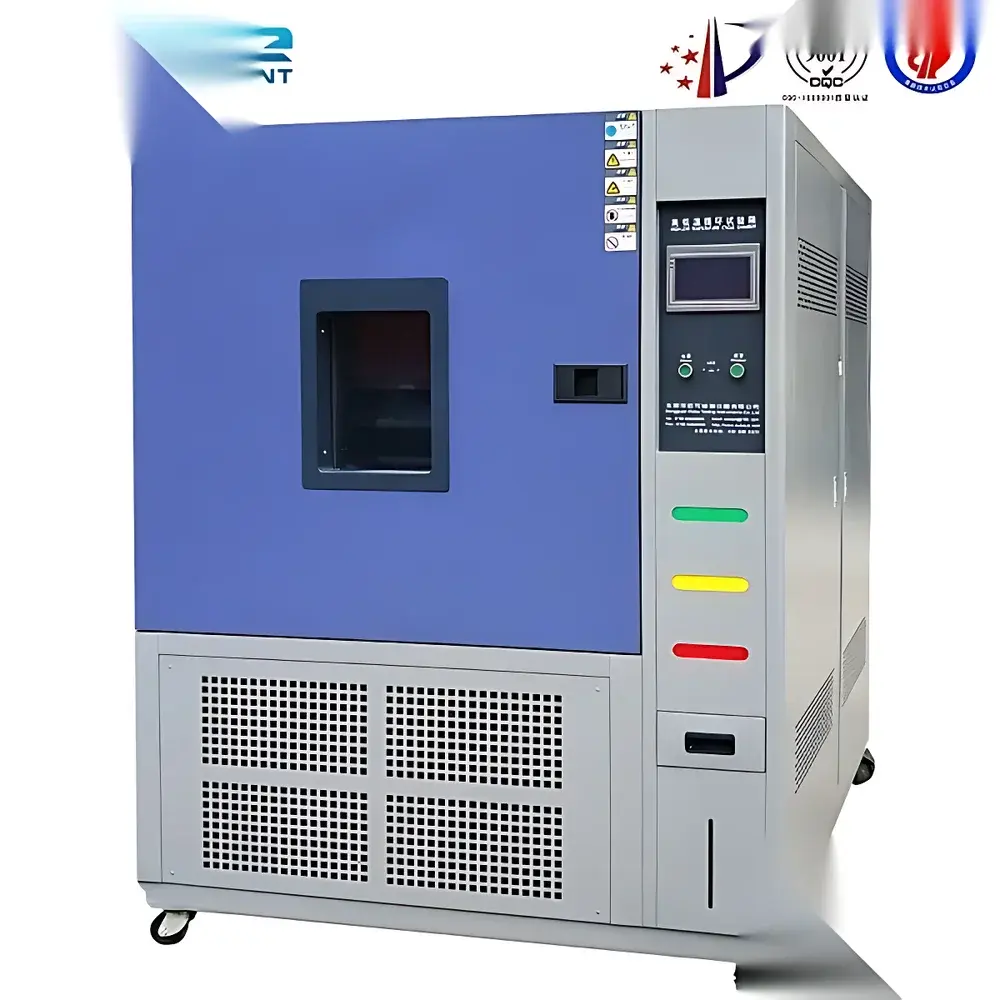
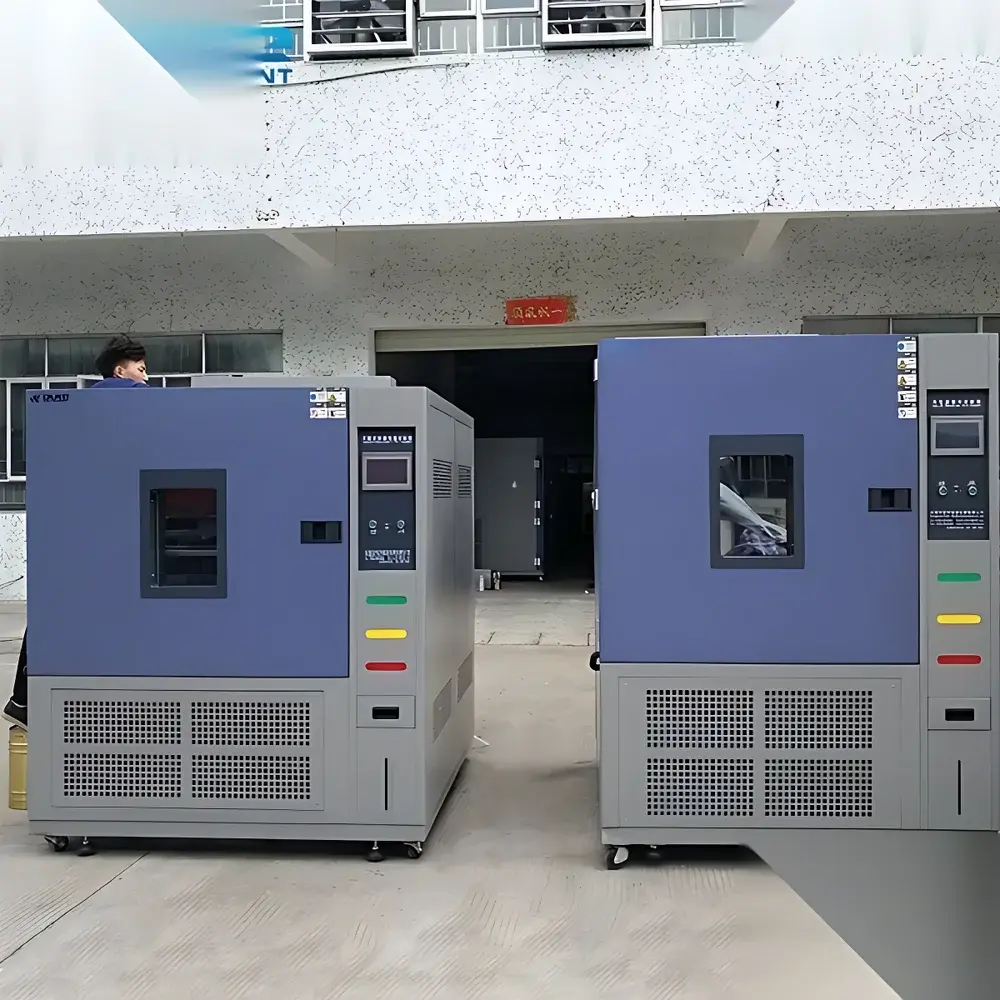
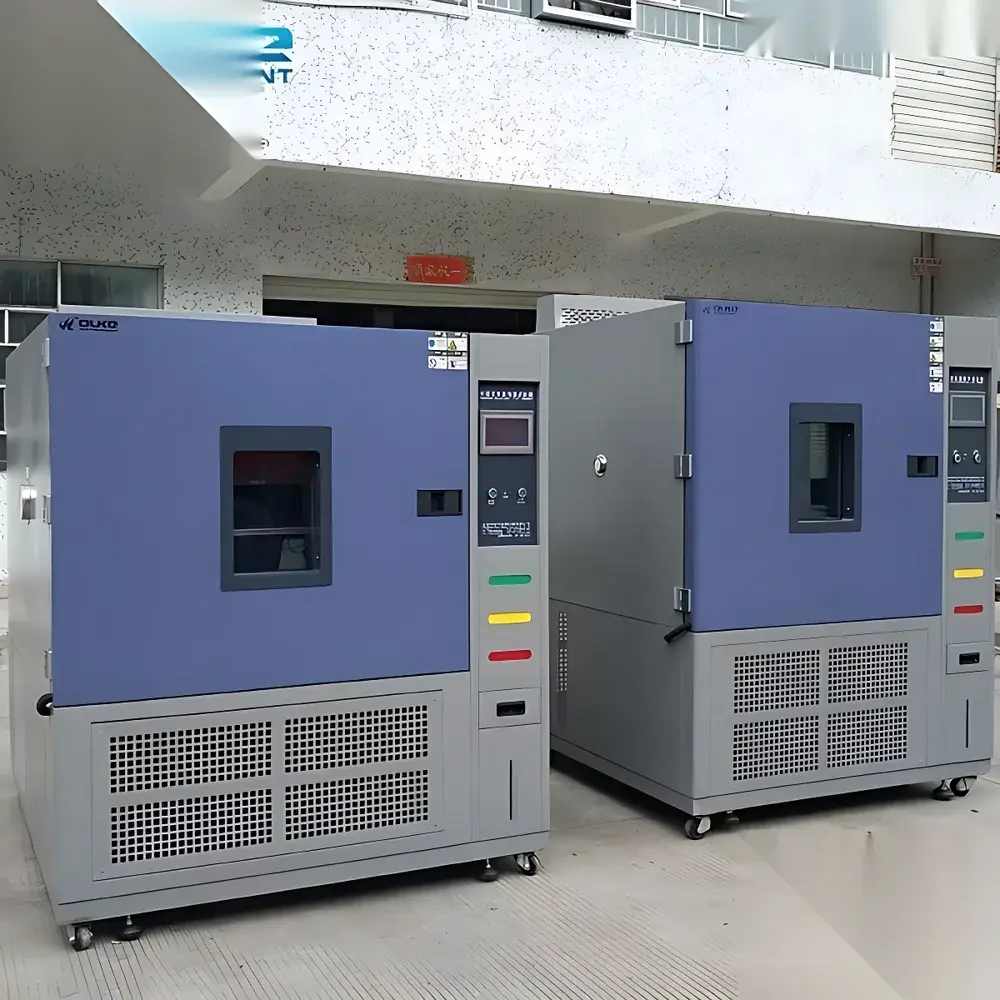
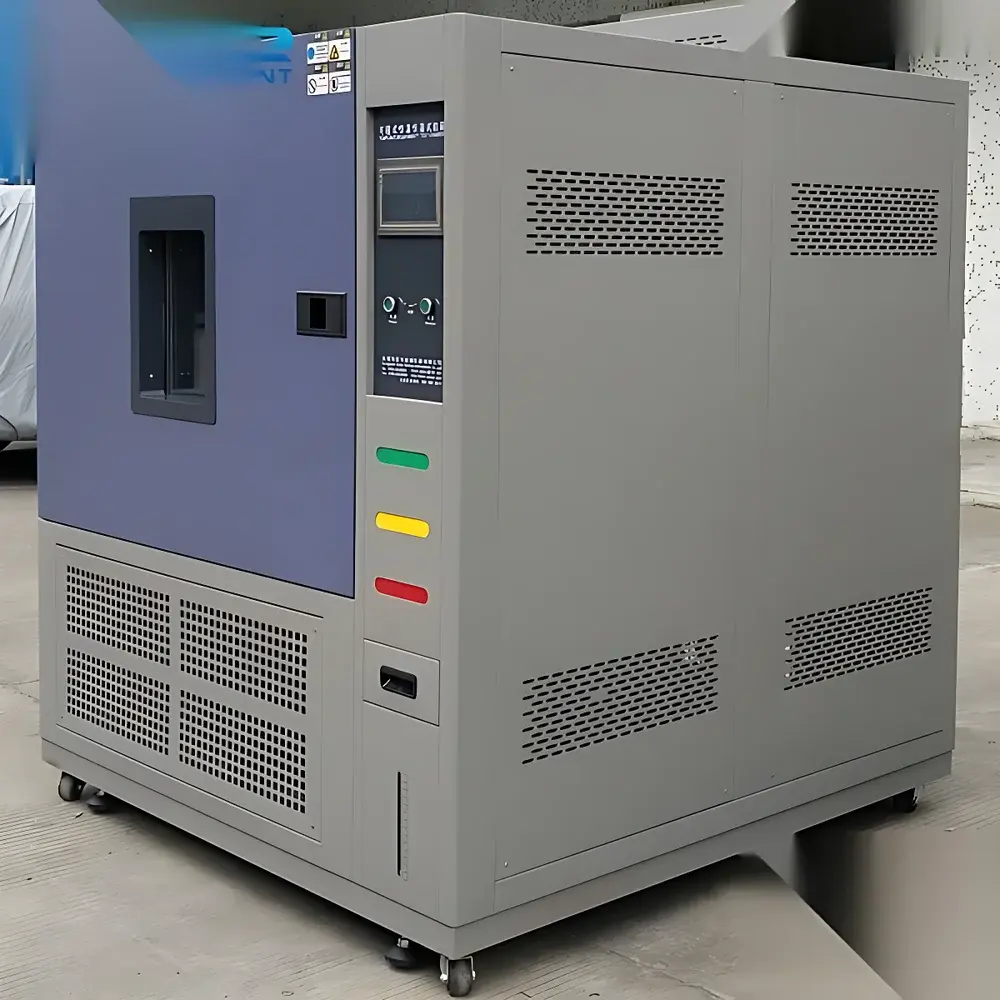
Generic Temperature and Humidity Controlled Environmental Test Chamber
| Brand | Other Brands |
|---|---|
| Origin | Imported |
| Manufacturer Type | Authorized Distributor |
| Price | USD 2,950 (approx. based on ¥22,000 at 1:7.45) |
| Temperature Range | −65 °C to +150 °C |
| Humidity Range | 20–95 % RH |
| Temp. Uniformity | ±2.0 °C |
| Temp. Stability | ±0.5 °C |
| Humidity Uniformity | ±3.0 % RH |
| Humidity Stability | ±1.5 % RH |
| Heating Rate | ≥2.5 °C/min (from +20 °C to +85 °C in ≤60 min) |
| Cooling Rate | ≥1.0 °C/min (from +20 °C to −40 °C in ≤70 min) |
| Refrigeration System | Dual-stage mechanical refrigeration (hermetic compressors, e.g., Tecumseh or Embraco) |
| Refrigerant | R404A / R23 |
| Heating Element | Nickel-chromium alloy tubular heaters |
| Humidifier | Stainless steel steam generator |
| Insulation | 100 mm thick high-density fiberglass + polyurethane foam |
| Interior Material | Mirror-finish SUS304 stainless steel |
| Exterior Material | Powder-coated cold-rolled steel or SUS304 brushed stainless steel |
| Air Circulation | Centrifugal blower with low-noise motor |
| Control Interface | LCD touchscreen (bilingual English/Chinese), PID control, real-time curve display, alarm logging, data export via USB |
Overview
The Generic Temperature and Humidity Controlled Environmental Test Chamber is a precision-engineered climatic simulation system designed for rigorous reliability validation of electronic components, automotive parts, aerospace materials, and consumer goods under controlled thermal and hygrothermal stress conditions. Operating on the principle of forced-air convection combined with dual-stage mechanical refrigeration and resistive steam humidification, the chamber delivers stable, repeatable environmental profiles across a wide operational envelope. Its architecture conforms to fundamental thermodynamic design principles—ensuring minimal thermal lag, uniform air distribution via optimized ducting and centrifugal airflow, and precise decoupling of temperature and humidity control loops. This enables compliance with standardized test protocols where independent parameter control and temporal fidelity are critical—particularly during ramp-and-soak cycles, steady-state conditioning, and accelerated aging studies.
Key Features
- Robust chamber construction: Mirror-polished SUS304 stainless steel interior (corrosion-resistant, non-outgassing) paired with powder-coated cold-rolled steel or brushed SUS304 exterior for structural integrity and cleanroom compatibility.
- High-efficiency thermal management: 100 mm thick composite insulation (high-density fiberglass + rigid polyurethane foam) minimizes heat transfer and supports rapid thermal transitions while maintaining energy efficiency.
- Optimized visibility and observation: Triple-layer, low-emissivity, tempered safety glass viewport with integrated conductive film heating and Philips LED lighting—enabling distortion-free, fog-free visual monitoring during extreme humidity or sub-zero operation.
- Intelligent control system: Bilingual (English/Chinese) 7-inch LCD touchscreen interface featuring multi-segment backlight adjustment, real-time graphical display of setpoint vs. actual curves, and comprehensive alarm diagnostics—including compressor overload, sensor fault, door open, and humidity saturation warnings.
- Enhanced operational safety: Dual-layer high-expansion silicone door gasket, vibration-dampening PU casters with locking mechanism, over-temperature/over-humidity cut-off, refrigerant leak detection, and built-in grounding per IEC 61000-6-3 EMC standards.
- Load-compatible testing capability: Optional power feedthrough ports (IP65-rated) support powered device-under-test (DUT) operation during environmental exposure—critical for functional validation of embedded systems and battery-powered electronics.
Sample Compatibility & Compliance
The chamber accommodates diverse sample geometries—from PCB assemblies and polymer specimens to packaged medical devices—without compromising environmental uniformity. Internal dimensions are configurable per model series (standard variants range from 100 to 1000 L volume). All units comply with national and international test standard requirements including GB/T 2423.1–2023 (cold), GB/T 2423.2–2023 (dry heat), GB/T 2423.3–2016 (constant damp heat), and GB/T 2423.4–2022 (cyclic damp heat), which align with IEC 60068-2-1, -2-2, -2-3, and -2-30. While not certified to ISO/IEC 17025 as a calibration laboratory, the chamber’s performance verification protocol follows GB 5170.2–2017 (temperature) and GB 5170.5–2017 (humidity) for routine in-house validation. Traceable NIST-calibrated reference sensors (optional) may be deployed for GLP-compliant audit trails.
Software & Data Management
The embedded controller supports local data logging (up to 10,000 data points) with timestamped records of temperature, humidity, alarm events, and PID output status. Export is enabled via USB flash drive in CSV format for post-processing in Excel or MATLAB. Optional Ethernet or RS485 interfaces allow integration into centralized lab management systems (LIMS) or SCADA platforms using Modbus RTU or TCP/IP protocols. Firmware updates are performed offline via USB; no cloud dependency or proprietary software installation is required. Audit trail functionality includes user login history, parameter modification logs, and system startup/shutdown timestamps—supporting basic 21 CFR Part 11 readiness when operated within documented SOPs.
Applications
This chamber serves core functions across R&D, quality assurance, and production release testing: accelerated life testing of lithium-ion batteries under thermal-hygric stress; solder joint reliability assessment per JEDEC JESD22-A104; packaging permeability evaluation for pharmaceutical blister packs; thermal cycling qualification of automotive ECUs per AEC-Q200; and material property characterization (e.g., coefficient of thermal expansion, moisture absorption kinetics) per ASTM D5229 and ISO 62. It is routinely deployed in third-party certification labs conducting CB Scheme testing and pre-compliance screening for CE, UL, and CCC marks.
FAQ
What is the typical lead time for delivery after order confirmation?
Standard models ship within 4–6 weeks from order acceptance; custom configurations (e.g., extended low-temp capability or special porting) require 8–10 weeks.
Can this chamber operate continuously for 1000+ hours without maintenance?
Yes—when operated within specified ambient conditions (15–30 °C, <80 % RH) and with scheduled compressor oil inspection every 6 months, continuous operation exceeding 2000 hours is validated per manufacturer MTBF data.
Is remote monitoring supported out of the box?
Basic remote status viewing (temperature/humidity readouts, alarm flags) is available via optional Ethernet module; full remote control requires additional middleware licensing and IT infrastructure alignment.
Does the unit include calibration documentation?
A factory-as-built verification report (including sensor linearity checks at three points per range) is supplied. Full ISO/IEC 17025 calibration certificates are available as a chargeable add-on with accredited third-party providers.
How is condensation managed during rapid cooling or high-humidity transitions?
The chamber employs adaptive dew-point control logic, dynamic drain pump activation, and heated viewport demisting—preventing internal condensation that could compromise test integrity or damage sensitive samples.



