
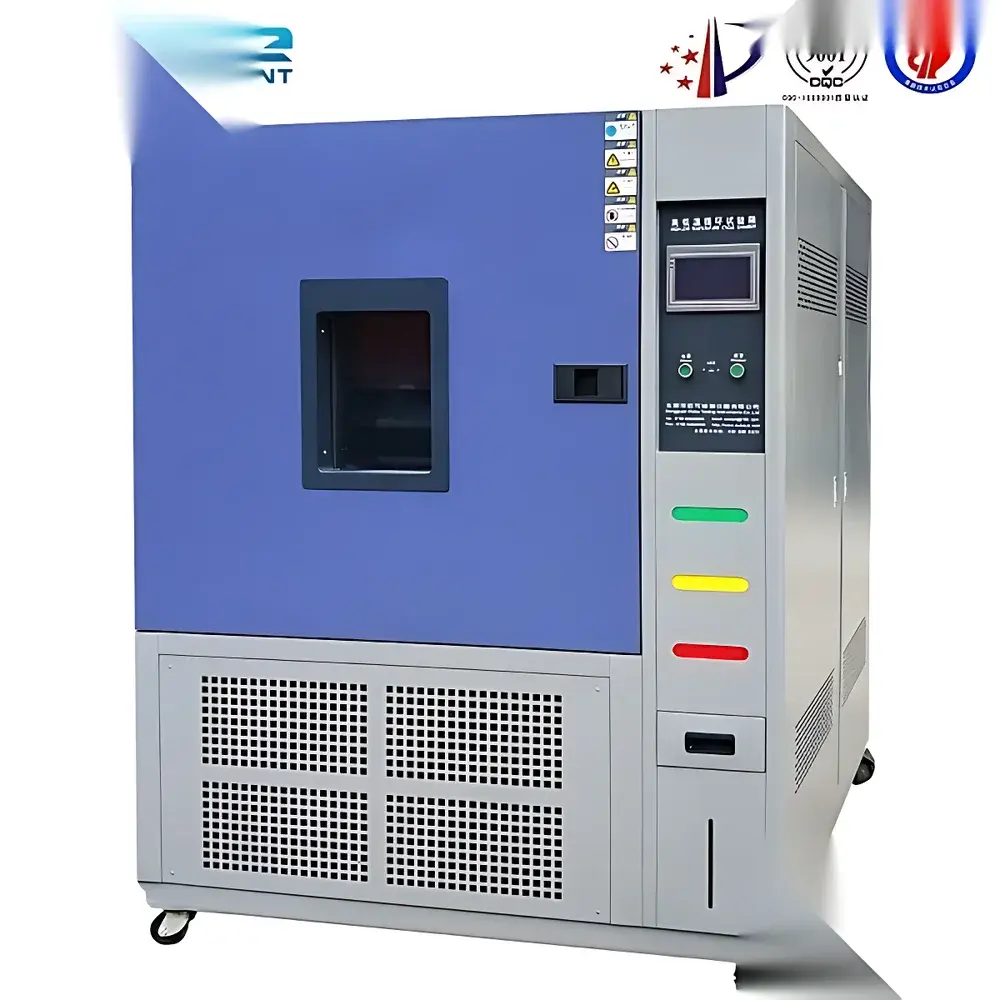
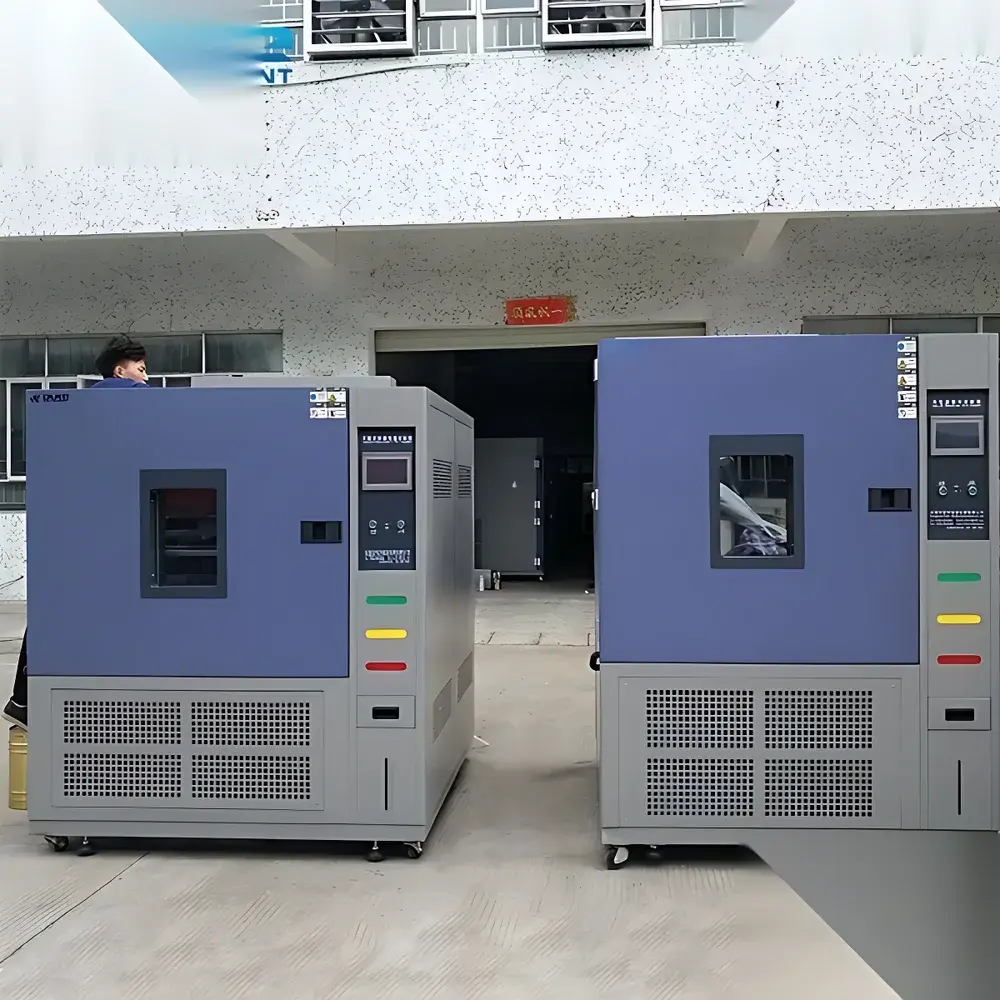
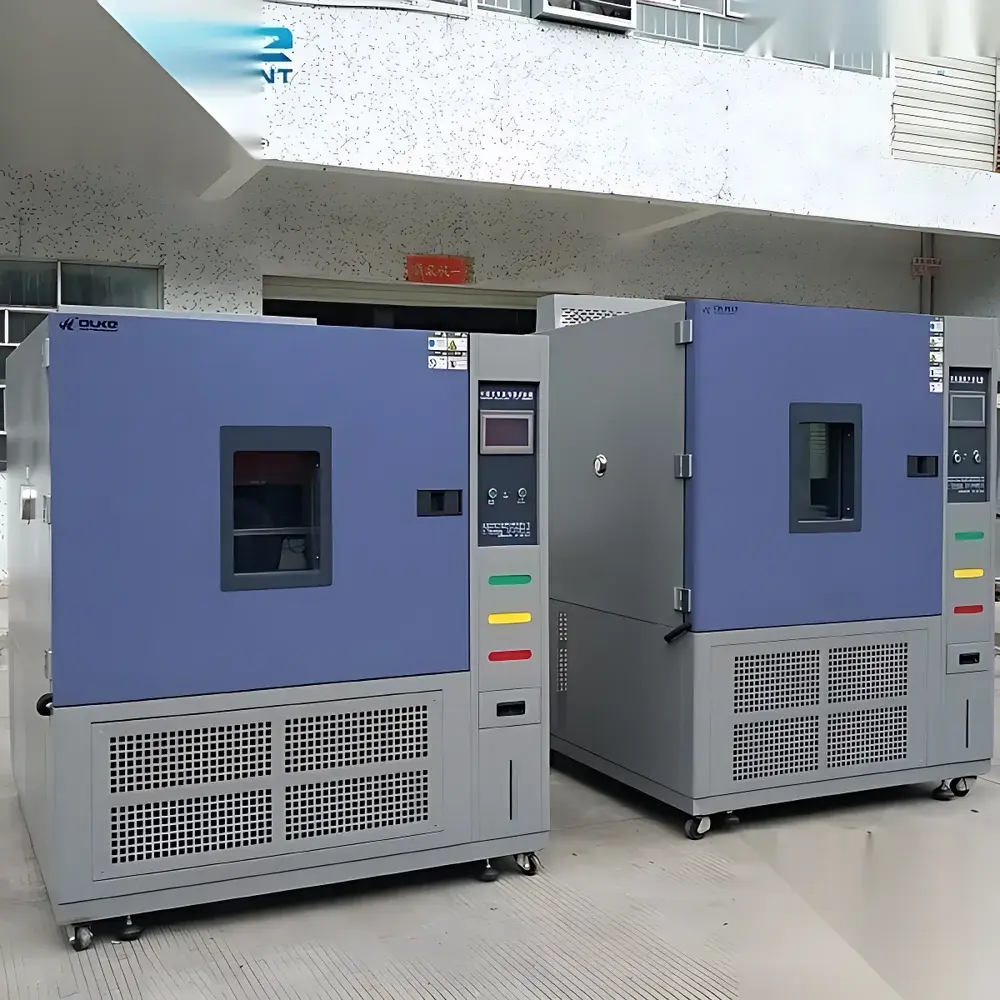
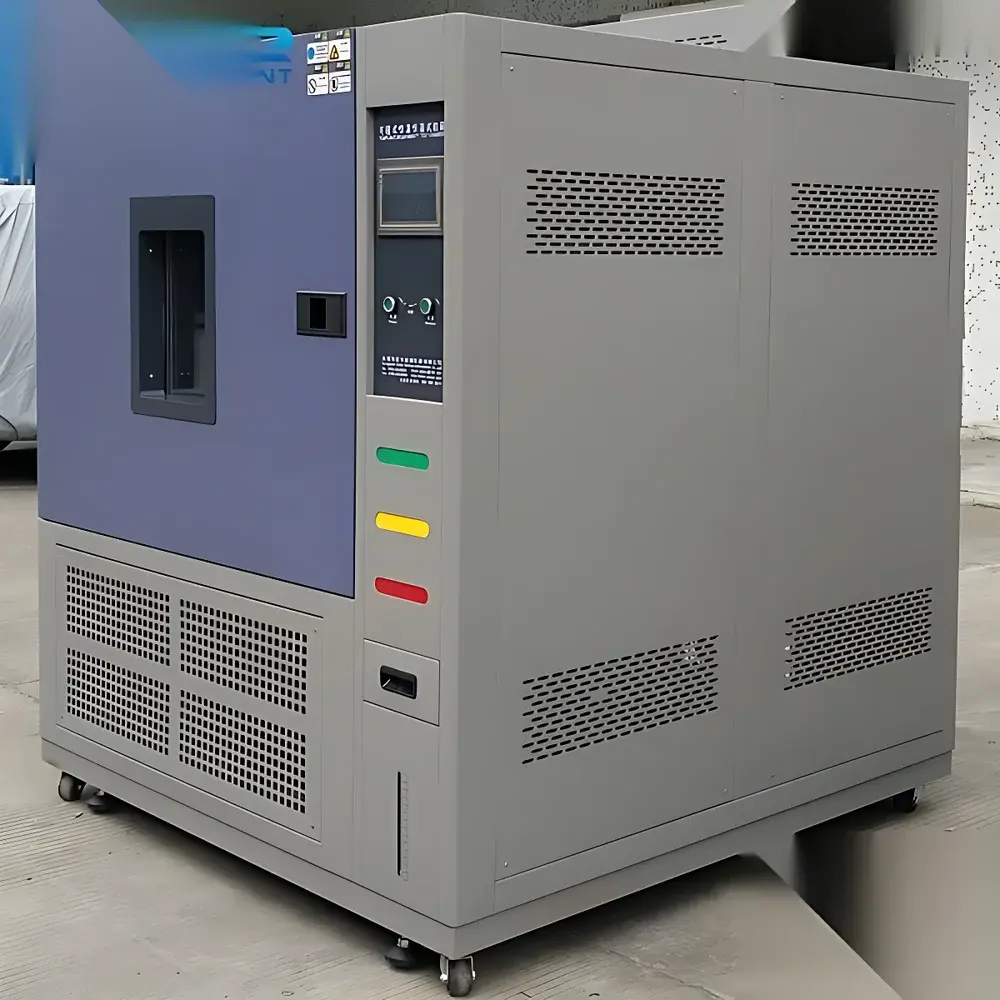
Generic Temperature and Humidity Controlled Environmental Test Chamber
| Brand | Other brands |
|---|---|
| Origin | Imported |
| Manufacturer Type | Authorized Distributor |
| Price | USD 3,100 (approx. based on ¥22,000 at 1 USD = ¥7.1) |
| Temperature Range | −65 °C to +150 °C |
| Humidity Range | 20–95% RH |
| Temp. Uniformity | ±2.0 °C |
| Temp. Stability | ±0.5 °C |
| Humidity Uniformity | ±3.0% RH |
| Humidity Stability | ±1.5% RH |
| Heating Rate | ≥2.5 °C/min |
| Cooling Rate | Avg. 1.0 °C/min |
| Refrigerant | R404A/R23 |
| Compressor | Hermetic scroll compressor (e.g., Tecumseh or Copeland) |
| Control System | TEMI880 color touchscreen PID controller with data logging and alarm management |
Overview
The Generic Temperature and Humidity Controlled Environmental Test Chamber is an industrial-grade climatic test system engineered for precise simulation of dynamic thermal and hygrothermal stress conditions. It operates on the principle of forced-air convection combined with dual-stage mechanical refrigeration and resistive heating, enabling stable, repeatable control across wide temperature (−65 °C to +150 °C) and relative humidity (20–95% RH) ranges. Designed for compliance-driven validation workflows, the chamber supports accelerated aging, reliability screening, and qualification testing of electronic components, automotive modules, aerospace materials, and medical devices under defined environmental profiles per IEC 60068-2, MIL-STD-810, and JEDEC JESD22 standards. Its robust architecture integrates thermodynamic isolation, low-vibration airflow management, and fail-safe redundancy to ensure measurement integrity during long-duration tests.
Key Features
- Double-wall construction with 100 mm thick high-density glass fiber insulation and polyurethane foam layering for minimal thermal leakage and energy efficiency
- Interior chamber lined with electropolished SUS304 stainless steel—non-porous, corrosion-resistant, and compliant with ISO 14644 cleanroom-compatible surface requirements
- Exterior housing fabricated from CNC-machined A3 steel with electrostatic powder coating for mechanical durability and aesthetic consistency
- Triple-sealed observation window using laminated tempered glass with integrated conductive film heater and Philips LED illumination for real-time, fog-free visual monitoring
- High-efficiency centrifugal circulation blower and low-noise hermetic compressor (Tecumseh or Copeland equivalent) with air/water-cooled condenser options
- Load-capable design supporting powered device-under-test (DUT) operation via dedicated 3-phase 380 V AC/50 Hz feedthrough terminals with overcurrent protection
- Integrated anti-vibration PU casters with locking mechanism for facility mobility and operational stability
Sample Compatibility & Compliance
The chamber accommodates standard test specimens up to 1 m³ internal volume (custom sizes available), with provisions for cable/port access, sensor mounting rails, and optional internal power distribution units. It meets the metrological verification criteria outlined in GB/T 5170.2–2017 (IEC 60068-3-5), GB/T 5170.5–2017 (humidity performance), and GB/T 2423.1–2021 (cold testing), as well as harmonized European standards EN 60068-2-1 and EN 60068-2-2. All controllers support audit-ready data traceability with timestamped setpoint logs, alarm histories, and deviation reports—fully compatible with GLP/GMP documentation requirements and FDA 21 CFR Part 11 electronic record controls when paired with validated software configurations.
Software & Data Management
Equipped with the TEMI880 intelligent programmable controller, the system delivers intuitive HMI navigation via a 7-inch color LCD touchscreen with 17-level backlight adjustment. The interface supports simultaneous multi-segment temperature/humidity ramp-soak profiles, real-time curve overlay of setpoints versus actual values, and graphical representation of PID tuning parameters. Built-in data logging records all critical variables at user-defined intervals (1 s to 60 min), exportable via USB to CSV format for post-processing in MATLAB, Excel, or LIMS platforms. Optional Ethernet/WiFi modules enable remote supervision, alarm SMS/email notifications, and integration into centralized test lab management systems (e.g., LabVantage, Thermo Fisher SampleManager).
Applications
This environmental chamber serves cross-industry functional validation needs including: thermal cycling of PCBAs per IPC-9701; humidity resistance evaluation of conformal coatings (IPC-CC-830); storage stability assessment of pharmaceutical packaging per USP ; cold-start performance testing of EV battery modules under −40 °C soak conditions; and accelerated corrosion testing of metallic enclosures per ASTM B117 (when configured with salt spray accessories). Its programmable dwell-ramp-hold sequences support both steady-state and dynamic profile execution—essential for automotive AEC-Q200 qualification, MIL-STD-810H Method 502.7 low-temperature operation, and IEC 60068-2-30 damp heat cyclic testing.
FAQ
What is the standard calibration interval for this chamber?
Per ISO/IEC 17025 recommendations, initial calibration is performed pre-shipment; subsequent verification should occur every 6–12 months depending on usage frequency and criticality of application.
Can the chamber operate continuously at −65 °C and 10% RH?
No—the specified humidity range is 20–95% RH; sub-20% RH requires optional dehumidification upgrades (e.g., desiccant wheel or LN₂ purge). Minimum humidity at extreme low temperatures is physically constrained by dew point limitations.
Is third-party certification (e.g., TÜV, UL) available?
Yes—CE marking is standard; UL 61010-1 and TÜV Rheinland certification can be arranged upon order with additional lead time and documentation review.
Does the controller support custom script-based test sequences?
The TEMI880 supports up to 120 program steps with conditional branching (e.g., “if temp > 80 °C then hold for 30 min”); advanced scripting requires optional PC-based software (TEMI PC Suite v4.2+).
What maintenance is required for long-term reliability?
Monthly condenser coil cleaning, quarterly refrigerant pressure checks, biannual door gasket inspection, and annual verification of sensor accuracy using NIST-traceable reference probes.



