
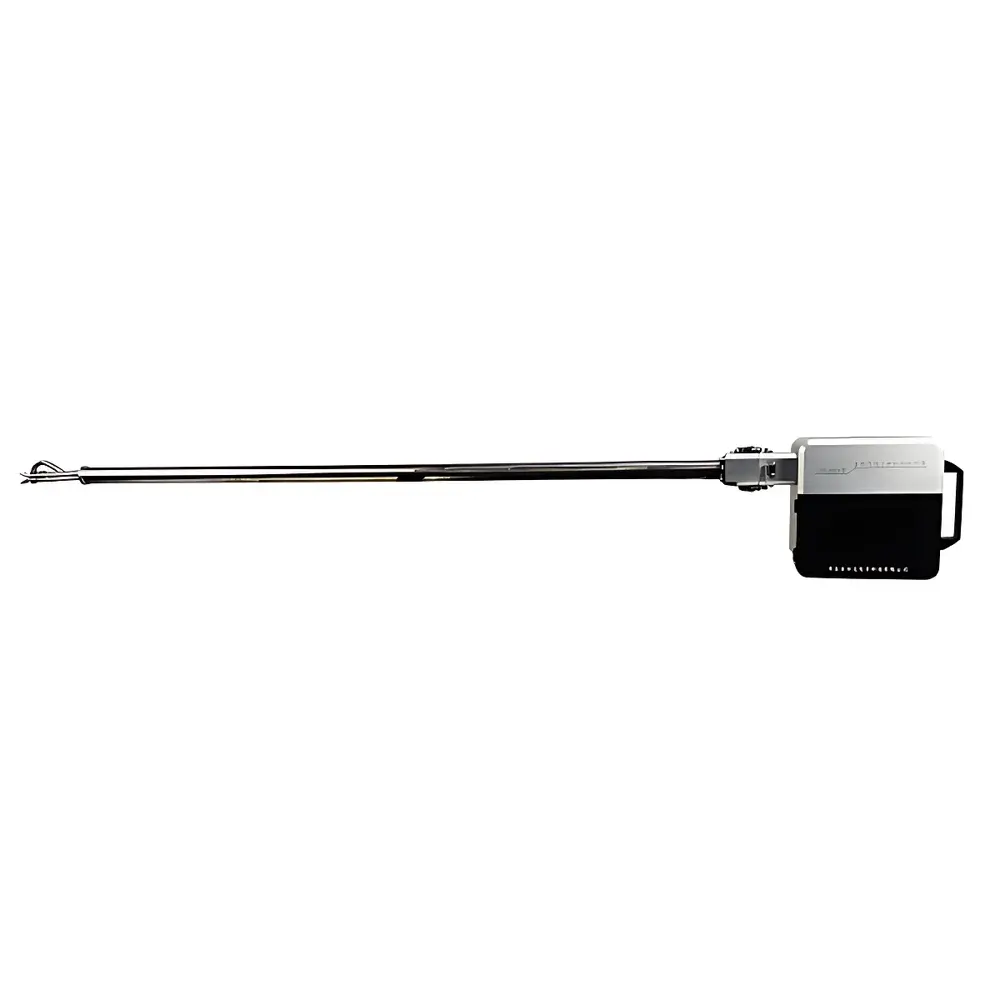
Genetec GH-6081 Beta-Ray Particulate Matter Monitor
| Brand | Genetec |
|---|---|
| Origin | Shandong, China |
| Manufacturer Type | OEM/ODM Manufacturer |
| Country of Origin | China |
| Model | GH-6081 |
| Pricing | Upon Request |
Overview
The Genetec GH-6081 Beta-Ray Particulate Matter Monitor is a field-deployable, in-stack continuous emission monitoring system (CEMS) designed for direct, real-time measurement of particulate matter (PM) mass concentration in flue gas streams from stationary combustion sources. It operates on the principle of beta-ray attenuation—where a low-activity carbon-14 (14C) radioactive source emits beta particles through a continuously advancing filter tape; the reduction in transmitted radiation intensity is quantitatively correlated to the accumulated mass of deposited particulates, enabling gravimetric-equivalent PM concentration determination (mg/m³, dry basis, standard conditions). Unlike optical or light-scattering methods, this technique is inherently insensitive to particle composition, refractive index, shape, or hygroscopicity—making it especially suitable for heterogeneous industrial emissions containing fly ash, soot, metal oxides, or condensable organics. The instrument integrates S-type Pitot tube, thermocouple-based temperature sensing, and heated sampling line control into a single probe assembly, allowing concurrent acquisition of stack gas velocity, static/dynamic pressure, temperature, moisture content, volumetric flow rate, and standardized dry flow—all essential parameters for regulatory-compliant emission quantification per ISO 16911-1 and EPA Method 17.
Key Features
- Low-activity 14C beta source (≤37 kBq), compliant with IAEA RS-G-1.9 and national Class V radioactive material handling regulations—no licensing burden for routine operation
- Filter-tape-based beta attenuation measurement with automatic heating (up to 180 °C) to prevent water condensation and minimize volatilization loss of semi-volatile compounds
- Integrated S-type Pitot tube and K-type thermocouple for simultaneous stack gas velocity, temperature, and differential pressure measurement
- Dual-stage heated sample line (probe + transport line) with PID-controlled thermal management to maintain dew point margin >20 °C above ambient
- Modular design separating sampling head from analyzer unit—critical components (detector, source chamber, tape drive) remain isolated from high-dust, high-moisture zones
- Ultra-smooth internal gas path (Ra ≤ 0.2 µm electropolished stainless steel) minimizes particle wall loss and adsorption hysteresis
- Onboard calibration verification using traceable NIST-traceable reference films; supports multi-point linear regression validation
- Tape breakage and end-of-tape detection with audible/visual alarms and automatic shutdown to preserve data integrity
Sample Compatibility & Compliance
The GH-6081 is validated for use across coal-fired power plants, waste incinerators, cement kilns, steel sintering facilities, and chemical process heaters emitting PM10, PM2.5, and total suspended particulates (TSP). It meets the performance criteria defined in DB37/T 3785–2019 (Shandong Province Standard for Low-Concentration PM Measurement by Beta-Ray Method), HJ/T 48–1999 (Technical Specifications for Dust Samplers), and GB/T 16157–1996 (Particulate and Gaseous Pollutant Sampling Methods). Its detection limit of 0.1 mg/m³ (dry, 273 K, 101.325 kPa) satisfies China’s ultra-low emission standards for thermal power units (GB 13223–2011 Annex A). While not certified under EN 13284-1 or EPA Performance Specification 11, its measurement methodology aligns with the fundamental principles referenced therein. All firmware and data logging modules support audit trails and user-access controls compatible with GLP/GMP documentation requirements.
Software & Data Management
Data acquisition and reporting are managed via embedded Linux-based firmware with dual-channel SD card logging (primary + backup). Raw beta-counting data, environmental parameters, and diagnostic logs are timestamped and stored at 1-minute intervals. Export formats include CSV and XML, structured to match China’s National Emission Monitoring Information Platform (NEMIP) schema. Optional USB-to-PC interface enables configuration via Genetec’s proprietary PC Suite v3.2, which supports remote calibration scheduling, tape life forecasting, and drift correction algorithms based on historical blank tape measurements. All data modifications—including manual overrides—are logged with operator ID, timestamp, and reason code, satisfying basic FDA 21 CFR Part 11 intent for electronic records in regulated environments.
Applications
- Continuous compliance monitoring of PM emissions from coal-, biomass-, and refuse-derived fuel-fired boilers
- Source testing and performance evaluation during CEMS certification (e.g., relative accuracy test audits per HJ 75–2017)
- Research-grade characterization of PM formation mechanisms in pilot-scale combustion rigs
- Stack testing for environmental impact assessments (EIAs) and permit renewal applications
- Multi-pollutant campaigns when paired with Genetec GH-60E integrated flue gas analyzer (SO₂, NOₓ, CO, O₂ via electrochemical sensors)
FAQ
Is the 14C source subject to nuclear regulatory approval in export markets?
Yes—though exempt from licensing in China under national exemption thresholds, international deployment requires prior notification to the importing country’s nuclear regulatory authority (e.g., NRC in USA, ONR in UK, ASN in France); Genetec provides full source documentation and shielding certification.
Can the GH-6081 operate unattended for extended periods?
Yes—designed for 7-day continuous operation with standard 10-m tape roll; optional extended-life tape module supports up to 30 days. Power failure recovery preserves last valid measurement and resumes counting without recalibration.
Does it support automatic zero/span verification?
No—zero verification is performed using clean tape segments; span verification requires manual insertion of certified calibration film. Automated gas-phase span is not implemented due to methodological incompatibility with beta attenuation.
What maintenance intervals are recommended?
Tape advance mechanism inspection every 3 months; beta detector window cleaning every 6 months; full system calibration annually or after any mechanical shock or source replacement.
Related Products







