
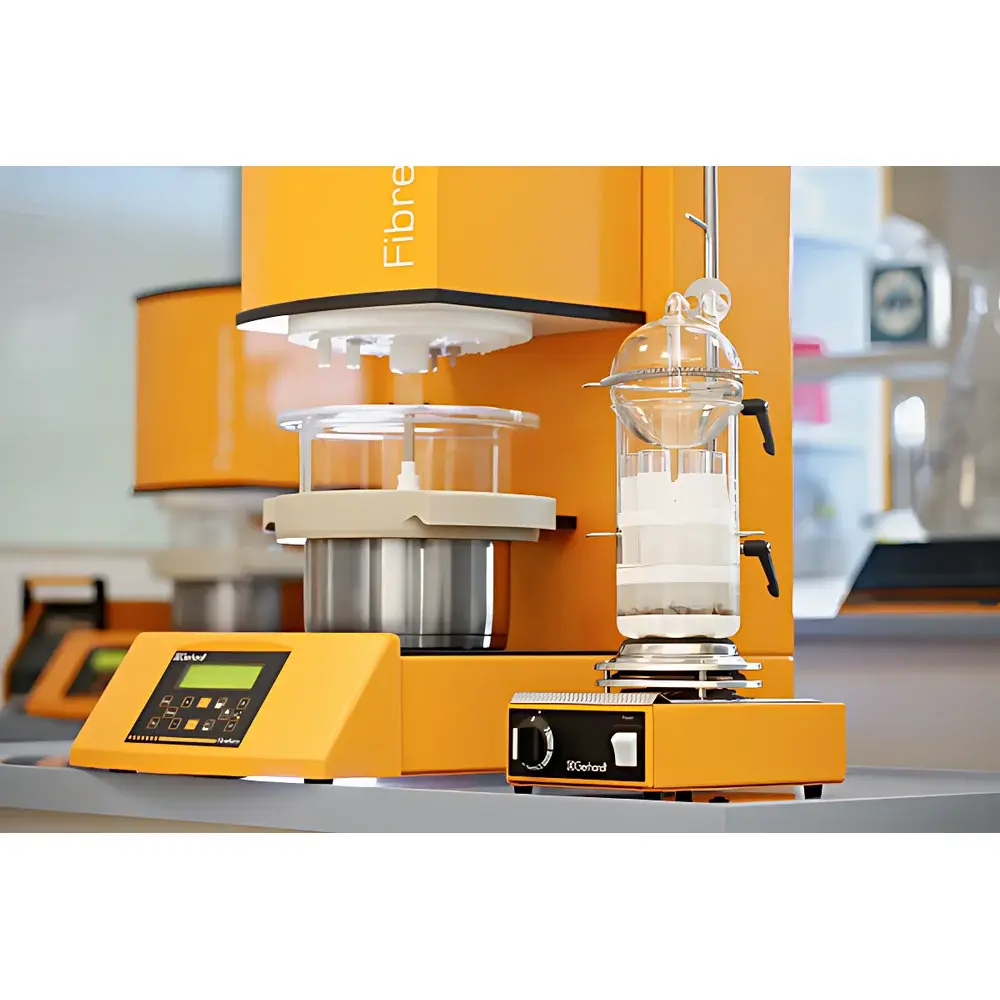
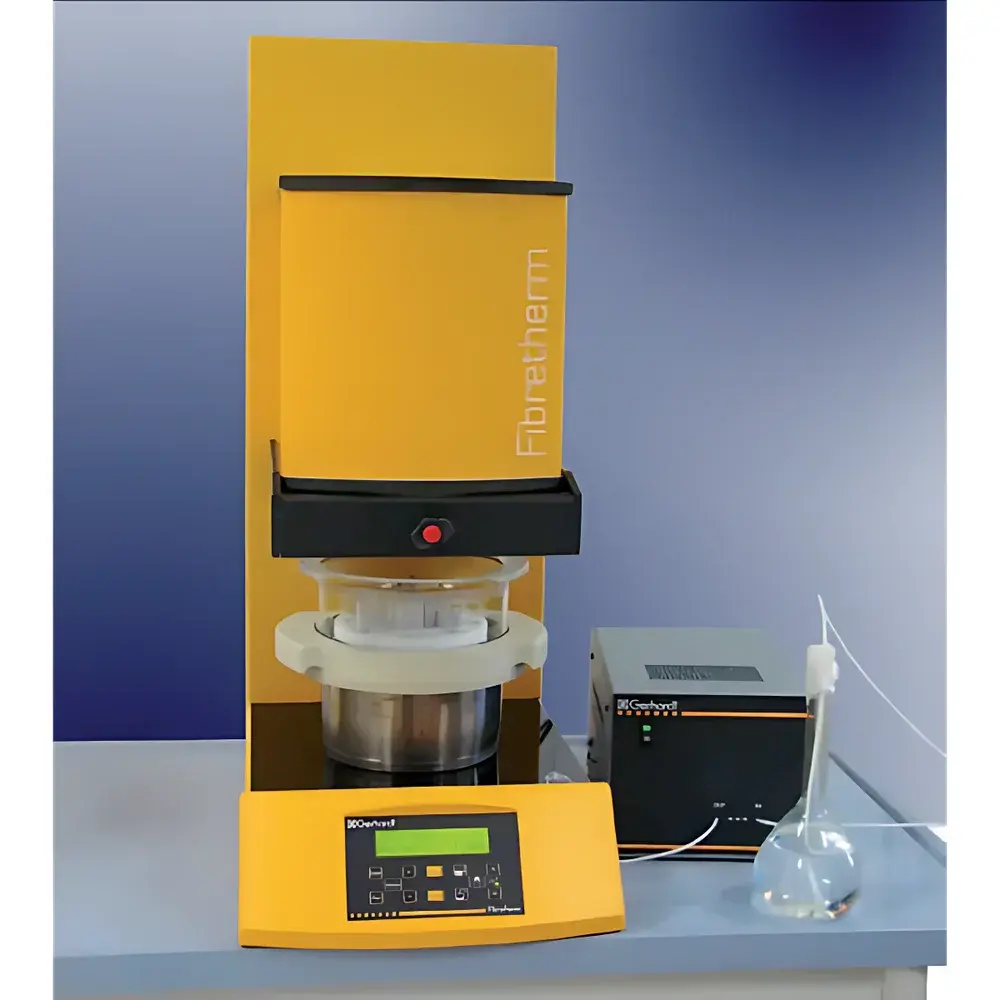
Gerhardt Fibretherm FT12 Fully Automated Dietary Fiber Analyzer
| Brand | Gerhardt |
|---|---|
| Origin | Germany |
| Manufacturer | C. Gerhardt GmbH & Co. KG |
| Model | Fibretherm FT12 |
| Sample Capacity | 1–12 samples per batch |
| Heating System | Programmable microcrystalline ceramic heater |
| Reagent Dispensing | Automated acid/alkali/water addition and waste drainage |
| Filtration | Pneumatically actuated high-precision FibreBag® filtration system |
| Control Interface | Onboard touchscreen with storage for up to 10 preprogrammed methods |
| Safety Features | Closed-system operation, acoustic and visual error alerts, automatic cooling water monitoring |
| Power Supply | 230 V AC, 50 Hz |
| Rated Power | 1900 W |
| Dimensions (W × D × H) | 330 × 650 × 860 mm |
| Weight | 42 kg |
| Cooling Water Requirement | 5 L/min (on-demand) |
Overview
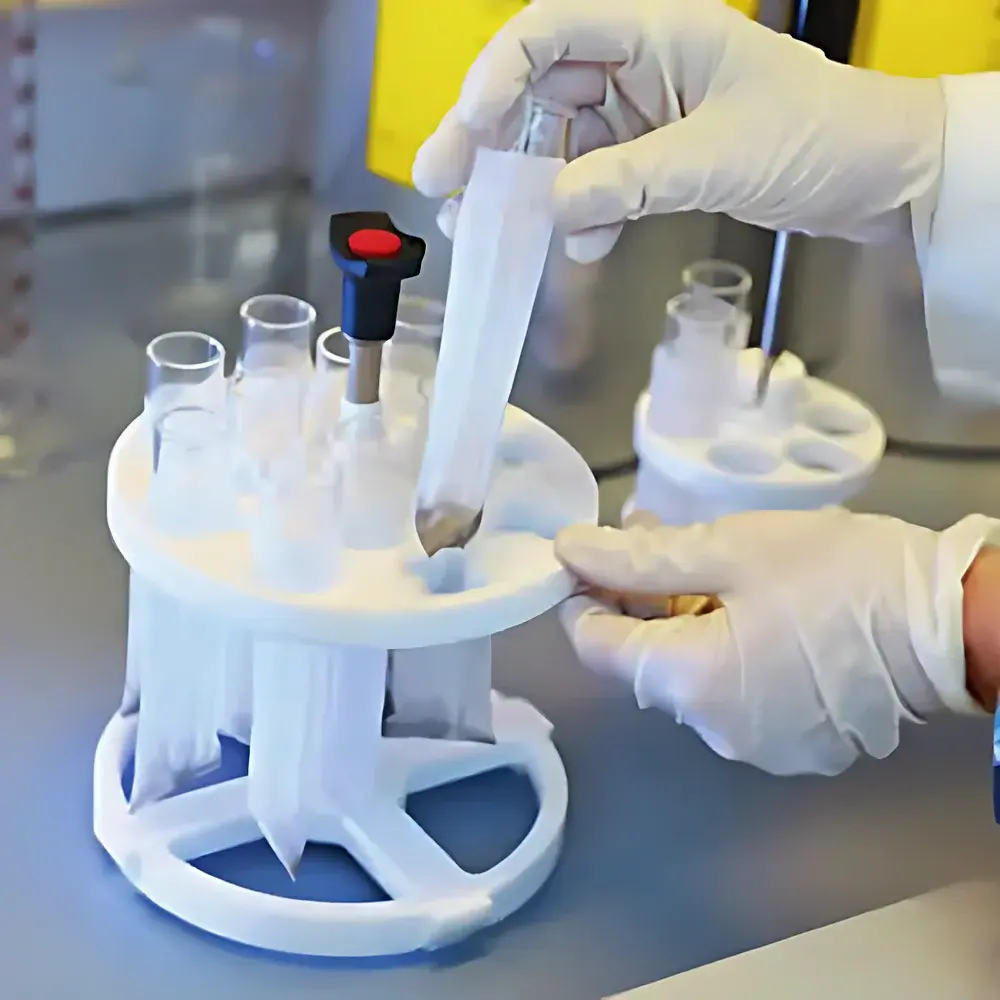
The Gerhardt Fibretherm FT12 is a fully automated, benchtop dietary fiber analyzer engineered for precise, reproducible determination of crude fiber (CF), neutral detergent fiber (NDF), acid detergent fiber (ADF), and total dietary fiber (TDF) in food, feed, and botanical matrices. It implements the classical gravimetric principle—based on sequential solvent extraction, acid/alkali digestion, filtration, drying, and ashing—but replaces manual, labor-intensive steps with programmable, closed-system automation. The core innovation lies in the proprietary FibreBag® technology: pre-weighed, inert cellulose-based filter bags that retain insoluble residues during boiling and filtration while enabling uniform mass transfer and minimal blank interference. Unlike open-beaker methods, the FT12 performs simultaneous digestion and vacuum-assisted filtration of up to 12 samples under strictly controlled temperature, time, and reagent volume conditions—ensuring inter-sample comparability and eliminating operator-induced variability. Its microcrystalline ceramic heating elements deliver stable, uniform thermal profiles across all reaction vessels, critical for consistent hydrolysis kinetics required by AOAC 978.10, AOAC 2009.01, AACC 32-05, and ISO 13905.
Key Features
- Fully automated reagent handling: Precise, timed dispensing of sulfuric acid (for CF), neutral detergent solution (for NDF), and acid detergent solution (for ADF), followed by automated water rinsing and waste evacuation.
- Integrated pneumatic lift mechanism: Enables synchronized elevation and sealing of FibreBag® holders during filtration, ensuring leak-free operation and pressure-stable vacuum draw.
- Programmable method storage: Up to 10 user-defined analytical protocols—including digestion temperature ramps, hold times, filtration durations, and rinse cycles—can be saved and recalled with one touch.
- Closed-system architecture: All digestion, filtration, and rinsing steps occur within sealed, chemically resistant chambers, minimizing exposure to hot vapors, corrosive reagents, and aerosols.
- Real-time system monitoring: Built-in sensors track cooling water flow, heating element status, vacuum pressure, and door interlock integrity; errors trigger audible alarms and on-screen diagnostic codes.
- Low-blank, high-reproducibility filtration: FibreBag® filters (pore size ≤25 µm) are manufactured from purified, ash-free cellulose and pre-conditioned to eliminate extractables—critical for accurate ash correction and low method blanks.
Sample Compatibility & Compliance
The Fibretherm FT12 accommodates solid, semi-solid, and dried particulate samples—including cereals, legumes, forages, dietary supplements, and processed foods—with particle sizes ≤2 mm recommended for homogeneous loading into FibreBags®. It supports all major regulatory and consensus methods: AOAC Official Methods 978.10 (crude fiber), 2009.01 (total dietary fiber), 985.29 (NDF/ADF); AACC International Method 32-05; and ISO 13905 (determination of dietary fiber as enzymatically digested residue). Its design meets GLP documentation requirements through traceable method parameters, audit-ready event logs (start time, cycle completion, error flags), and compatibility with external LIMS integration via RS232 or optional Ethernet module. All wetted components—including reaction vessels, tubing, and FibreBag® holders—are constructed from PTFE, borosilicate glass, or high-purity stainless steel (AISI 316), ensuring resistance to concentrated acids, alkalis, and detergents over extended service life.
Software & Data Management
The onboard control unit runs embedded firmware with a 7-inch capacitive touchscreen interface supporting multilingual operation (English, German, Spanish, French). Each analysis run automatically records timestamped metadata: method ID, sample ID, start/end times, actual temperatures achieved, reagent volumes dispensed, filtration vacuum levels, and any system warnings. Raw weight data (pre-digestion, post-drying, post-ashing) are entered manually or imported via USB keyboard; final calculations for CF, NDF, ADF, and TDF follow standardized equations defined in AOAC and AACC guidelines. Export options include CSV files for spreadsheet analysis or direct printing to connected thermal printers. For laboratories operating under FDA 21 CFR Part 11, the system supports optional electronic signature modules and role-based access control when paired with validated third-party laboratory software platforms.
Applications
The FT12 is routinely deployed in quality control laboratories of animal feed mills, cereal processors, functional food manufacturers, and contract testing facilities performing routine compliance testing against nutritional labeling regulations (e.g., EU Regulation No. 1169/2011, US FDA 21 CFR §101.9). It enables rapid assessment of forage digestibility in ruminant nutrition studies (via NDF/ADF ratios), verification of fiber enrichment claims in breakfast cereals and bakery products, and validation of enzymatic–gravimetric TDF protocols in clinical nutrition research. Its ability to process 12 samples in parallel—without cross-contamination or timing drift—makes it especially suited for high-throughput screening of raw material batches or stability studies requiring repeated fiber quantification over time.
FAQ
What standards does the Fibretherm FT12 comply with?
It supports AOAC 978.10, AOAC 2009.01, AACC 32-05, and ISO 13905 for crude fiber, dietary fiber, NDF, and ADF determinations.
Can the FT12 be used for enzymatic–gravimetric total dietary fiber (TDF) analysis?
Yes—when combined with approved enzymatic kits (e.g., Megazyme), the FT12 automates the post-enzymatic precipitation, filtration, and gravimetric steps per AOAC 2009.01.
Is FibreBag® supplied with the instrument?
FibreBag® consumables are sold separately in certified lots with individual lot-specific ash content certificates; Gerhardt provides validated bag specifications and blank data for each batch.
How is calibration and performance verification performed?
Users verify system performance using reference materials such as AOAC Standard Reference Material 1849 (Infant Formula) or in-house control samples with certified fiber values; temperature accuracy is confirmed with calibrated PT100 probes.
What maintenance is required for long-term reliability?
Routine tasks include cleaning the filtration manifold and reagent lines with deionized water after each run, inspecting O-rings and vacuum seals quarterly, and replacing the microcrystalline ceramic heater only if thermal output deviates beyond ±2 °C across the full operating range.





