
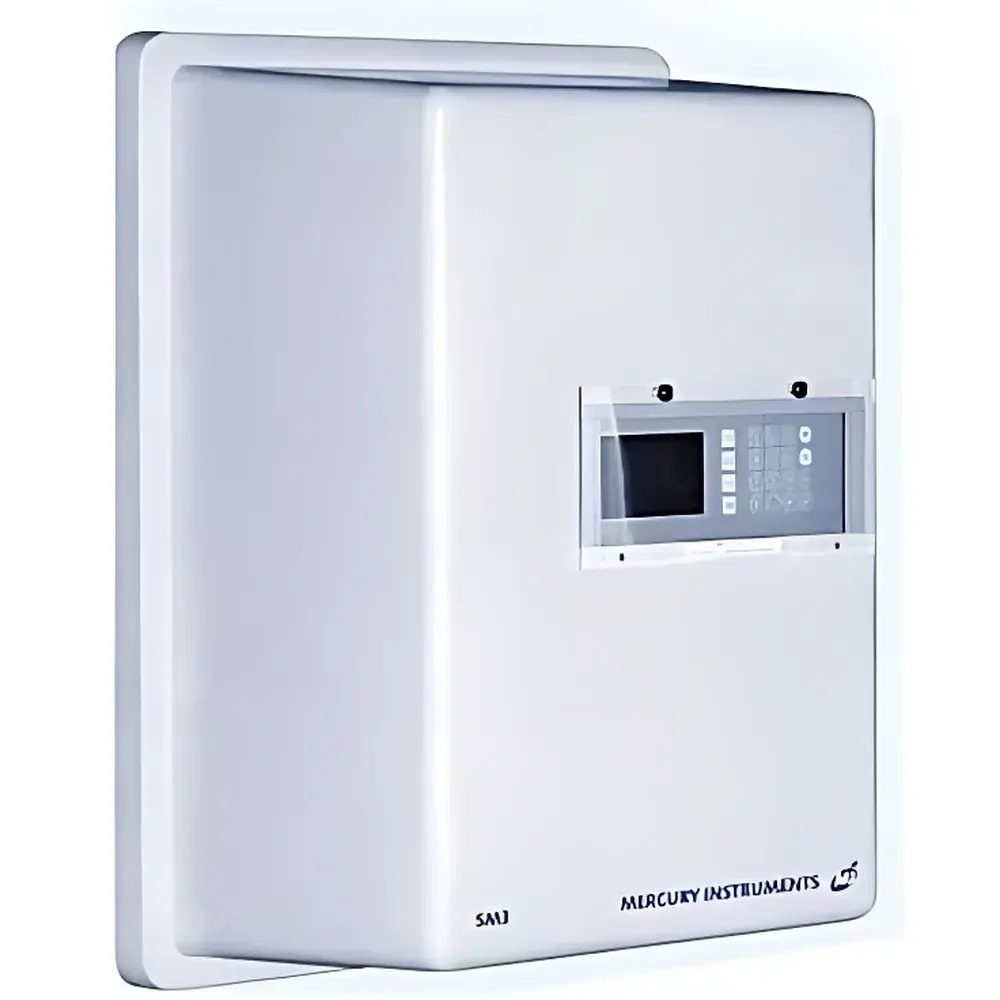
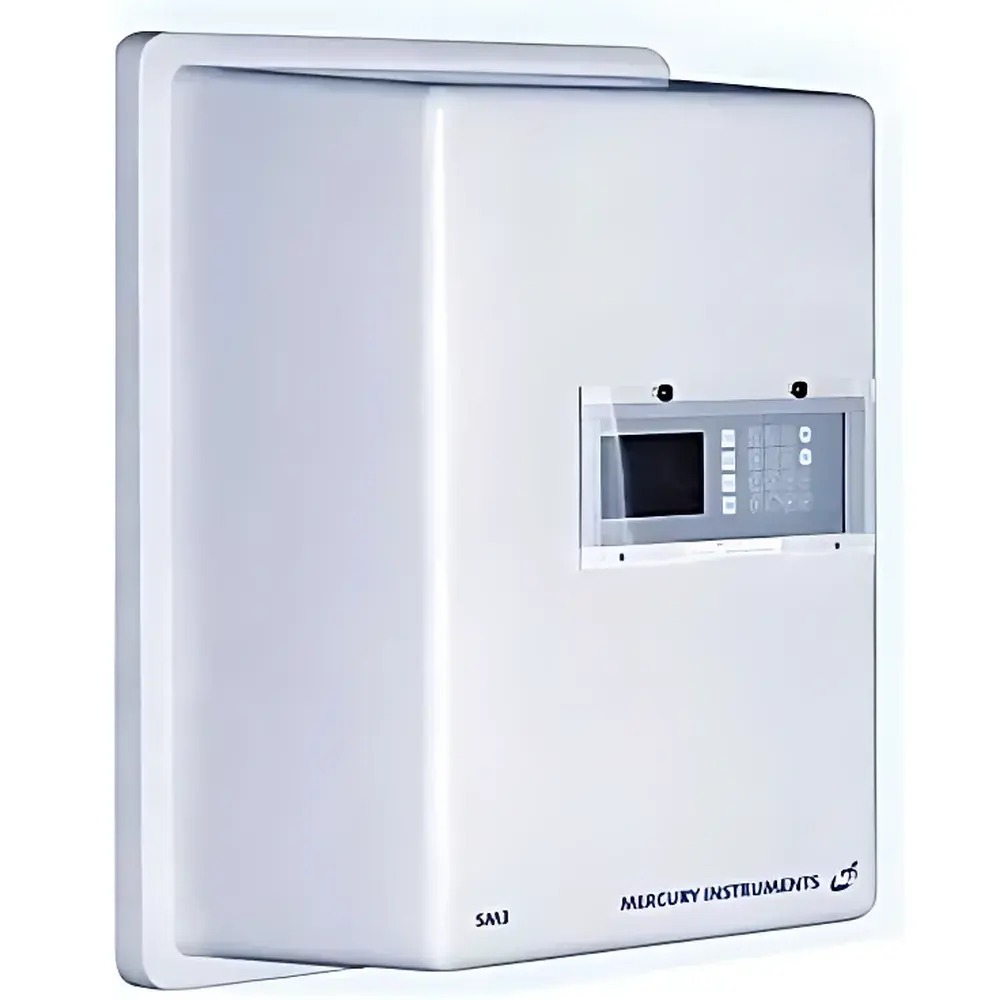
German MI SM-3 Flue Gas Mercury Continuous Emission Monitoring System
| Origin | Germany |
|---|---|
| Manufacturer Type | Authorized Distributor |
| Origin Category | Imported |
| Model | SM-3 |
| Pricing | Upon Request |
Overview
The German MI SM-3 Flue Gas Mercury Continuous Emission Monitoring System (CEMS) is a fully automated, high-stability analyzer engineered for real-time, uninterrupted quantification of total mercury (HgT) in industrial flue gases. It employs thermal catalytic conversion followed by cold vapor atomic absorption spectroscopy (CVAAS) at the resonant wavelength of 253.7 nm — a method recognized for its specificity, linearity, and compliance with international reference protocols for mercury speciation-independent measurement. Unlike batch-based or enrichment-dependent systems, the SM-3 delivers true continuous measurement without sampling cycles, dwell times, or offline derivatization. Its design eliminates reliance on wet chemistry, gold amalgamation traps, solvents, or consumable reagents — thereby ensuring long-term operational stability, minimal drift, and intrinsic resistance to gold-surface poisoning. Certified by the German Technical Inspection Association (TÜV) under GMBI No. 33/1999, the SM-3 meets the foundational metrological requirements for regulatory-grade mercury CEMS deployment in emission-controlled industries.
Key Features
- True continuous measurement: No sampling cycle; real-time T90 response < 60 seconds
- Thermal catalytic converter operating > 180 °C — ensures complete conversion of Hg0, Hg2+ (e.g., HgCl2, HgO), and covalent species (e.g., HgS) to elemental mercury vapor
- High-temperature sample path: Entire gas pathway — from probe tip to detector cell — maintained above mercury’s condensation point (−38.8 °C), minimizing wall adsorption and memory effects
- PFA-lined sample lines and heated stainless-steel probe (customizable flange: DN80/PN6 or ANSI 3″/150 lbs) prevent Hg loss and ensure trace-level integrity
- Integrated self-cleaning filtration: Pneumatically actuated, automatic purge cycle every 60 minutes (duration < 5 s) using oil-free compressed air (~1.5 bar)
- Passive drying via maintenance-free thermoelectric cooler — no desiccants or liquid traps
- Robust industrial enclosure (550 × 1000 × 700 mm, ~50 kg) with corrosion-resistant construction suitable for harsh stack environments
Sample Compatibility & Compliance
The SM-3 is validated for direct analysis of hot, humid, particulate-laden flue gases from combustion sources without dilution or conditioning beyond filtration. It detects total mercury regardless of chemical form — elemental (Hg0), ionic (Hg2+), or covalently bound species — making it compatible with ASTM D6784-22 (Standard Test Method for Elemental, Oxidized, Particle-Bound, and Total Mercury in Flue Gas), EN 14181 (Quality Assurance of Automated Measuring Systems), and EU IED (Industrial Emissions Directive) Annex V monitoring requirements. While not intrinsically compliant with 21 CFR Part 11, its analog 4–20 mA output (max. 500 Ω load) and relay contacts support integration into auditable DCS/SCADA architectures with external data logging and audit-trail capabilities required under GLP/GMP frameworks.
Software & Data Management
Operation is managed via an integrated membrane keypad with backlit graphical LCD display — enabling local zero calibration, span adjustment, system diagnostics, and status monitoring without external hardware. Optional RS-232 or Ethernet interface allows remote configuration, firmware updates, and time-synchronized data export (ASCII or CSV) to centralized environmental data management platforms. All critical events — including filter purges, temperature deviations, and signal validation flags — are timestamped and stored internally for ≥30 days. Raw absorbance signals and converted concentration values (µg/m³) are simultaneously available as analog outputs and digital streams, supporting third-party validation software per EN 15267-3 certification guidelines.
Applications
The SM-3 is deployed across regulated thermal processes where mercury emissions must be monitored continuously for compliance reporting and process optimization. Typical applications include:
- Municipal solid waste incinerators (MSWI) and sewage sludge incineration plants
- Hazardous waste incinerators (HWI) subject to BAT conclusions under the EU IED
- Cement kilns co-processing alternative fuels
- Coal-fired power plants equipped with FGD and SCR systems
- Waste-to-energy facilities and biomass combustion units
- Non-ferrous metal smelters and secondary metal recycling furnaces (e.g., aluminum dross processing)
- Wood-fired heating plants and industrial boiler stacks
FAQ
Does the SM-3 require gold traps or chemical reagents for operation?
No. The SM-3 uses a solid-state thermal catalyst and CVAAS detection — eliminating gold amalgamation, wet chemistry, and solvent consumption.
What is the lowest detectable concentration (LOD)?
The instrument achieves a method detection limit of < 1 µg/m³ under standard operating conditions.
Can the SM-3 be used for mobile or temporary monitoring campaigns?
Yes. Its compact footprint, integrated power supply (230 VAC / 50 Hz), and self-contained sample handling make it suitable for transportable deployment and rapid field installation.
Is temperature control active throughout the entire gas path?
Yes. The probe, transfer line, filter housing, catalytic converter, and optical cell are all actively heated to >180 °C to prevent condensation and adsorption losses.
How often does the system require maintenance?
Scheduled maintenance is limited to annual verification of catalyst activity, optical alignment, and flow calibration — no routine consumables or liquid replacements are required.
Related Products







