
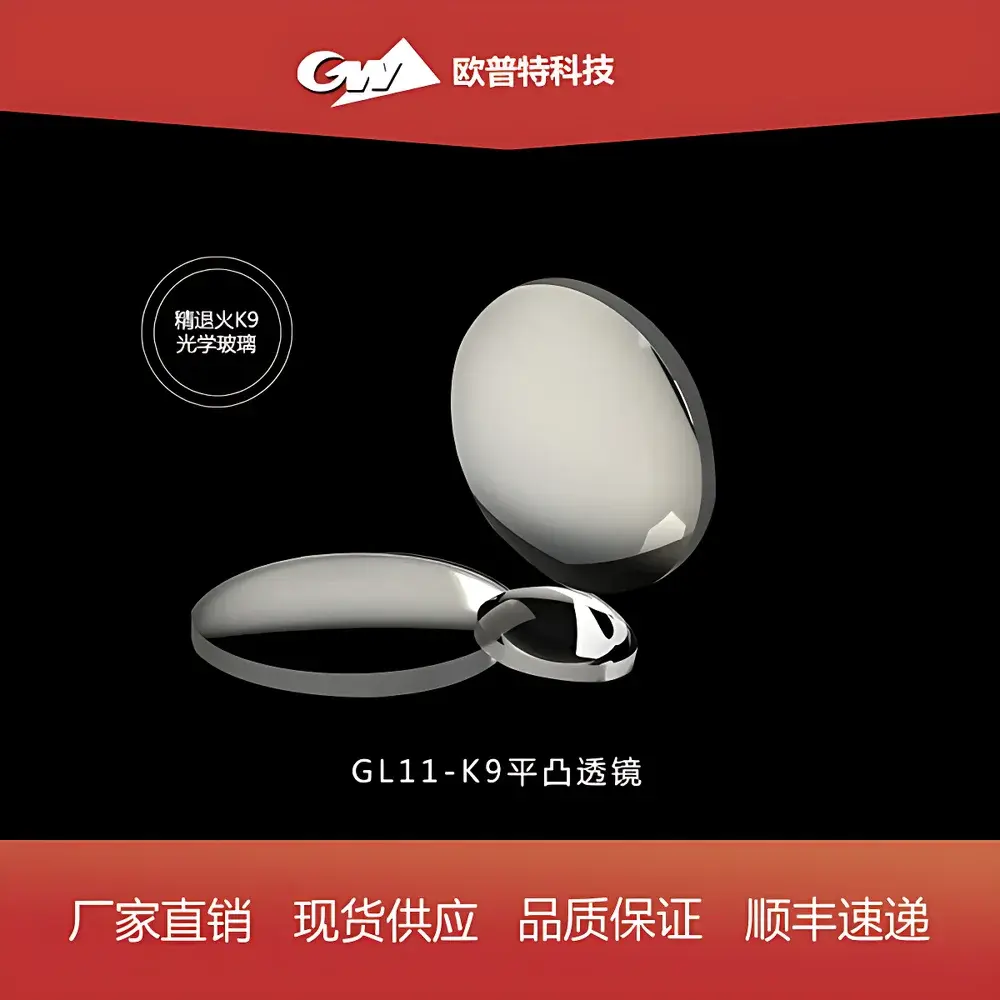
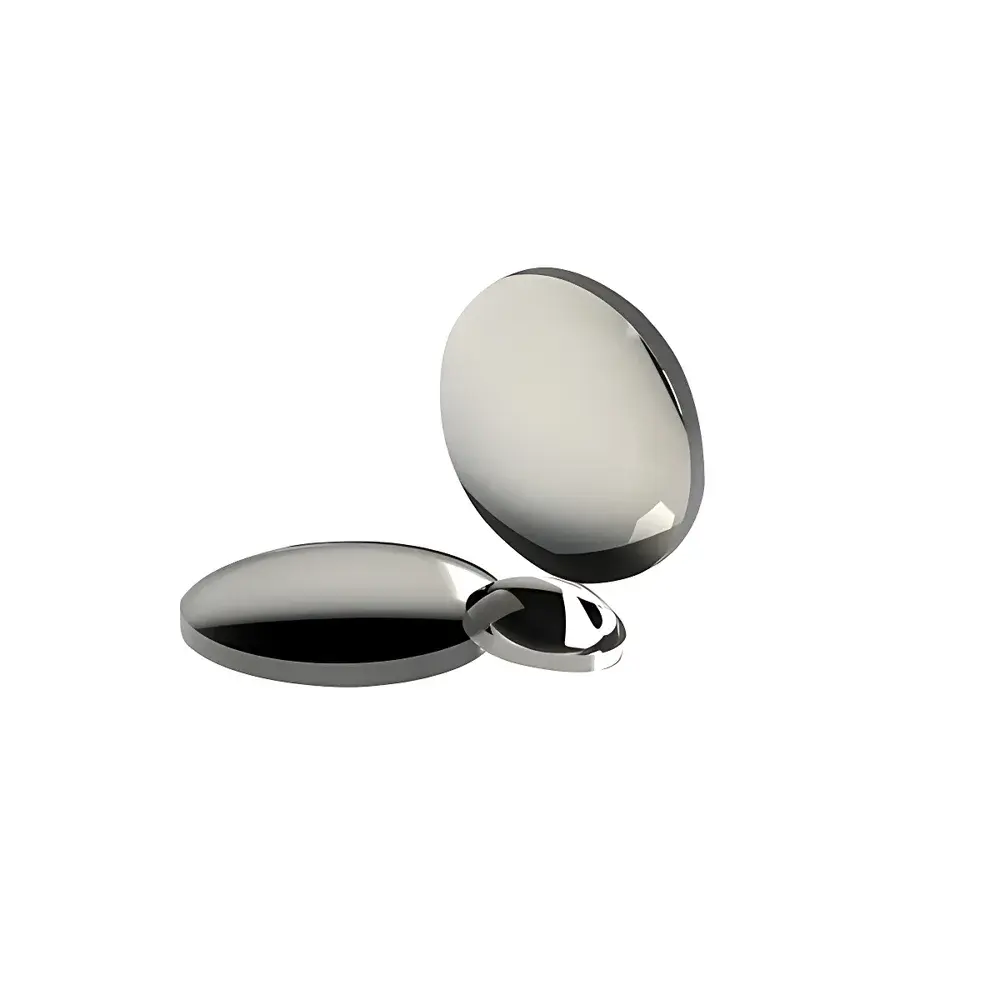
GL11-SWIR Plano-Convex Lens with Short-Wave Infrared (SWIR) Broadband Anti-Reflection Coating, Ø3–100 mm
| Origin | Beijing, China |
|---|---|
| Manufacturer Type | Authorized Distributor |
| Regional Origin | Domestic (PRC) |
| Model | GL11-SWIR |
| Price Range | USD 0.15 – 75.00 (per unit, volume-dependent) |
| Component Category | Optical Element |
| Coating Specification | SWIR broadband AR coating (optimized for 900–1700 nm) |
Overview
The GL11-SWIR Plano-Convex Lens is a precision optical component engineered for high-transmission performance in short-wave infrared (SWIR) spectral applications. Designed using high-homogeneity fused silica and N-BK7 substrates—selected per focal length and diameter requirements—the lens adheres to ISO 10110 surface quality standards (scratch-dig 40–20 typical) and features a plano-convex geometry optimized for minimal spherical aberration in collimated or focused SWIR beam paths. Unlike standard visible-light AR-coated variants, the GL11-SWIR variant employs a multi-layer dielectric thin-film coating deposited via ion-assisted electron-beam evaporation, delivering average reflectance 98.5% at 1310 nm and 1550 nm—key wavelengths for telecommunications, laser ranging, and hyperspectral imaging systems. Its design follows paraxial ray-tracing principles and conforms to standard Gaussian optics conventions for effective focal length (EFL), back focal length (BFL), and principal plane positioning.
Key Features
- Optimized SWIR broadband anti-reflection coating: 900–1700 nm spectral range, low group delay dispersion, and high laser-induced damage threshold (LIDT ≥ 5 J/cm² @ 1064 nm, 10 ns pulse)
- Standardized mechanical tolerances: ±0.1 mm diameter, ±1% EFL, ±0.2 mm center thickness, surface flatness λ/4 @ 633 nm (plano side), surface irregularity λ/8 PV (convex side)
- Material options include N-BK7 (for visible-SWIR dual-band use up to 1000 nm) and fused silica (for extended SWIR transmission beyond 2000 nm and superior thermal stability)
- Edge treatments: fine ground and black anodized metal mounting rings compatible with industry-standard SM-threaded lens mounts (e.g., SM05, SM1, SM2 series)
- Traceable metrology: each batch undergoes interferometric verification of radius of curvature (R1) and transmitted wavefront error (TWE < λ/10 RMS over clear aperture)
Sample Compatibility & Compliance
The GL11-SWIR lens family supports integration into OEM instrumentation, including FTIR spectrometers, SWIR line-scan cameras, free-space optical interconnects, and quantum cascade laser (QCL) beam delivery systems. All coated lenses comply with RoHS 2015/863/EU and REACH SVHC screening protocols. Coating adhesion meets MIL-C-48497A Class I specifications; environmental durability is validated per ISO 9211-4:2018 (damp heat, abrasion, solvent resistance). For regulated environments—including medical device optical subassemblies and defense-grade electro-optical systems—the lenses are supplied with full material traceability documentation and optional ISO/IEC 17025-accredited calibration reports upon request.
Software & Data Management
While the GL11-SWIR is a passive optical element, its geometric and coating parameters are fully integrated into Zemax OpticStudio™ and CODE V® lens design libraries (available as .zmx and .seq files upon order confirmation). Each product SKU includes a digital datasheet compliant with ANSI Z80.10-2020 metadata structure, containing wavelength-dependent transmission curves, refractive index tables (Sellmeier coefficients), and mechanical drawing exports (STEP, IGES). Batch-specific coating spectral data is archived in secure cloud storage with time-stamped access logs—supporting audit readiness for GLP/GMP-aligned R&D labs and FDA 21 CFR Part 11–governed validation workflows.
Applications
- SWIR spectroscopy: collimation and focusing optics in portable NIR/SWIR analyzers (e.g., grain moisture, pharmaceutical tablet assay)
- Laser beam shaping: coupling optics for 1064 nm Nd:YAG, 1310/1550 nm telecom DFB lasers, and 1900–2200 nm Tm/Ho fiber lasers
- Thermal imaging relay systems: front-end objectives in uncooled InGaAs and HgCdTe detector arrays
- Machine vision: high-contrast illumination optics for agricultural sorting, silicon wafer inspection, and plastic polymer identification
- Defense & aerospace: ruggedized sighting optics, laser warning receivers, and EO/IR fusion subsystems requiring low-stray-light performance
FAQ
What is the maximum operating temperature for the SWIR AR coating?
The dielectric stack remains stable up to +80 °C continuous exposure; short-term excursions to +120 °C are permissible for ≤30 minutes without delamination or spectral shift.
Can custom focal lengths or diameters outside the standard catalog be manufactured?
Yes—custom geometries (Ø1–150 mm, EFL 2–500 mm) and hybrid coatings (e.g., VIS-SWIR dual-band, 400–1700 nm) are available under NRE-supported prototyping agreements with lead times from 6–10 weeks.
Is there a difference in wavefront error between N-BK7 and fused silica versions at 1550 nm?
Fused silica exhibits lower thermal drift (dn/dT ≈ −0.5 × 10⁻⁶/°C vs. N-BK7’s −3.2 × 10⁻⁶/°C) and reduced chromatic aberration across the SWIR band; measured TWE is typically λ/12 RMS for fused silica versus λ/10 RMS for N-BK7 under identical test conditions.
Do you provide mounting hardware with anti-reflective matched surfaces?
Yes—SM-threaded lens cells (PN35032/34/36-LMxx-S series) feature blackened internal bores and AR-coated retention threads to minimize ghost reflections; all mounts are CNC-machined from 6061-T6 aluminum with ±5 µm concentricity tolerance.
How is coating uniformity verified across the full aperture?
Spectrophotometric mapping is performed at nine radial positions (center + eight points at 0.707 NA) using a calibrated PerkinElmer Lambda 1050+ with integrating sphere; results are reported in the Certificate of Conformance accompanying each shipment.





