
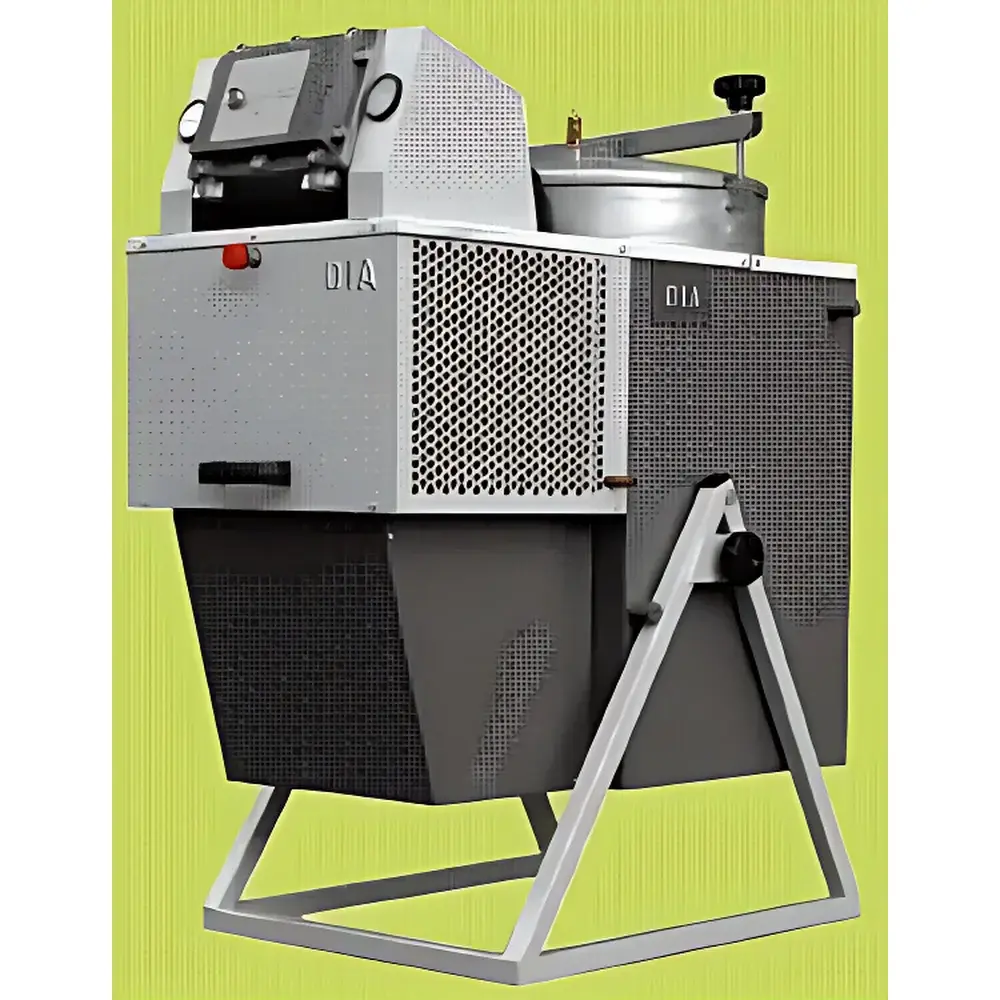
GLOBUS Vacuum Distillation and Concentration System
| Brand | GLOBUS |
|---|---|
| Origin | Italy |
| Equipment Type | Sub-boiling Distillation Apparatus |
| Application Scope | Laboratory & Industrial Scale |
| Compliance Context | Designed for GLP-compliant solvent recovery and thermal-sensitive compound processing |
Overview
The GLOBUS Vacuum Distillation and Concentration System is a precision-engineered sub-boiling distillation apparatus designed for the gentle, high-efficiency removal and recovery of volatile solvents—particularly ethanol, ethanol–water mixtures, and other low-boiling organic solvents—from thermolabile extracts. Operating under controlled vacuum conditions (typically 5–25 mbar), the system enables solvent evaporation at temperatures as low as 40–45 °C, thereby preserving heat-sensitive active ingredients commonly found in botanical extracts, pharmaceutical intermediates, nutraceuticals, and aromatic compounds. Unlike conventional atmospheric or rotary evaporation systems, this apparatus employs a dual-stage vacuum-controlled heating mantle combined with optimized condensation geometry to achieve high vapor-phase separation efficiency and minimal carryover. Its core principle relies on differential vapor pressure manipulation under reduced pressure, ensuring reproducible concentration endpoints without thermal degradation or oxidative side reactions.
Key Features
- Vacuum-integrated sub-boiling operation with digital pressure regulation (range: 1–100 mbar) and real-time feedback control
- Stainless-steel 316L distillation chamber and condenser assembly, fully compliant with ISO 8573-1 for clean process gas compatibility
- Programmable temperature ramping and hold functions across both heating mantle and cold trap zones
- Integrated solvent recovery circuit with calibrated collection vessels (volumes: 500 mL to 5 L, configurable per application)
- CE-marked electrical architecture with IP54-rated enclosure for laboratory and pilot-scale environments
- Modular design supporting scalability from benchtop (1–2 L batch) to industrial pre-production (up to 50 L/h throughput)
Sample Compatibility & Compliance
The system accommodates a broad range of feedstock viscosities (up to 5,000 mPa·s) and solid loadings (<15 wt% suspended solids), including crude tinctures, macerates, supercritical CO₂ extracts, and aqueous–alcoholic fractions. It meets essential requirements for Good Manufacturing Practice (GMP) and Good Laboratory Practice (GLP) environments: all wetted surfaces are electropolished to Ra ≤ 0.4 µm; documentation packages include Factory Acceptance Test (FAT) reports, material traceability certificates (EN 10204 3.1), and IQ/OQ protocol templates. While not inherently 21 CFR Part 11–compliant, optional audit-trail-enabled controllers (with electronic signatures and user-level access logs) are available to support FDA-regulated workflows.
Software & Data Management
Standard configuration includes GLOBUS ControlSuite™ v3.2—a Windows-based HMI platform supporting recipe-driven operation, multi-step vacuum/temperature profiles, and automatic endpoint detection via integrated weight-loss monitoring (optional load-cell integration). Data export conforms to ASTM E2500-19 standards: CSV and PDF reports include timestamps, operator IDs, parameter setpoints, deviations, and alarm histories. Optional OPC UA connectivity enables seamless integration into LIMS or MES platforms (e.g., LabWare, Siemens Desigo, or Rockwell FactoryTalk).
Applications
- Concentration of ethanol-based herbal tinctures while retaining volatile terpenes and labile glycosides
- Solvent recovery and reuse in API purification sequences following liquid–liquid extraction
- Dehydration of hydrosols and floral waters without compromising aroma profile integrity
- Pre-concentration of fermentation broths prior to chromatographic isolation
- Removal of residual solvents from lipid-soluble nutraceutical concentrates (e.g., curcuminoids, astaxanthin)
- Process development studies aligned with ICH Q5C stability guidelines for biologics excipients
FAQ
What is the minimum achievable residual solvent content after concentration?
Typical final residue levels range from 5–15% w/w moisture/solvent, depending on feed composition and target endpoint. With extended hold times under deep vacuum (<5 mbar) and chilled condensation (−20 °C), residual ethanol can be reduced to <0.5% w/w—verified by headspace GC-FID per USP <467>.
Can the system handle corrosive solvents such as chlorinated hydrocarbons?
Standard configuration supports ethanol, methanol, isopropanol, ethyl acetate, and acetone. For halogenated or strongly acidic solvents, optional Hastelloy C-276 condenser linings and fluoropolymer gasket kits must be specified at order stage.
Is validation support provided for regulated environments?
Yes—GLOBUS supplies full DQ/IQ/OQ documentation templates, calibration certificates traceable to NIST standards, and on-site commissioning assistance by certified field engineers. PQ protocols are customer-defined but supported with raw data logs and uncertainty budgets.
Related Products



