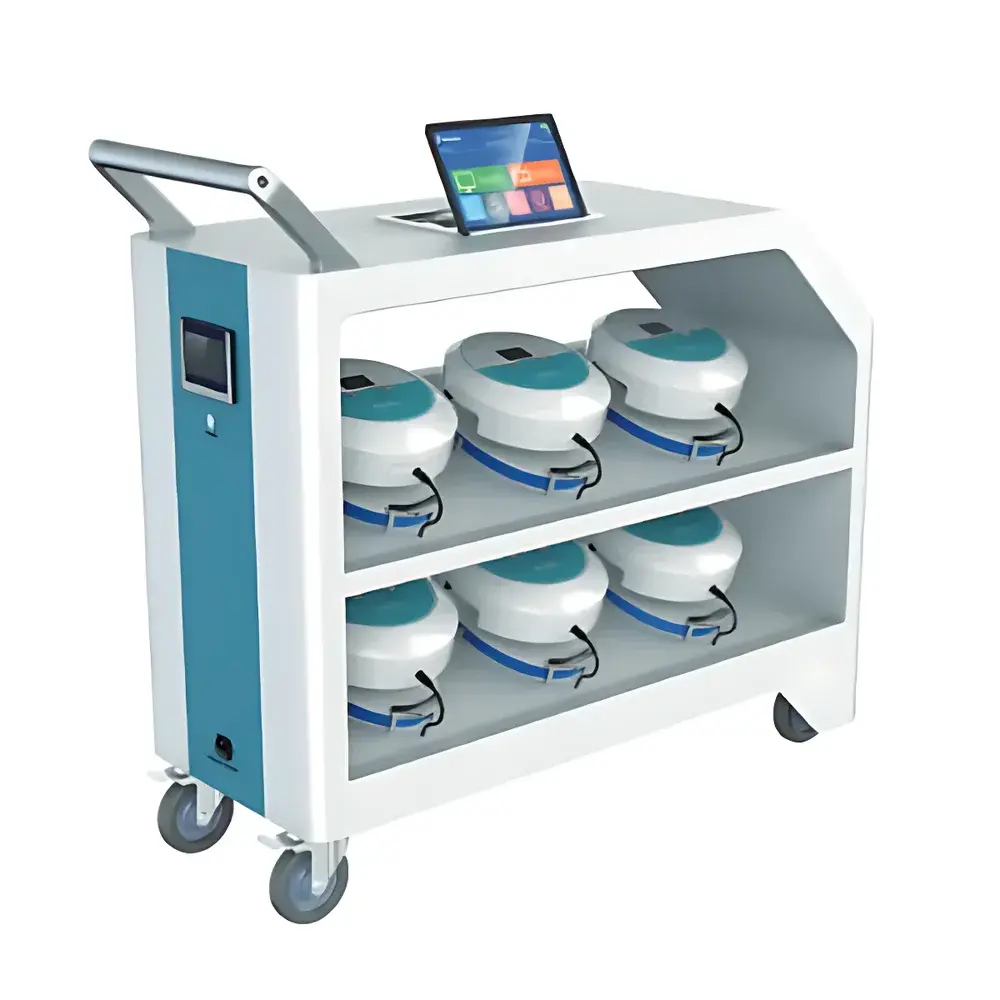
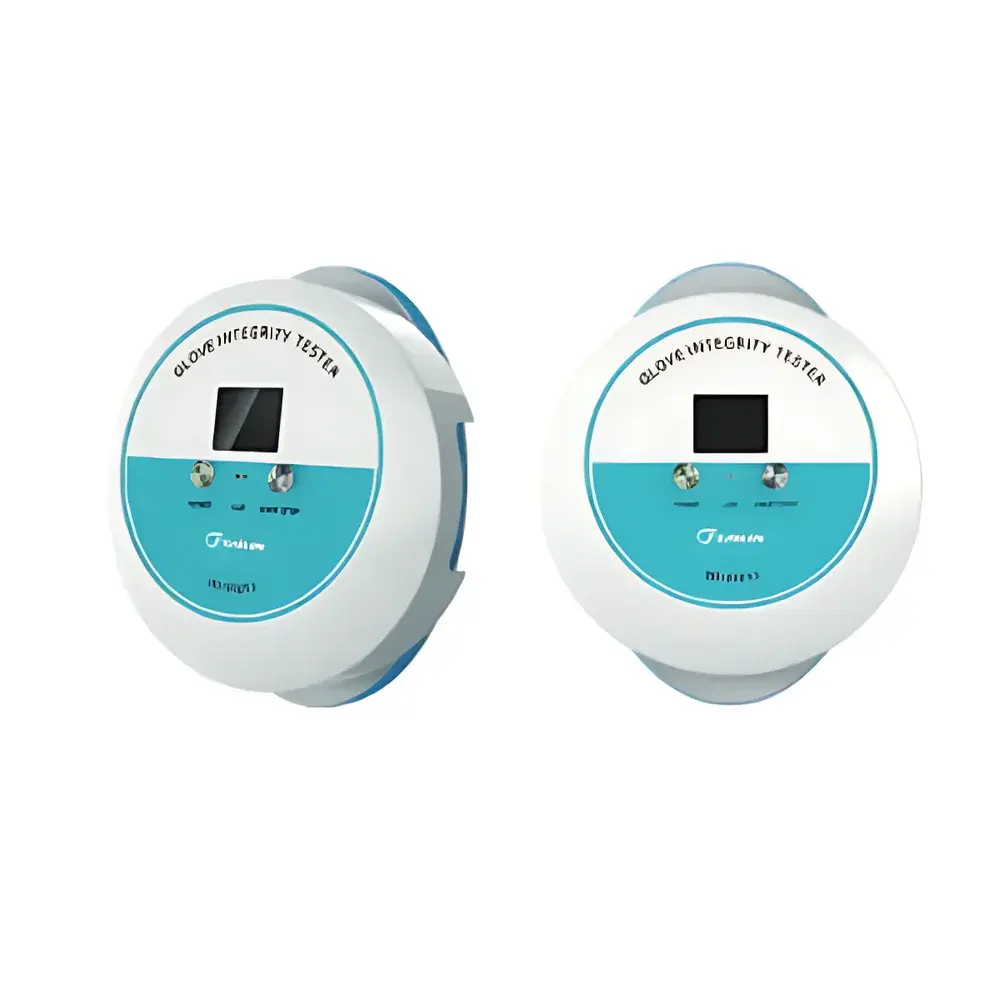
Gloves Integrity Tester with Mobile Trolley
| Brand | Tailin Biotech |
|---|---|
| Origin | Zhejiang, China |
| Manufacturer Type | OEM/ODM Manufacturer |
| Regional Category | Domestic (China) |
| Model | Not Specified |
| Pricing | Upon Request |
Overview
The Tailin Gloves Integrity Tester with Mobile Trolley is an engineered solution for quantitative leak detection of elastomeric gloves used in sterile barrier systems—including isolators, Restricted Access Barrier Systems (RABS), and gloveboxes—within pharmaceutical aseptic manufacturing environments. It operates on the principle of pressure decay testing: the glove is sealed within a calibrated test chamber, pressurized to a defined setpoint (typically 1–5 kPa), and monitored for pressure loss over a standardized duration. The rate of pressure decline is mathematically correlated to volumetric leakage flow (in pL/s or mL/min), enabling objective, repeatable assessment against predefined acceptance criteria per ISO 14644-7 Annex B and EU GMP Annex 1 (2022). Unlike qualitative methods such as soap-bubble or alcohol-vapor tests, this instrument delivers traceable, auditable, and statistically defensible data required for regulatory submissions and routine QC release.
Key Features
- Regulatory-Compliant Architecture: Fully validated software architecture compliant with FDA 21 CFR Part 11 requirements—including electronic signatures, audit trails, role-based access control, and immutable data logging—ensuring alignment with GLP/GMP data integrity expectations.
- Redundant Pressure Release Mechanism: Integrated manual mechanical vent valve enables safe, immediate depressurization of the test chamber during system fault, power loss, or operator intervention—eliminating reliance on automated solenoid valves alone.
- RFID-Based Glove Identification: Embedded RFID reader automatically captures unique glove ID tags (ISO 15693 compliant) at test initiation, associating each result with glove serial number, installation date, and historical test records—supporting lifecycle tracking per ISO 14644-7 Clause 7.3.
- High-Efficiency Integrated Air Supply: Onboard high-pressure diaphragm blower (rated ≥ 70 kPa max output) replaces external compressed air sources or low-flow piston pumps, reducing average pressurization time to 2–3 minutes—improving throughput by ~50% versus legacy pneumatic systems.
- Thermal Compensation Capability: Dual-point PT100 temperature sensors (±0.1 °C accuracy) monitor ambient and chamber temperatures in real time; software applies thermal drift correction to pressure decay calculations per ASTM E2877-13 guidelines.
- Sub-100 pL/s Detection Sensitivity: Under controlled environmental conditions (20–25 °C, RH < 60%), the system achieves a verified lower limit of detection (LLD) of ≤100 pL/s for helium-equivalent leakage—meeting stringent thresholds specified in USP and PDA Technical Report No. 27.
Sample Compatibility & Compliance
The tester accommodates standard glove materials (natural rubber latex, nitrile, neoprene, chloroprene) across common sizes (6.5–9.5 inches) and thicknesses (0.15–0.35 mm). All contact surfaces are electropolished 316L stainless steel or chemically inert PTFE-coated aluminum, ensuring compatibility with IPA, hydrogen peroxide vapor (HPV), and VHP decontamination cycles. Device validation documentation includes IQ/OQ/PQ protocols aligned with ISO 13485:2016 and ICH Q5A(R2) for biopharmaceutical facility qualification. Calibration certificates traceable to NIM (National Institute of Metrology, China) are provided with each unit.
Software & Data Management
Embedded Linux-based firmware runs Tailin IntegritySuite™ v3.2, supporting CSV and PDF report export with embedded digital signatures. Data storage includes local encrypted SD card (32 GB) and optional Ethernet/Wi-Fi connectivity for integration into MES or LIMS via OPC UA or HL7 interfaces. Audit trail records capture user ID, timestamp, parameter changes, test start/stop events, and failure modes—retained for minimum 15 years per 21 CFR Part 11 §11.10(e). Software updates undergo formal change control per ISO 14971 risk management process.
Applications
- Routine pre-use and post-decontamination glove integrity verification in Grade A isolators
- Periodic requalification of RABS glove ports during annual system validation
- Root cause analysis of particulate ingress events linked to glove micro-tears
- Supporting Annex 1 (2022) requirement for “continuous monitoring of critical barrier integrity” through scheduled automated test sequences
- Generating evidence for regulatory inspections (FDA, EMA, PMDA) under PIC/S PE 009-16 Chapter 4.22
FAQ
Does the device require external compressed air?
No—it features a self-contained high-pressure diaphragm blower, eliminating dependency on facility air lines or oil-lubricated compressors.
Can test data be exported to our LIMS without custom development?
Yes—standard CSV export and optional OPC UA interface support out-of-the-box integration with major LIMS platforms including LabWare, STARLIMS, and Thermo Fisher SampleManager.
Is the RFID reader compatible with existing glove tagging infrastructure?
Yes—the system supports ISO 15693 and ISO 14443A protocols; custom tag encoding (e.g., GS1 EPCglobal) can be configured upon request.
What is the recommended calibration interval?
Annual calibration is advised per ISO/IEC 17025:2017; on-site calibration verification using NIST-traceable pressure and temperature standards is supported.
How is thermal drift compensated during long-duration tests?
Real-time dual-sensor temperature inputs feed into a first-order thermal compensation algorithm embedded in the pressure decay calculation engine, minimizing false positives from ambient fluctuations.
Related Products