
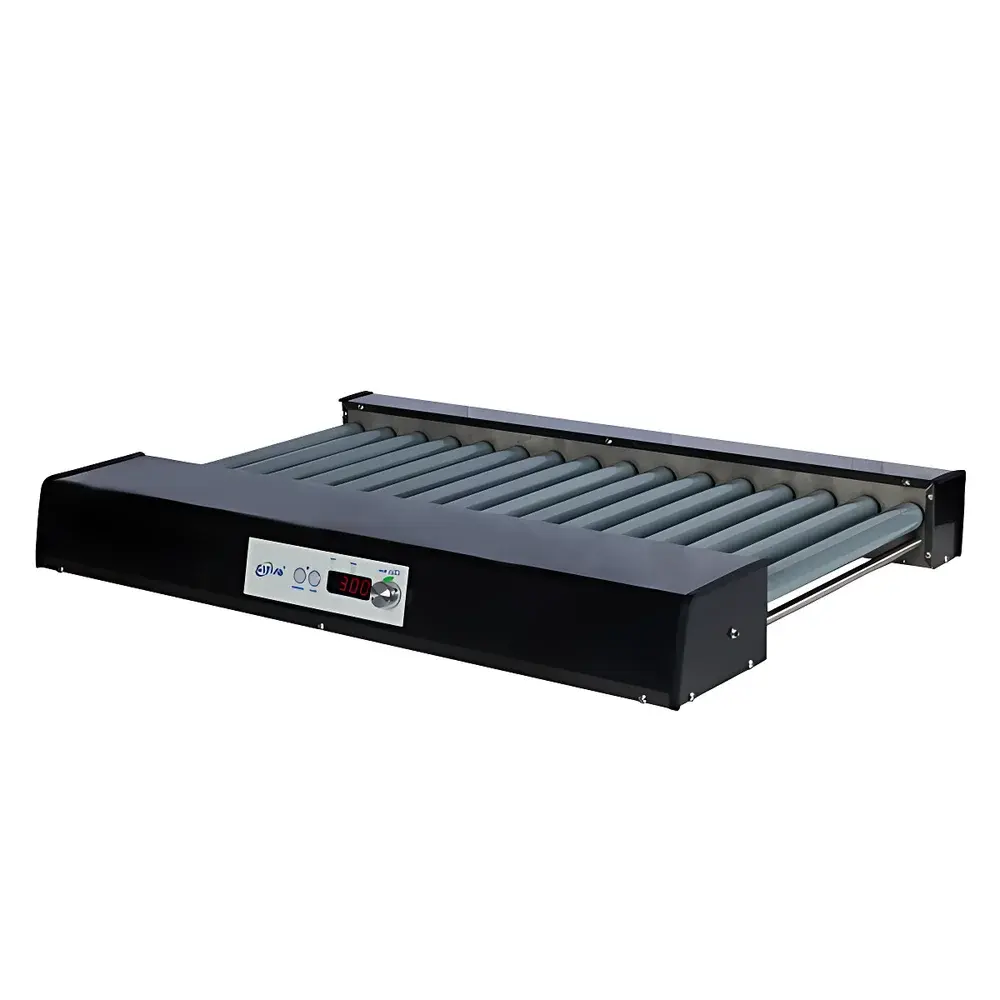
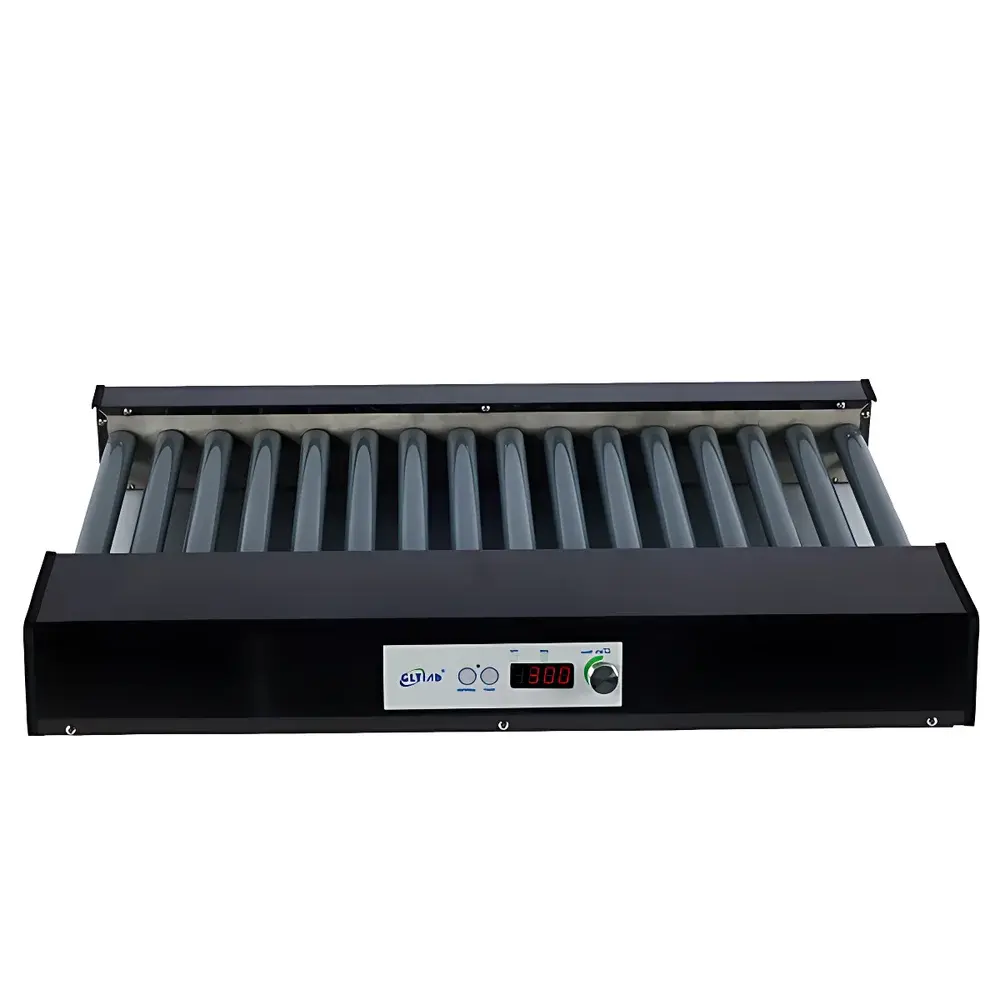
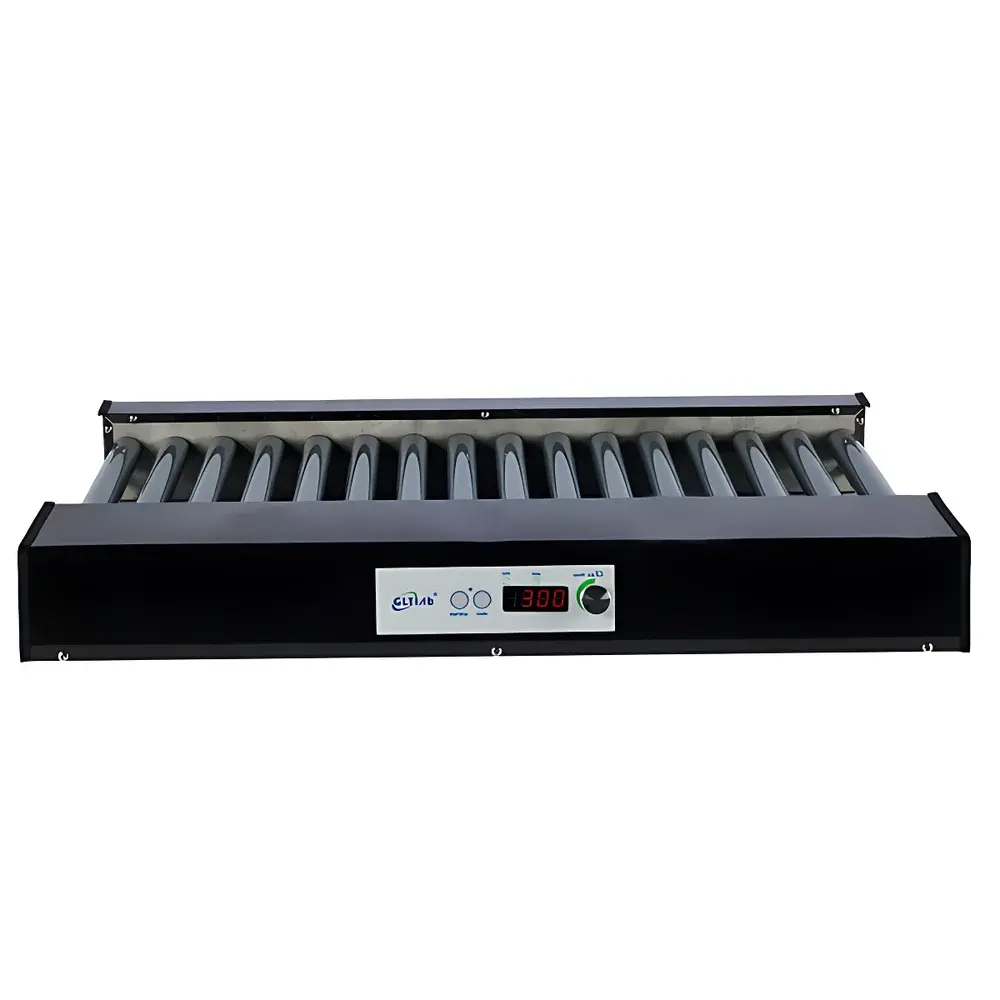
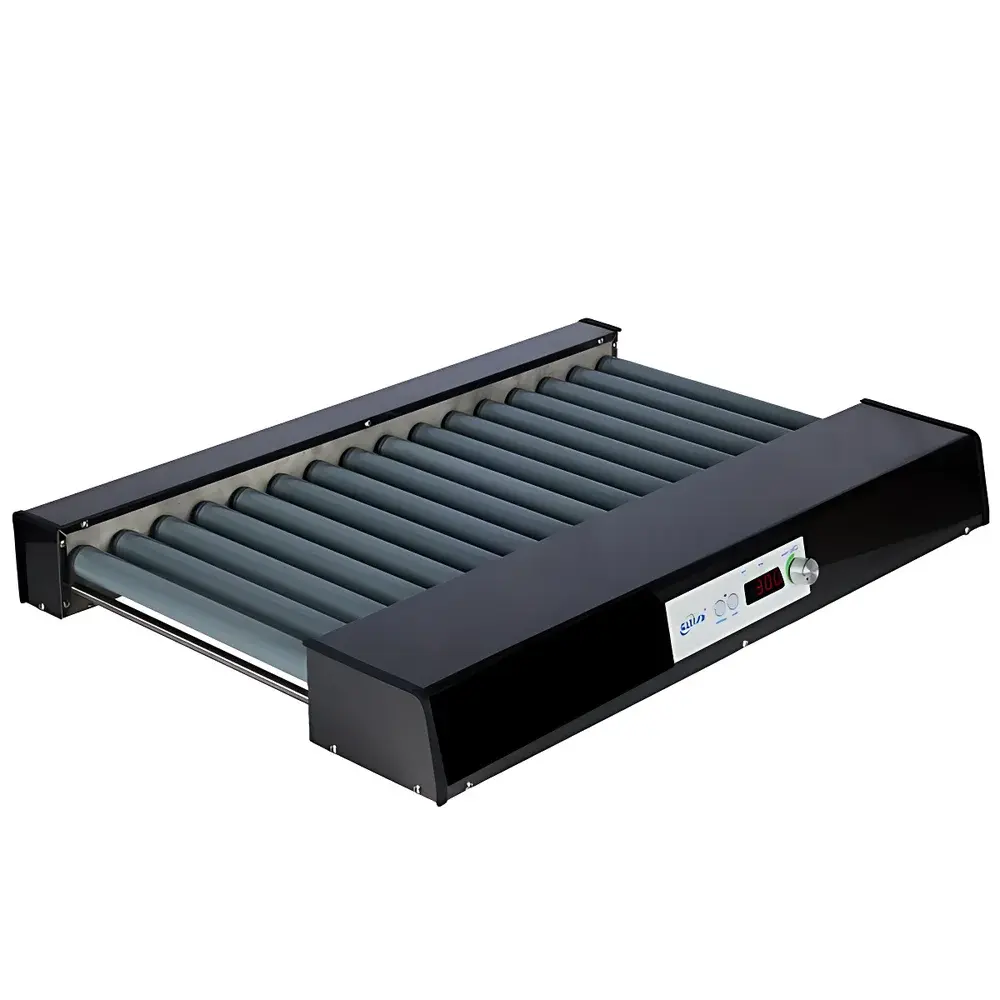
GLTLab TR16-800 16-Axis Orbital Roller Mixer
| Brand | GLTLab |
|---|---|
| Origin | Guangdong, China |
| Manufacturer Type | Direct Manufacturer |
| Product Category | Domestic (China-Made) |
| Model | TR16-800 |
| Instrument Type | Bead-Free Orbital Roller Mixer |
| Dimensions (W×D×H) | 560 × 800 × 100 mm |
| Sample Volume Range | 50–10,000 mL |
Overview
The GLTLab TR16-800 is a high-capacity, digitally controlled 16-axis orbital roller mixer engineered for reproducible, low-shear homogenization of viscous suspensions, pastes, and heterogeneous slurries in R&D and pilot-scale production environments. Unlike bead-based homogenizers that rely on mechanical impact or cavitation, this instrument operates on the principle of continuous orbital rotation—each of its 16 independently driven rollers rotates at a precisely defined angle and speed, generating gentle yet effective tumbling motion that promotes uniform dispersion without introducing thermal stress, foaming, or particle degradation. Its stainless-steel monocoque frame and IP54-rated enclosure ensure structural integrity and resistance to chemical exposure, making it suitable for use in battery electrolyte labs, catalyst formulation suites, and electrochemical materials development facilities where long-duration, unattended operation under controlled ambient conditions is required.
Key Features
- 16 synchronized orbital rollers with independent torque control and bidirectional rotation capability—enabling programmable reversal intervals to prevent sedimentation and improve mixing homogeneity in high-viscosity systems.
- Digital touchscreen interface with real-time RPM display, adjustable timer range from 1 second to 200 hours, and memory for up to 9 user-defined protocols.
- Stainless-steel (304-grade) chassis and roller shafts—corrosion-resistant and compatible with acidic, alkaline, and organic solvent environments typical in electrode slurry preparation and catalyst ink formulation.
- Low-noise brushless DC motor drive system with thermal overload protection—designed for continuous duty cycles exceeding 72 hours without performance drift.
- Modular roller clamp design accommodating tubes, bottles, and custom vessels (50–10,000 mL), including conical centrifuge tubes, glass vials, and polypropylene jars with secure O-ring sealing.
Sample Compatibility & Compliance
The TR16-800 supports solid–solid, solid–liquid, and high-viscosity liquid–liquid mixing across diverse material classes: cathode/anode slurries (e.g., NMC, LFP, graphite, PVDF/NMP systems), PEMFC catalyst inks (Pt/C, IrO₂, ionomer dispersions), supercapacitor electrode pastes (activated carbon, MXene, conductive polymer composites), and ceramic precursor suspensions. It complies with general laboratory safety standards per IEC 61010-1 and meets mechanical stability requirements outlined in ISO 13485 Annex A for equipment used in GMP-aligned material synthesis workflows. While not certified for Class I Div 1 hazardous locations, its sealed electronics and non-sparking drive architecture permit safe operation in ventilated fume hoods or inert-gas gloveboxes when handling volatile solvents such as NMP, DMF, or ethanol.
Software & Data Management
The integrated microcontroller logs timestamped operational metadata—including start/stop time, total runtime, average RPM, direction reversal count, and error flags—for audit trail generation. Exportable CSV logs support integration into LIMS platforms and satisfy basic data integrity expectations under FDA 21 CFR Part 11 for non-critical process steps. Optional RS-232 or USB-C serial output enables remote monitoring via third-party SCADA or LabVIEW-based control systems. No proprietary cloud service or subscription is required; all firmware updates are delivered via offline USB flash drive with SHA-256 checksum verification.
Applications
- Lithium-ion Battery Development: Homogenization of cathode slurries (LiCoO₂/PVDF/NMP), anode slurries (Si-C composites in CMC/SBR aqueous binders), and separator coating suspensions—ensuring consistent solids distribution prior to slot-die coating or doctor-blade casting.
- Fuel Cell R&D: Preparation of catalyst-coated membranes (CCMs) and gas diffusion layer (GDL) inks, where uniform Pt nanoparticle dispersion directly influences oxygen reduction reaction (ORR) kinetics and membrane durability.
- Supercapacitor Manufacturing: Blending of hierarchical porous carbons with pseudocapacitive metal oxides (e.g., MnO₂, RuO₂) in ethylene glycol or aqueous electrolytes—critical for achieving balanced energy/power density profiles.
- Advanced Ceramics & Composites: Deagglomeration of nanoscale fillers (Al₂O₃, SiC, BN) in thermoset resins prior to vacuum-assisted resin transfer molding (VARTM) or stereolithography (SLA) feedstock preparation.
FAQ
Is the TR16-800 suitable for mixing shear-sensitive biological samples?
No—it is optimized for industrial materials science applications involving abrasive particles and non-Newtonian fluids; it is not intended for cell lysis, protein extraction, or nucleic acid isolation.
Can the unit be integrated into automated production lines?
Yes—via dry-contact relay outputs and optional Modbus RTU communication module (sold separately) for PLC-level synchronization with conveyors, dispensers, or environmental chambers.
What maintenance is required for long-term reliability?
Annual inspection of roller bearing preload and belt tension; no lubrication required due to sealed precision bearings and synchronous timing belt drive architecture.
Does the device support GLP-compliant electronic records?
It provides raw operational logs meeting ALCOA+ principles for attributable, legible, contemporaneous, original, and accurate data—but requires external validation documentation for full GLP audit readiness.
Are replacement rollers and clamps available as spare parts?
Yes—standardized M6-threaded roller assemblies and universal silicone-grip tube holders are stocked globally through authorized GLTLab distributors.



