
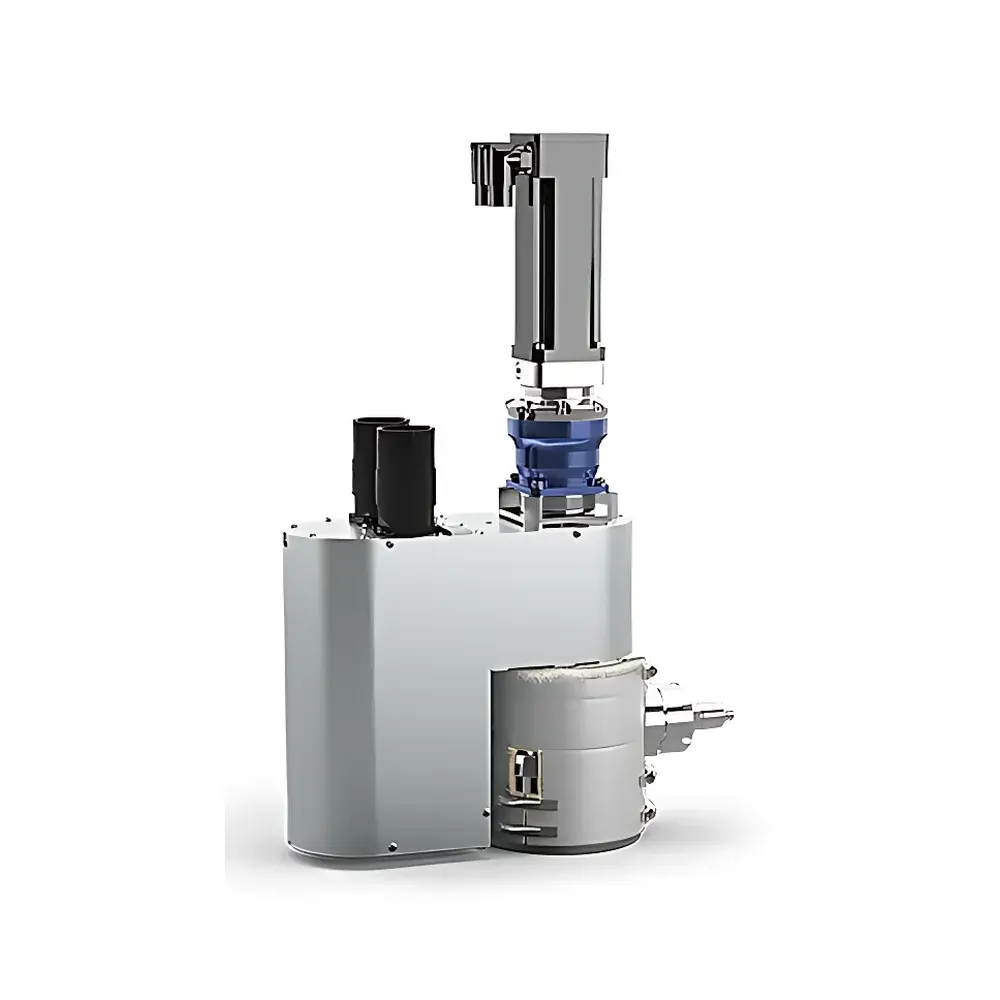
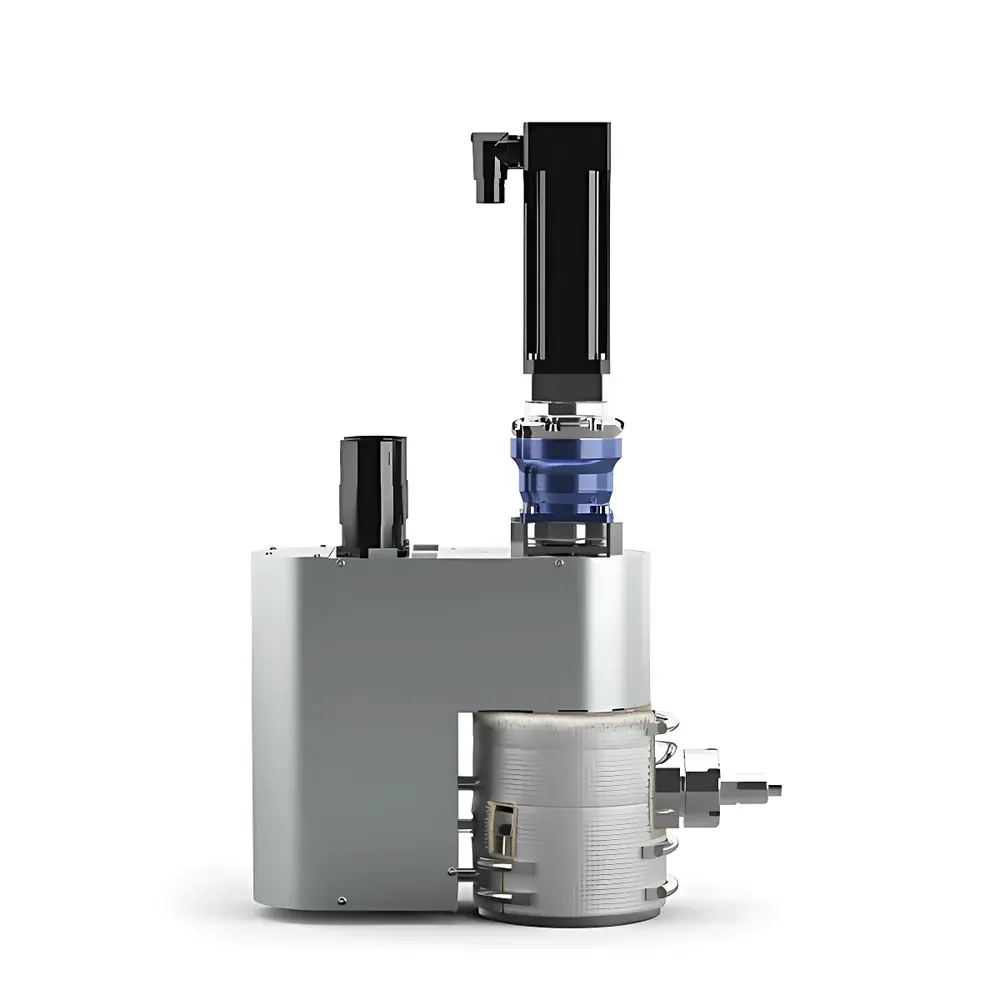
Goettfert SSR Inline Capillary Rheometer
| Brand | Goettfert |
|---|---|
| Origin | Germany |
| Model | SSR |
| Capillary Diameter | 0.5–10 mm |
| Capillary Length | 20 / 60 / 92 mm |
| Temperature Range | 40–350 °C |
| Pressure Range | 1–350 bar |
| Melt Pump Displacement | 0.37 cm³/rpm |
| Pump Speed | 0.1–100 rpm |
| Dynamic MVR Range | 1:1000 |
| Dimensions (L×W×H) | 664 × 147 × 361 mm |
| Weight | ~30 kg |
Overview
The Goettfert SSR Inline Capillary Rheometer is a precision-engineered, recirculating capillary rheometry system designed for continuous, real-time monitoring of polymer melt rheological behavior directly within extrusion lines. Operating on the principle of capillary flow rheology—governed by the Mooney equation and corrected for entrance/exit pressure losses—the SSR measures shear viscosity, apparent shear rate, melt flow rate (MFR/MVR), flow rate ratio (FRR), and power-law index n, which correlates with molecular weight distribution (Mw/Mn). Its circular capillary geometry ensures direct comparability with laboratory-scale capillary rheometers (e.g., Goettfert’s Rosand series) and ASTM D3835 / ISO 11443 compliant test data. Unlike inline pressure or temperature sensors, the SSR delivers quantitative, traceable rheological parameters—not proxies—enabling closed-loop process control and material consistency validation in high-value thermoplastic production.
Key Features
- Recirculating melt path with annular melt delivery tube—enables single-port installation into standard extruder threaded ports (e.g., 1/2″ NPT or M27×2), eliminating need for major extruder modifications or bypass loops.
- Compact, thermally insulated architecture featuring stainless steel and corrosion-resistant alloy construction for all wetted parts (excluding melt pump and shut-off valve).
- Integrated dual-stage旁flow valves at both capillary inlet and outlet to stabilize pressure profiles and minimize transient effects during start-up or grade changeovers.
- Broad dynamic operating range: shear rate coverage from 0.1 to >10⁵ s⁻¹ (1:1000 MVR range), achieved via precise stepper-motor-driven melt pump (0.37 cm³/rev displacement) with speed control from 0.1 to 100 rpm.
- Configurable operation modes: constant piston speed (for viscosity vs. shear rate sweeps) or constant pressure (for stability assessment under fixed backpressure conditions).
- High-fidelity pressure transducers with thermal isolation to suppress drift; calibrated for full-scale ranges up to 350 bar with traceable NIST-traceable certification options.
Sample Compatibility & Compliance
The SSR supports thermoplastic melts including polyolefins (PP, PE), engineering plastics (PA6, PC, PBT), thermoplastic elastomers (TPEs), and filled compounds (glass-, mineral-, or carbon-reinforced). It accommodates standard capillary geometries per ISO 11443: L/D = 10, 20, 30, and 40 configurations (with lengths of 20, 60, and 92 mm available); diameters range from 0.5 mm to 10 mm to cover low-viscosity solvents through ultra-high MW polymers. All hardware and firmware comply with CE marking requirements and electromagnetic compatibility (EMC) Directive 2014/30/EU. Optional validation packages support IQ/OQ documentation aligned with pharmaceutical (USP ) and regulated polymer manufacturing environments requiring GLP/GMP traceability.
Software & Data Management
The SSR interfaces with Goettfert’s proprietary RHEOPLUS software via Ethernet or RS-485, enabling real-time visualization of viscosity curves, FRR trends, and n-index drift over time. Data logging occurs at user-defined intervals (down to 100 ms resolution) with embedded timestamping and metadata tagging (e.g., batch ID, operator, extruder zone temperatures). Export formats include CSV, XML, and HDF5 for integration into MES or SCADA platforms. Audit trail functionality meets FDA 21 CFR Part 11 requirements when configured with electronic signatures and role-based access control. Raw pressure and displacement data are retained locally on industrial-grade SD card storage (optional RAID backup).
Applications
- Real-time detection of polymer degradation during extrusion (e.g., drop in n-index indicating chain scission).
- On-line verification of incoming resin lots against specification limits for MFR, viscosity activation energy, and shear thinning behavior.
- Optimization of screw design and processing parameters (e.g., barrel temperature profile, screen pack resistance) using empirical rheological feedback.
- Supporting quality-by-design (QbD) initiatives in medical-grade polymer compounding where viscosity stability directly impacts device dimensional accuracy.
- Correlating inline rheology with offline GPC and DSC results to establish predictive models for final part performance (e.g., impact strength, warpage).
FAQ
Can the SSR be installed on twin-screw extruders without interrupting production?
Yes—the SSR’s single-port mounting design allows hot-tap installation during scheduled maintenance windows; typical mechanical integration requires ≤90 minutes with no extruder disassembly.
Does the system require external cooling water or compressed air?
No—thermal management is fully passive via integrated heat sinks and optional air-cooled jacket; only electrical supply (230 V AC, 50/60 Hz) and Ethernet connectivity are required.
How is calibration maintained under continuous operation?
Goettfert provides factory-calibrated reference capillaries and certified Newtonian oils (e.g., NIST SRM 2490c); field recalibration is supported via automated zero-pressure and full-scale pressure checks with user-initiated validation reports.
Is it possible to retrofit legacy extrusion lines with the SSR?
Yes—standardized mounting kits accommodate common port sizes (M27×2, 1/2″ NPT, G3/4″) and thermal expansion compensation is built into the flange interface to prevent seal failure during thermal cycling.
What level of IT infrastructure is needed for data integration?
The SSR operates as a Modbus TCP slave device and supports OPC UA connectivity; no dedicated server is required—data can be ingested directly into existing historian systems (e.g., OSIsoft PI, Ignition) via standard industrial protocols.



