
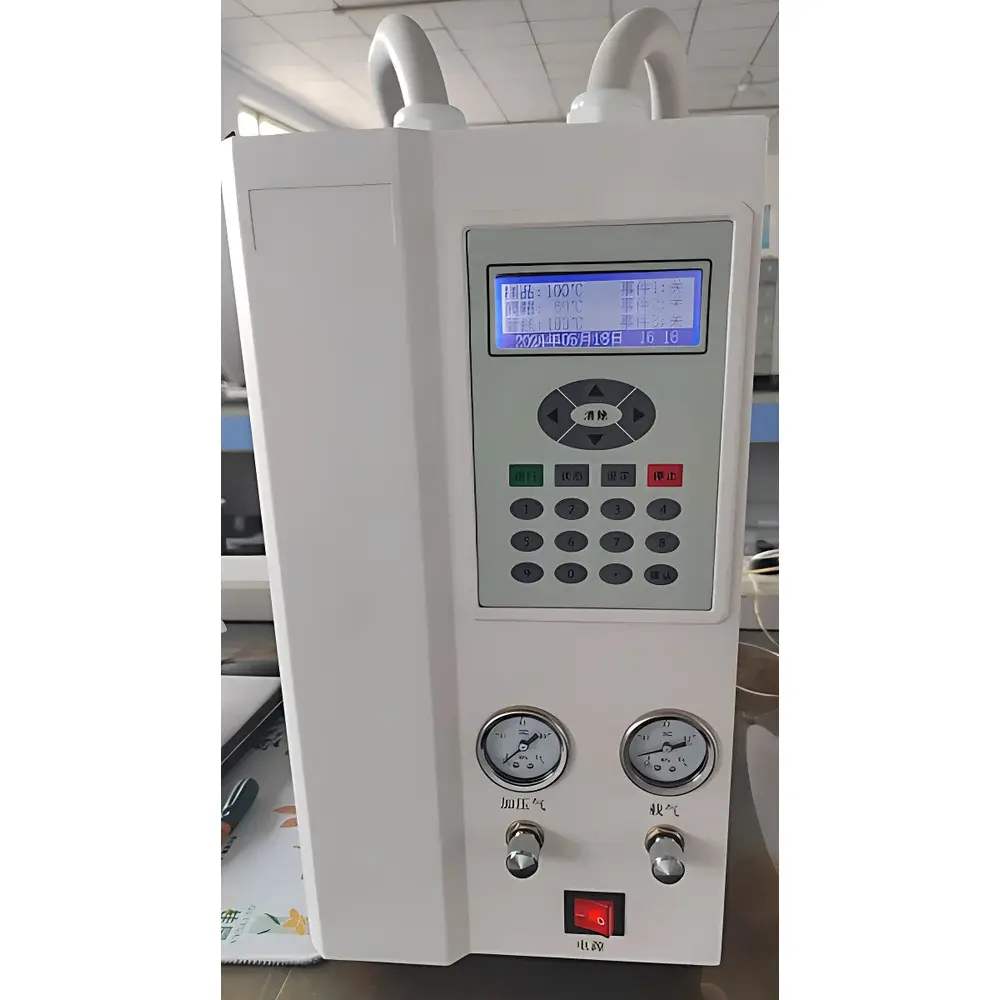
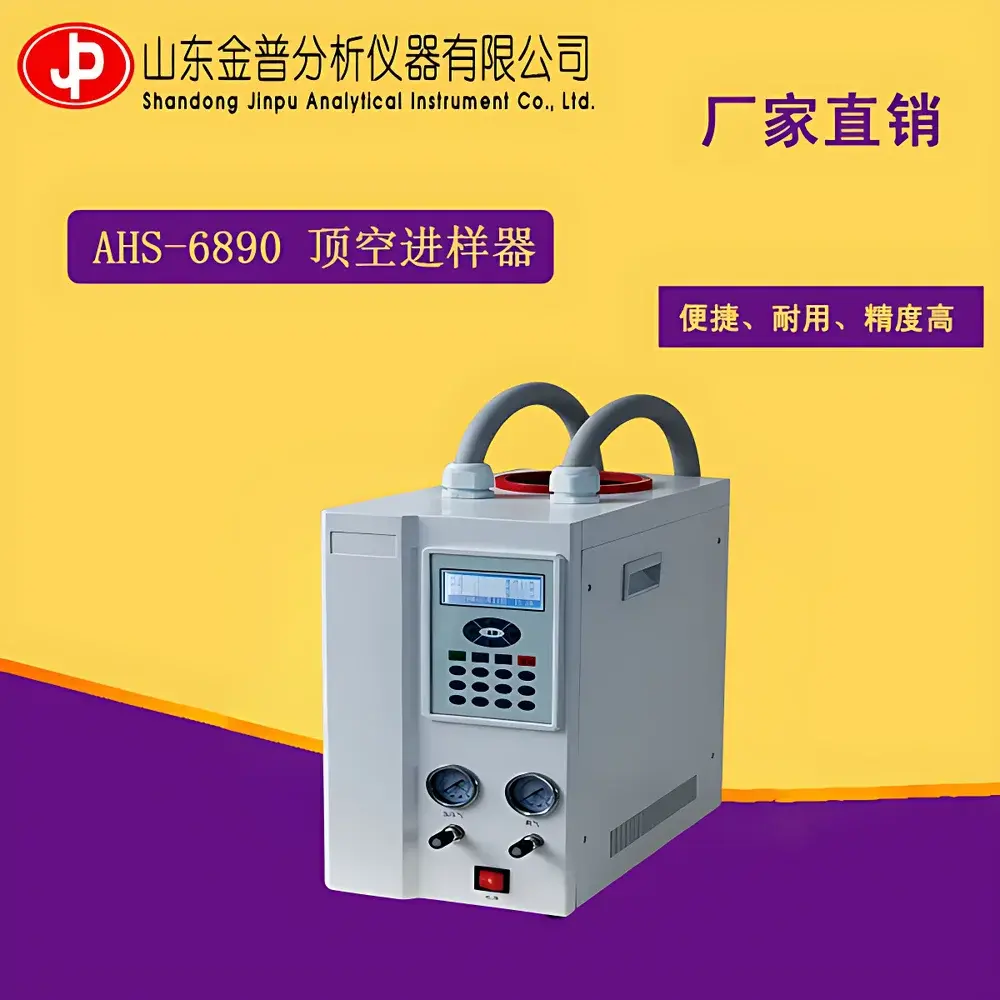
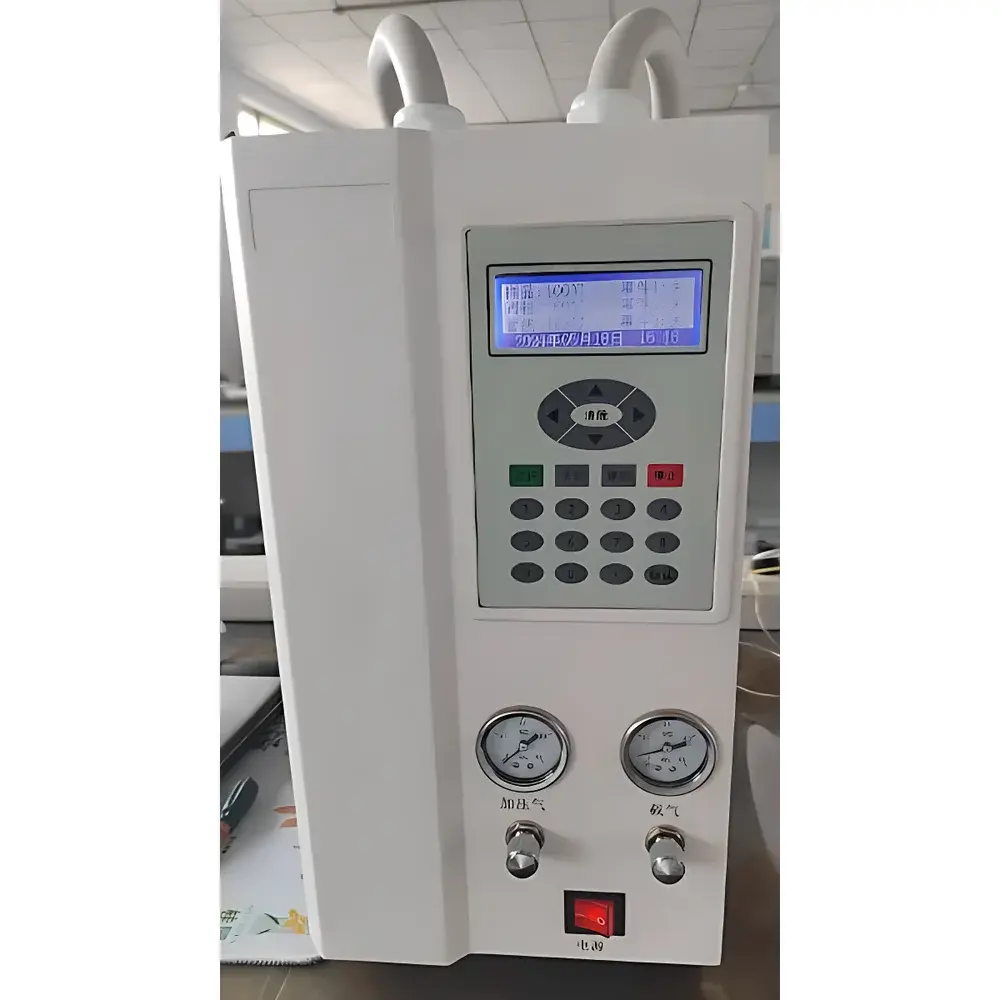
Golden Promise AHS-6890 Semi-Automatic Headspace Sampler
| Brand | Golden Promise |
|---|---|
| Model | AHS-6890 |
| Type | Semi-Automatic Headspace Sampler |
| Sample Capacity | 12-position vial carousel |
| Vial Size | Standard 20 mL (customizable: 5 mL, 10 mL, 50 mL) |
| Sample Zone Temp Range | Ambient to 200 °C (1 °C increments) |
| Transfer Line Temp Range | Ambient to 160 °C (1 °C increments) |
| Valve & Loop Temp Range | Ambient to 160 °C (1 °C increments) |
| Temperature Accuracy | ±0.5 °C |
| Temperature Uniformity | ±0.5 °C |
| Pressurization Range | 0–0.4 MPa (continuously adjustable) |
| Carryover Reduction | Programmable purge flow and duration |
| Reproducibility | RSD < 3% (dependent on GC system performance and operator technique) |
| Dimensions (W×D×H) | 200 × 380 × 400 mm |
| Weight | ~20 kg |
| Control Interface | Microprocessor-based with LCD display, membrane keypad, and embedded time-programmable logic (8-step sequence, 9 stored methods) |
| GC Synchronization | TTL-compatible event triggering |
| Safety | Low-voltage heating circuitry for transfer lines |
Overview
The Golden Promise AHS-6890 Semi-Automatic Headspace Sampler is a precision-engineered sample introduction system designed for quantitative and qualitative analysis of volatile and semi-volatile organic compounds (VOCs and SVOCs) in complex matrices via gas chromatography (GC). It operates on the fundamental principle of phase equilibrium partitioning: solid or liquid samples are sealed in thermostatted vials and heated to promote volatilization of target analytes into the headspace above the sample matrix. Once equilibrium is established between the condensed phase and vapor phase, a precise volume of the equilibrated headspace gas is transferred—via pressurized loop injection or valve-switched sampling—directly into the GC inlet. This solvent-free, non-destructive technique eliminates matrix interference common in liquid injection, minimizes column contamination, and delivers high analytical reproducibility with low detection limits. The AHS-6890 is optimized for laboratories requiring robust, method-driven headspace analysis without full robotic automation—offering manual vial loading with automated thermal control, timing, pressure regulation, and GC synchronization.
Key Features
- Triple-zone independent temperature control: sample incubation oven, transfer line, and valve/loop assembly—all programmable from ambient to 200 °C (sample zone) or 160 °C (lines and valves), with resolution of 1 °C and stability better than ±0.5 °C.
- 12-position rotating carousel accommodates standard 20 mL crimp-top vials; alternative vial formats (5 mL, 10 mL, 50 mL) supported via optional adapters—enabling flexibility across regulatory and research workflows.
- Eight-step, event-driven time programming with nine user-editable, non-volatile method storage slots—allowing rapid recall of validated SOPs for residual solvents, environmental VOCs, or forensic ethanol assays.
- Programmable pressurization (0–0.4 MPa) and post-injection purge parameters—including flow rate and duration—to minimize carryover between injections and ensure long-term retention time stability.
- Microprocessor-based controller with backlit LCD interface, tactile membrane keypad, and integrated self-diagnostic firmware—displaying real-time status, error codes, and active parameter values during operation.
- TTL-level synchronization with GC systems and data systems: supports both internal trigger (on method completion) and external initiation (e.g., from GC ready signal), ensuring tight integration within automated analytical sequences.
- Low-voltage heating architecture for all heated zones—compliant with IEC 61010-1 safety standards for laboratory equipment—and configurable display brightness for varied ambient lighting conditions.
Sample Compatibility & Compliance
The AHS-6890 supports a broad spectrum of sample types including aqueous solutions, polymers, pharmaceutical tablets, foodstuffs, soil slurries, blood and urine specimens, and packaged consumer goods. Its design aligns with widely adopted analytical standards, including ASTM D3699 (gasoline hydrocarbons), USP (residual solvents in pharmaceuticals), EPA Method 502.2 and 524.2 (drinking water VOCs), and ISO 11843-2 (detection capability estimation). While not inherently 21 CFR Part 11 compliant as a standalone device, its deterministic time-programmed operation, audit-ready parameter logging (when paired with compliant GC data systems), and method traceability support GLP and GMP environments when deployed within documented quality management frameworks.
Software & Data Management
The AHS-6890 operates as an intelligent peripheral—not requiring proprietary PC software for routine use. All operational parameters, method sequences, and runtime logs are managed locally via the embedded controller. For laboratories integrating into enterprise-level informatics, the device outputs standardized TTL pulses and accepts external triggers compatible with third-party chromatography data systems (CDS) such as Thermo Chromeleon, Agilent OpenLab CDS, and Waters Empower. Time-stamped method execution records—including vial position, temperature setpoints, pressurization duration, and cycle completion signals—can be captured by the CDS for full audit trail generation. No cloud connectivity, remote access, or firmware update mechanism is provided—ensuring data sovereignty and minimizing cybersecurity exposure in regulated labs.
Applications
- Pharmaceutical Quality Control: Residual solvent quantification per ICH Q3C guidelines (e.g., methylene chloride, acetone, ethyl acetate) in active pharmaceutical ingredients (APIs) and final dosage forms.
- Environmental Monitoring: Analysis of trihalomethanes (THMs), haloacetic acids (HAAs), benzene, toluene, ethylbenzene, and xylenes (BTEX) in drinking water and wastewater per EPA protocols.
- Food & Beverage Safety: Ethanol profiling in fermented products; acetaldehyde in PET packaging; hexane residues in edible oils; and flavor compound fingerprinting in teas, wines, and spirits.
- Forensic Toxicology: Blood alcohol concentration (BAC) determination and detection of volatile intoxicants (e.g., isopropanol, acetone, chloroform) using static headspace-GC-FID or GC-MS.
- Polymer & Packaging Testing: Migration studies of monomers (e.g., styrene, vinyl chloride) and additives from plastics into simulants, aligned with EU Regulation 10/2011.
- Clinical & Hygiene Applications: Ethylene oxide residue testing in sterilized medical devices per ISO 10993-7, and formaldehyde release assessment in textiles and adhesives.
FAQ
Is the AHS-6890 compatible with all gas chromatographs?
Yes—provided the GC accepts TTL-level start/stop signals and has a standard split/splitless inlet capable of accepting pressurized headspace injections. Adapter kits for Agilent, Shimadzu, Thermo, and PerkinElmer GC models are available upon request.
Can I validate this instrument under GMP conditions?
The AHS-6890 supports IQ/OQ protocols through its deterministic thermal and timing behavior, stable pressure control, and repeatable mechanical actuation. Full PQ requires co-validation with the connected GC and detector; documentation templates and calibration checklists are supplied with the instrument.
What maintenance is required beyond routine cleaning?
Annual verification of temperature sensor accuracy (using NIST-traceable dry-block calibrators) and leak testing of the pressurized sampling path are recommended. No consumables—other than septa and vials—are required for normal operation.
Does it support dynamic headspace (purge-and-trap) mode?
No—the AHS-6890 is configured exclusively for static headspace analysis. Dynamic headspace functionality requires dedicated purge-and-trap instrumentation with cryofocusing and thermal desorption capabilities.
How is carryover managed between analyses?
Carryover is minimized through three independent mechanisms: (1) programmable post-injection carrier gas purge of the transfer line and valve, (2) elevated temperature hold during purging to accelerate volatilization of residual analytes, and (3) adjustable pressurization to ensure complete displacement of headspace gas during sampling.
Related Products





